
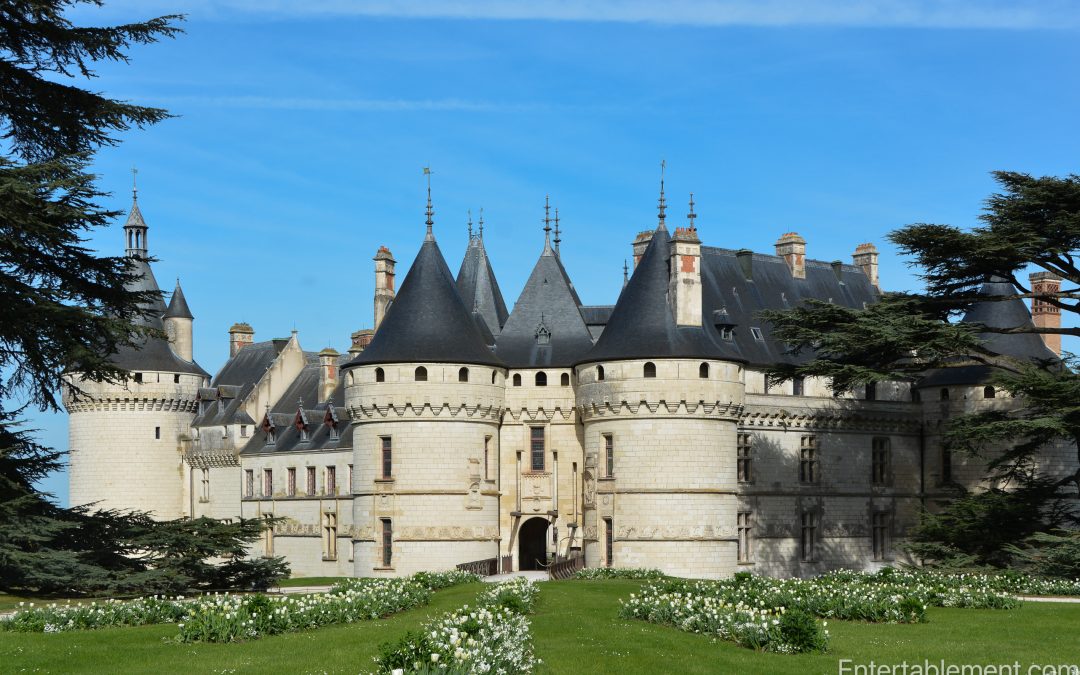
Updated May 2025 with new photos and insights.
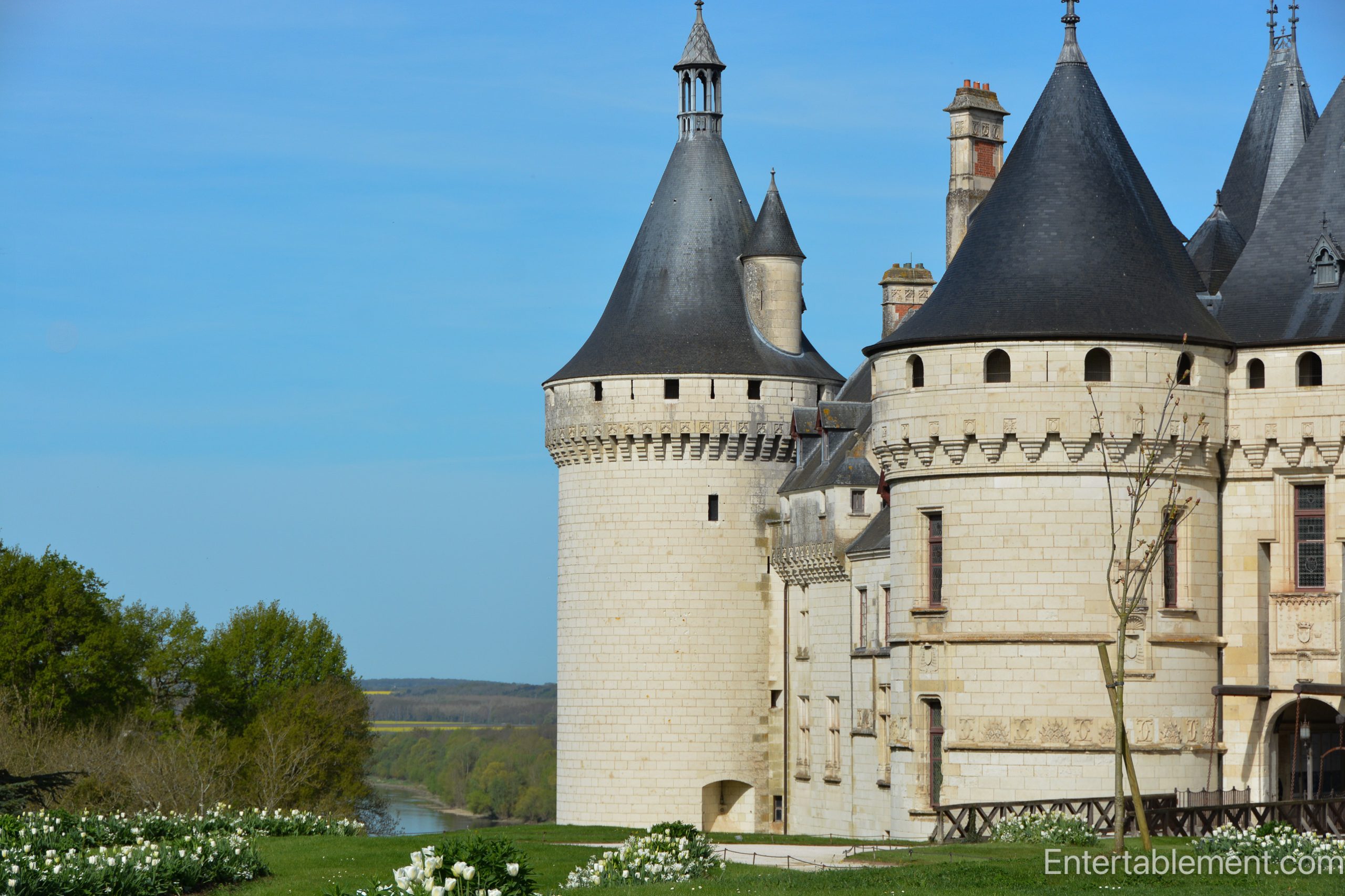
Perched high above the River Loire, the Château de Chaumont-sur-Loire looks every bit the romantic stronghold with its conical towers, sculpted stonework, and soaring views. But beyond its fairy-tale façade lies a far richer story—one that spans royal symbolism, personal reclamation, revolutionary support, and continued reinvention through art and landscape.
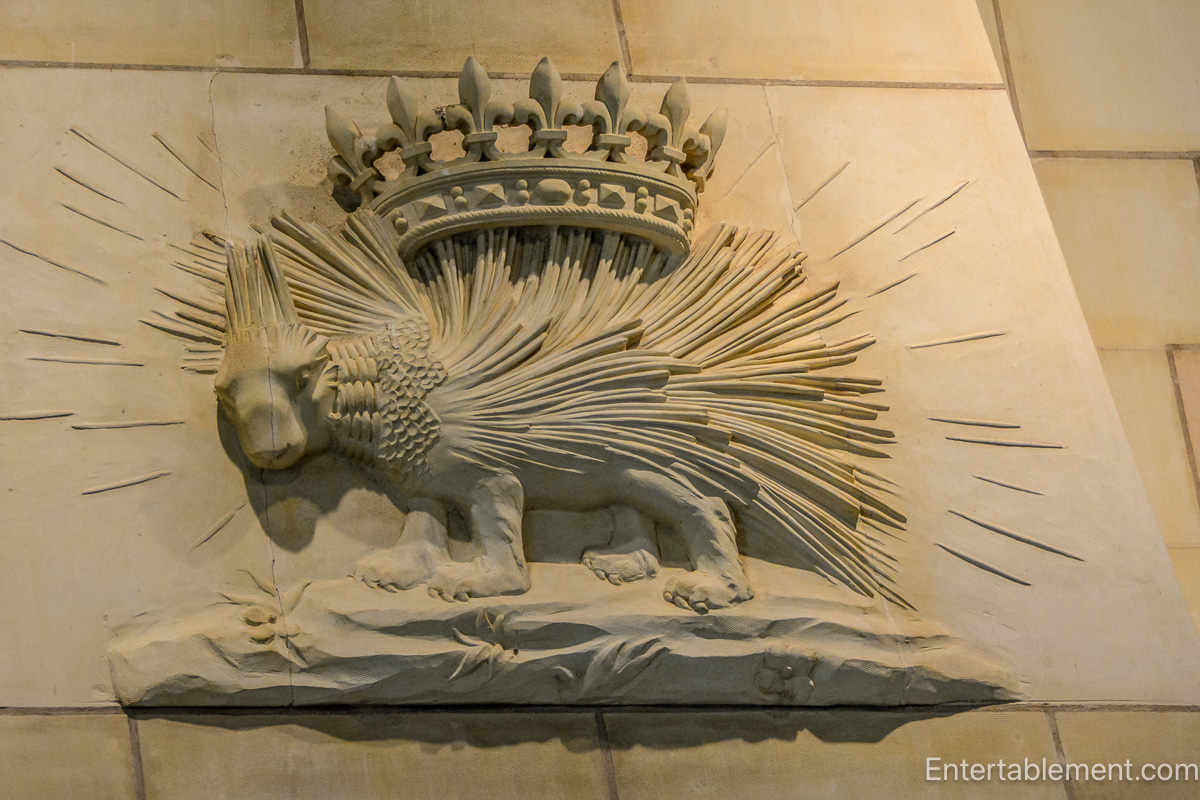
The Porcupine King
Our journey begins not with a royal resident, but with a royal reference. Though Louis XII never owned Chaumont himself, his emblem—the porcupine—appears prominently throughout the château. These carvings were commissioned by the Amboise family, particularly Charles II d’Amboise, who served as governor of Milan under Louis XII and sought to honour the king by including his royal symbol.

At first glance, the porcupine might seem an odd choice for a royal emblem. But accompanied by the motto “Qui s’y frotte, s’y pique” (“Who touches it, pricks themselves”), it becomes clear: the porcupine symbolized a king who was outwardly unassuming, yet fiercely protective and formidable. The architecture of Chaumont during this time reflects that duality: fortified exteriors blended with increasingly refined interiors.
The interior courtyard, complete with a well, looks out over the River Loire.
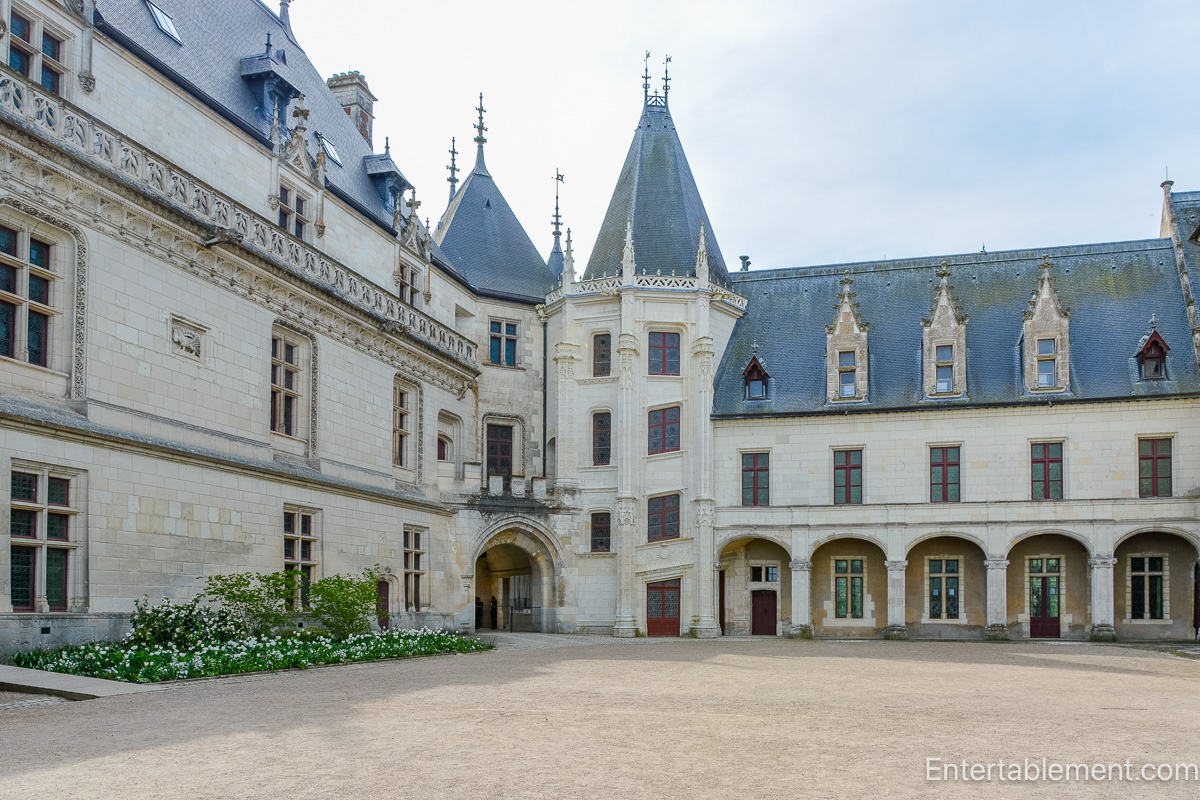
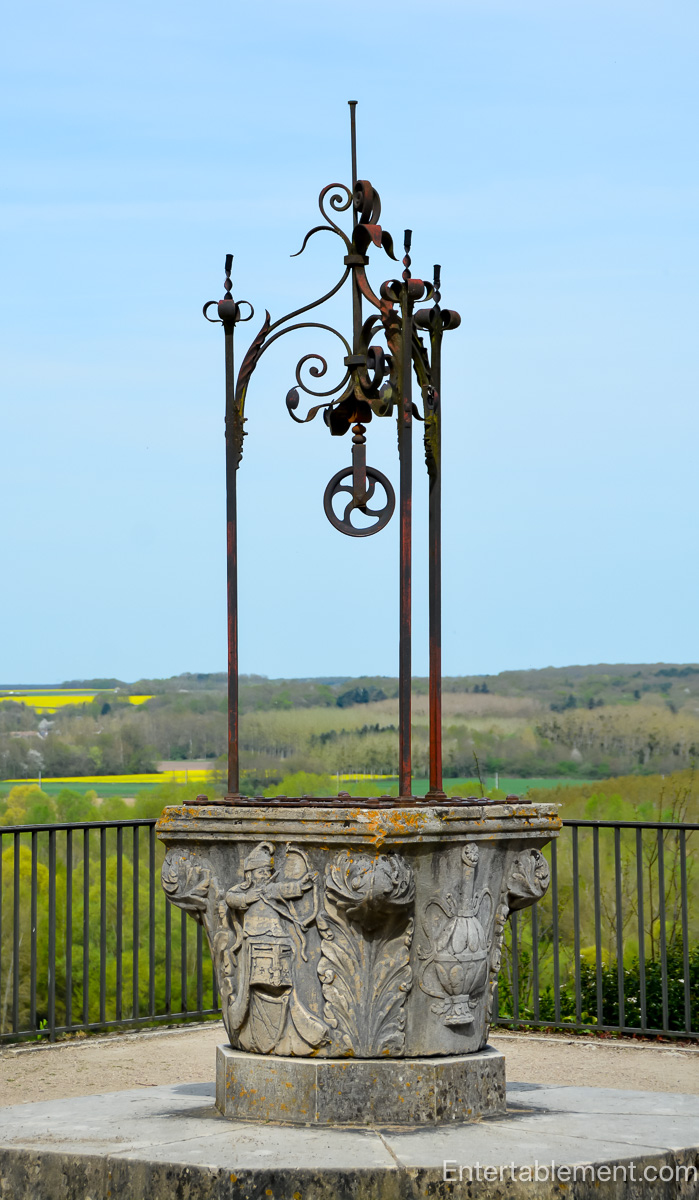
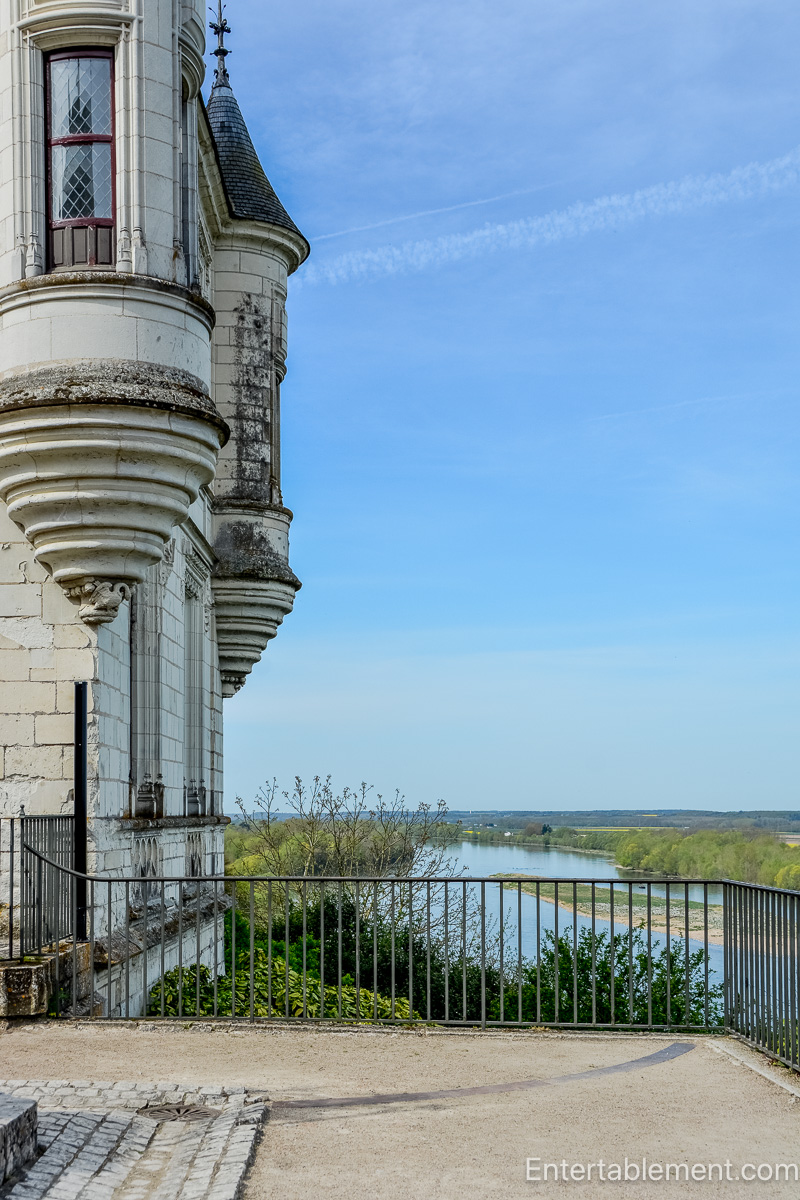
The slanted windows in the centre hint at the grand spiral staircase inside.
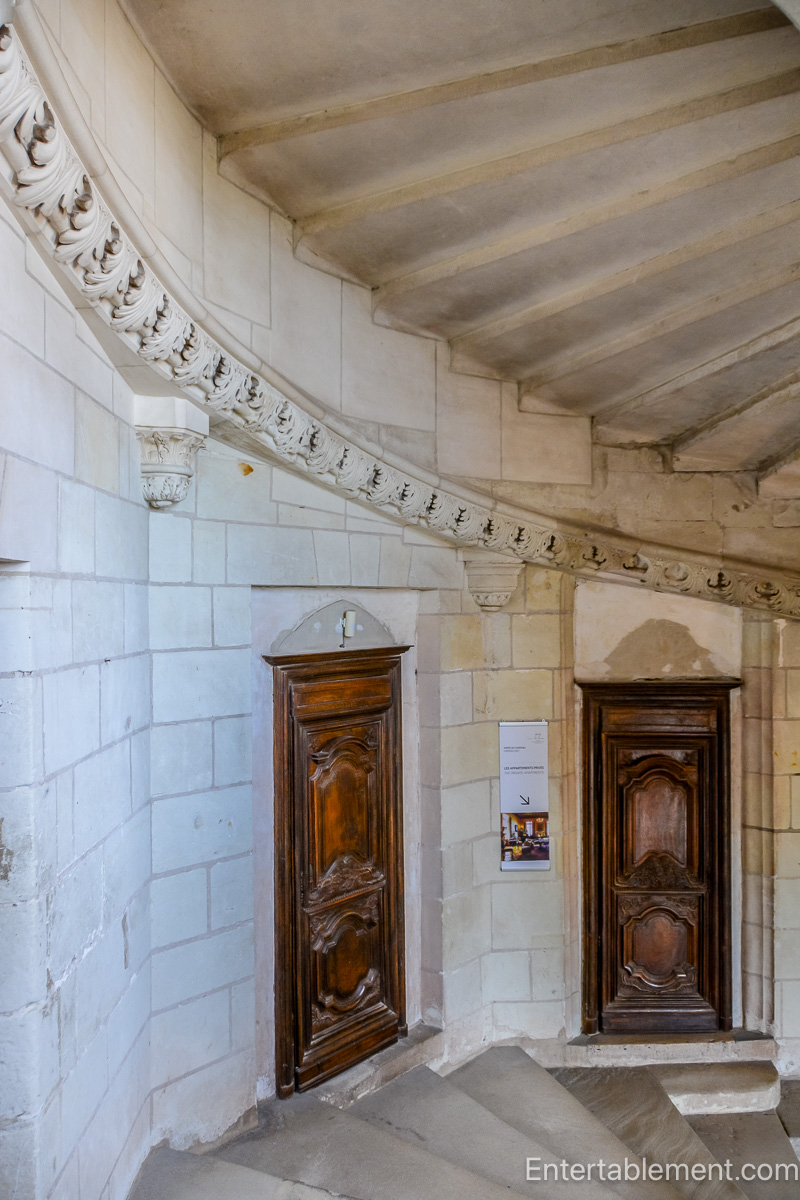
Here are the staircase windows from the inside.

The ribbed vaulting at the top of the staircase—it’s magnificent.

Catherine and Diane: Power, Rivalry, and Reinvention
Queen Catherine de Medici purchased the château in 1550, using it as a hunting lodge and strategic stop between Amboise and Blois. When her husband, Henri II, died in 1559, she demanded the return of Château de Chenonceau (shown below) from his mistress, Diane de Poitiers. In exchange, Catherine offered Chaumont.

Though Diane stayed only occasionally, she left her mark. She completed the East Wing and the gatehouse….
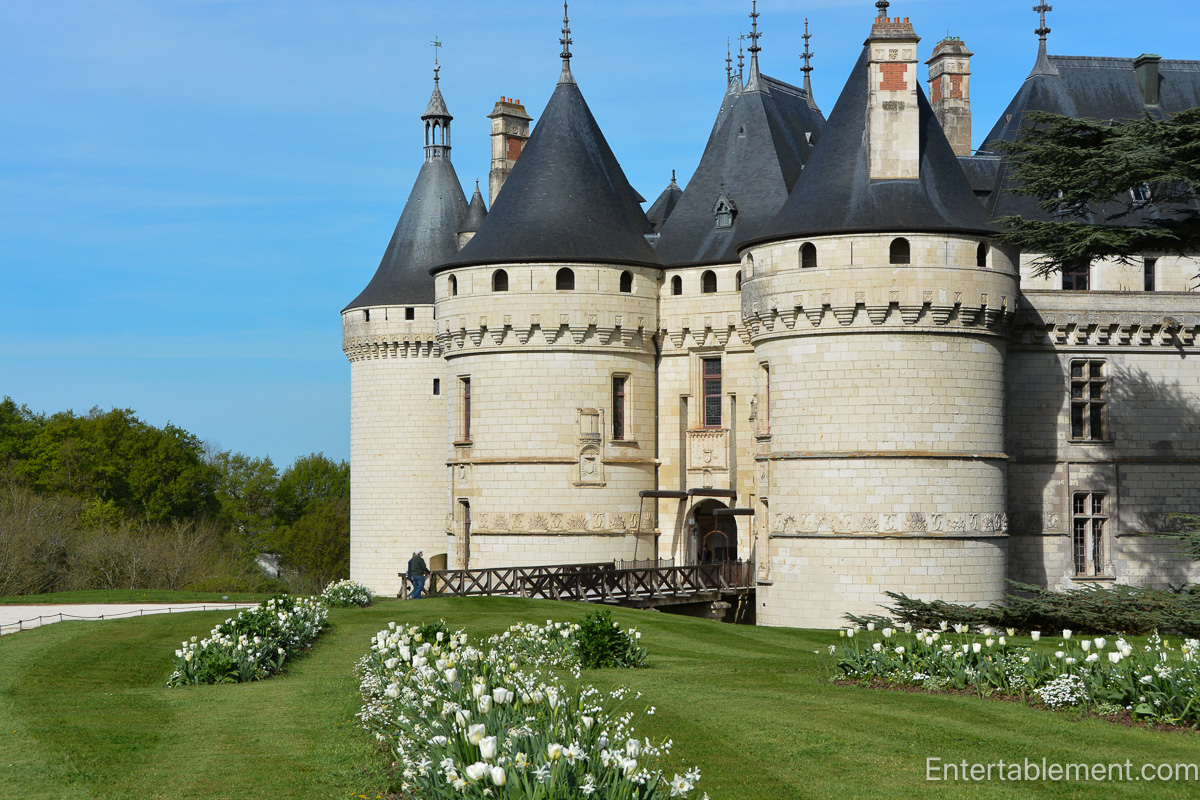
…complete with drawbridge.

Confess: Haven’t you always wanted your own drawbridge? I sure have, and apparently, so did Diane de Poitiers.

Diane and Catherine both wielded influence through their connections to Henri II and, more directly, through relentless self-fashioning, whether in architecture, art, or symbolism. They were masters of image and legacy, each turning their residences into lasting monuments of power and pride.
A Revolutionary Connection
In the 18th century, Jacques-Donatien Le Ray, an early supporter of the American Revolution, purchased the estate. He hosted Benjamin Franklin here, embedding Chaumont into the surprising narrative of American independence. Franklin, who served as America’s first Ambassador to France from 1778 to 1785, became a beloved figure in French society and an instrumental diplomat in securing French support for the American cause. His time in France was marked by negotiations and alliances, intellectual exchange, and personal friendships, including with Le Ray.
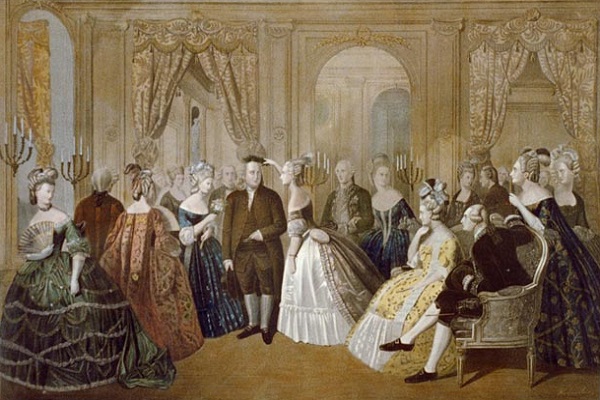
Franklin’s appearance at the Court in Versailles on March 20, 1778. King Louis XVI approved the Treaty of Alliance between France and the United States. Library of Congress.
Le Ray provided not just hospitality but real support. In addition to funding ships and supplying goods to the revolutionaries, Le Ray provided Franklin with a luxurious, fully-staffed mansion at his Passy estate in Paris, allowing Franklin to live comfortably while working on behalf of the American cause, This layer of history makes the château more than a French treasure—it is a quiet ally to revolutionary ideals and a witness to the international currents that helped shape modern democracy.
Princess de Broglie and the Industrial Age
In 1875, Chaumont was purchased by Princess de Broglie, heiress to the Say sugar fortune. Her vision revived the château for a new era. She introduced velvet furnishings, elaborate tapestries, and extensive wood panelling—many of which define the aesthetic visitors enjoy today. On the walls hang 17th-century Aubusson tapestries based on designs by Charles Le Brun.

One highlight was the “Salon d’Automne,” or Autumn Room. It features Napoleon III–era furnishings, including an exceedingly rare “indiscreet”—a triple helicoidal armchair, perfect for shredding reputations in whispered after-dinner conversations.
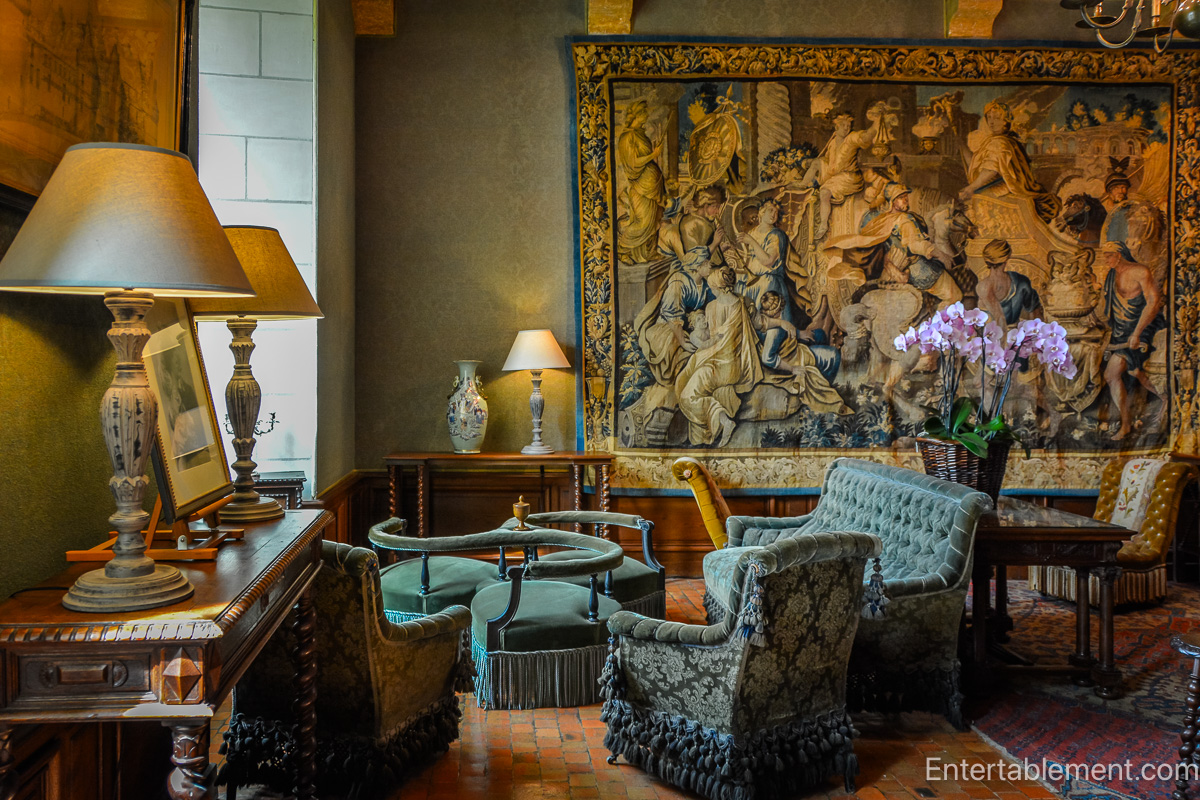
Historic Interiors: Rooms of Splendour and Strategy
Inside, the château dazzles. Though much of its original decor was lost in a 1957 fire, it has been restored, consistent with the archival records of floral yellow fabric.

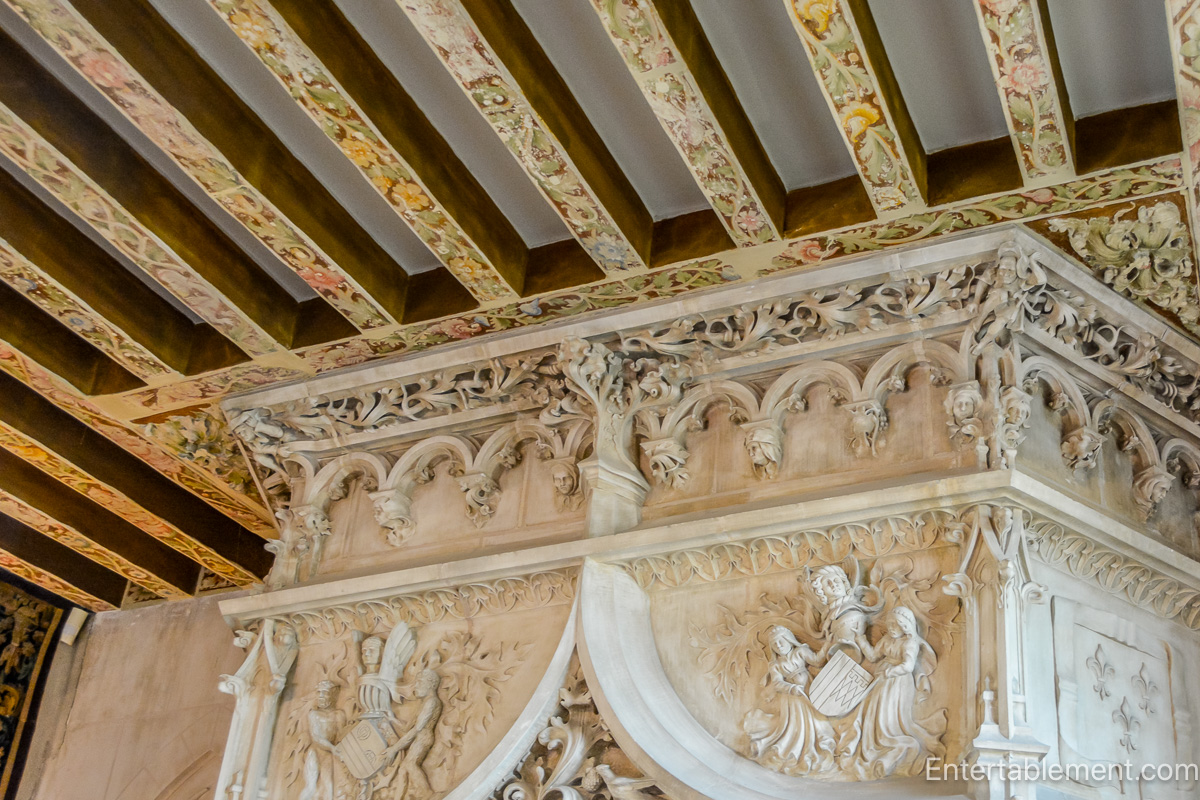
The fireplace features another porcupine!

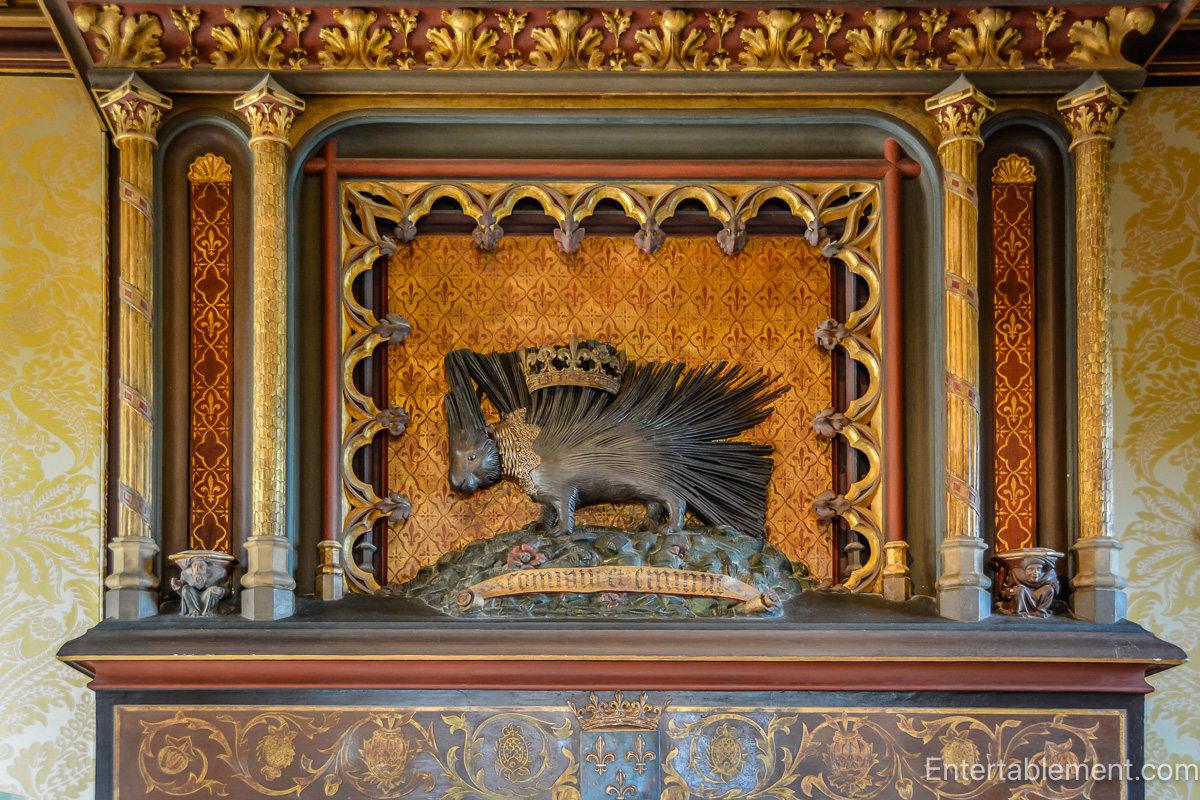

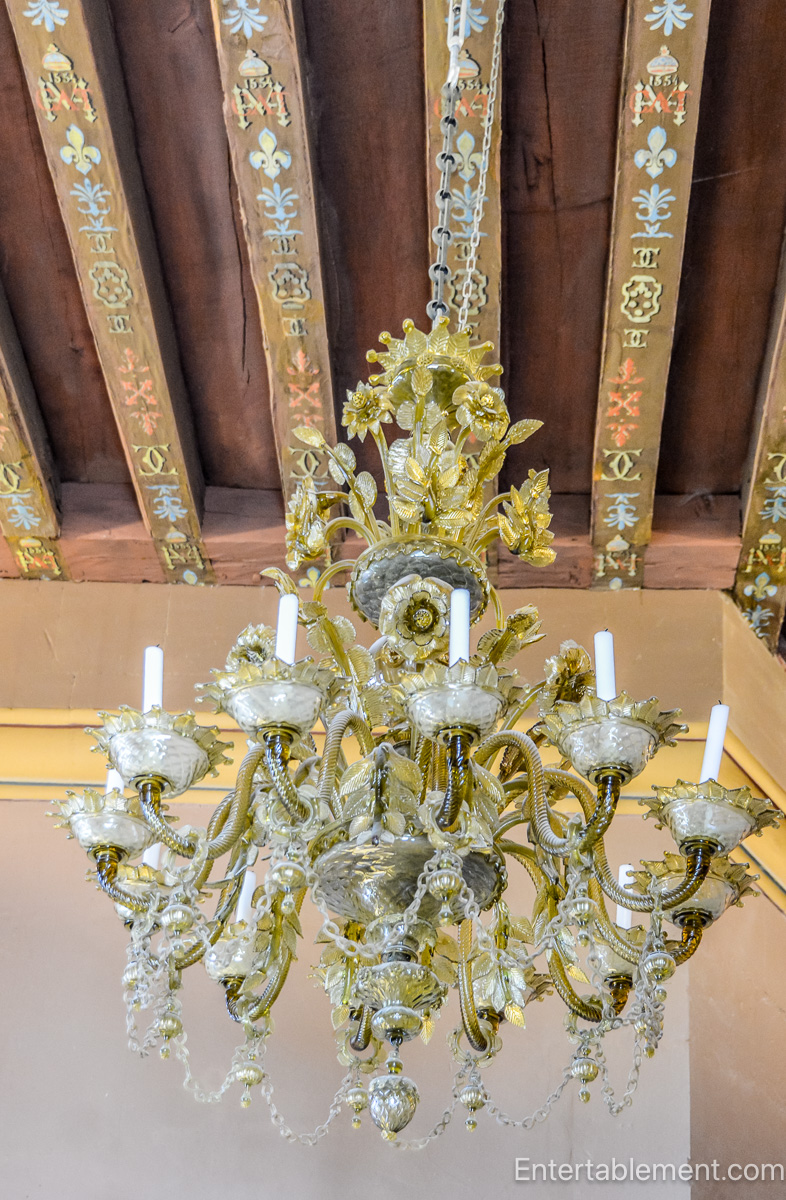
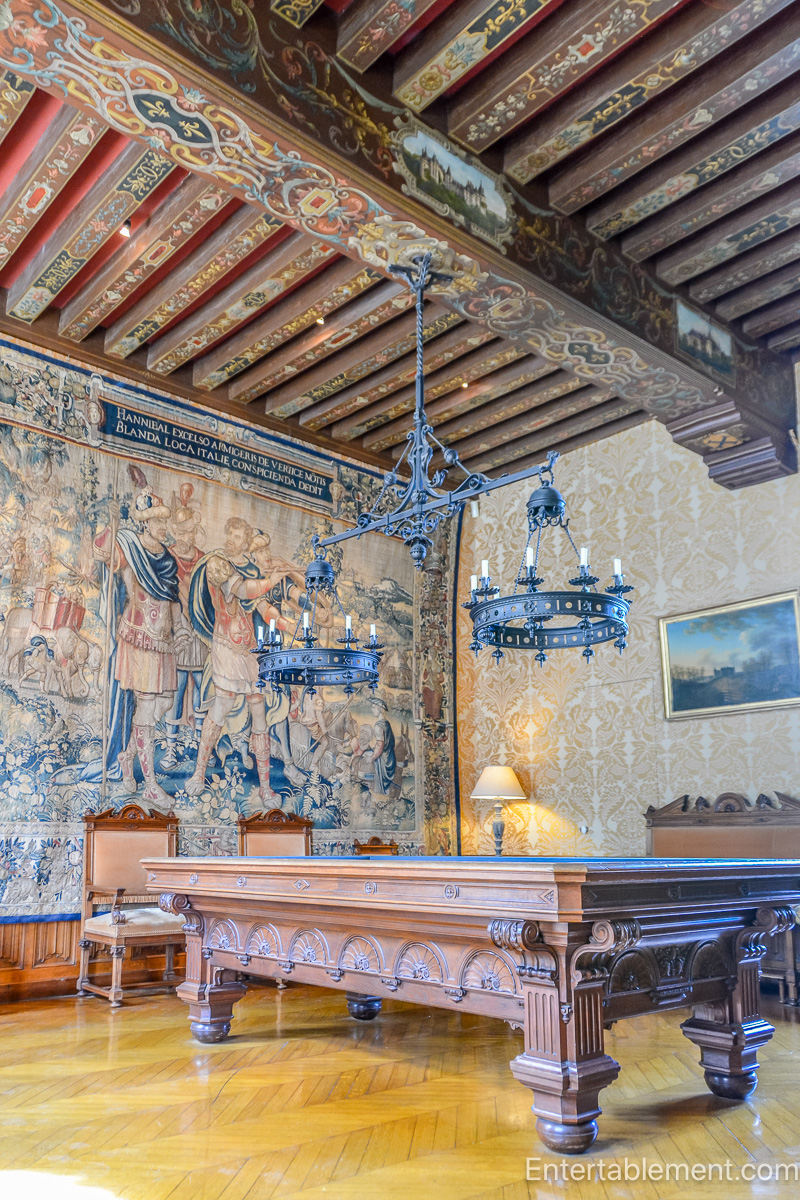
The billiard room has a magnificent painted ceiling…
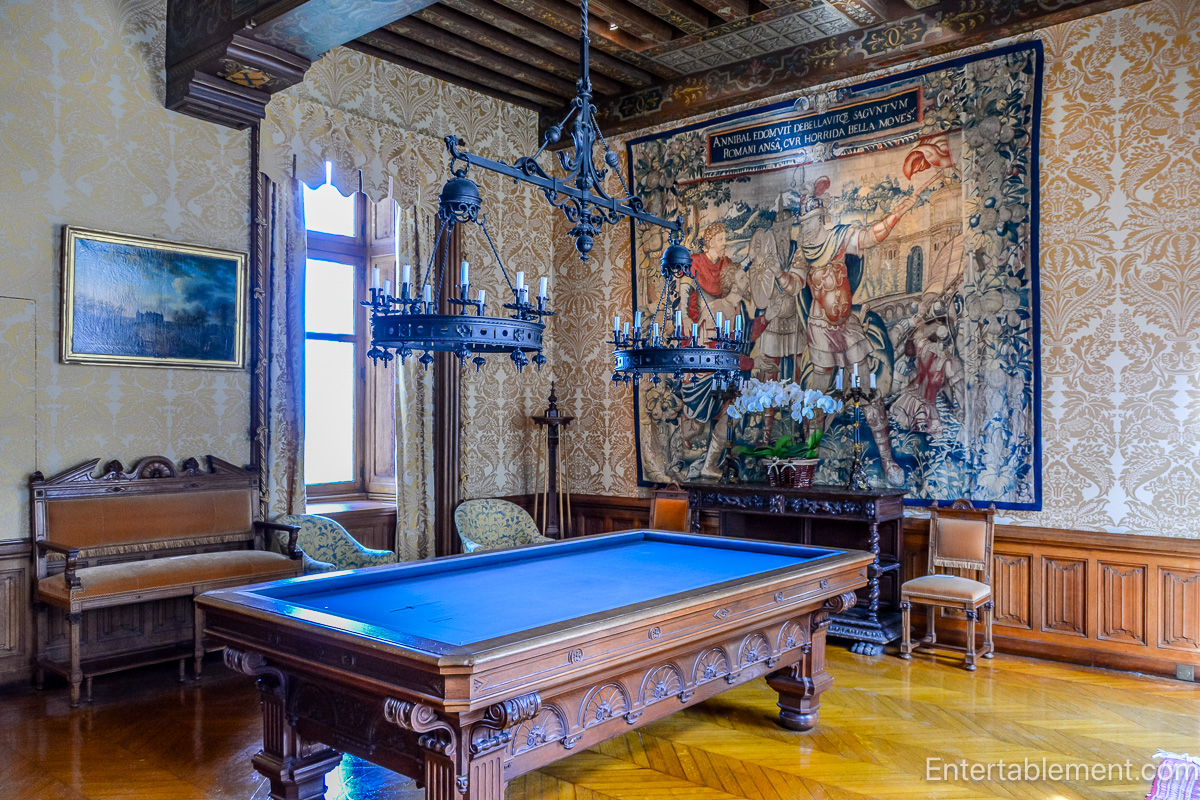
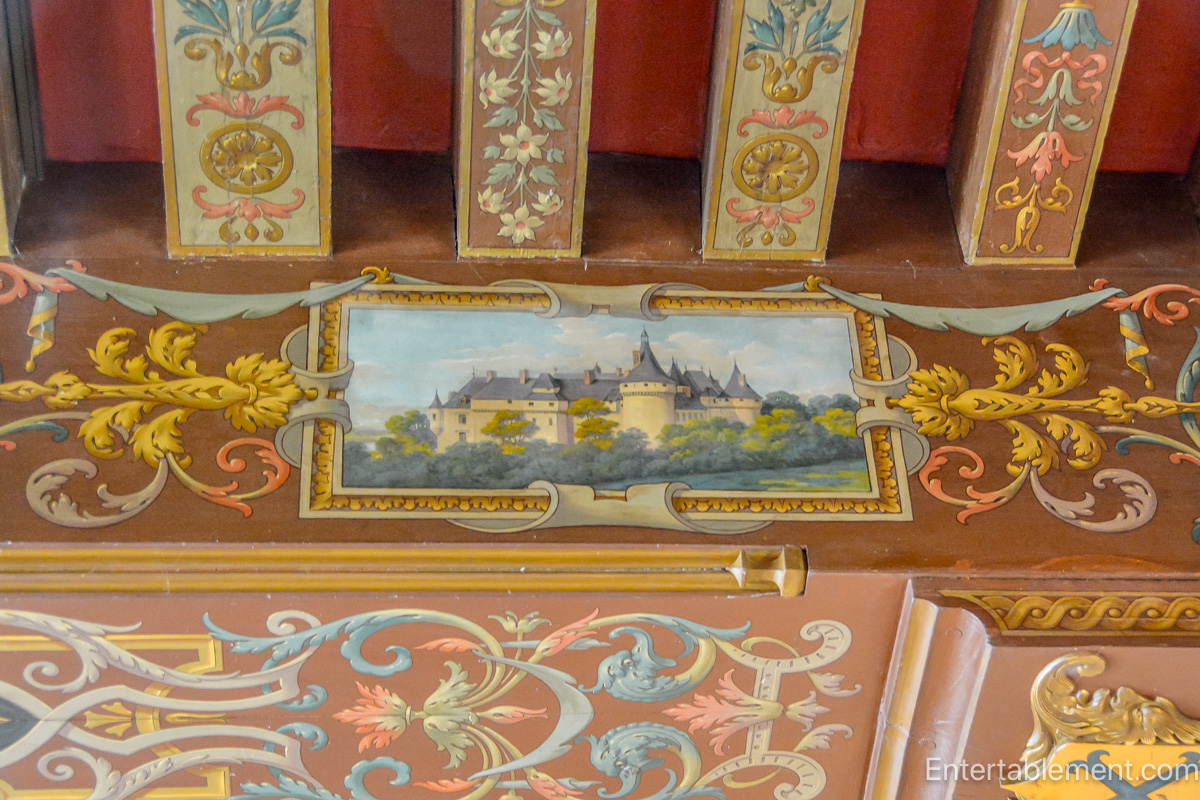
…with painted depictions of Chaumont on the sides of the largest beams.
The inner courtyard…

… and the view from the other side.
One of the most striking transformations occurred in the dining room—once a servant’s kitchen, it was reimagined in 15th- and 16th-century style, complete with underfloor heating, polychrome ceilings, and silver service.
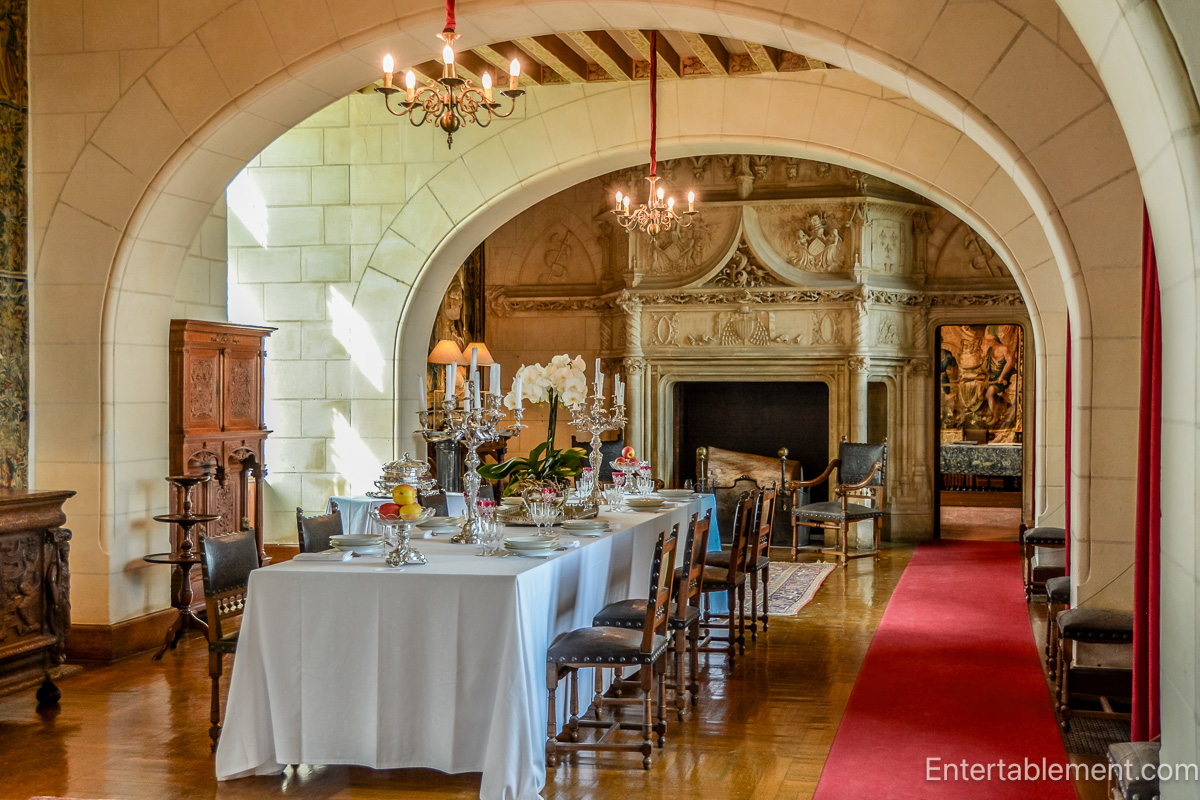
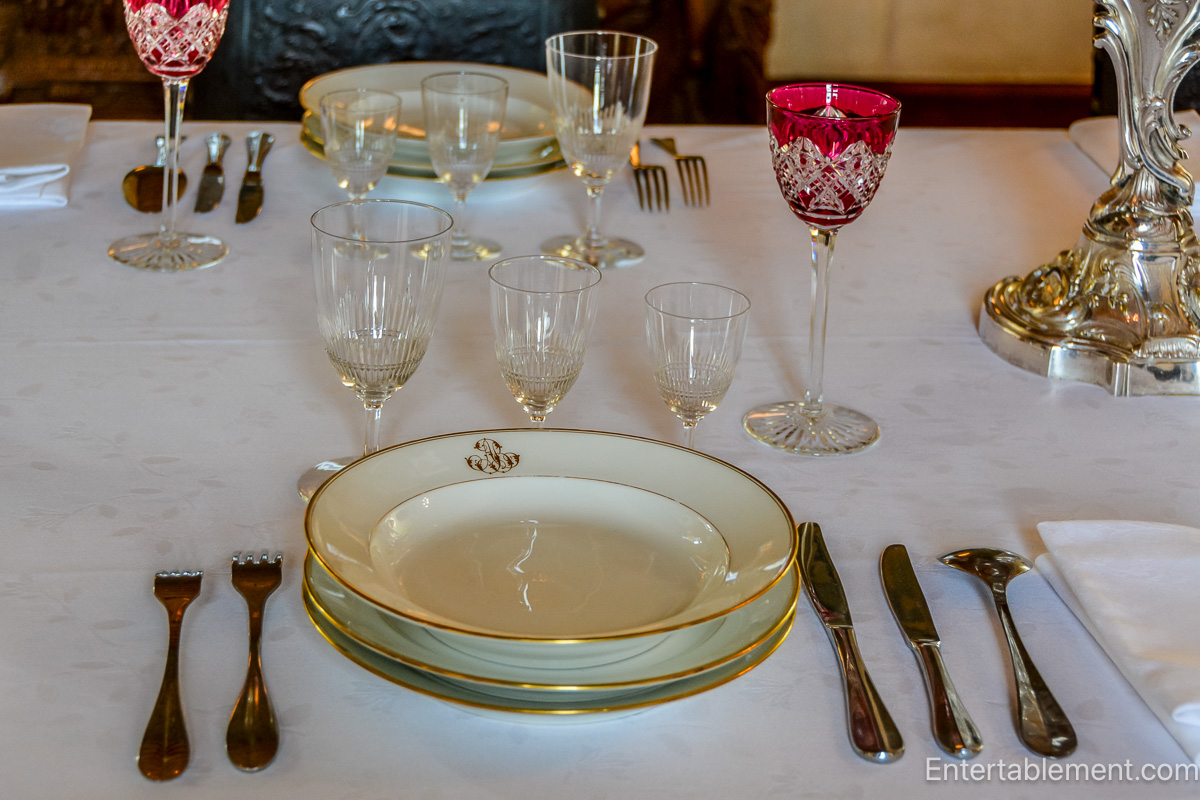

Memoirist Gabriel-Louis Pringué described whimsical dinners hosted by Princess de Broglie, who adored orchids and dramatic flair. One 1913 banquet included Potage à la Reine (Queen’s Soup) and Loire salmon with green sauce. I couldn’t resist looking those up: cream of chicken soup and salmon with a herb sauce.
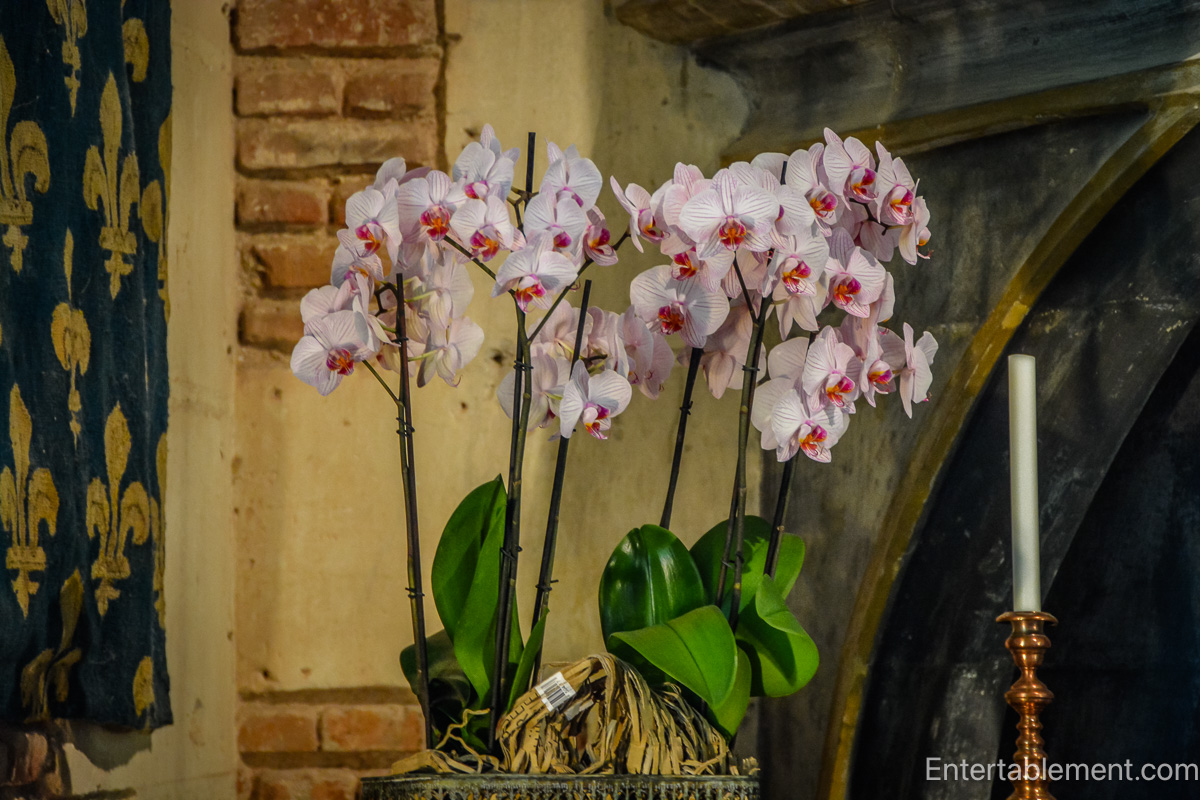
Other rooms evoke different chapters: the Catherine de Medici Room, showcasing a Tournai tapestry.

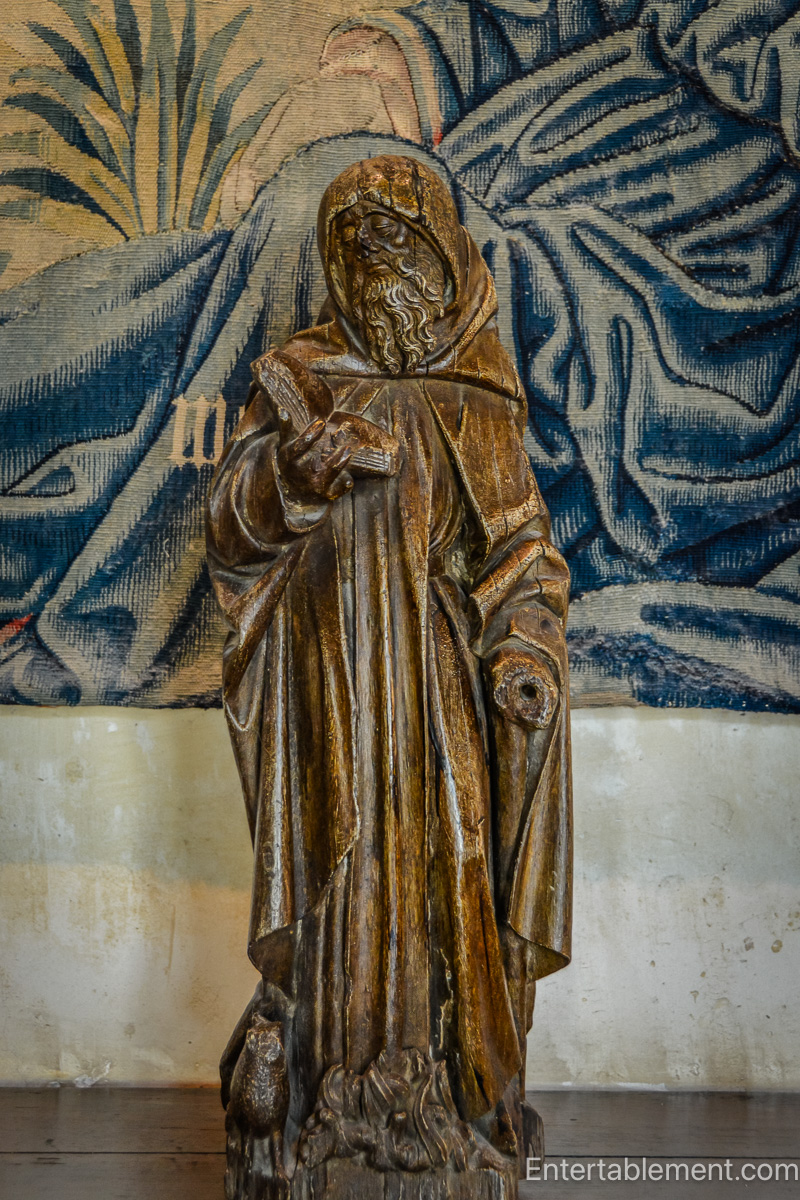
I don’t know the significance of this statue, but I suspect it’s St Francis of Assisi, judging by the animals at his feet.
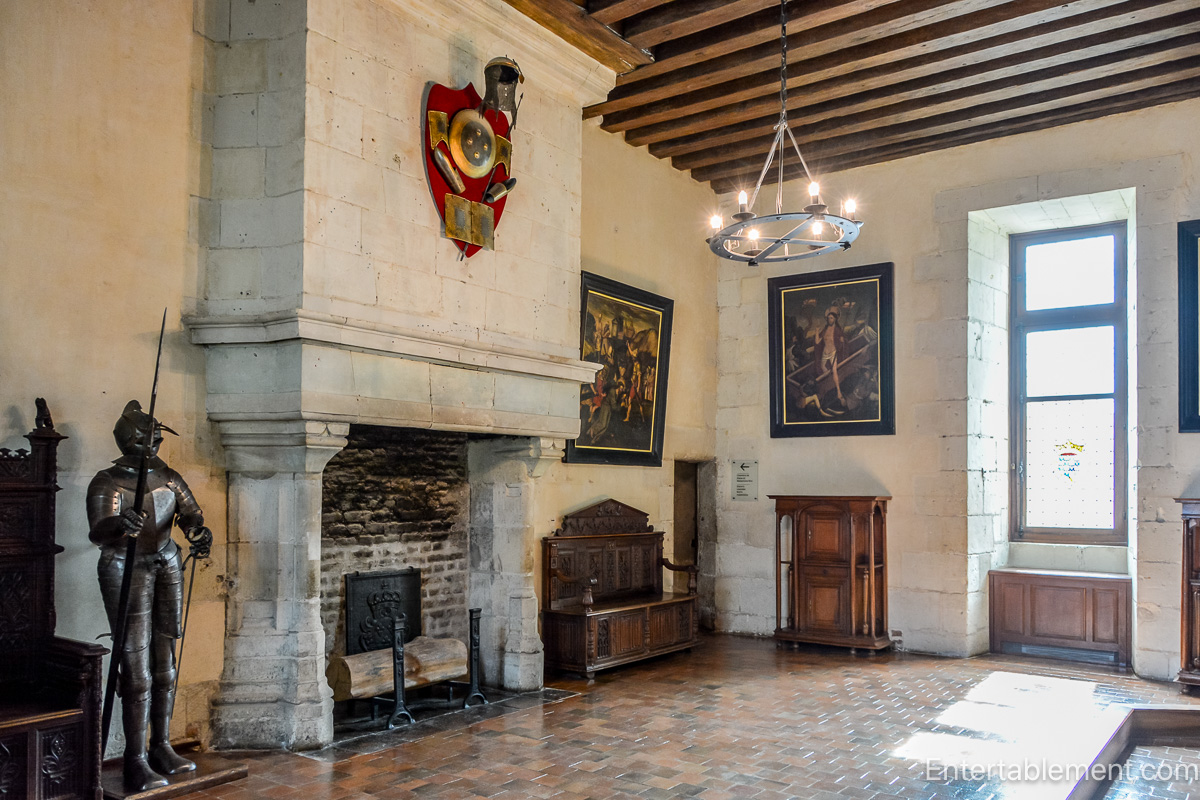
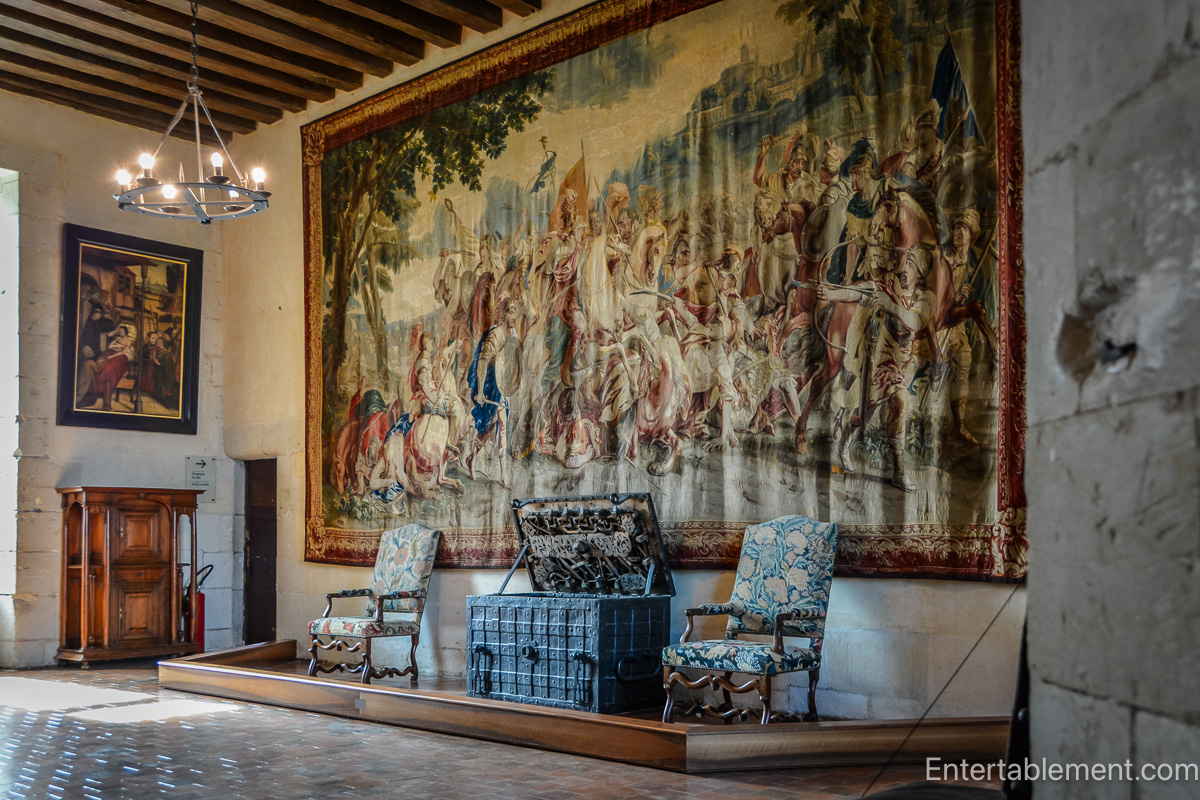
The Guard Room is adorned with Ottoman weapons and armour from the Maharaja of Kapurthala.
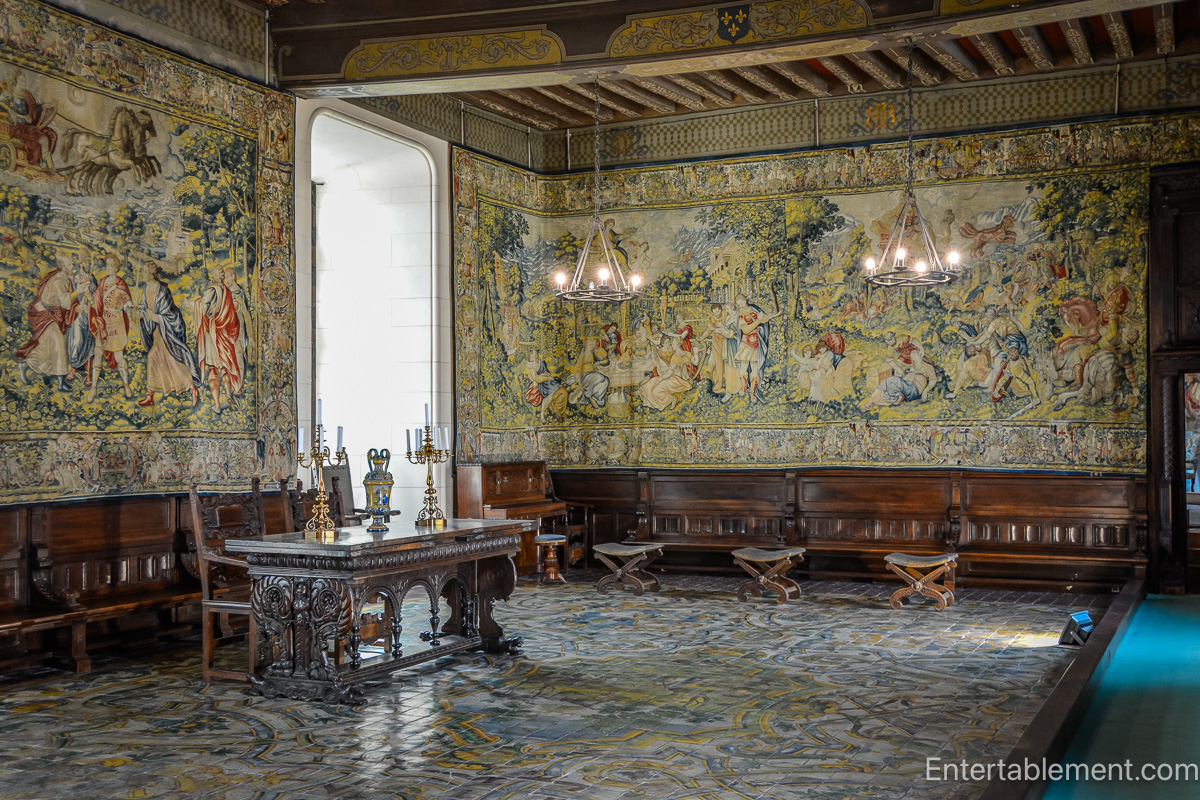
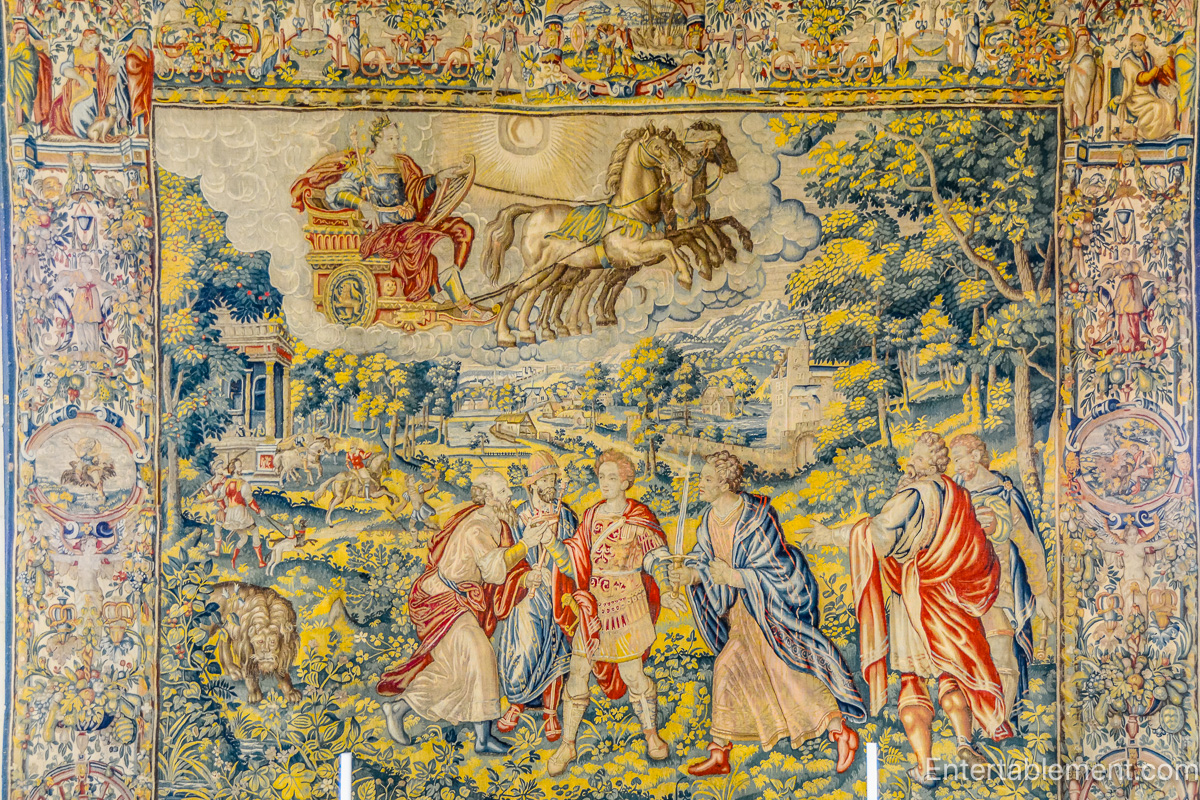
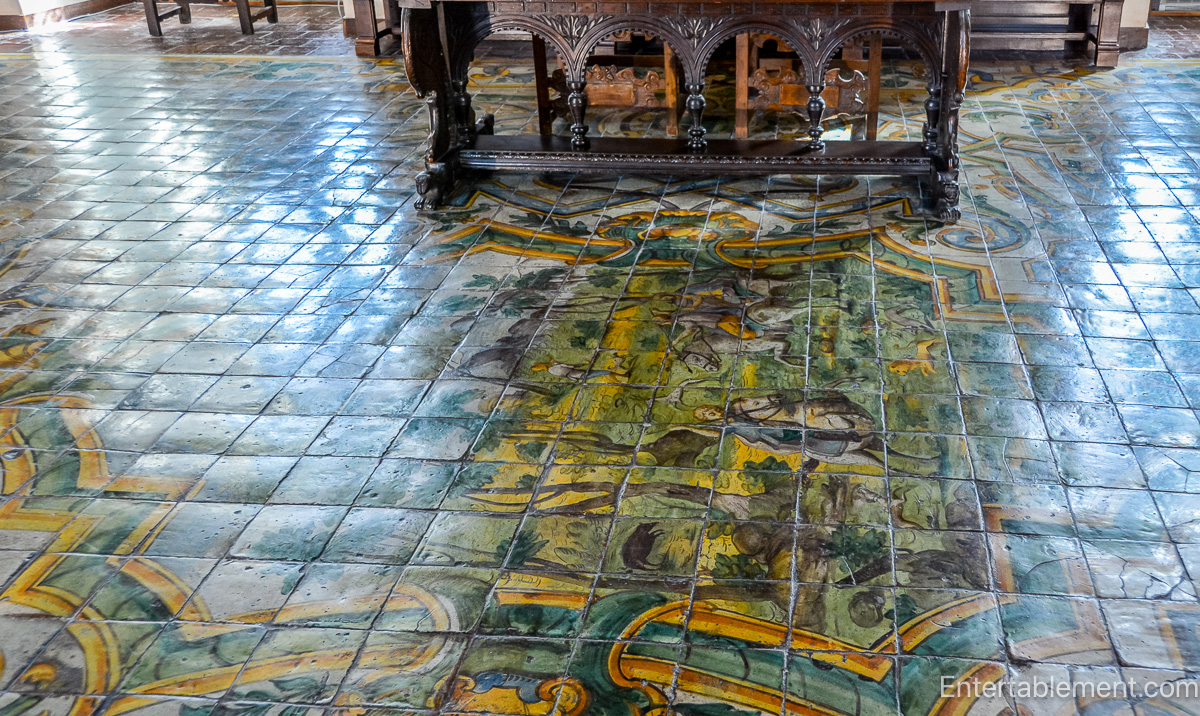
The Council Room, with Brussels tapestries of planetary deities and a tiled floor bargained from a Sicilian palazzo.
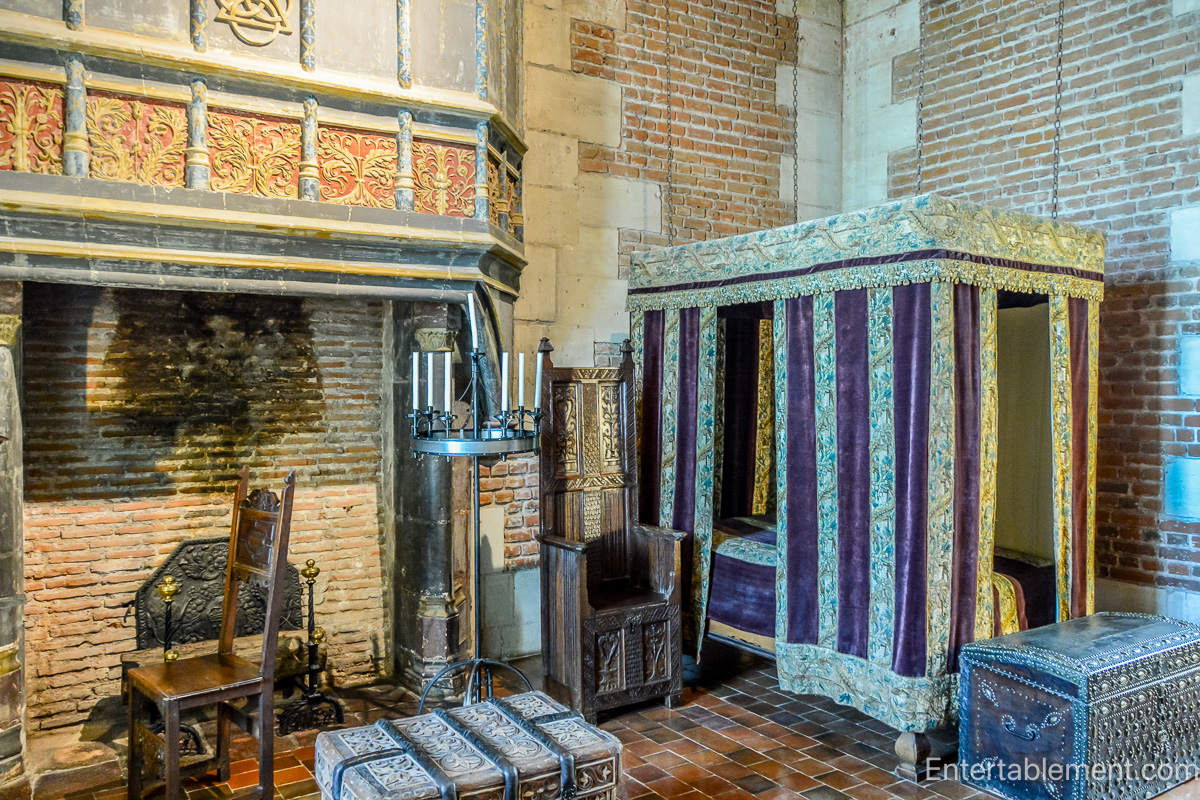
One room—sometimes called the “Ruggieri Room”—was once believed to bear the symbols of Catherine’s astrologer, Cosimo Ruggieri, due to carvings of the Greek letter delta and three moon-like circles. More likely, they evoke Diane de Poitiers and allude to Diane, goddess of the moon.
Stained Glass Stories
Scattered throughout the château, the stained glass windows of Chaumont-sur-Loire are more than decorative flourishes; they are luminous vignettes of history, allegory, and daily life. Many panels feature finely painted Renaissance-style medallions set within intricate lead latticework.
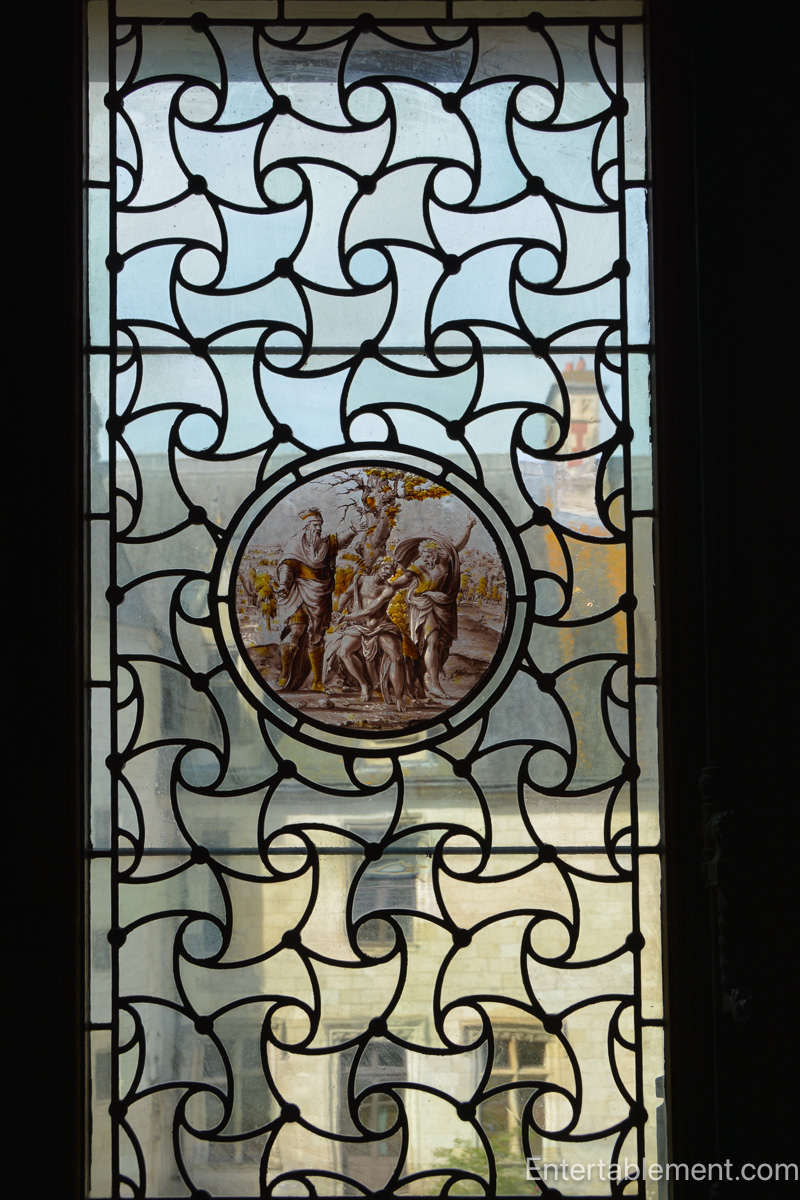
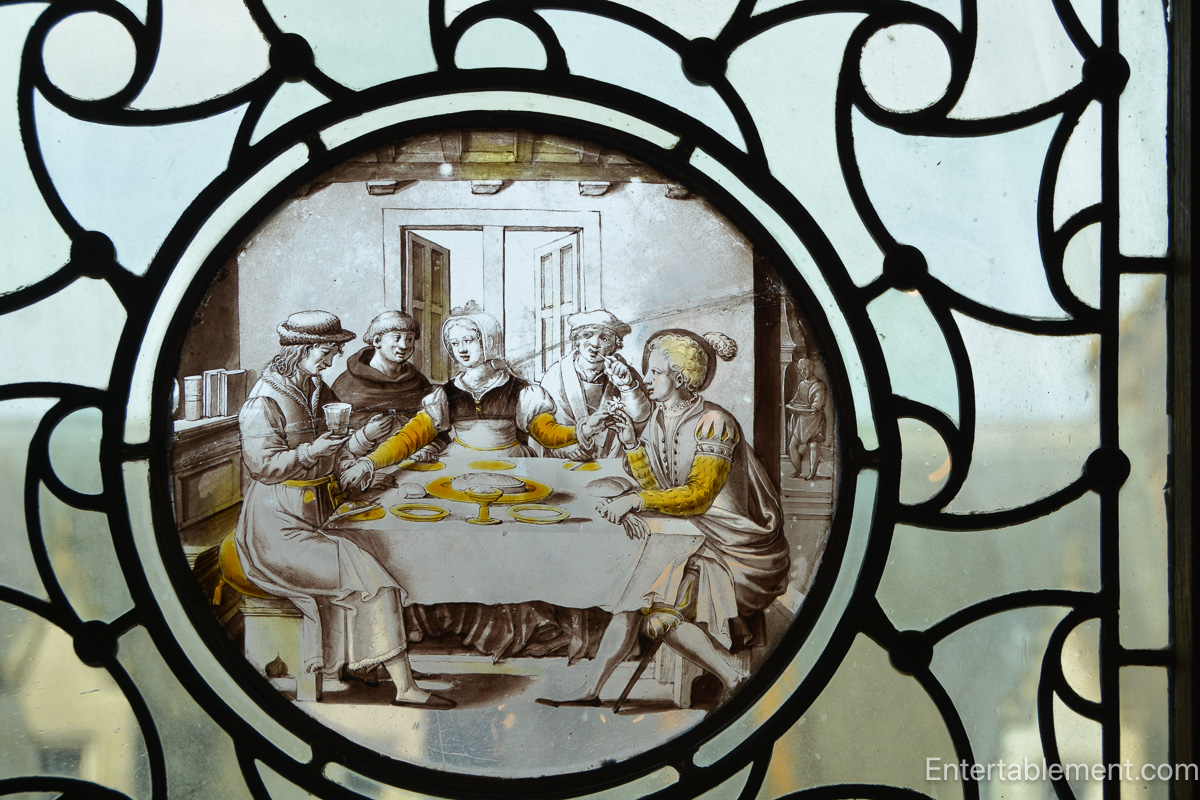
These medallions often depict classical or biblical scenes, like the binding of Isaac, or intimate genre moments such as a group gathered at a tavern table, captured mid-toast.
One particularly charming set includes coats of arms and pastoral scenes, bringing both heraldry and humanity into conversation with light.
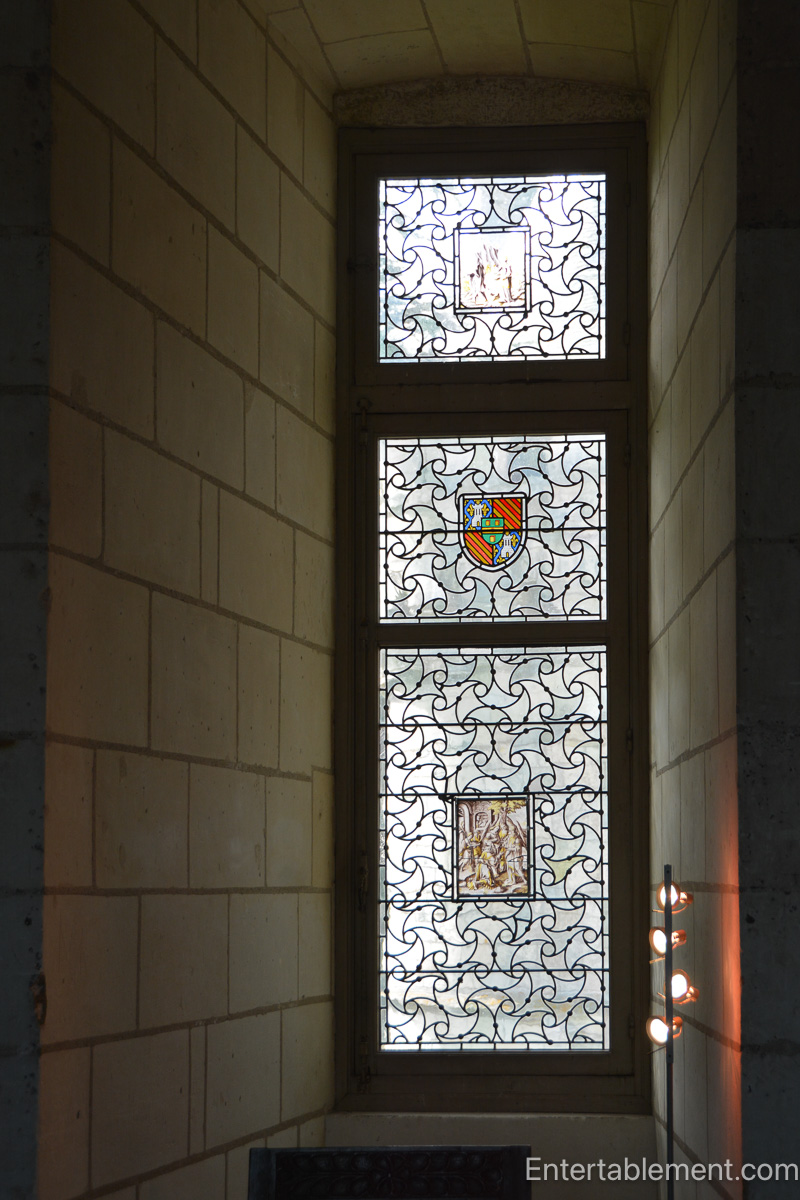
The effect is subtle but captivating: morning sun casting colored shadows on polished floors, and viewers drawn closer to decipher the stories etched in glass.
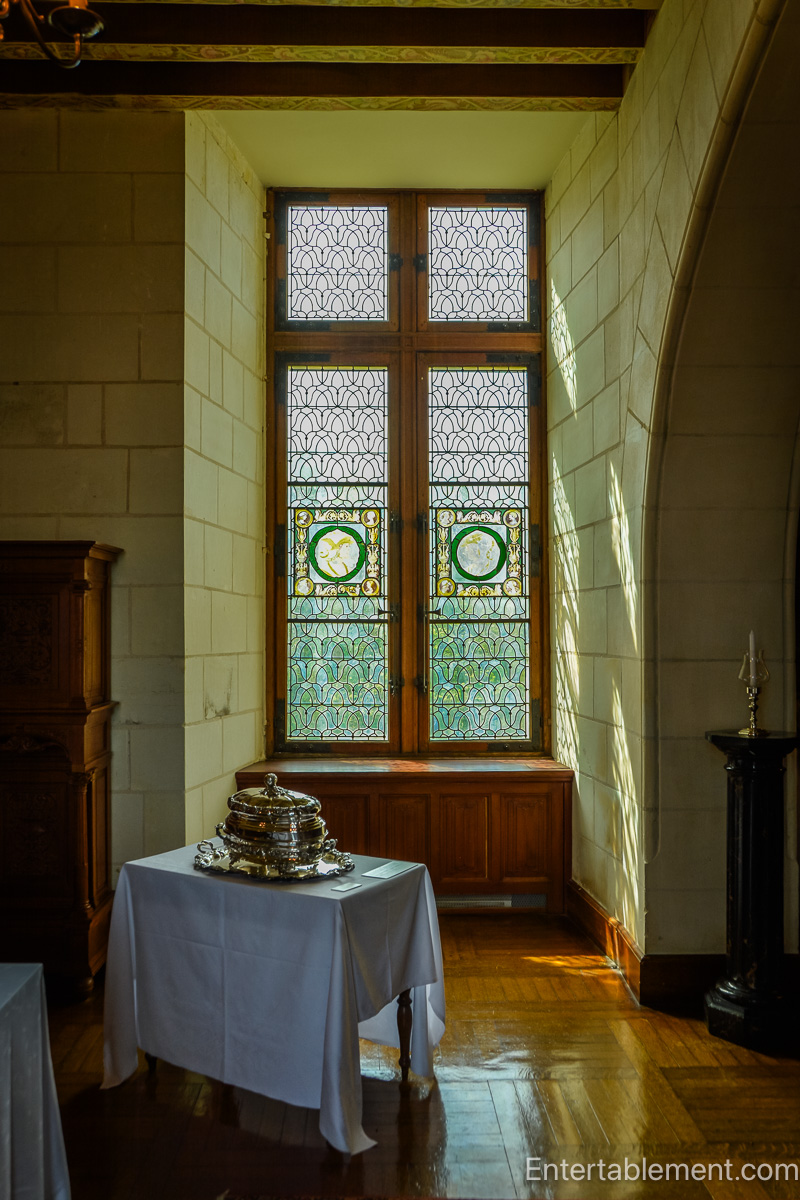
These panels are believed to have been imported or restored during the 19th-century renovations, likely under the direction of Princess de Broglie or her architects, who took great care to blend historical resonance with period-appropriate detail. Their delicate craftsmanship adds a quiet elegance to even the grandest of rooms.
The Noble Stable Block
Just beyond the main residence lie the aristocratic stables, renovated in 1877 under architect Paul-Ernest Sanson.
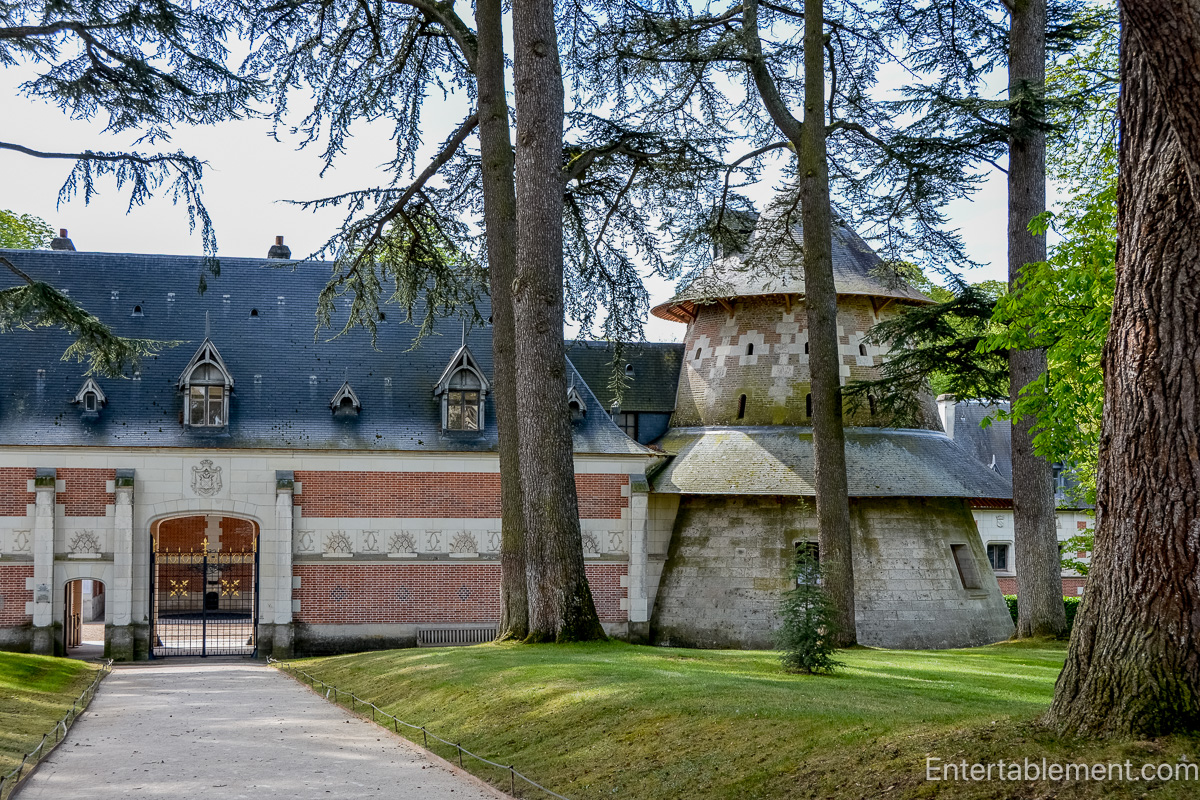
Commissioned by Princess de Broglie, they were among the most modern and luxurious in Europe—fitted with brass fixtures, vaulted red-brick ceilings, and an immaculate tack room.
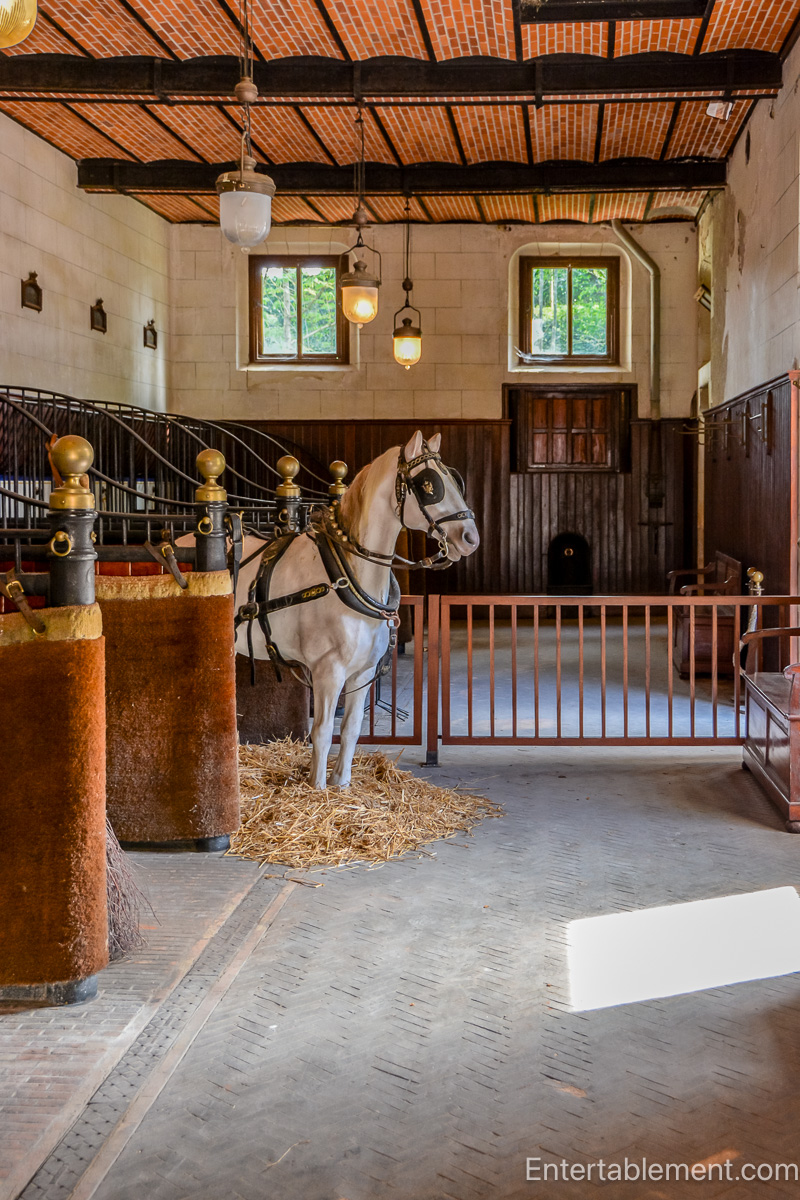
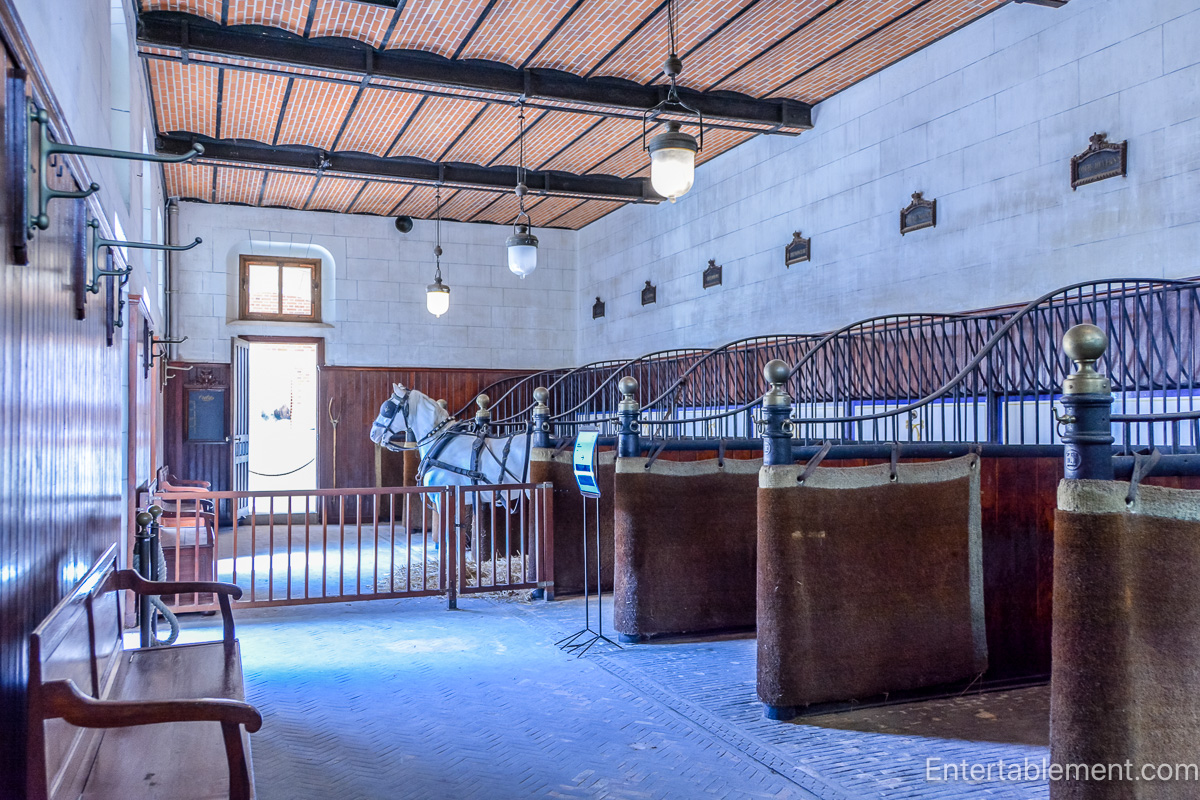
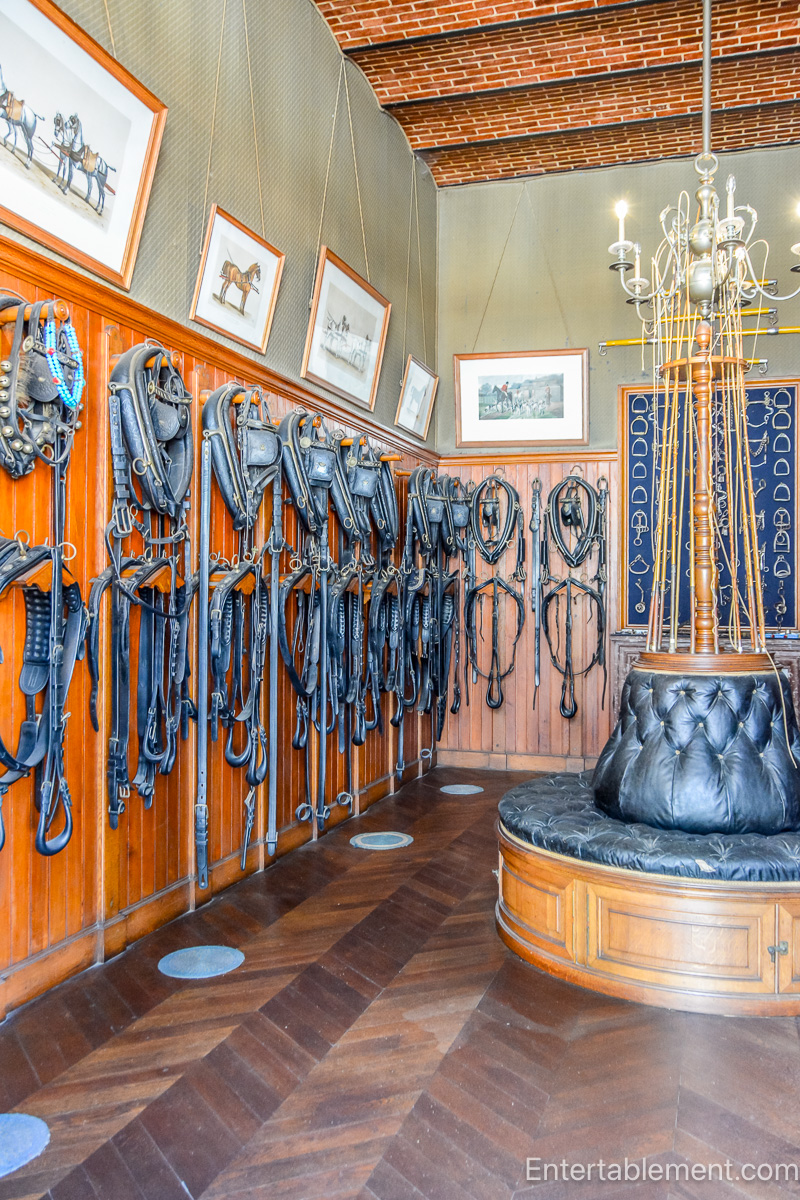
Horsemanship was a key marker of nobility, and both Louis XII and Diane de Poitiers were deeply engaged in equestrian culture. The stables, blending refinement with utility, reflect that enduring tradition.
From Private Estate to Cultural Landmark
In 1938, the château passed into state ownership. Its role evolved from private retreat to public treasure. Today, Chaumont is known especially for the Festival International des Jardins, a dynamic celebration of contemporary garden design.

Art installations now live alongside Gothic vaults and Renaissance fireplaces.

Wicker loungers in the garden? Not just for show—they invite you to see history as a living, changing canvas.

But I couldn’t quite work out what this was in aid of. Ideas, anyone?

A Living Legacy
Château de Chaumont matters not because it’s frozen in time, but because it never has been. It has served as a fortress, royal residence, exile’s refuge, revolutionary waypoint, and cultural incubator.

Its layers—Louis XII’s symbolism, Diane’s elegance, Le Ray’s diplomacy, and de Broglie’s revival—make it a living testament to French reinvention.

Whether you come for the staircase, the avant-garde gardens, or a conversation bench with a view, Chaumont offers more than beauty. It provides a story still being written.
This post is part of the Loire Valley Château Series—a journey through the elegance, history, and charm of France’s most beloved estates.
Explore the full series:
- Château de Chenonceau
- Château de Chambord
- Château de Chaumont
- Château de Cheverny
- Château de Villandry





Thank you very much for your tour of the chateau describing almost every room with your attention to features that tell a story from the past. I have recently been given a bunch of photos from my cousin’s visit in 2022, but she had no descriptors to her photos. I am trying to piece together these photos with the help of your article which I am very grateful for. Now I can lay down some text to each photo in an attempt to edit a short video of her enjoyable visit in 2022! Many thanks again for throwing light into each part of this lovely castle.
You are most welcome, Steve! Good luck with your project. Chaumont is one of the most beautiful of the chateaux in the Loire. Well worth the effort.