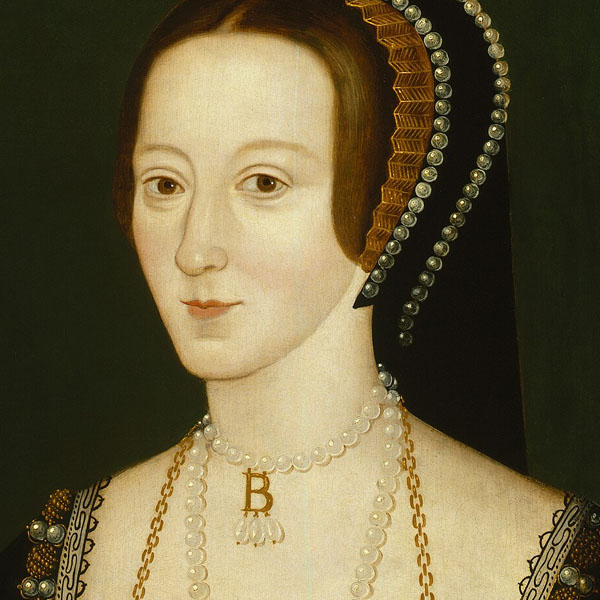
Few historical figures have been as divisive, enigmatic, and consequential as Anne Boleyn. She was not merely the woman for whom Henry VIII broke with Rome but a political strategist, religious reformer, and key architect of the Tudor era. Her meteoric rise and shocking downfall were not just personal tragedies—they reshaped the course of English history.
This deep dive explores her ascent, the political intrigues that led to her execution, and the enduring myths surrounding her.
The Rise of Anne Boleyn: From Lady-in-Waiting to Queen
Anne’s journey to power was far from conventional. Unlike many of Henry VIII’s queens, she was not a foreign princess but the daughter of a well-connected, ambitious family:
- Born c. 1501, Anne was educated in the Netherlands and France, gaining continental sophistication and courtly skills.
- She served as lady-in-waiting to Queen Claude of France, where she was exposed to Renaissance humanism and reformist religious ideas.
- Upon returning to England, she caught the eye of Henry VIII but refused to become his mistress, insisting on marriage.
Her intelligence, charm, and refusal to submit to convention made her irresistible and infuriating to Henry, setting the stage for one of the most seismic shifts in European history—the English Reformation.
The Queen Who Changed Everything
Anne was not just a pawn in Henry’s desires; she was an active player in shaping religious and political policy:
- She championed reformist ideals, favouring Protestant-leaning theologians and helping bring William Tyndale’s writings to Henry’s attention.
- She was instrumental in Henry’s break with the Catholic Church, which led to the Dissolution of the Monasteries and the establishment of the Church of England.
- As queen, she surrounded herself with progressive courtiers and supported charitable causes.
However, her most significant political weapon—her ability to captivate Henry—became her greatest weakness when she failed to produce a male heir.
While history often states that Anne never bore a son, she did have multiple pregnancies. It is believed that she miscarried at least twice, and one of those lost children may have been a male heir, further fueling Henry’s frustration. Some historians speculate that Henry himself may have been the cause, either due to syphilis (a long-rumoured but unproven theory) or, more plausibly, a chronic leg wound from a jousting accident that may have led to a deep bone infection, impacting his overall health and fertility.
The Fall: Betrayal, Scandal, and Execution
Anne’s downfall was sudden, brutal, and meticulously orchestrated:
- By 1536, after three short years of marriage, Henry was frustrated by Anne’s inability to bear a son; her only surviving child was Elizabeth I.
- Jane Seymour, Anne’s lady-in-waiting, had caught Henry’s attention, making Anne’s removal convenient and urgent.
- Henry’s chief minister, Thomas Cromwell, turned against Anne, engineering charges of adultery, incest, and treason.
- Five men, including Anne’s brother, George Boleyn, were executed alongside her, accused of being her lovers.
- On May 19, 1536, Anne was beheaded by a French swordsman, maintaining her innocence to the end.
Her death marked the first execution of an English queen and sent a chilling message to future consorts—no one was safe from Henry’s wrath.
Anne’s Enduring Legacy
Despite her violent end, Anne’s influence lived on:
- Her daughter, Elizabeth I, became one of England’s greatest monarchs, proving Anne’s dynastic importance.
- She reshaped the role of queenship, demonstrating that a queen could be politically astute and independent.
- She remains a cultural icon, inspiring countless books, films, and historical debates.
Anne Boleyn was not simply a tragic victim—she was a woman ahead of her time whose ambition and intelligence changed the course of English history forever.