
This essay is part of The Continental Thread — a series exploring how authority, culture, and daily life reorganized themselves as Europe moved from Roman order to the modern world.
For a long time, I thought of what followed Rome’s departure from England as collapse — full stop. The so-called “Dark Ages.” Civilization slipping backwards into mud and thatch as roads were abandoned and stonemasonry was forgotten. That view turns out to be more Roman nostalgia than historical truth.
Rome didn’t disappear everywhere. In Italy, it lingered, and flourished, though authority decentralized into city states. It reshaped itself in Gaul (later France). Law, language, and stonework carried on there. But in Britain, something different happened.
The legions left and administration thinned as big buildings fell silent. Life moved outward into timber halls, fields, kinship networks, and local rule.
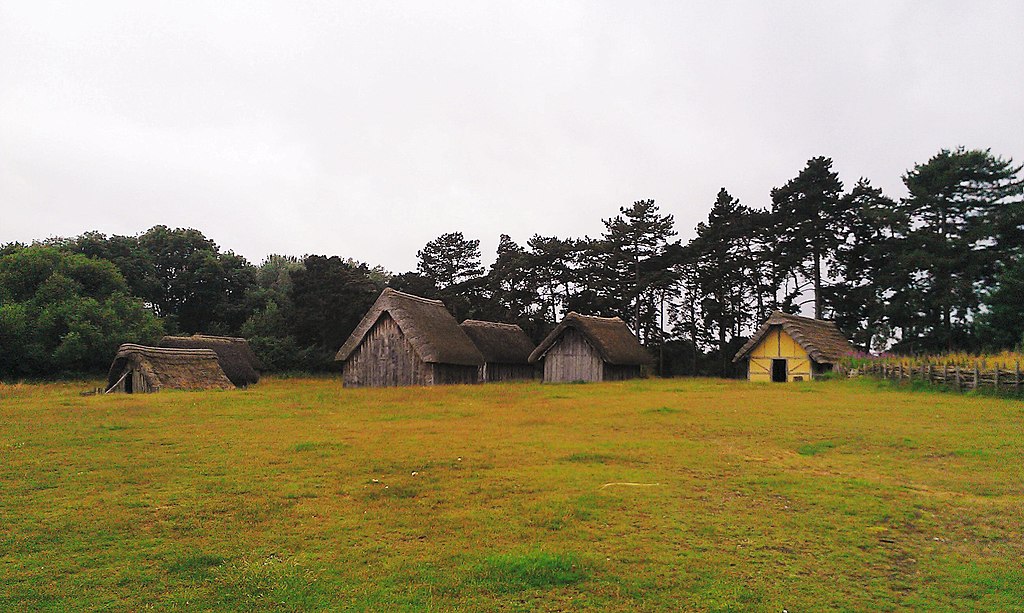
West Stowe Anglo Saxon Village (Reconstructed)
There was less marble and more weather. And yet, this was not chaos. What was lost was scale. No more imperial logistics, vast grain shipments, or centralized kitchens feeding cities. Food became local again: seasonal and repetitive. Lots of broth, bread and ale. Survival first.
Decisions returned to households, and every choice resumed weight: what to plant, whom to trust, what to store, and when to move. Scarcity wasn’t just hunger; it was uncertainty.
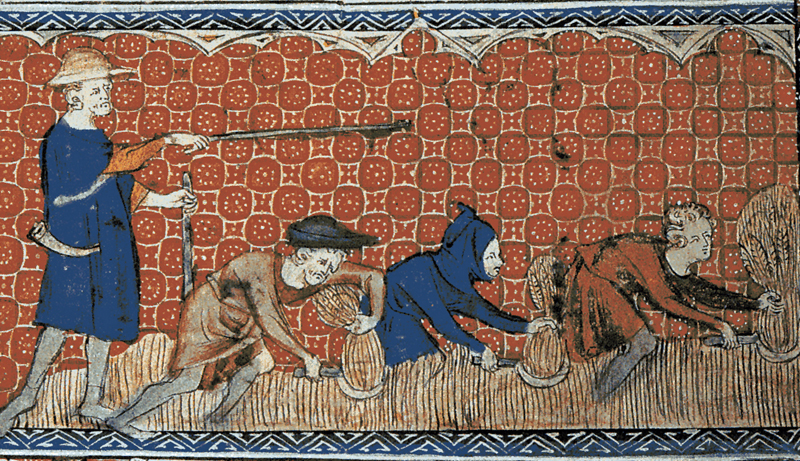
Reeves and Serfs in Anglo Saxon Britain
As Roman power thinned, along came the Roman Church with its alternative authority. Not political in the old sense, but pervasive. And with the Church came the monasteries.

On the surface, they were religious houses. In practice, they were experiments in living with uncertainty. Their structure and cadence were also training grounds for obedience—laboratories for living under a rule that was moral rather than civic, internal rather than imposed.
The Rule of St Benedict formalizes this with remarkable practicality: pray and work. Eat together, sleep at set hours and obey the rhythm even when you don’t feel like it. Holiness here is not ecstatic; it is repetitive. The point is reliability over transcendence. Seen this way, monasteries were less about retreating from the world that replaced Rome, and more about how the world reorganized itself when Rome outgrew itself.

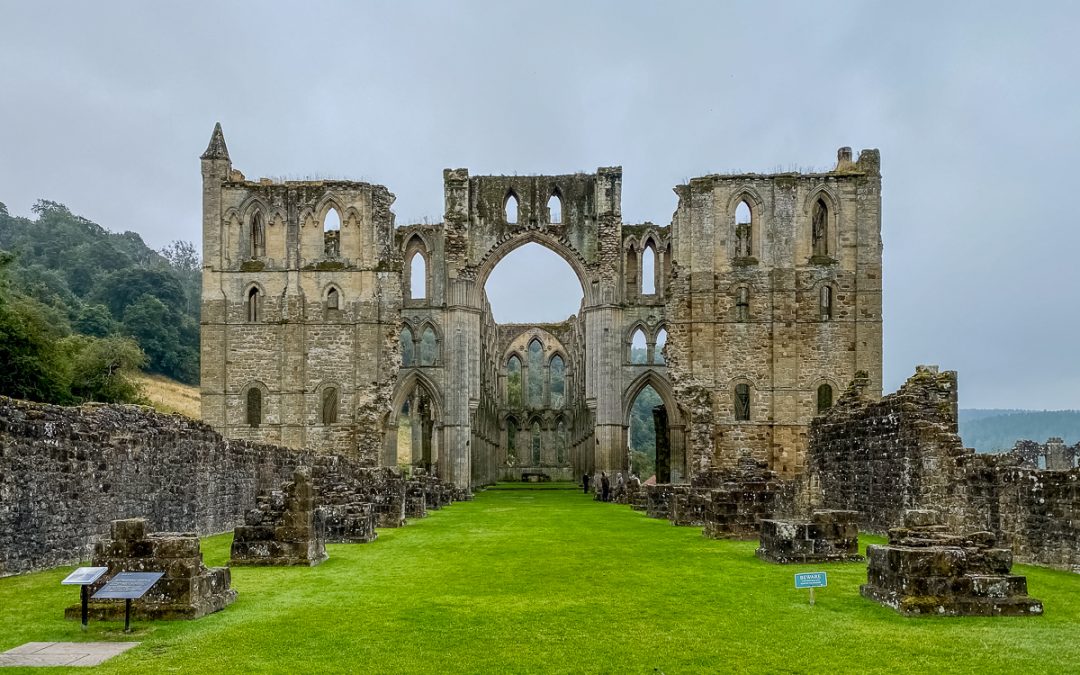
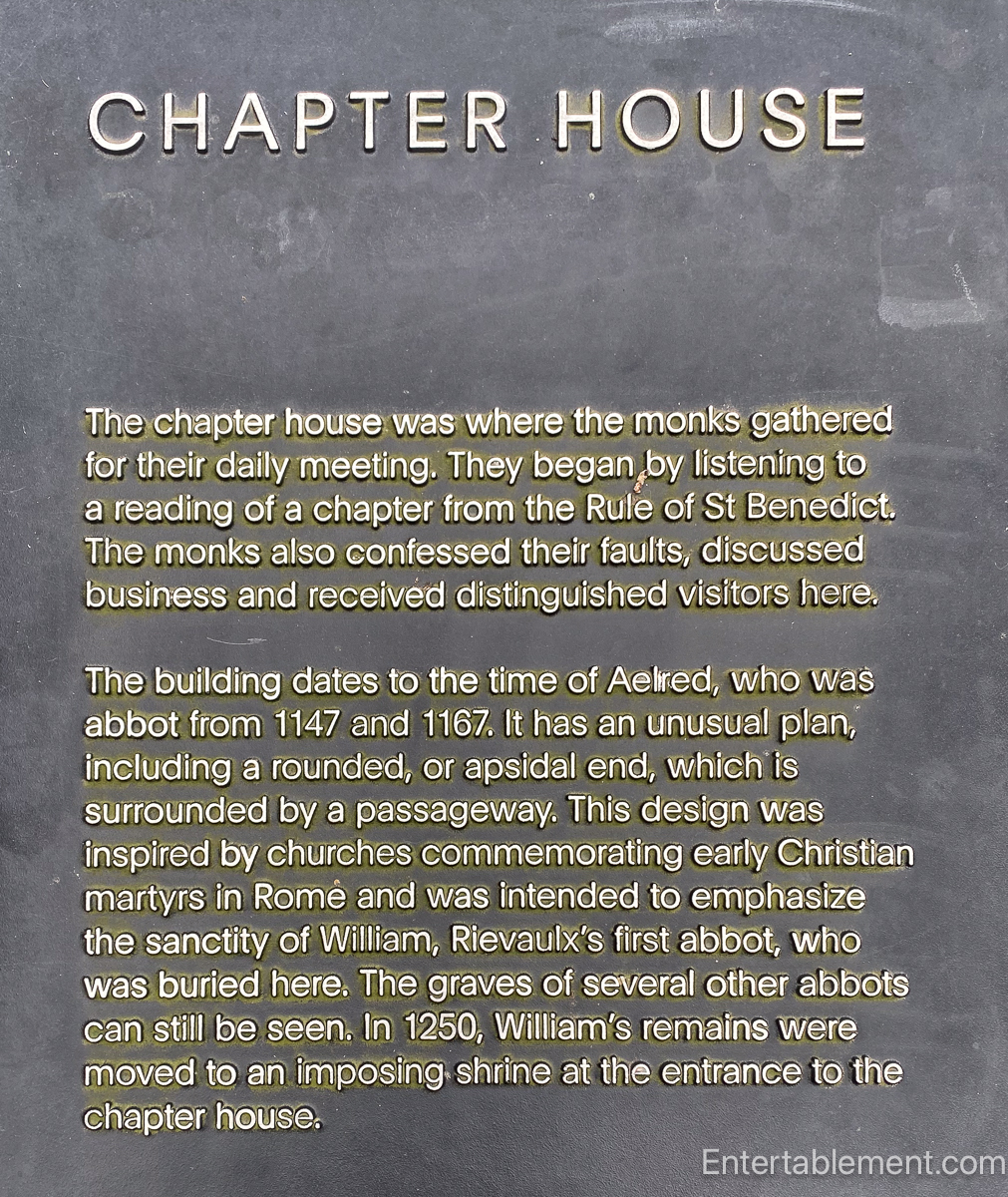
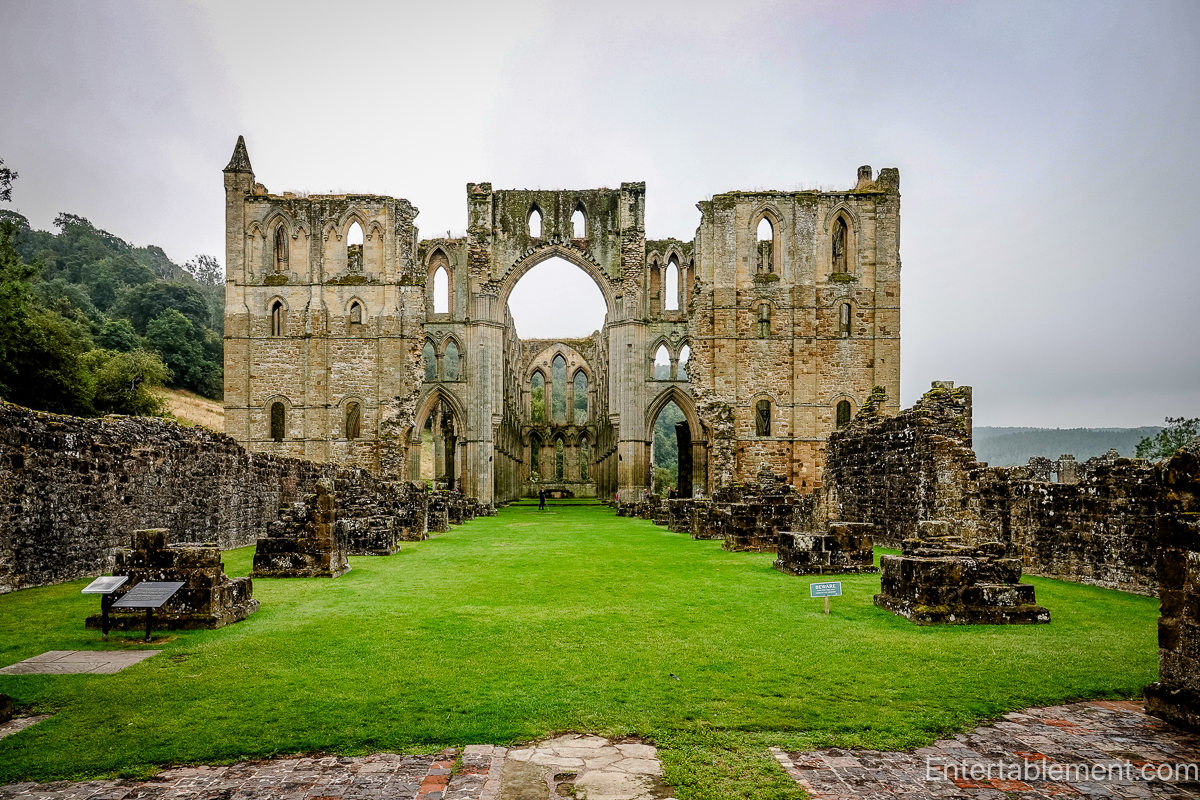
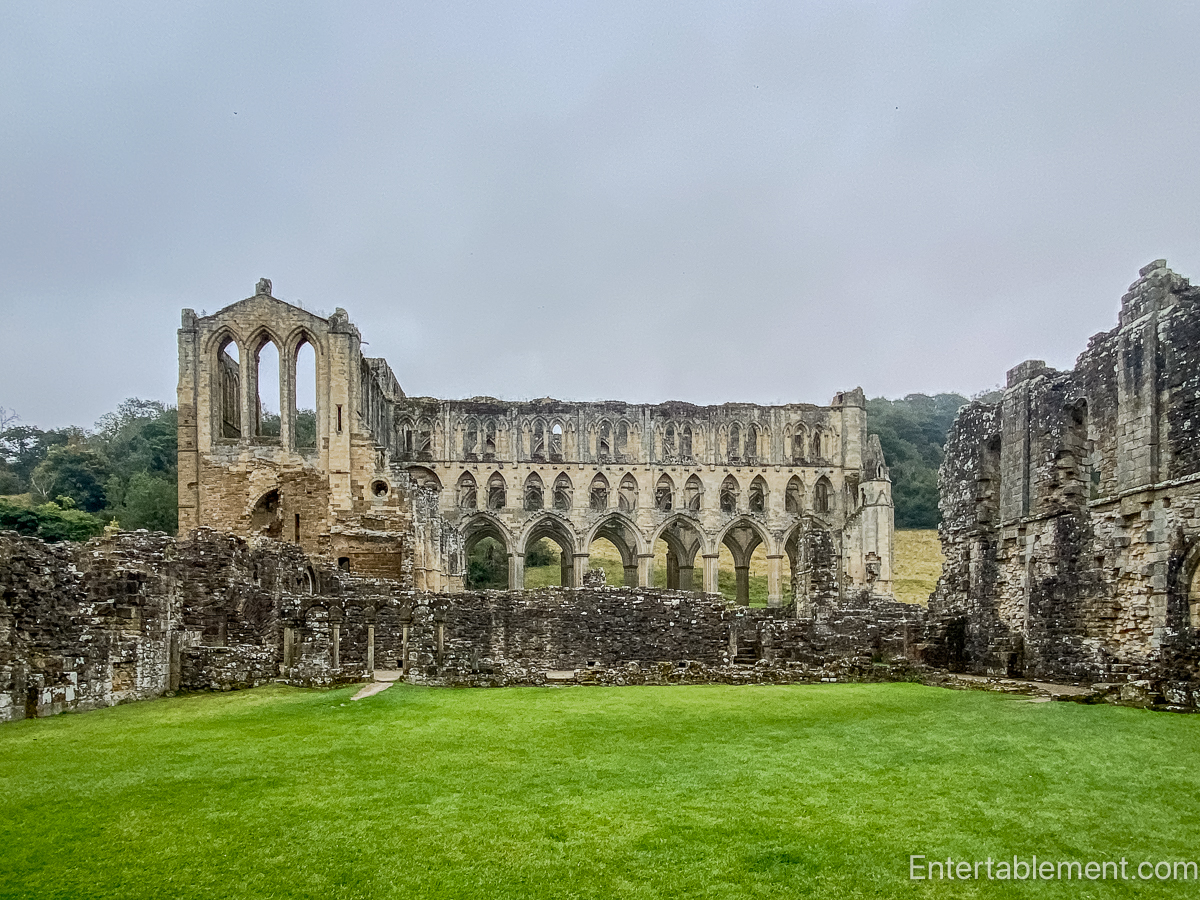
Standing at places like Rievaulx Abbey, you feel this viscerally. You can trace the dormitory, the refectory, the cloister — life arranged for endurance. This structural arrangement was repeated countless times as Benedictine and Augustinian monasteries sprang up around the country.
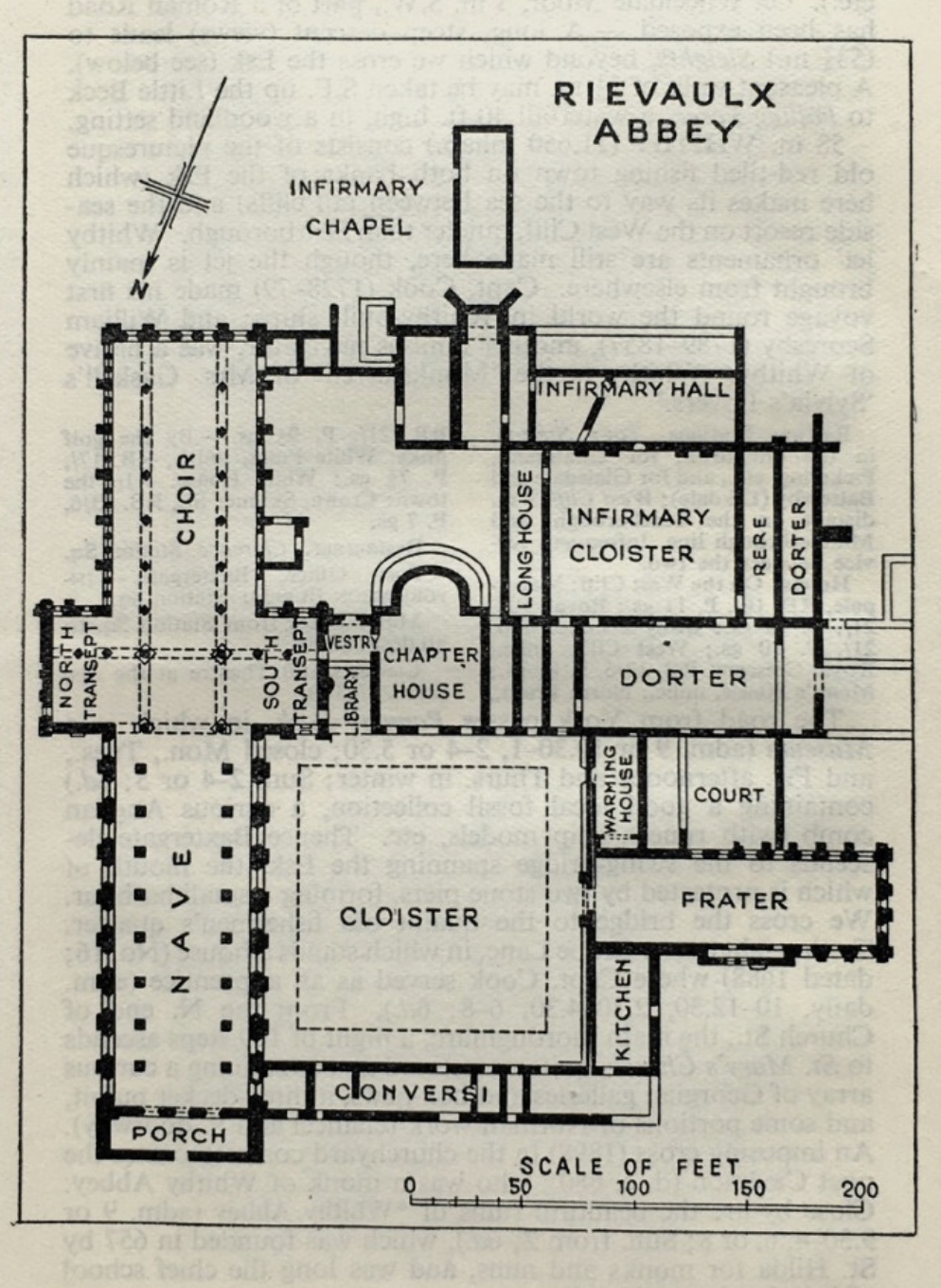
Rievaulx Abbey
But the Roman Church had competition in the already established Celtic churches. The Celtic tradition was flexible, rooted in place, and happily adapted to local rhythms — including, inconveniently, celebrating Easter on different dates.
The Synod of Whitby, held in 664 CE, is usually described as a theological argument between the Roman and Celtic churches. In practice, it marked a familiar turning point: what had worked perfectly well when life was local had begun to fray once things got bigger.

Whitby Abbey
Roman Christianity offered something less charming but more practical — a shared calendar, shared authority, and a way of keeping everyone on the same page, on the same Sunday. King Oswiu’s choice of Rome wasn’t so much a conversion as an act of coordination. Like agreeing on standard time once trains arrived, it marked the moment when looseness stopped being endearing and started being a problem — and when coherence, for better or worse, won the day.
In retrospect, the post-Roman period is often told as decisive. Conversion replaced paganism. Authority consolidated. Order returned. The story, smoothed by time, feels almost inevitable. But lived forward, nothing felt settled. Beliefs overlapped while practices coexisted. Old gods lingered in habit long after they disappeared from official stories.

Saint Aidan, founder of Lindisfarne Priory.
Monastic life didn’t replace the world; it threaded itself unevenly through it — sometimes welcomed, sometimes tolerated, sometimes resented. Authority was shifting, but it wasn’t secure. And that uncertainty matters, because it explains what comes next.
The Viking period is often treated as a dramatic interruption, but in practice it fits the same pattern. Raiding was terrifying, especially for exposed communities like Lindisfarne, yet it was brief compared to what followed. Settlement, intermarriage, and adaptation came quickly.

Lindisfarne
In England, this produced a patchwork rather than a rupture: the North and East shaped by the Danelaw, the West and South remaining largely Anglo-Saxon, with different legal customs operating side by side. What held was not ideology, but habit — farming, trade, marriage, and local obligation. Authority remained dispersed, law was regional, and life went on. It wasn’t elegant or uniform, but it worked well enough. In a world no longer held together by Rome, looseness proved resilient.
Rome didn’t fall so much as pull back — unevenly. And where it withdrew, people adapted. Not glamorously or monumentally, but nonetheless, effectively. The Angles, Saxons, Jutes, and Vikings were not illiterate barbarians scratching in the dirt. Governance continued, just not in the forum. Law codes existed, trade persisted, and literacy survived.
When William the Conqueror arrived centuries later, the administrative groundwork was already there. It may have been loose and local, but it made the Domesday Book possible. You don’t audit a kingdom from scratch.
Let’s now take a look at some of the surviving sites in England and Scotland.
Fountains Abbey is the granddaddy of the bunch. It was the largest Cistercian abbey in England and among the largest monastic complexes in Europe.
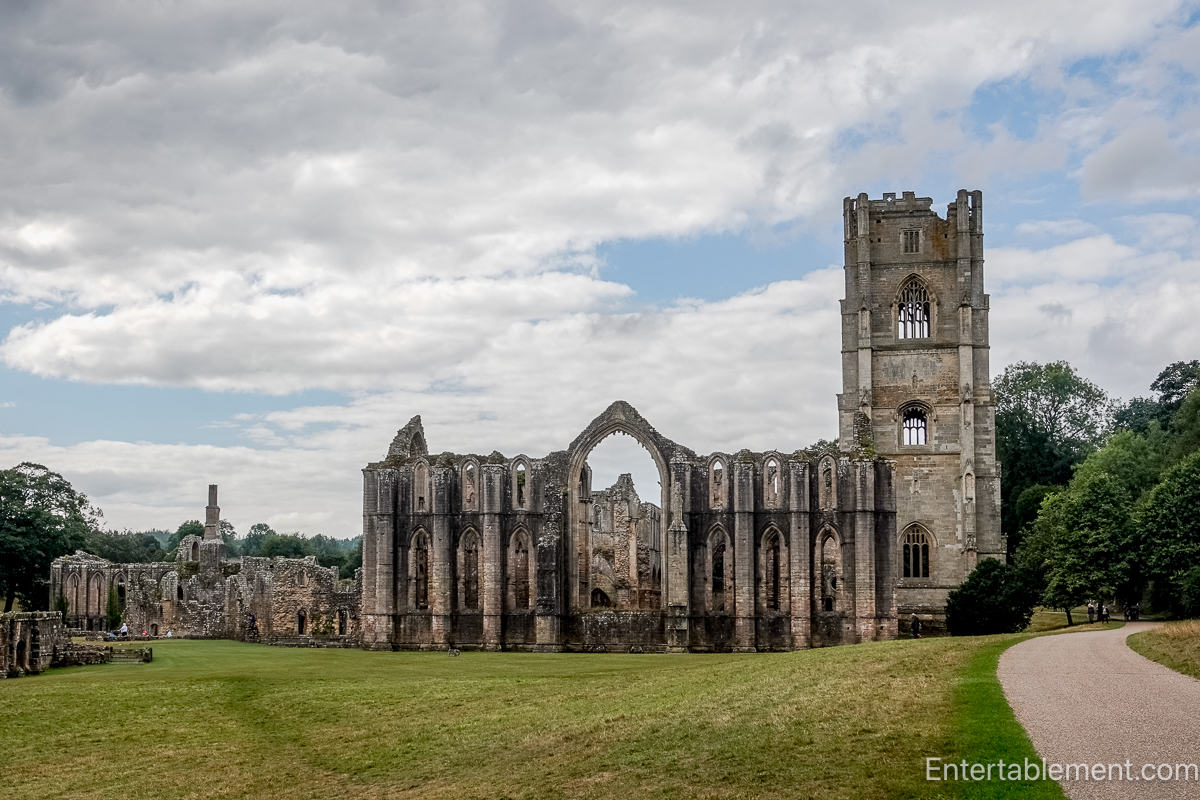
Fountains Abbey
On paper, its scale is immediately striking. The precinct covers roughly seventy acres. Even without specialist knowledge, the ground plan reads as something closer to a settlement than a retreat.

This scale was not accidental, nor was it ornamental. Founded in 1132, Fountains belonged to an order that prized restraint in form, but it operated in a region rich in wool and remote enough to expand without friction. Over time, steady accumulation mattered more than dramatic ambition. Buildings multiplied because functions multiplied.
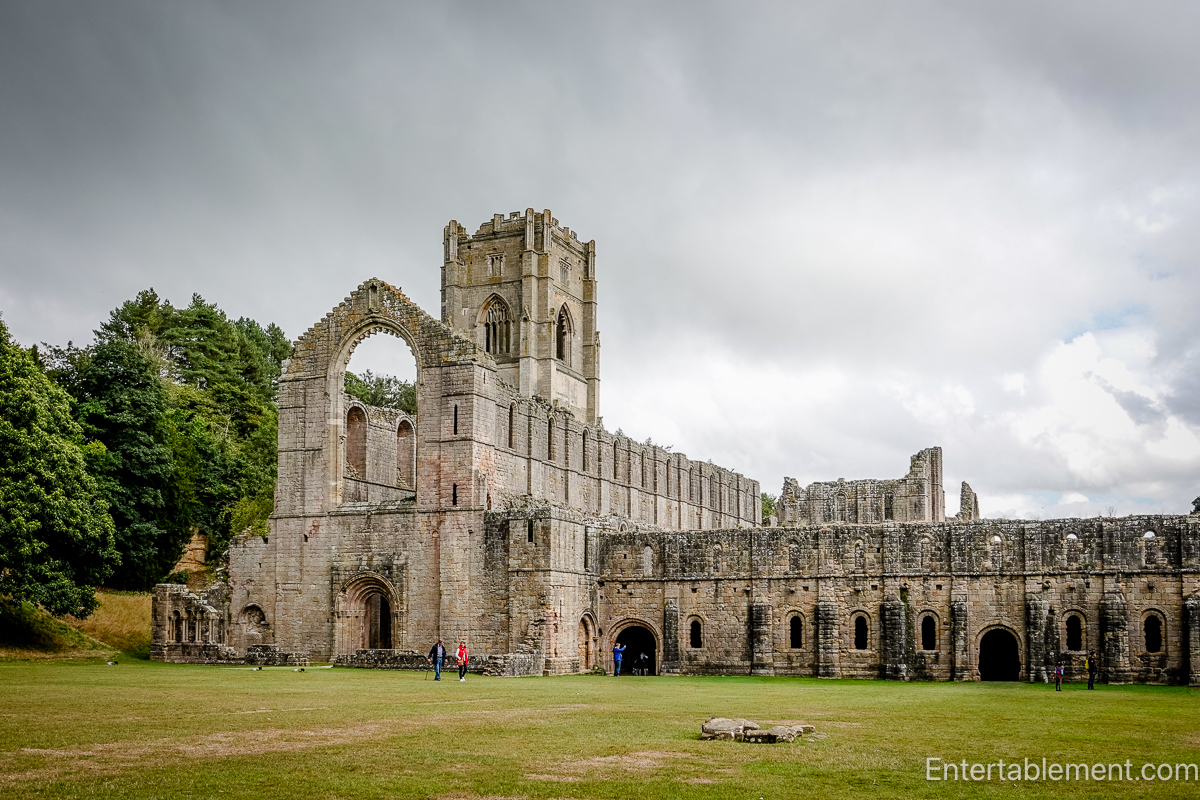
Fountains Abbey
What emerges on the diagrams is not simply a church with attachments, but an integrated system: water diverted and controlled, mills and workshops arranged around it, quarters for lay brothers who carried much of the labour, and an infirmary complex larger than many parish churches. The sprawl reflects organization rather than indulgence. These plans map an economy as much as a devotional life.

Detailed Diagram Fountain’s Abbey
Rievaulx, also Cistercian, expresses the same principles under different constraints. Set in a narrower valley, its expansion was shaped by topography as much as intention. The result feels more contained, even when the architecture reaches moments of real grandeur.

Where Fountains reads as expansive, Rievaulx is composed. The buildings press more closely together, the circulation tighter, the impression one of monumentality rather than reach. The difference is not ideological. It is environmental. The rule adapts; the rhythm holds.
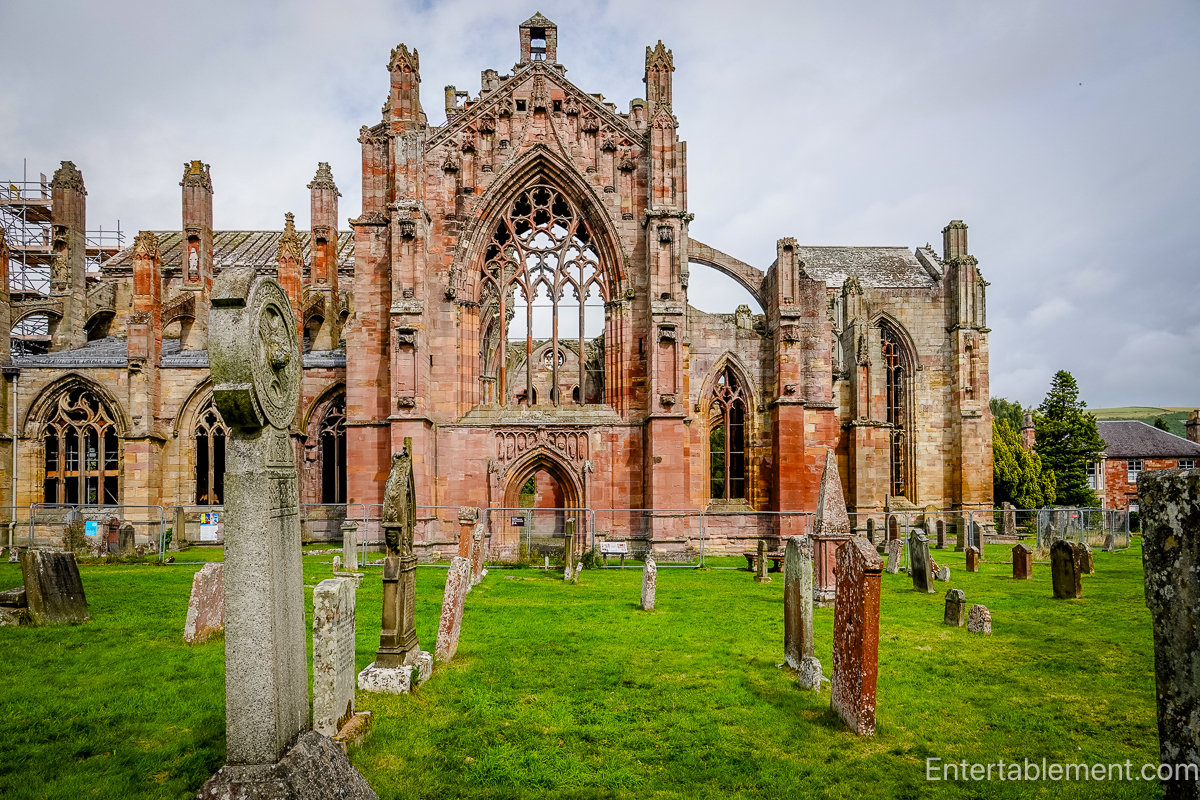
Melrose belongs to a later moment, and it shows. The architecture privileges elevation and detail, drawing the eye upward rather than outward. The footprint is comparatively compact, and the supporting structures recede in importance.
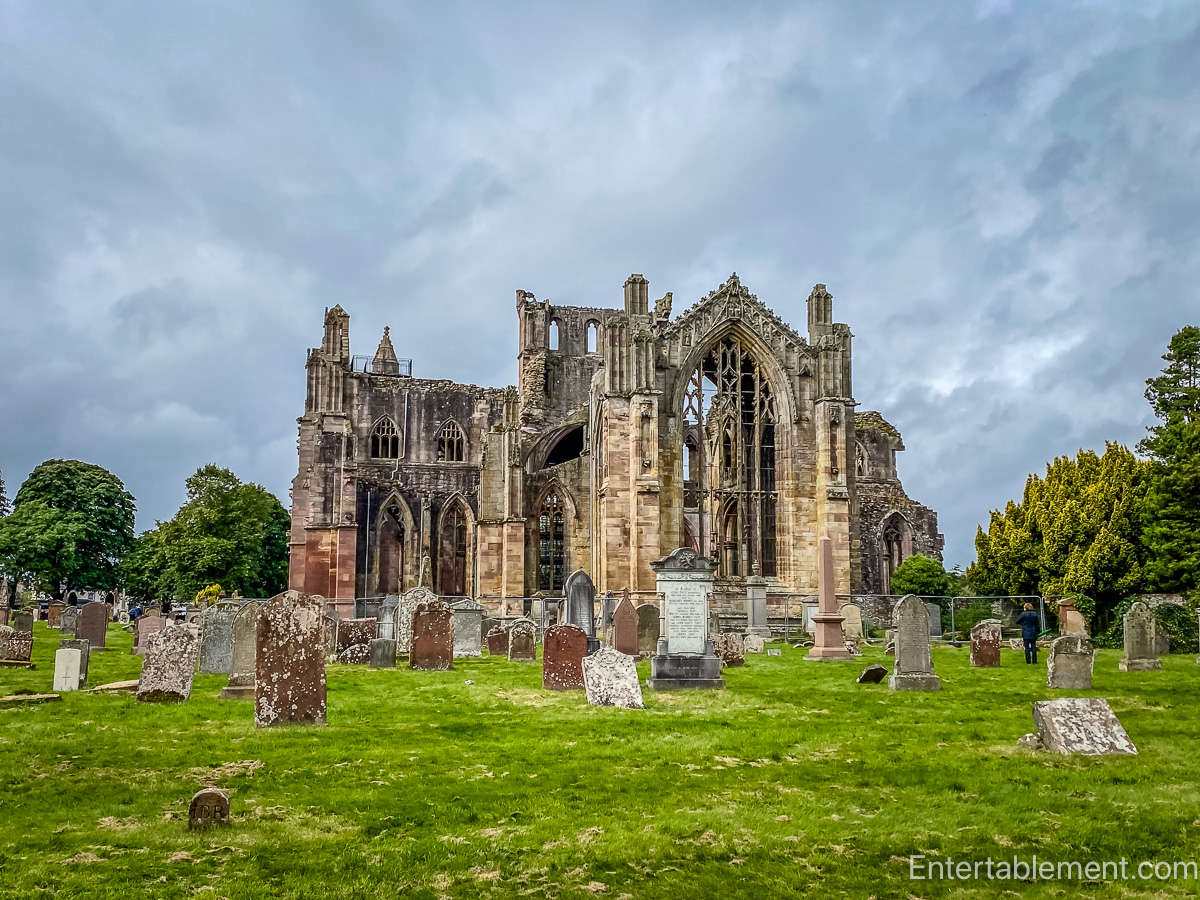
Melrose Abbey
Here, authority announces itself more readily. The decorative confidence reflects a world in which coherence had returned and display had become safe again. The contrast with earlier Cistercian houses is instructive. Organization remains, but persistence is no longer the primary concern; it has scope for ornamentation.
Jedburgh, an Augustinian foundation, sits close to the town and behaves accordingly. The church dominates, square and sturdy in aspect, cathedral-like in ambition, while the claustral buildings remain constrained. The relationship with secular life is immediate and visible.

This proximity changes the balance. The monastery still organizes time and labour, but it does so alongside civic rhythms rather than apart from them. The architecture reflects a different negotiation with authority — one that is already more entangled.
Lindisfarne is modest in scale and exposed by design. The island setting limits expansion and enforces dependence on tide and timing.


Repeated destruction and rebuilding left little room for accumulation.

What survives here is function stripped to essentials. Organization yields to rhythm imposed by the landscape itself. Authority is exercised through access and patience rather than mass. The priory’s influence was never architectural; it was temporal.
Persistence as the Point
Monasteries were not designed to govern societies. They were designed to endure within them. For centuries, that proved sufficient. Their structures reduced uncertainty, their habits stabilized daily life, and their rules outlasted the individuals who followed them.

Battle Abbey Dortor (dormitory)
Over time, endurance became visibility. Stability attracted obligation. What began as an internal way of organizing life became entangled with life beyond the walls. This was not a failure of intention, but a consequence of success. Where coordination persists, humans begin to register position. Status follows differentiation as reliably as hierarchy follows management.

Fountains Abbey Storage Vaults
When political authority reasserted itself more forcefully, monasteries were no longer peripheral. They were legible, wealthy, and embedded — easy to catalogue, negotiate with, and eventually appropriate. Systems that persist long enough tend to be noticed. Systems that are noticed become targets.

Fountains Abbey
Seen this way, the later disruption of monastic life does not invalidate the model. It confirms it. For centuries, monasteries provided order without conquest and continuity without coercion. In the long arc traced by The Continental Thread, they mark an interval — a period when authority sat quietly, waiting for conditions to change again.
English Heritage has a sign at Rievaulx that reads, “Beware — this view will live long in the memory.”

It’s not wrong.

Previous essay:
Rome— Scale, Infrastructure and the Relief of Decision







I love your beautiful photos and historical commentary Helen! What a fasciating topic – your travels are so interesting. Thanks for sharing them. It’s so great to hear the stories behind the monuments!
Thanks, Barb! I love visiting the monastery sites. They have an common underlying organization, but each one is a bit different. At Rievaulx, there was a whole display on how they managed the water flow from input right through to the tanning leather area (the dirtiest water). Not great for the literal downstream effect! It’s also startling to see the size of the structures and realize that they may have housed several hundred people at one point. The plague in the 14th century wiped out about a third to a half of the population, and the monasteries were struggling even before the Dissolution in the 16th century.