
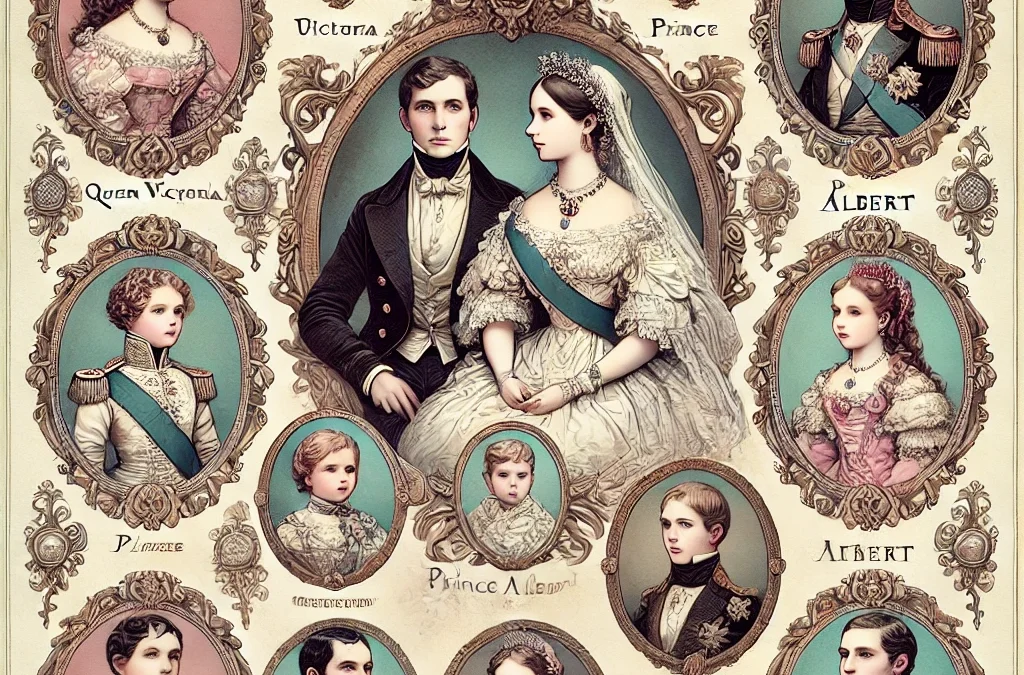
Queen Victoria was not just the ruler of Britain—she was the matriarch of a dynasty that spread across Europe. Her nine children married into the royal houses of Germany, Russia, Denmark, Sweden, and beyond, earning her the nickname Grandmother of Europe.
But beyond their strategic marriages, they were a complex family filled with ambition, rivalry, and Victoria’s ever-watchful (and often exasperated) presence.
Let’s have a look at the nine children who shaped Europe’s monarchies and their quirks.
The Nine Children: A Family in Motion
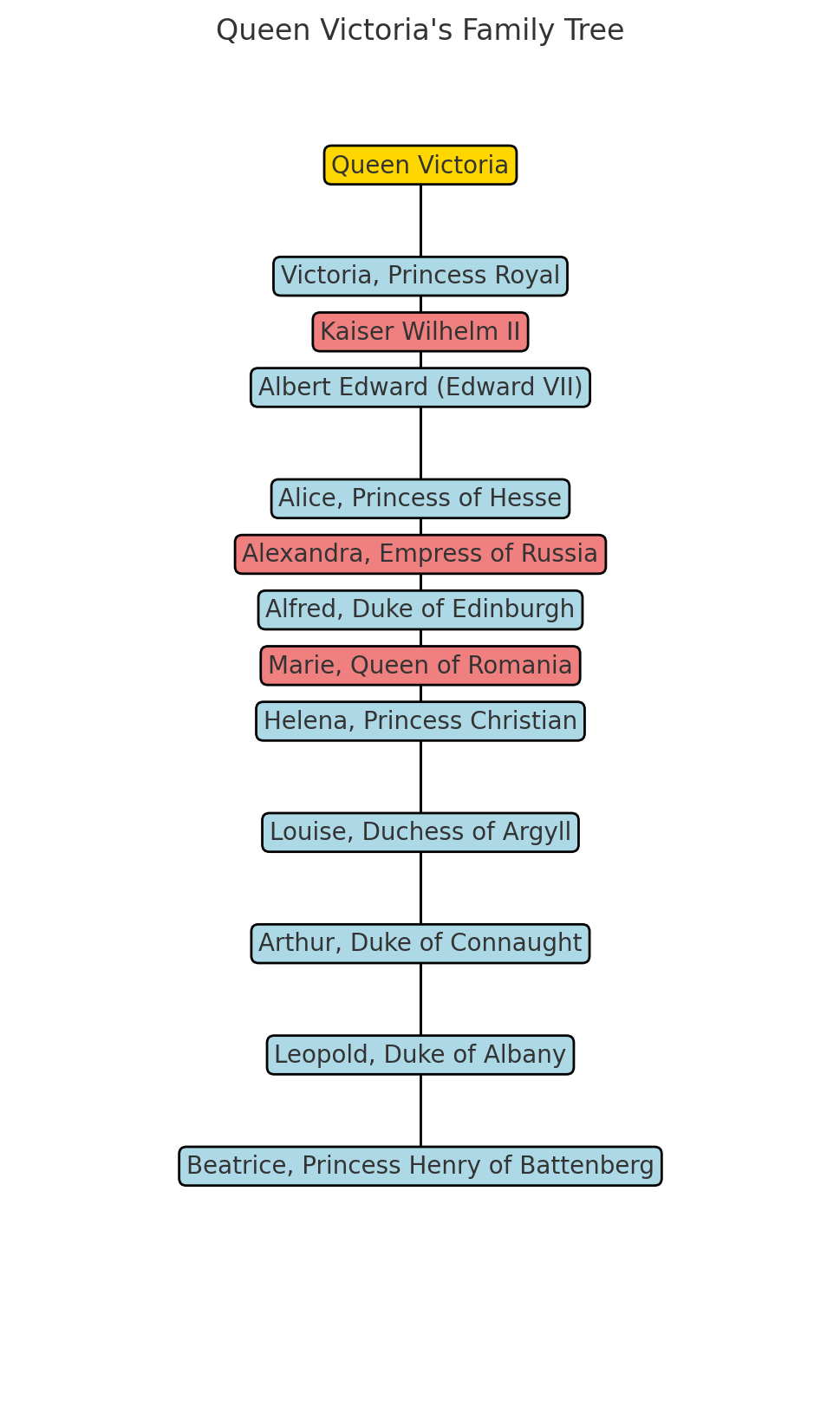
Victoria, Princess Royal (1840-1901)
- Married German Emperor Frederick III, becoming Empress of Germany.
- Intelligent and strong-willed, she shared Albert’s progressive ideals.
- She clashed with Bismarck and suffered heartbreak over her husband’s early death.
- Mother of Kaiser Wilhelm II, who led Germany into World War I.
Albert Edward, Prince of Wales (1841-1910) – Later King Edward VII
- The rebellious son frustrated his parents with his love of leisure.
- Ultimately, a successful king, modernizing the monarchy’s public role.
- His long wait for the throne (59 years) earned him the nickname Bertie.
Alice, Princess of Hesse (1843-1878)
- Deeply compassionate, she championed nursing and social reform.
- Passed on the hemophilia gene, which would impact future royals, including Russia’s Tsarevich Alexei.
- Died tragically young of diphtheria.
Alfred, Duke of Edinburgh & Saxe-Coburg and Gotha (1844-1900)
- Served in the Royal Navy and later became the Duke of Saxe-Coburg and Gotha.
- Unhappy in Germany, his reign was marked by political struggles.
- His daughter, Marie, became Queen of Romania.
Helena, Princess Christian of Schleswig-Holstein (1846-1923)
- Devoted to duty and public service, she remained close to Victoria.
- Married a minor German prince but largely stayed in England.
- A keen supporter of nursing and the Red Cross.
Louise, Duchess of Argyll (1848-1939)
- The most unconventional of Victoria’s children, she was artistic and independent.
- Married a Scottish aristocrat rather than a European prince.
- A talented sculptor—her statue of Queen Victoria stands in Kensington Gardens.
Arthur, Duke of Connaught (1850-1942)
- He served across the Empire as a career soldier and was the Governor General of Canada.
- His descendants still hold ties to European royalty.
Leopold, Duke of Albany (1853-1884)
- The most tragic figure—he inherited hemophilia and suffered from poor health.
- Highly intelligent and charming, but restricted by his illness.
- Died at just 30 after a fall.
Beatrice, Princess Henry of Battenberg (1857-1944)
- Victoria’s favourite and most devoted child, she remained by her mother’s side at Osborne.
- Married against Victoria’s wishes, but was allowed to stay in England.
- Lived in the Durbar Wing at Osborne House, where she cared for Victoria in her final years.
- Her husband, Prince Henry of Battenberg, died in 1896, leaving her a widow while she continued to serve as Victoria’s constant companion.
- Edited Victoria’s journals, shaping the Queen’s legacy.
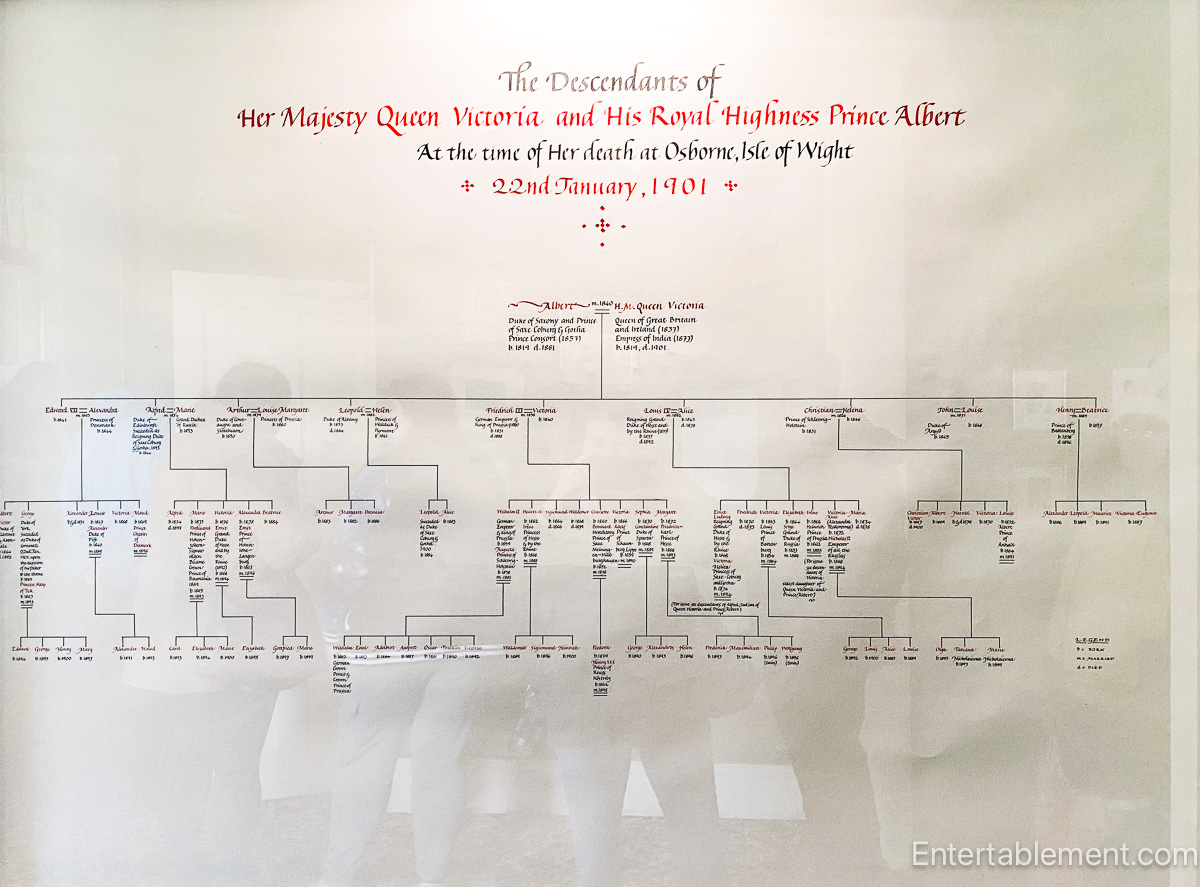
The Family Tree: A Web of European Royalty
Victoria’s Influence & The Family Dynamics
- Victoria’s strong opinions on her children’s marriages—she had favourites and was not shy about it.
- The strained relationship with Bertie, whom she never saw as competent.
- The deep bond with Alice and Beatrice, who remained her closest confidantes.
- The tragedy of hemophilia haunted the next generations.
Conclusion
Victoria’s children did more than inherit thrones; they shaped European history. Their marriages created alliances and tensions that would culminate in World War I. Their lives were as complex as the continent they ruled, from scandal to service, rebellion to duty.
In the end, perhaps Victoria got what she wanted most—her influence and that of her family endured long after her reign ended.



Helen. Love the tours of these fabulous homes, but we never see the antique loo. Any9 bathrooms?
Hi Myrna,
If the house is being maintained in its original time period (pre indoor plumbing), the best you can hope to see is one of those hip baths by the fire. The ones that have been restored and brought up to date can be great. So…hang onto your hat when you see the upcoming loos at Holkham in Norfolk. Tapestries on the walls, mahogany encased bathrooms. Stunning. I’ll try to think back if there are any other examples that spring to mind, Myrna. Lots more to come!
Best,
Helen
But she adopt Sarah and her name is not noted anywhere
I’m not aware of Queen Victoria adopting a child named Sarah. Do you have a historical source for this? I’d be interested to read it.