Updated in May of 2025 with new pictures and insights.
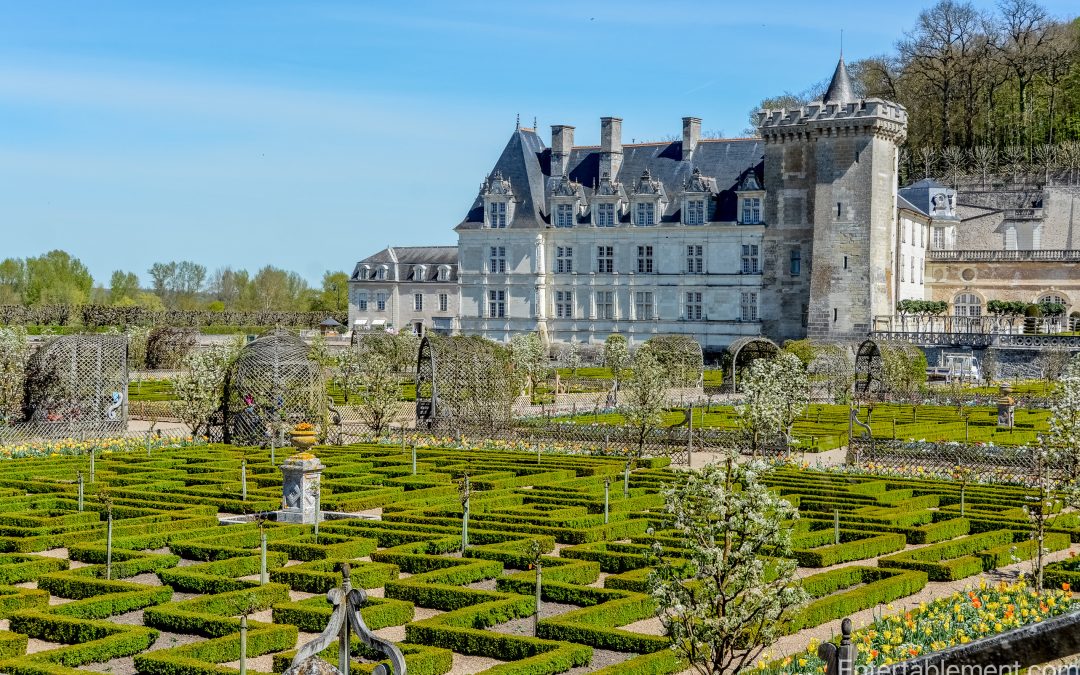
While the Château at Villandry is best known for its gardens, let’s start with the château’s interior, because it tells its own fascinating story. Built in the early 16th century by Jean de Breton, Finance Minister to François I, the château was one of the last constructed in the true Renaissance style.

From Theatricality to Intimacy
What’s striking is how Villandry balances grandeur with charm. It avoids the chilling scale of Versailles, instead offering a home that feels both stately and livable. In this sense, Villandry is almost a bridge between the courtly excesses of the Ancien Régime and the cozy, private elegance of the English country house. Where Louis XIV invited the world, Villandry allows the family to live with beauty behind closed doors.

Historians call this the “cult of the interior”—a movement that transformed the home into a moral and psychological sanctuary. This is why Villandry’s domestic quarters feel so different from Chenonceau’s more performative apartments. There is something gentler here—still grand, but filtered through sentiment and stability.
Speaking of theatre, I was intrigued by this model of Villandry in one of the upstairs rooms. It gives a good visual sense of the château’s overall proportions. At first, I thought the object behind it was a sedan chair, but then I realized it was a puppet theatre.

Jean de Breton’s original Renaissance design already incorporated symmetry and rational planning—a nod to the new humanist ideals. Later owners, especially Dr. Joachim Carvallo and Ann Coleman, layered on their own interpretation of domestic harmony. Their careful restoration doesn’t just revive historic décor; it recreates a worldview.
From Public to Private: The Domestic Shift
In earlier medieval homes, life revolved around the great hall—one large, multifunctional space. By the Renaissance, architectural sophistication allowed for more distinct rooms, but privacy was still relative. Fast-forward to Villandry’s restoration and 20th-century furnishing, and you see rooms designed for specific uses: the formal salon, the family dining room, the intimate bedroom suite.

The Enlightenment at Home
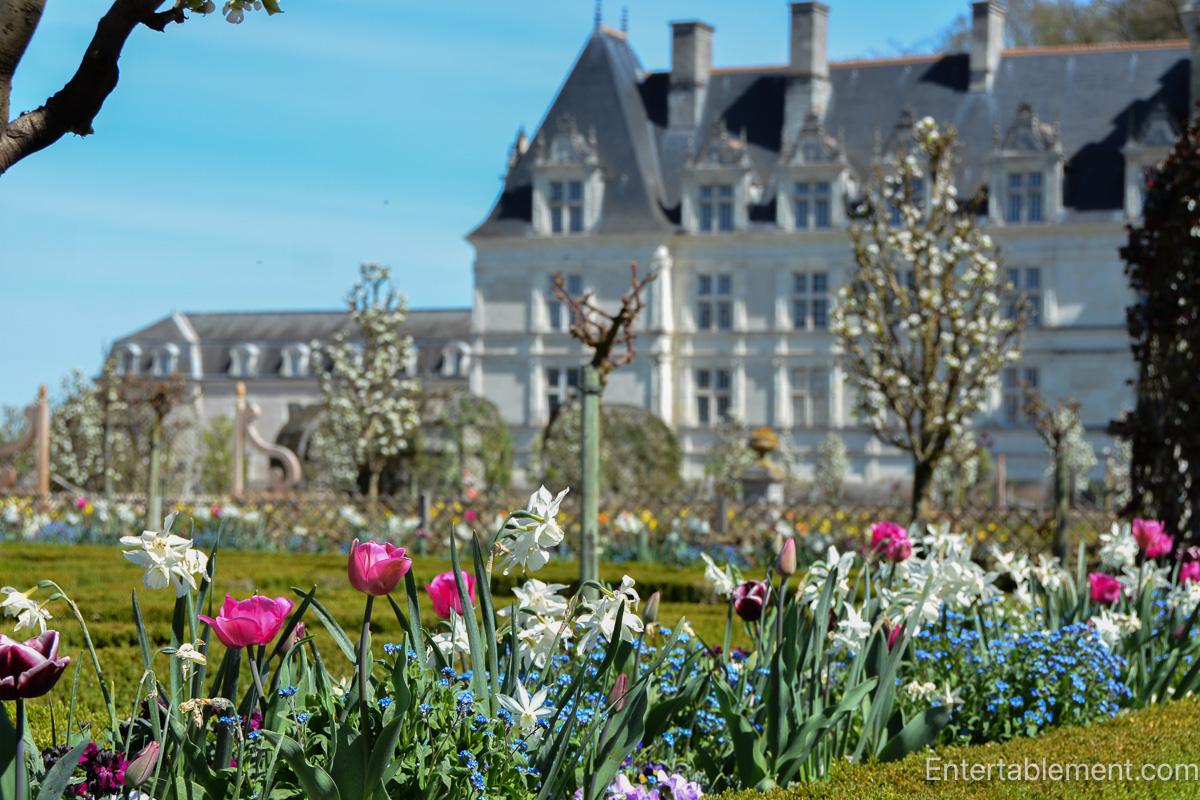
You see Enlightenment values in the grand staircase’s elegant order, the salon’s measured grace, and even the children’s rooms upstairs. These are not merely decorative—they reflect an intellectual belief that beauty, proportion, and reason belong in everyday life.
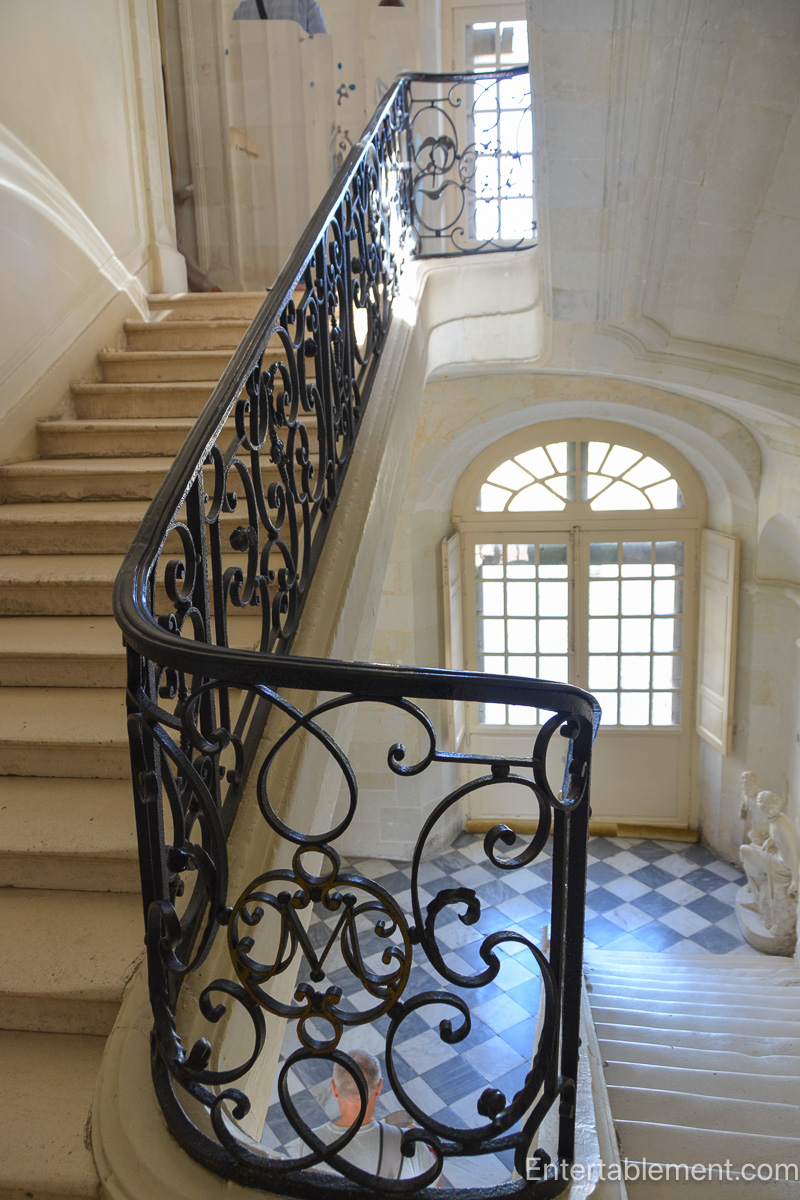
Today, the formal rooms reflect this elegant layering. The grand salon is cheerful, with butter-yellow panelled walls and a tapestry depicting a mythological hunt, which seems to bring the outdoors in. Gilded mirrors share space with vases of tulips, while a circular arrangement of chairs surrounds a Louis XV fireplace.
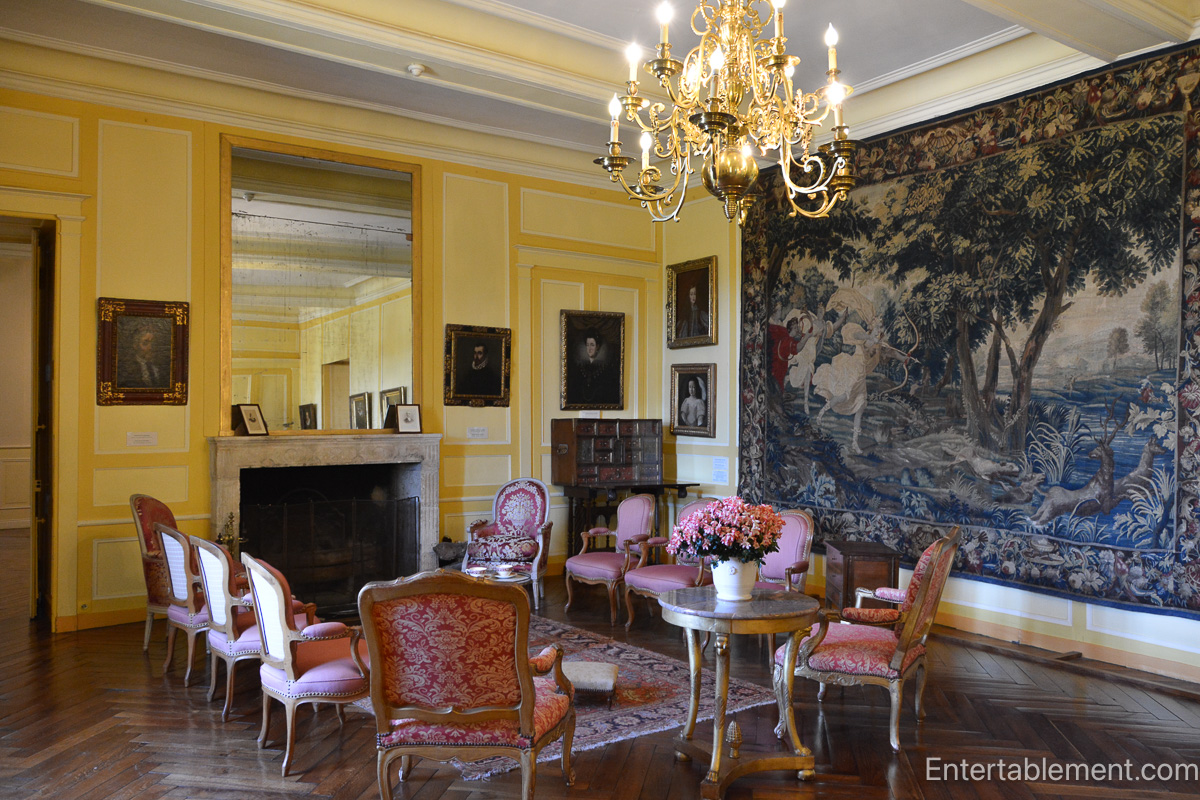
Fresh flowers and framed family photos throughout the rooms remind you that Villandry is still privately owned and very much lived in. The sense of continuity is one of the estate’s most charming features.

The grand piano topped with black-and-white family photographs is a perfect metaphor: opulence and intimacy share the same stage.

The domestic dining room emerged by the 18th century. Hosting became an art, and furniture, plateware, and ritual reflected a new philosophy of the home. Villandry’s dining room, with its deep salmon walls and dramatic alcove, strikes a balance between ceremony and comfort.

The table is dressed with silver candelabras, etched glass, and a particularly playful addition—a tureen filled with colourful porcelain fruit and vegetables.
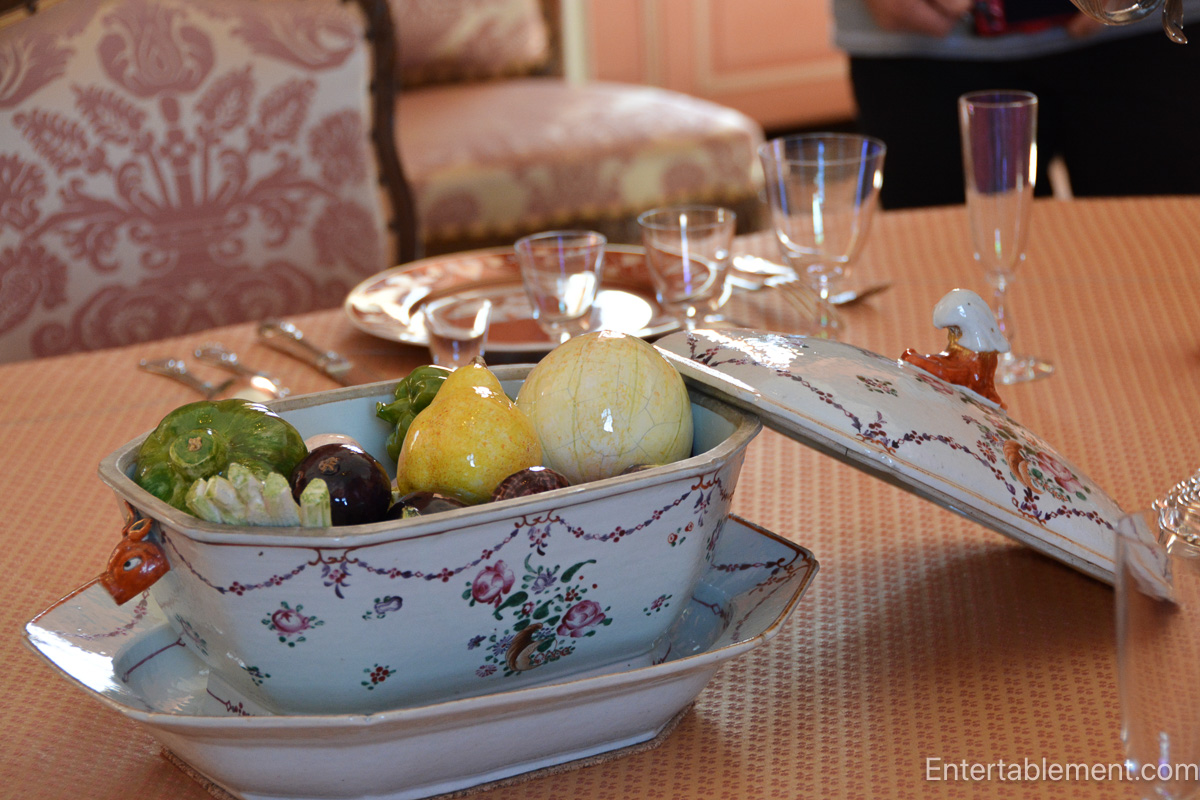
The table is set with deep rust and white porcelain featuring still-life motifs. It is a masterclass in etiquette and craftsmanship—note the multiple glasses and specific silverware, reflecting the rise of codified dining rituals.

And glorious autumn flowers grace a marble-topped console.

Faience plates depicting birds and floral motifs adorn the walls.

The Bedroom as a Public Space
In aristocratic households, bedrooms were not strictly private. The master or mistress of the house might receive visitors while still in bed. This sounds odd to us, but it was tied to court culture and social ritual. Beds were ceremonial thrones, and dressing or reclining became a form of social theatre. The Morning Levée was a ceremony, especially among royalty and nobility. From high-ranking officials to favoured guests, visitors could enter stages to watch or assist the person dressing or pay homage.
At Villandry, we see a subtle shift from theatricality toward privacy and nurture. The deep crimson room, with its Empire-style Lit à la Polonaise, incorporating a round or oval canopy supported by curved poles, was popular in the Rococo era.

The Alcove Bed (Lit en Alcôve)
In Villandry, several examples of the Alcove Bed are elaborately decorated with matching fabrics for beds, curtains, and walls.

This design trend emerged in the 17th century and peaked in the 18th century. Alcoves helped with insulation in drafty stone buildings and made sleeping more private in large, shared spaces.
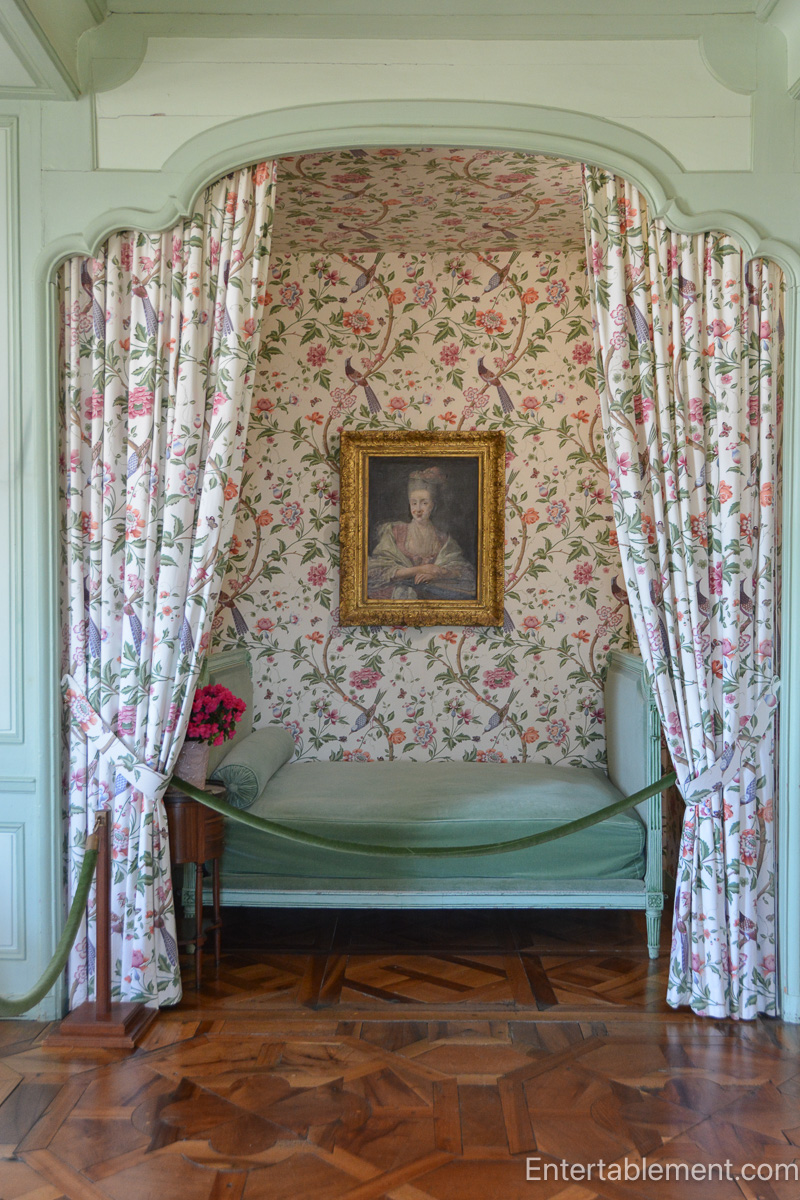
The corded tassels used to gather draperies are fine examples of passamenterie, a decorative art highly prized in 17th–19th-century France and still used today.

Unlike today’s bedrooms, living rooms, reception rooms, and working offices, these were usable at all hours, thanks to writing desks, dressing tables, and fireplaces. A noblewoman might embroider here while receiving guests.
Villandry’s Empire-style room has a Lit à la Duchesse, a bed with a canopy supported at the head and no foot posts. Many beds were shorter, not because people were shorter, but because they slept upright or semi-reclined, a position thought healthier (especially for digestion and preventing illness). Curtains also helped trap warmth and keep out insects.

The Children’s Rooms
The children’s quarters are among the most emotionally resonant parts of the tour, not because of grandeur, but because of their intimacy. These rooms reflect Enlightenment and post-Enlightenment ideals that viewed children not just as small adults, but as beings in development, deserving their own spaces, rhythms, and educative environments. This marks a significant cultural evolution, mirroring similar shifts in English country houses of the same era, where nurseries and schoolrooms were increasingly distanced from formal family life and integrated into structured, age-appropriate routines.

At Villandry, this is beautifully preserved in delicate wallpapers, toy furniture, and small-scale armoires.

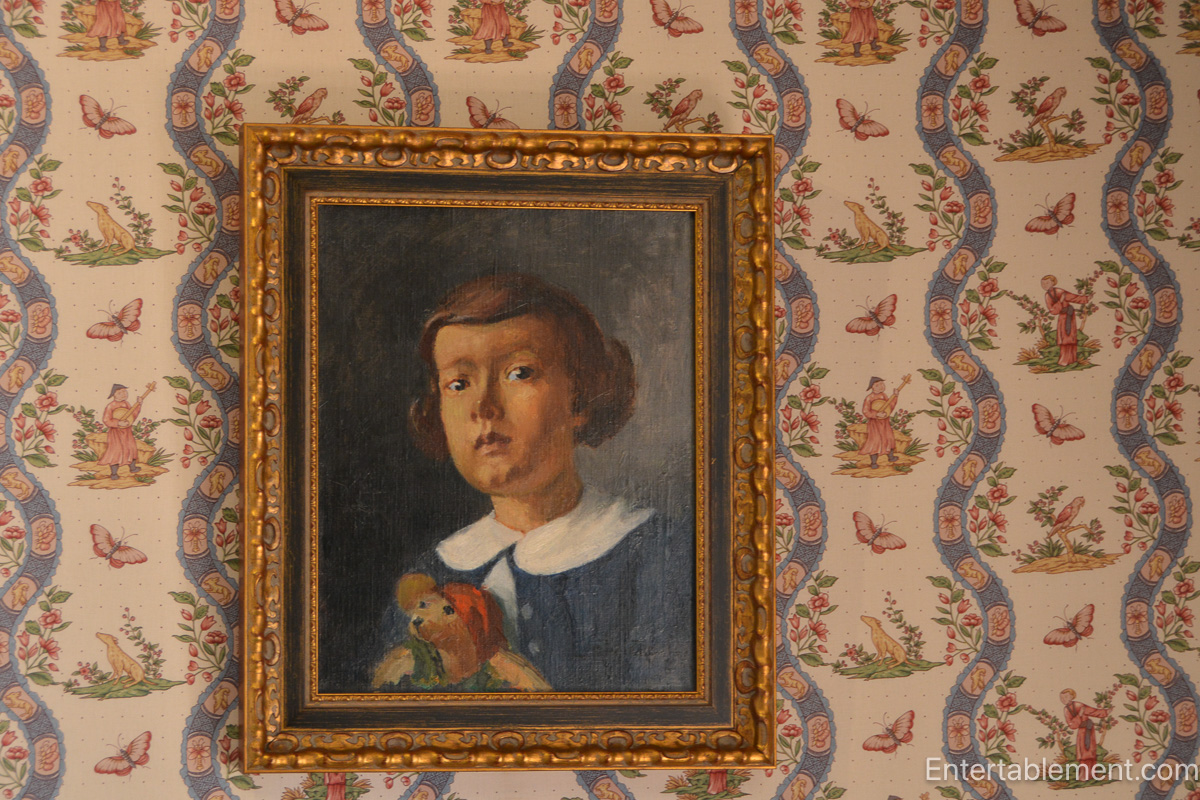
The portrait of a boy with a teddy bear, framed against whimsical wallpaper of butterflies and rural figures, evokes a childlike world blending innocence with imagination.
With its graceful cradle and embroidery-hung bed, the blue-hued nursery feels designed for gentleness and order.

A charming doll-sized armoire and miniature furnishings suggest not just toys, but moral instruction—training girls for future domestic roles. A wicker mannequin dressed in a child’s outfit captures the dual purpose of such rooms: play and preparation.

The Kitchen: French Country Fantasy Meets Historical Heart
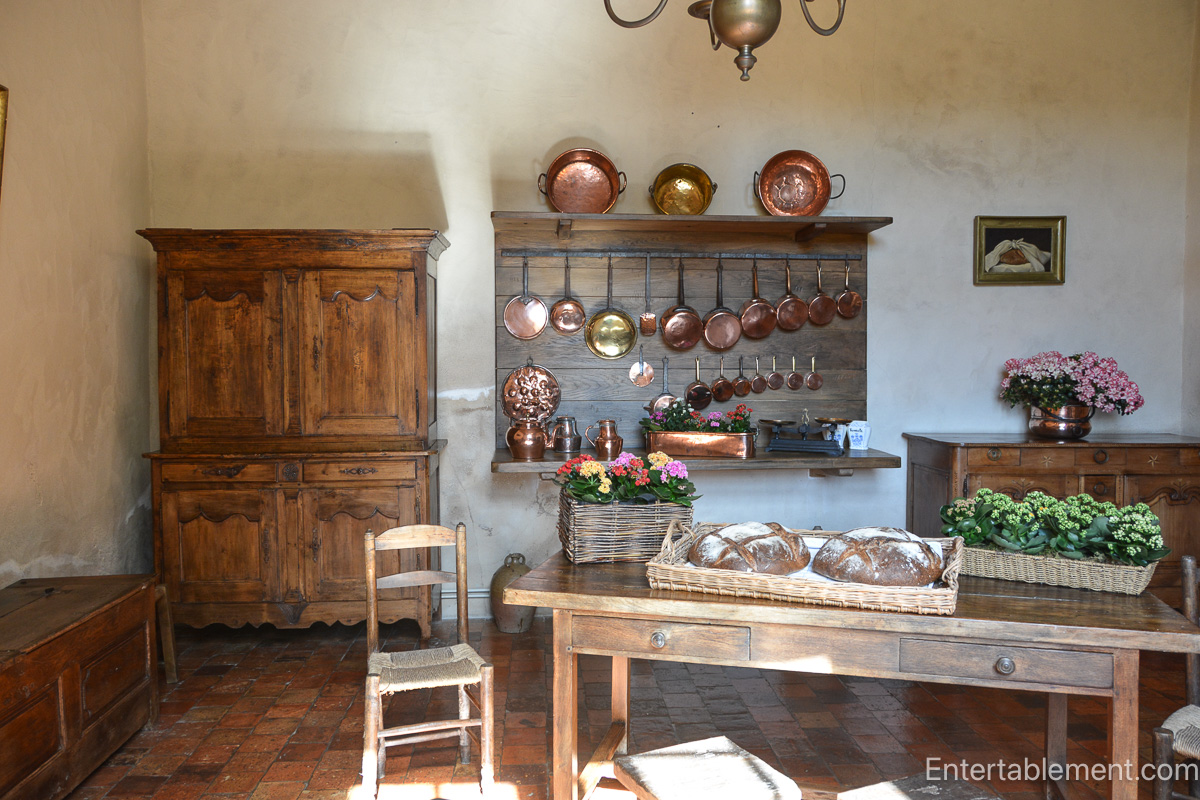
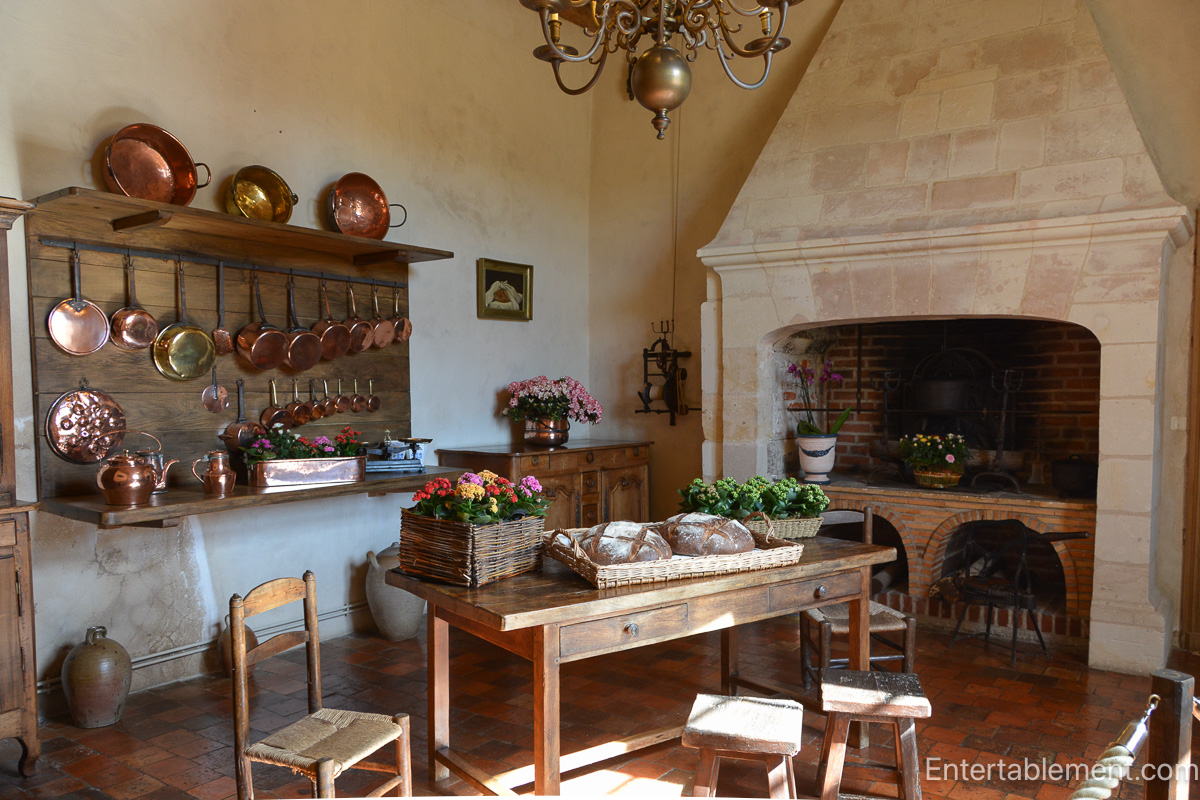
Descending into the kitchen at Villandry is like walking into the pages of Maison Française — a scene so impeccably styled it could be a Martha Stewart editorial. But beneath the copper polish and flowers lies something more profound: a room that reflects domestic function and aesthetic revival.
The masonry fireplace, with its classic brick-and-limestone hood, is a showstopper — large enough to roast multiple joints of meat, boil pots, and warm the room for the kitchen staff. It echoes pre-industrial hearths that were truly the heart of the home. The fireplace here, split with a double-arched base for wood storage and a wide firebox above, speaks to a time when cooking meant open flames and heavy ironwork.
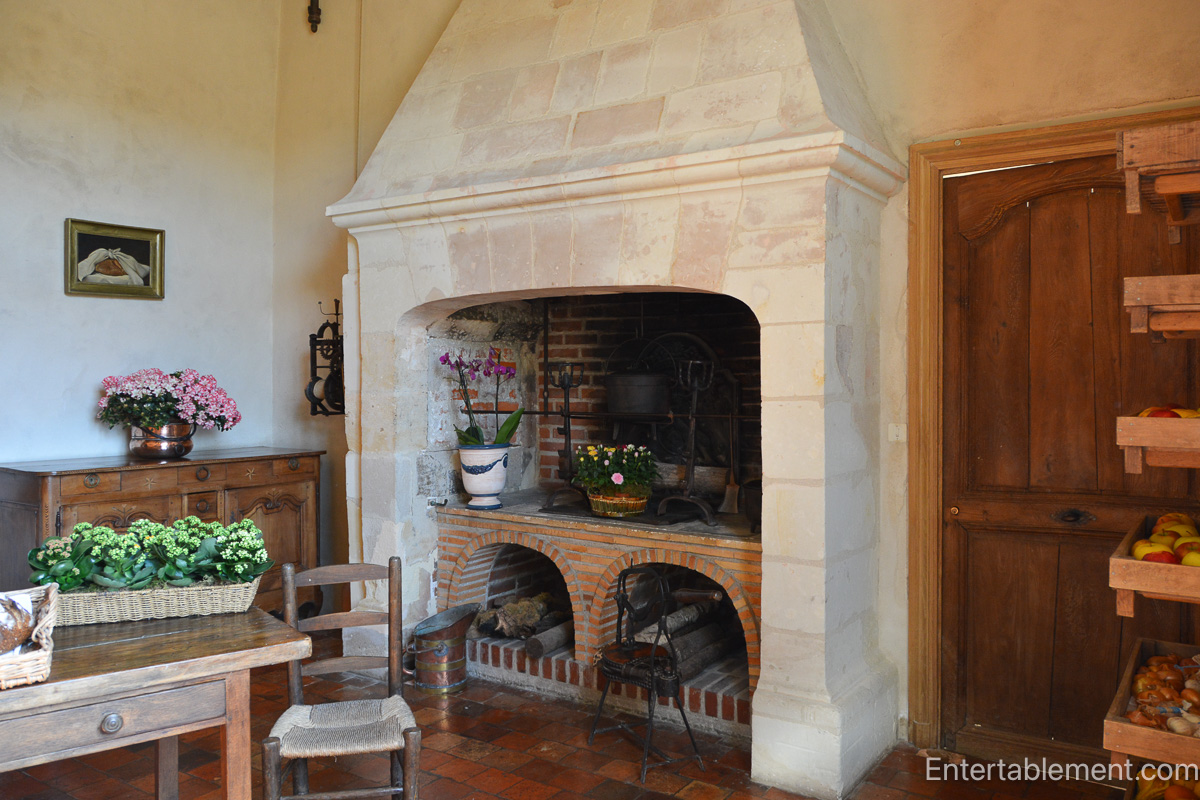
And yes — with those drawers full of apples, orderly open shelving, and soft, filtered light, this kitchen does look like a page from a lifestyle catalogue.
Where Are the Scullions?
What’s missing, of course, are the scullery maids, sweating at the fire. No grease, no soot, no half-plucked game birds. It’s a fantasy version of a working kitchen, as museums often must be. Yet it tells a powerful story of how even domestic, utilitarian spaces were touched by craftsmanship and care.
In short, Villandry’s kitchen may not teach us much about historical food preparation in a technical sense. Still, it offers a vivid, emotionally resonant image of the home as a centre of nourishment, beauty, and care. It’s not a kitchen designed to reveal hardship or hierarchy—it makes you long for a simpler, slower life. And in that, it succeeds completely.
The Gardens of Villandry: A Living Tapestry of Renaissance Grandeur
When Spanish doctor Joachim Carvallo and his American wife Ann Coleman restored Villandry in the early 1900s, they rejected the fashionable English-style landscape gardens of the time. Instead, they returned to a stricter, formal vision rooted in French classicism. But even that vision was infused with modern practicality, horticultural science, and aesthetics shaped by their era.

What they created is a palimpsest. Isn’t it a fantastic word? New to me! Palimpsest originally refers to a manuscript page from which the text has been scraped off so it can be reused, yet traces of the old writing remain, layered beneath the new. Over time, it’s come to describe anything that bears visible traces of its history under the surface—cities, buildings, even landscapes like Villandry, where Renaissance ideals overlaid with Enlightenment rationalism, were reshaped again by 20th-century restoration. You’re walking through centuries at once, all elegantly manicured into one breathtaking whole.
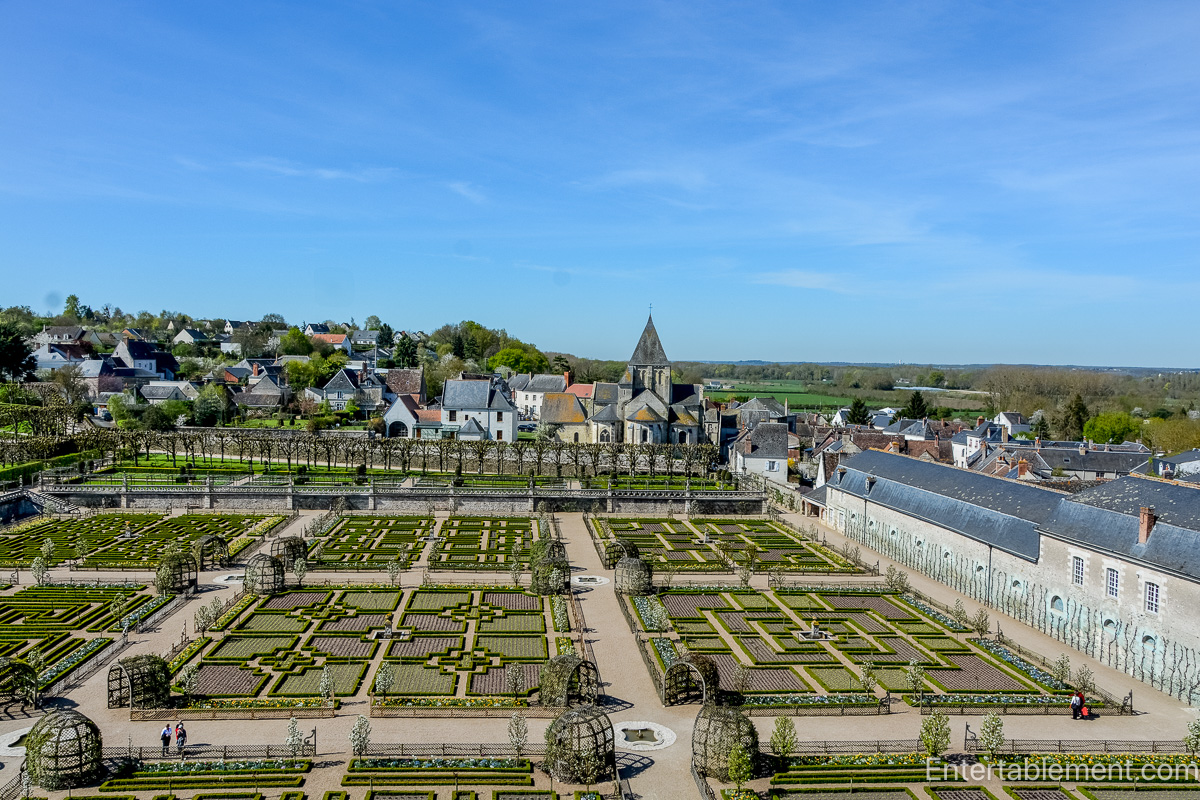
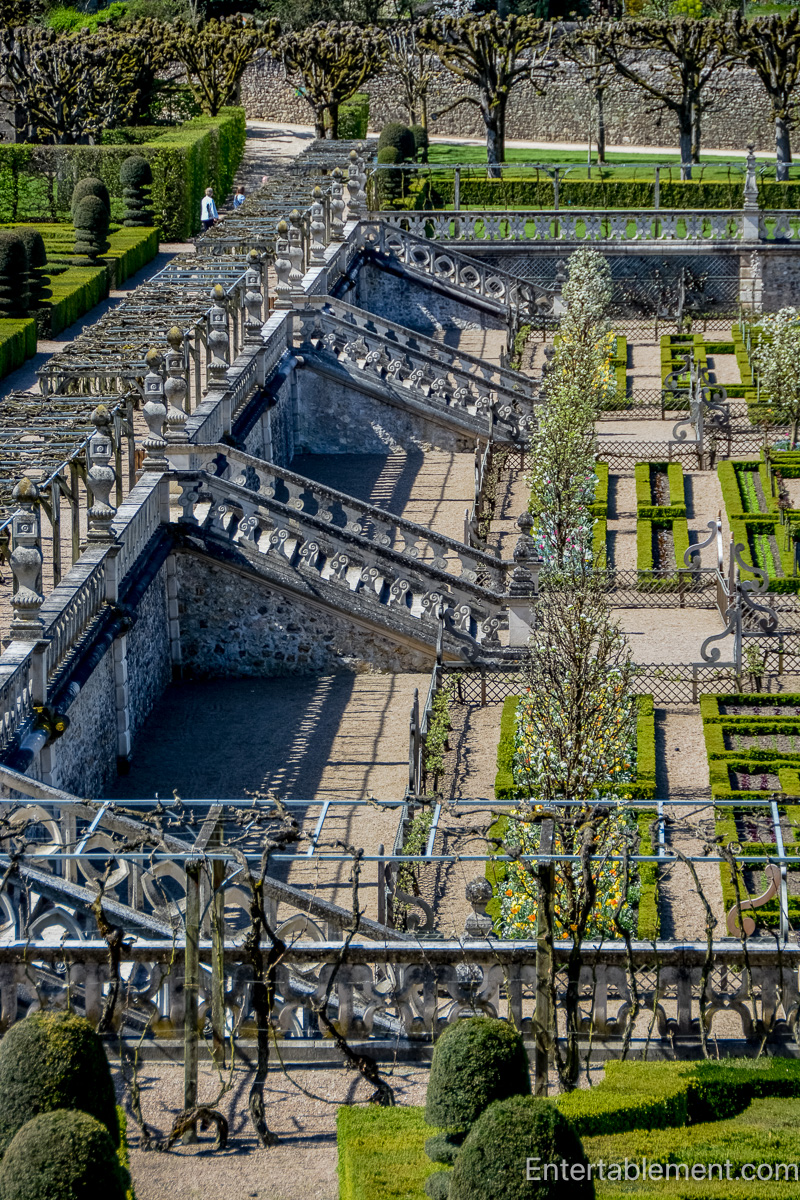
Walking the raised terraces that frame the grounds, one sees the gardens, the surrounding village, the church, and the wider Loire Valley. Villandry’s gardens blur the boundary between the château and the community, as well as private pleasure and public display.
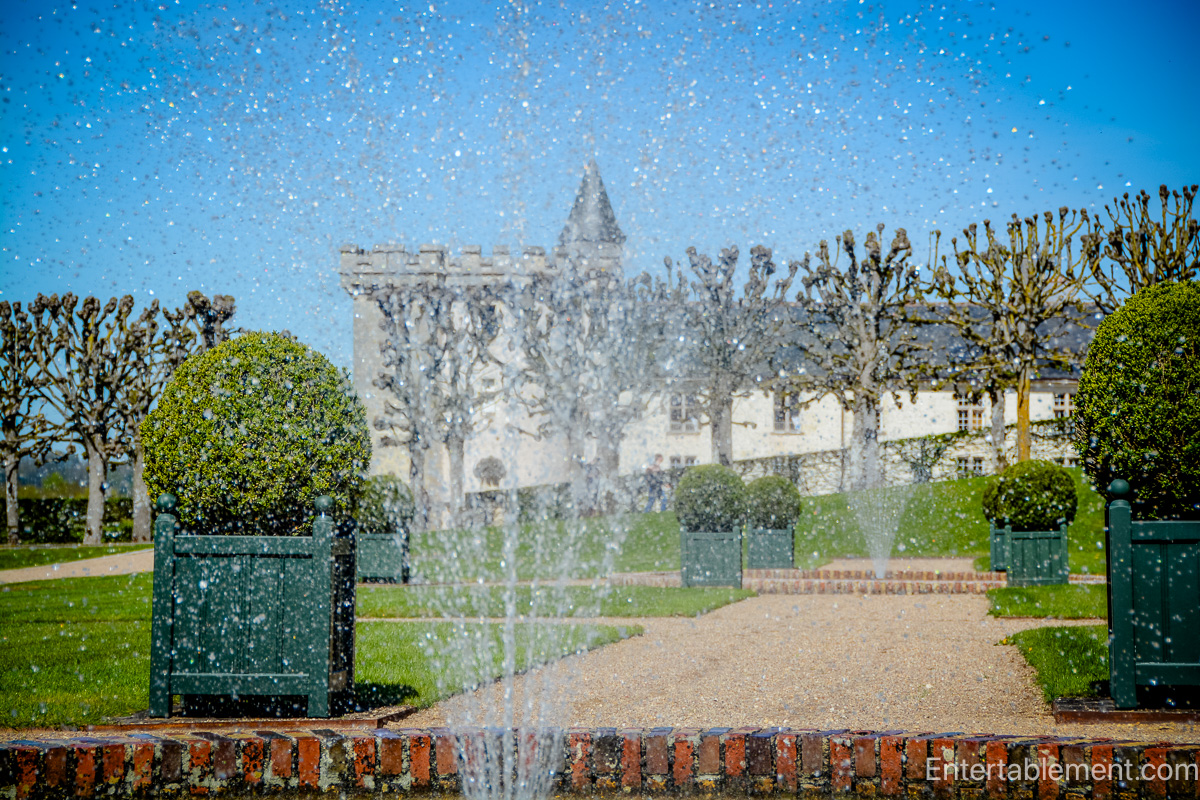
Even in its most intimate corners—shaded alleys lined with pollarded linden trees, secluded benches beneath bowers—it speaks of order and artifice. Nothing here is accidental.

The Garden of Love: Allegory in Boxwood
The most visually romantic of all the gardens is the Jardin d’Amour (Garden of Love), a perfectly clipped boxwood parterre in which each section represents a different form of love—tender, passionate, tragic, and fickle love.

These intricate designs aren’t merely decorative but symbolic narratives rendered in greenery. Hearts are broken and mended, daggers pierce through passion, and flames of ardour are etched into the living canvas.

This allegorical use of flora aligns with the Renaissance garden ideal: not just a retreat for leisure, but a philosophical space. Villandry’s garden was a place to stroll and reflect on life’s deeper meanings, enveloped in fragrant blossoms and formal symmetry.
The Potager: Utility Meets Aesthetic Perfection
Perhaps most astonishing is the decorative vegetable garden—a parterre of practicality. Rows of lettuce, cabbage, and herbs are meticulously arranged into geometric patterns more often found on cathedral floors than on soil plots.
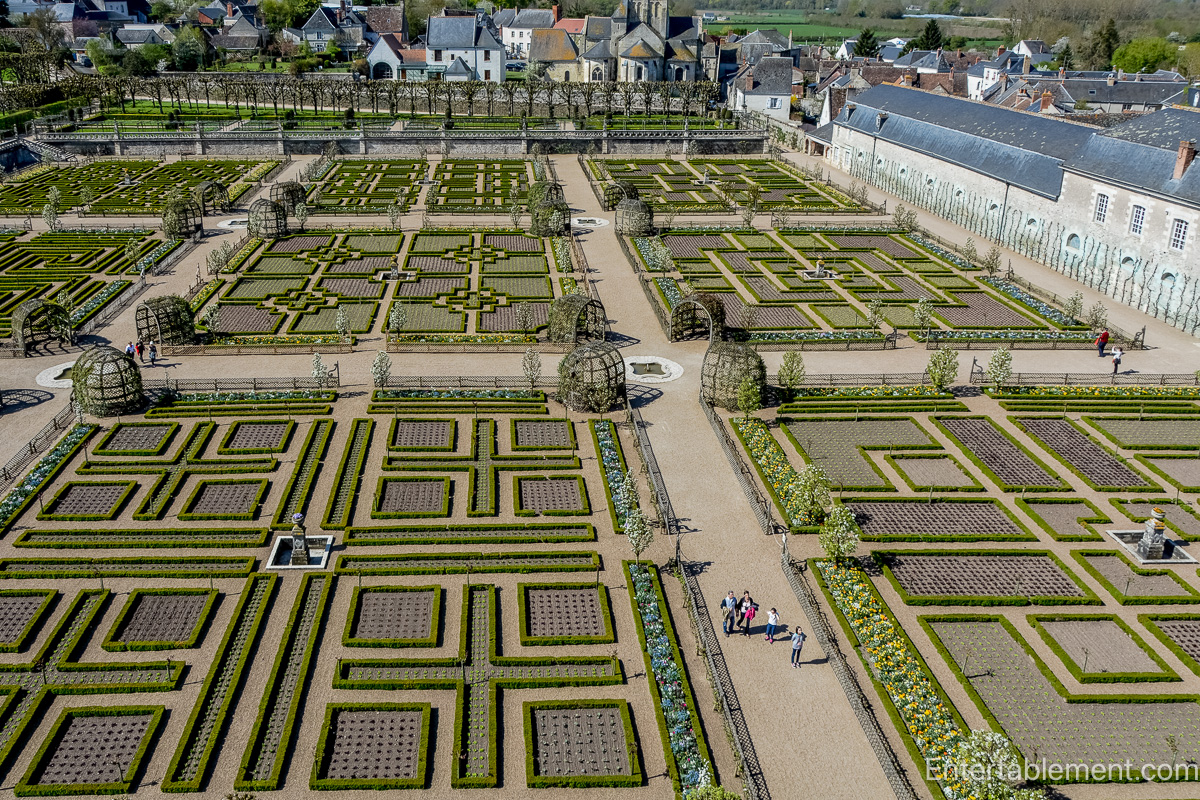
Each plant is chosen for colour and texture as much as for taste, creating a functional space that satisfies the Renaissance craving for harmony and order.
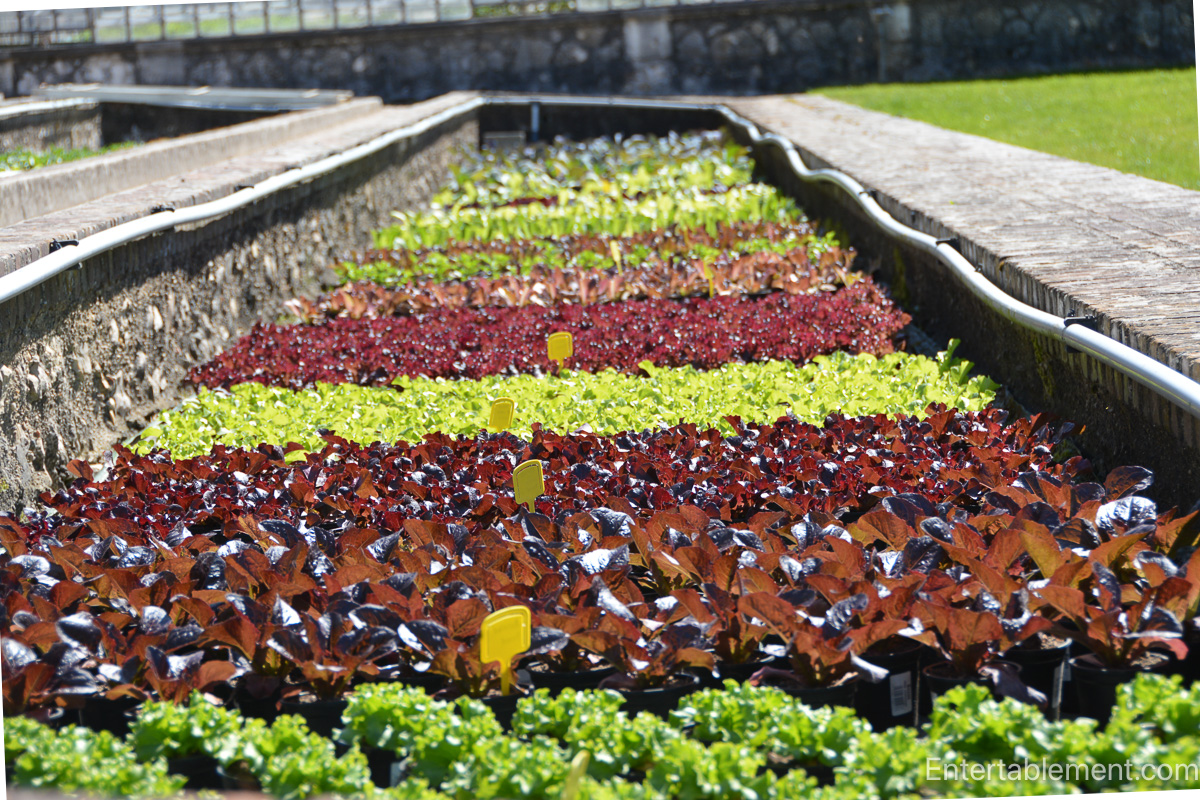
In this way, Villandry challenges modern distinctions between the ornamental and the useful. Here, vegetables are not just cultivated—they are art. This blend of beauty and bounty reflects an Enlightenment mindset that valued rational structure alongside the pleasures of the senses.
The Terraces and Perspective
From above, the full impact of Villandry’s layout is clear. Terraced views reveal the strict axial alignments and repeated motifs that govern the overall design. Walkways divide each parterre with mathematical precision, echoing architectural principles and enhancing the sense of control over nature, a central theme in Renaissance landscape design.
The Water Garden: A Peaceful Oasis
At the far end lies the Water Garden, a tranquil space shaped like a Louis XV mirror, surrounded by linden trees pruned into sculptural forms.

Its central basin and serene reflecting pool were designed as a visual focal point.

It also serves an irrigation function, connecting to a network of canals that support the lower gardens.
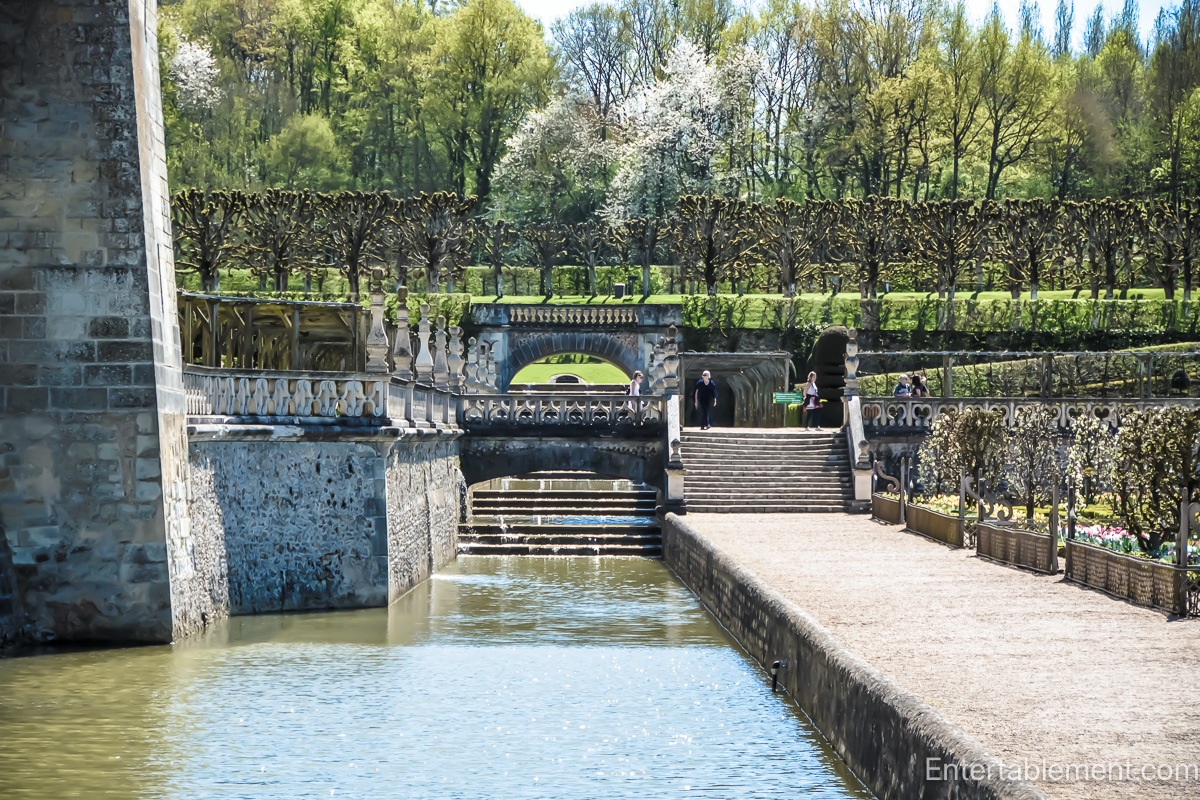

This is Enlightenment rationalism made tangible: the marriage of beauty and engineering.

The Pavilion of the Audience, or l’Audience
Tucked away from the formal gardens, near the entrance, looking like a decorative folly or a child’s playhouse is a stage set for delight.

It was built during the restoration in the early 1900s.
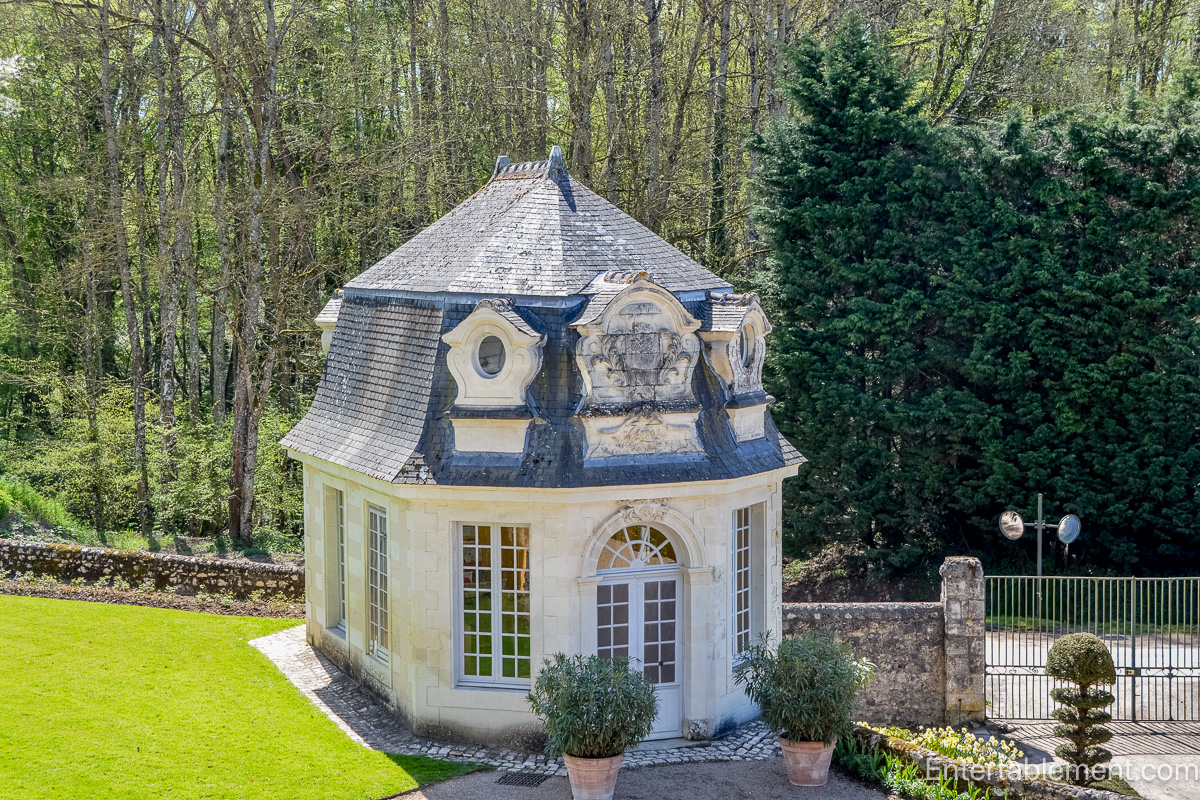
While the exterior is charmingly ornate with Baroque revival flourishes, the trompe l’oeil details steal the show, especially the painted ginger cat gazing into the window, and a parrot perched above, painted with such delicacy that they look startlingly lifelike.

These faux residents animate the scene, suggesting the building is still “in use,” as though someone or something is always holding court inside. Remind you of anyone?

Perhaps Lord of All He Surveys, Dundee? We always miss our pets when we travel. And I wish I could say that absence makes the heart grow fonder. The dogs great us with hysterical joy. The cats, not so much. We get the cold paw for a few days while they convey their displeasure at our desertion. Happily, it doesn’t last.

Villandry’s Modern Legacy
It’s easy to forget that Villandry’s gardens were painstakingly recreated from old maps and texts in the early 1900s after the grounds had fallen into neglect. What we see today is not just preservation, but a loving act of historical imagination.

Visitors walk the same gravel paths as Renaissance lords and ladies and partake in a 20th-century revival of heritage, sustainability, and beauty. The gardens of Villandry are not a frozen relic; they are living history, tended daily, seasonally renewed, and always breathtaking.
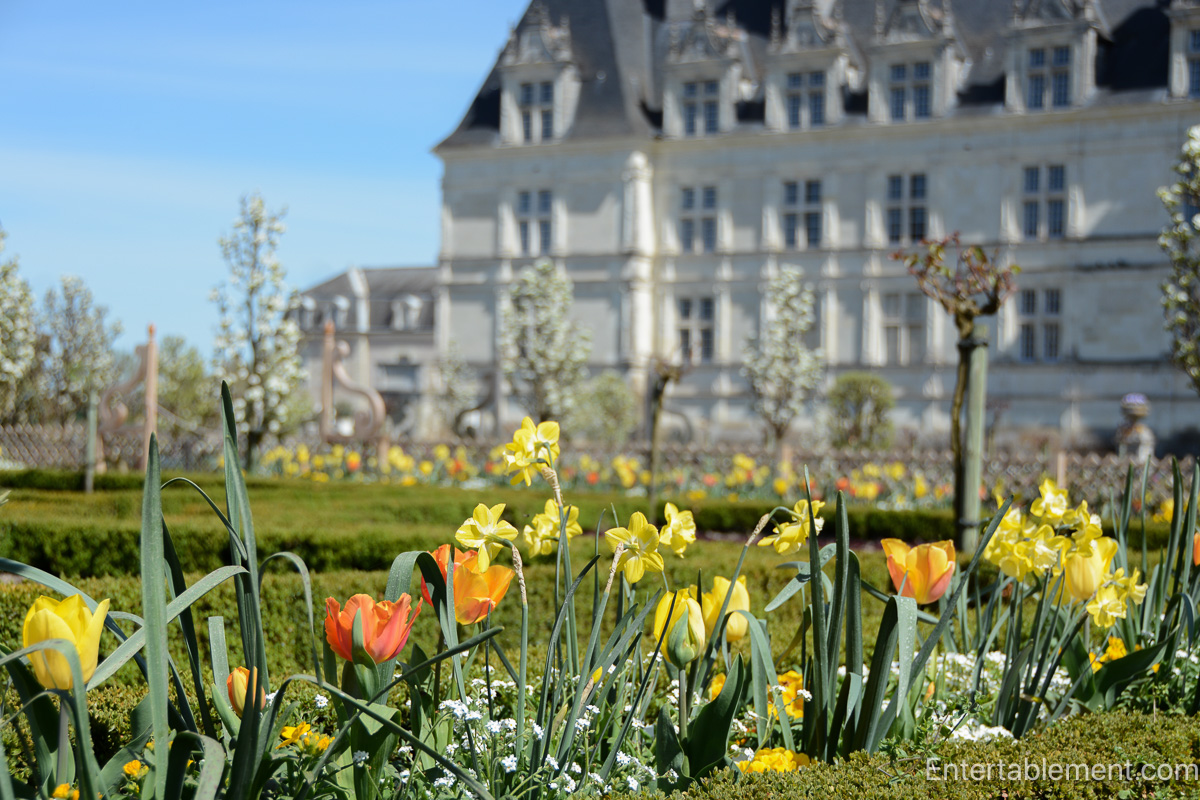
Yet, for all its formal elegance, Villandry’s gardens are far from static. They evolve with the seasons, the weather, and the shifting ideas of those who tend them. The vegetable beds are replanted multiple times a year, and the pruning of the trees and hedges is relentless. Behind the tranquil surface is a choreography of constant labour. This tension—between permanence and change, tradition and renewal—gives Villandry its particular magic.
This post is part of the Loire Valley Château Series—a journey through the elegance, history, and charm of France’s most beloved estates.
Explore the full series: