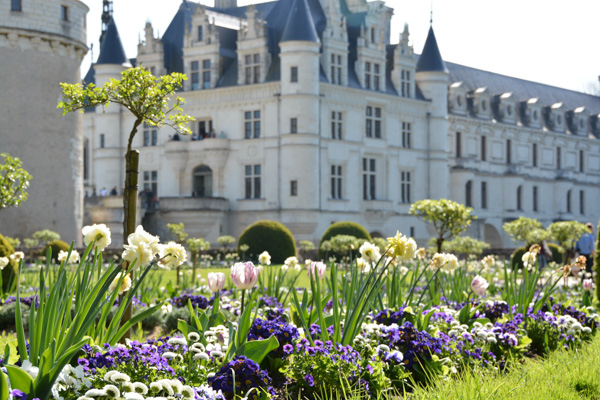
Updated May 2025 with new photos and insights.
Tucked into the Loire Valley like a fairytale come to life, Château de Chenonceau is one of France’s most romantic and intriguing châteaux. Known as “The Ladies’ Castle,” Chenonceau owes much of its splendour to the extraordinary women who designed, embellished, and protected it across centuries. From Diane de Poitiers to Catherine de’ Medici, the château reflects a tapestry of power, beauty, and grace—woven with feminine hands.
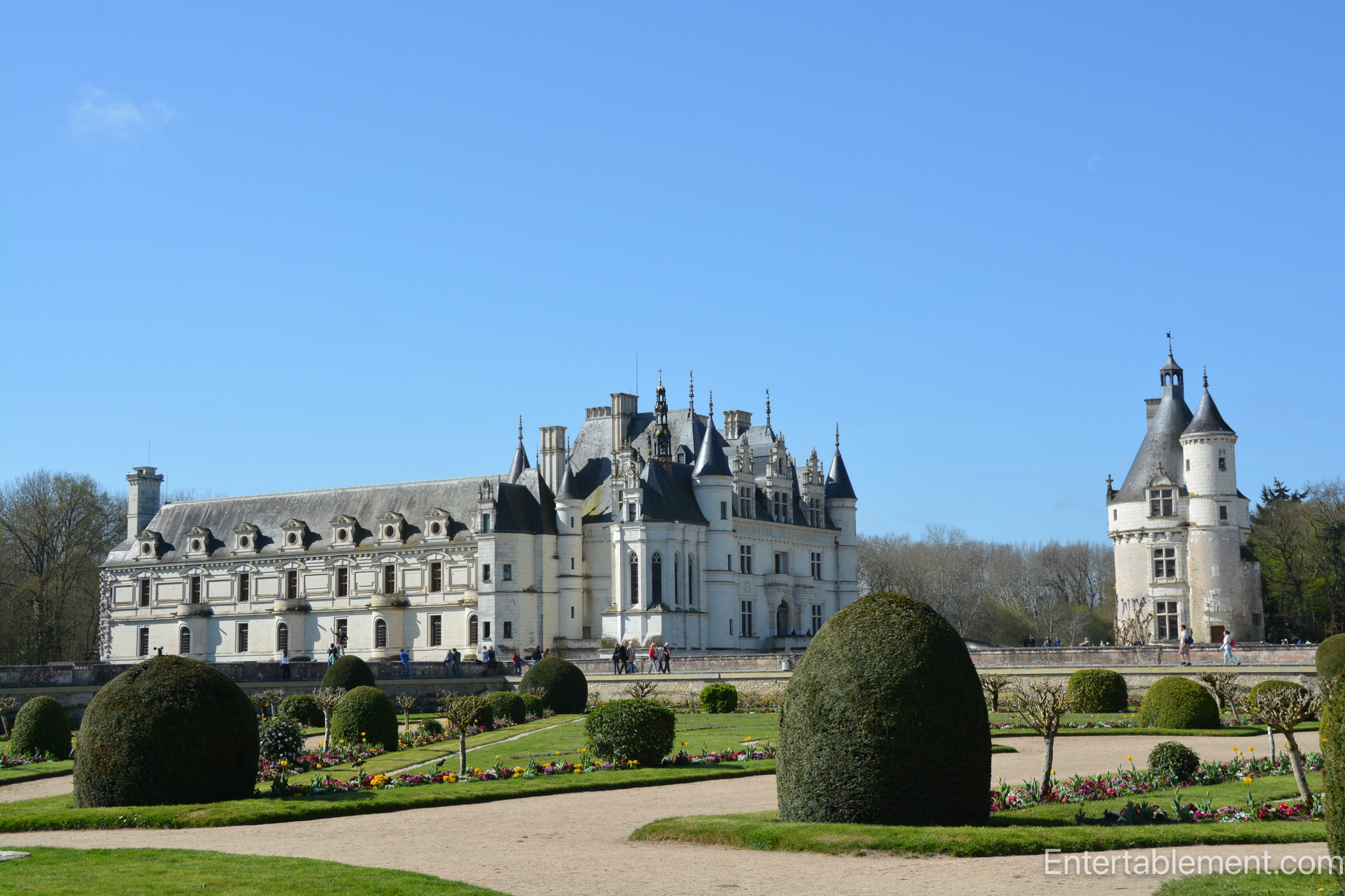
Having first visited in 2015, I was inspired to revisit the post when I featured Gien’s Chateaux of the Loire plates in a table setting over on Entertablement. What a difference a decade makes in editing technology and the photographer’s skill (ahem)… The updated photos capture the castle’s detail and grandeur inside and out.
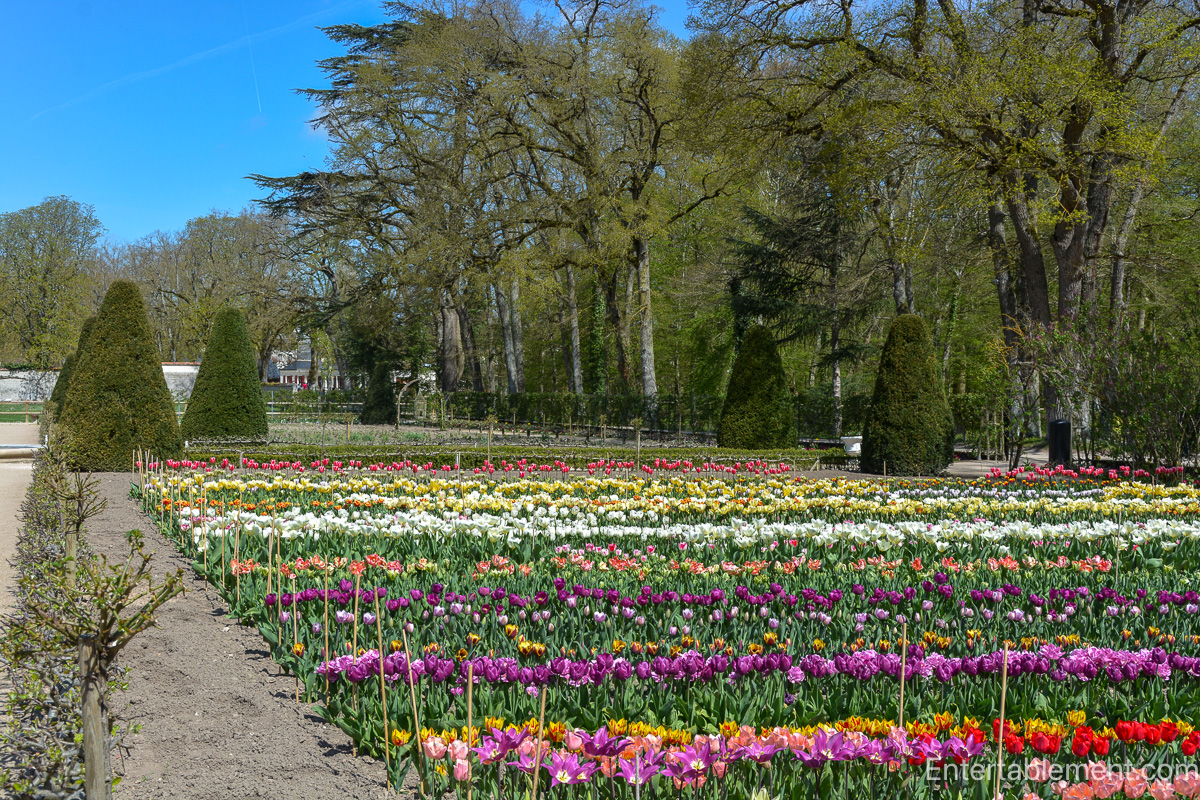
Springtime proved ideal, with tulips in bloom and the gardens freshly dressed.
A Castle Floating on Water
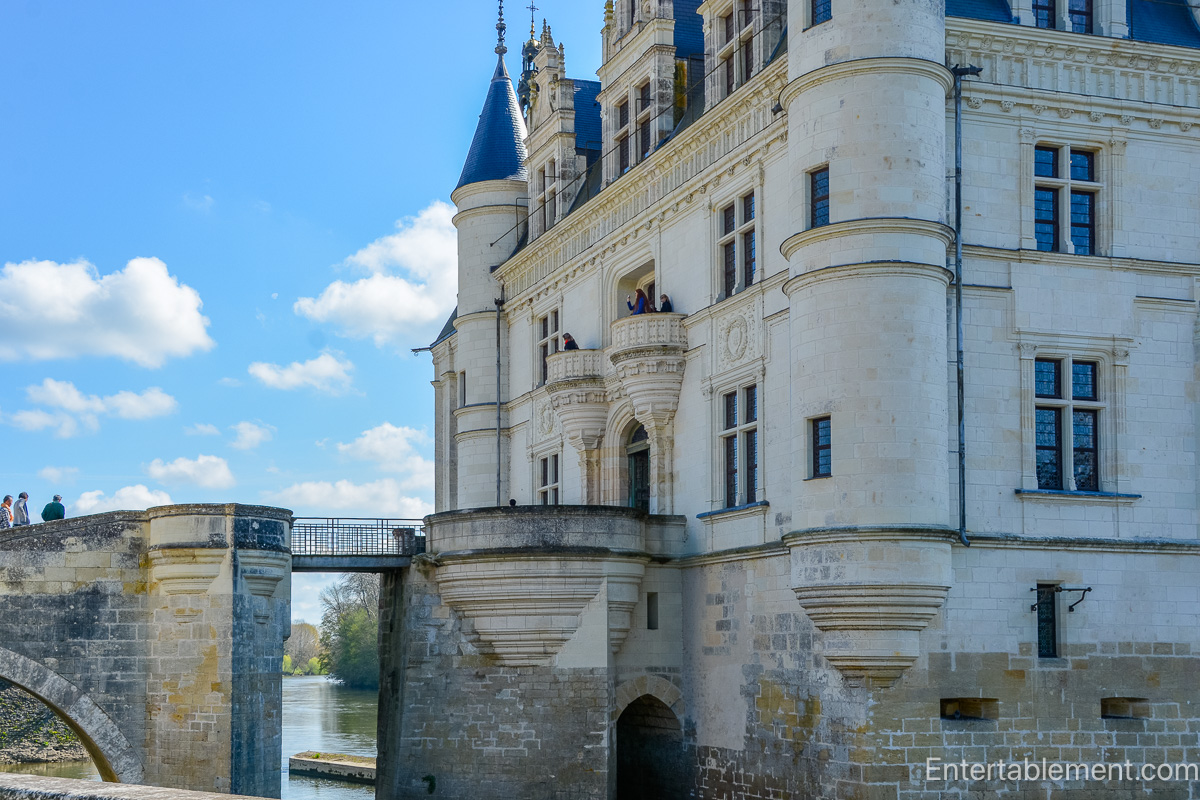
Perhaps Chenonceau’s most iconic view is its arched gallery stretching across the River Cher. This elegant expansion, added by Catherine de’ Medici, gives the illusion of a palace sailing across the water. On a still day, the building reflects perfectly in the river’s surface, as though posing for a portrait.

During World War II, Chenonceau’s unique position over the River Cher gave it unexpected geopolitical significance. The river marked the boundary between Nazi-occupied France and the Free Zone. The gallery’s far end, lying in free territory, served as an escape route for resistance fighters and refugees—a remarkable chapter in the château’s storied past.
As one Resistance member recalled: “The gallery at Chenonceau was more than a passage—it was a lifeline. On one side, oppression; on the other, hope.”
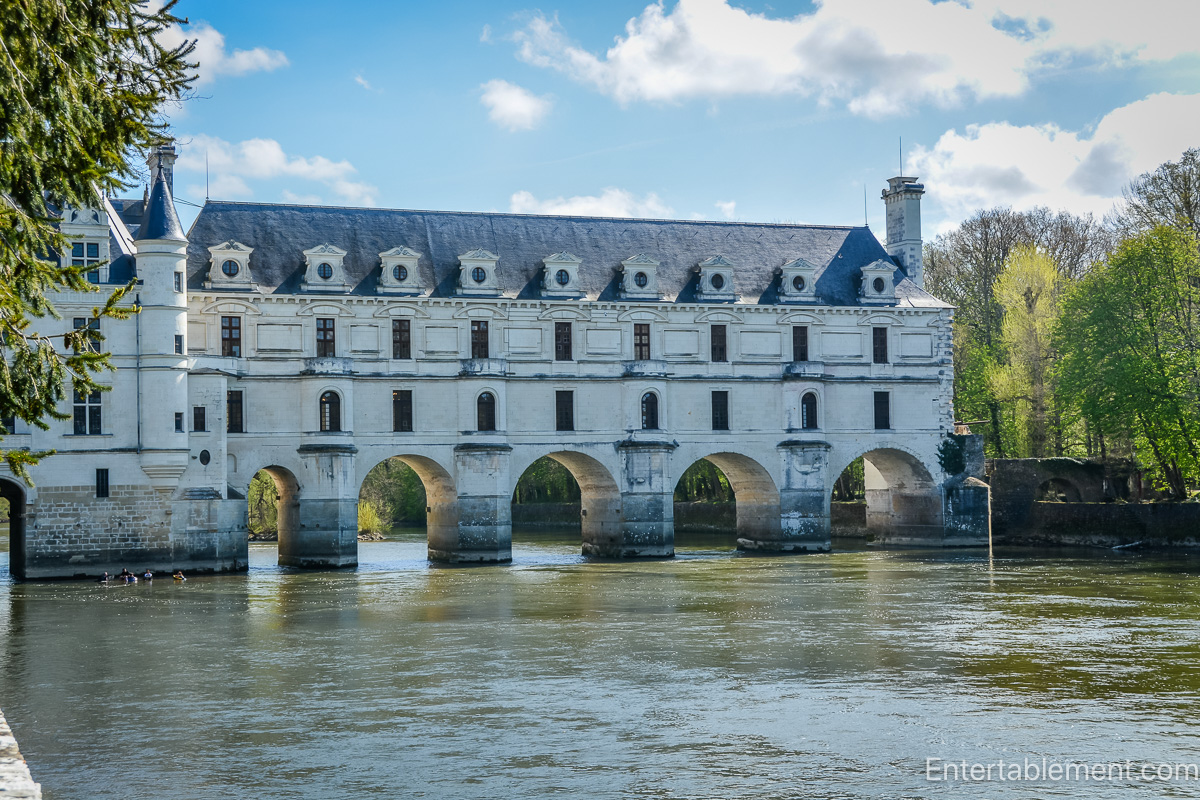
From a distance, the castle’s gracious proportions belie its size. Only when you get close do you appreciate the sheer size and engineering complexity of the extension over the river.

Gardens of Rival Women
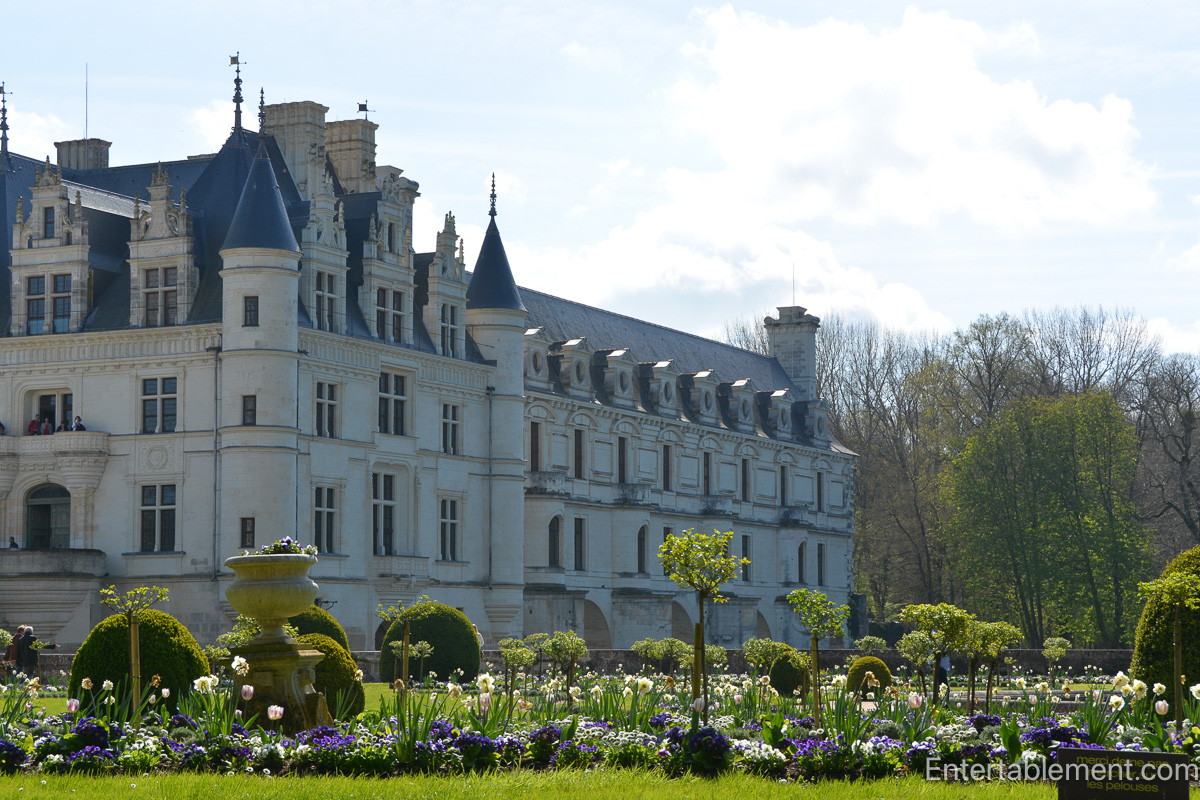
The rivalry between Diane de Poitiers and Catherine de’ Medici lives on in the gardens they each designed. Diane, mistress of Henry II, created a bold, symmetrical garden with commanding views.

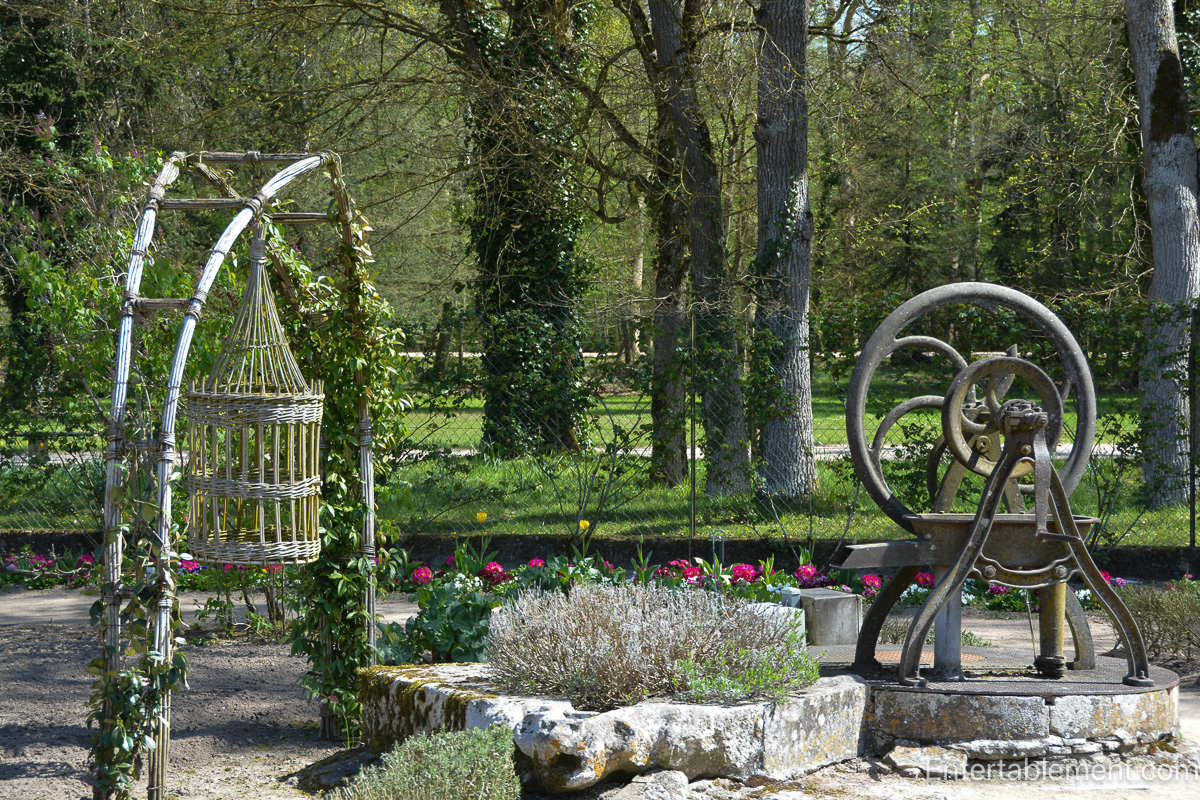
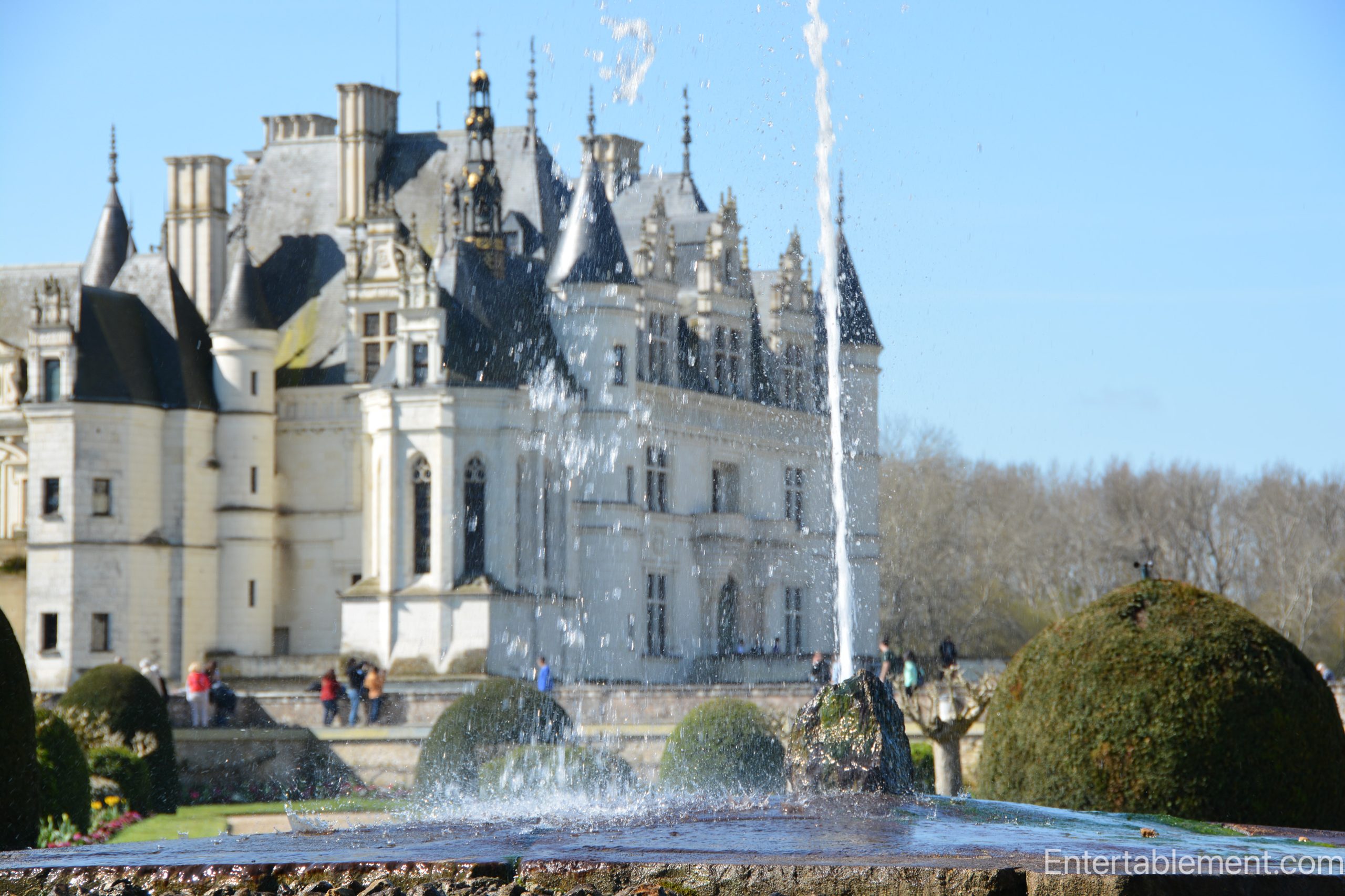
Catherine, his widow and queen, favoured a more intimate space with fountains and floral flourishes. Spring paints both in vibrant colours.

Architectural Details & Symbolism
Chenonceau is a feast of Renaissance design.
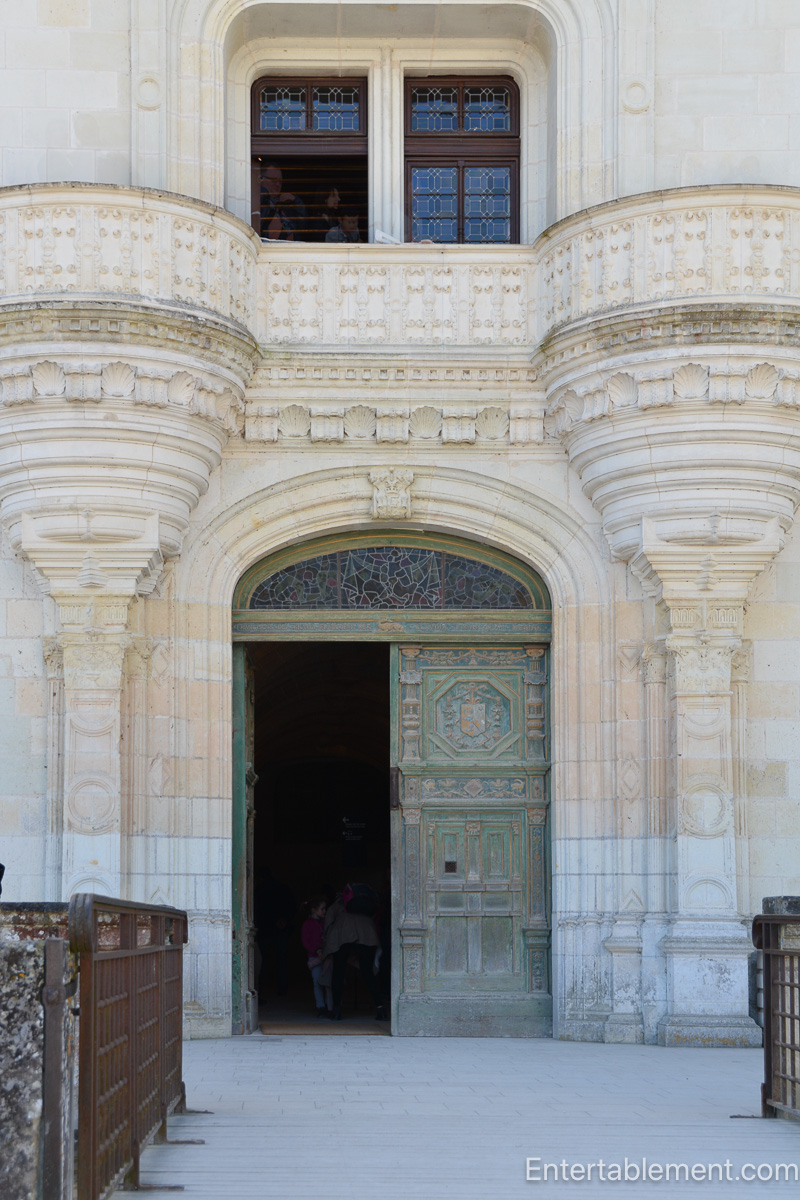
A carved doorway bears the inscription “CLAUDIA FRANCORUM REGINA” — Queen Claude of France.

An interior ceiling features the initials of Henry and Catherine (you can see the bottom of the “C” towards the top of the photo).
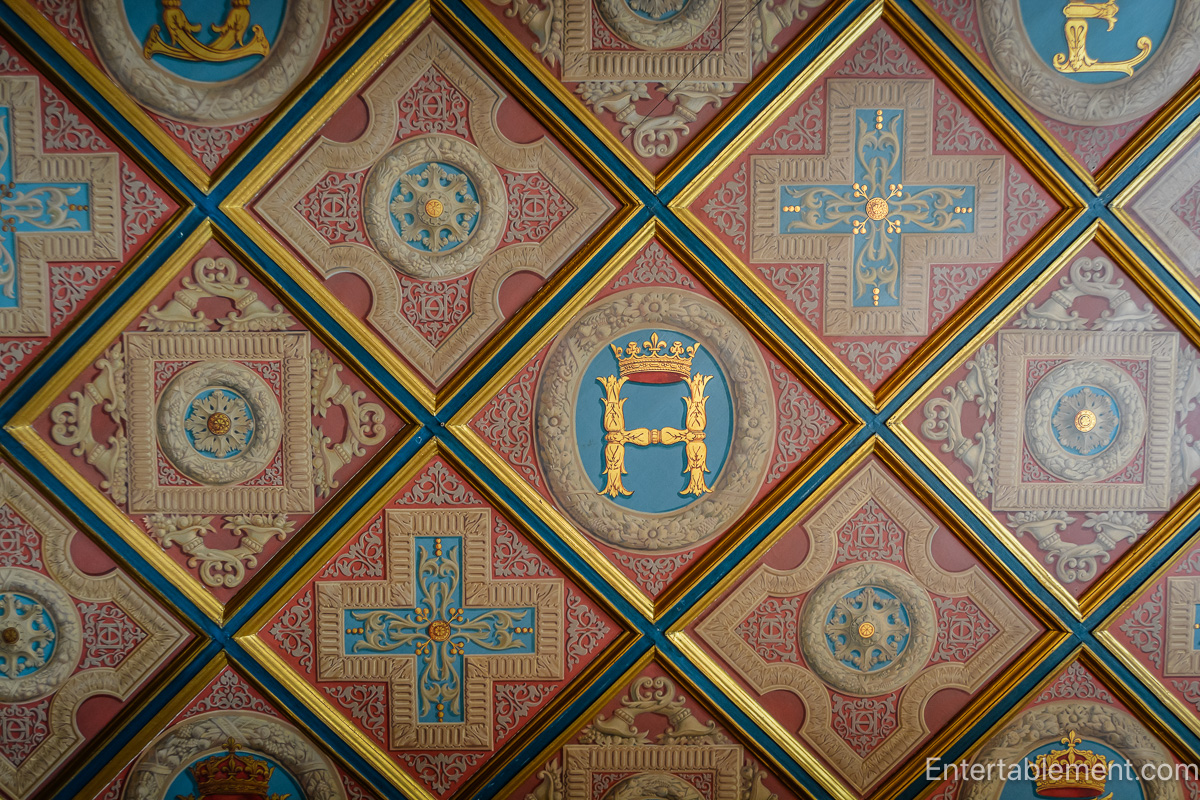
Tapestries, Tiles & Textiles
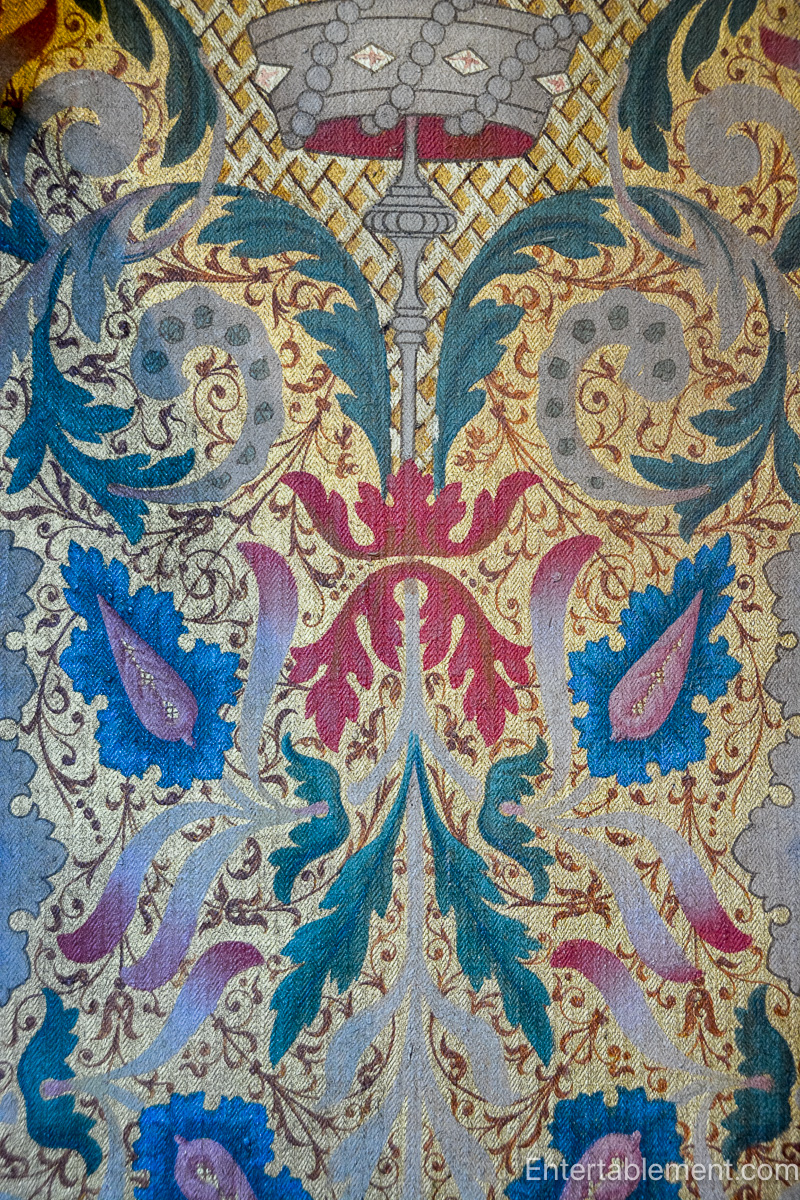
Inside, Chenonceau delights with texture: lush tapestries, vibrant embroidered fabrics, and charming tiled scenes. Each piece tells a story.
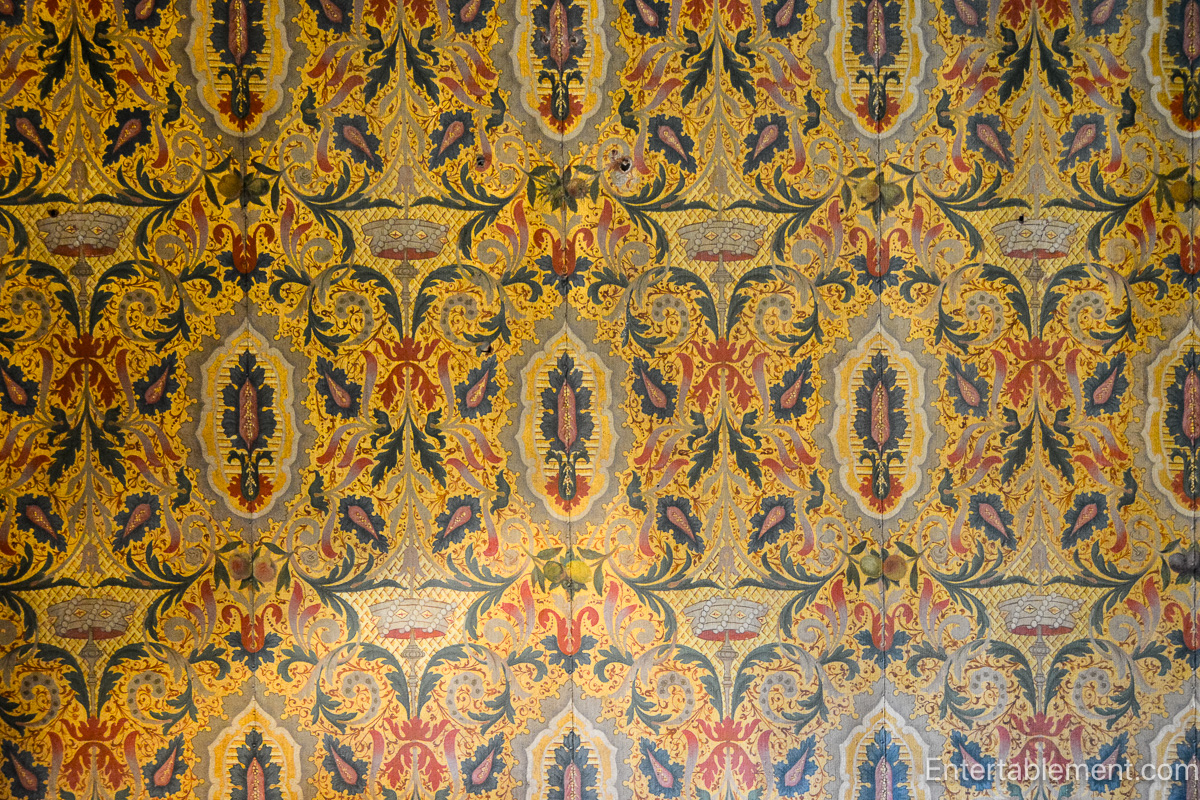
Note how the crown is woven in.
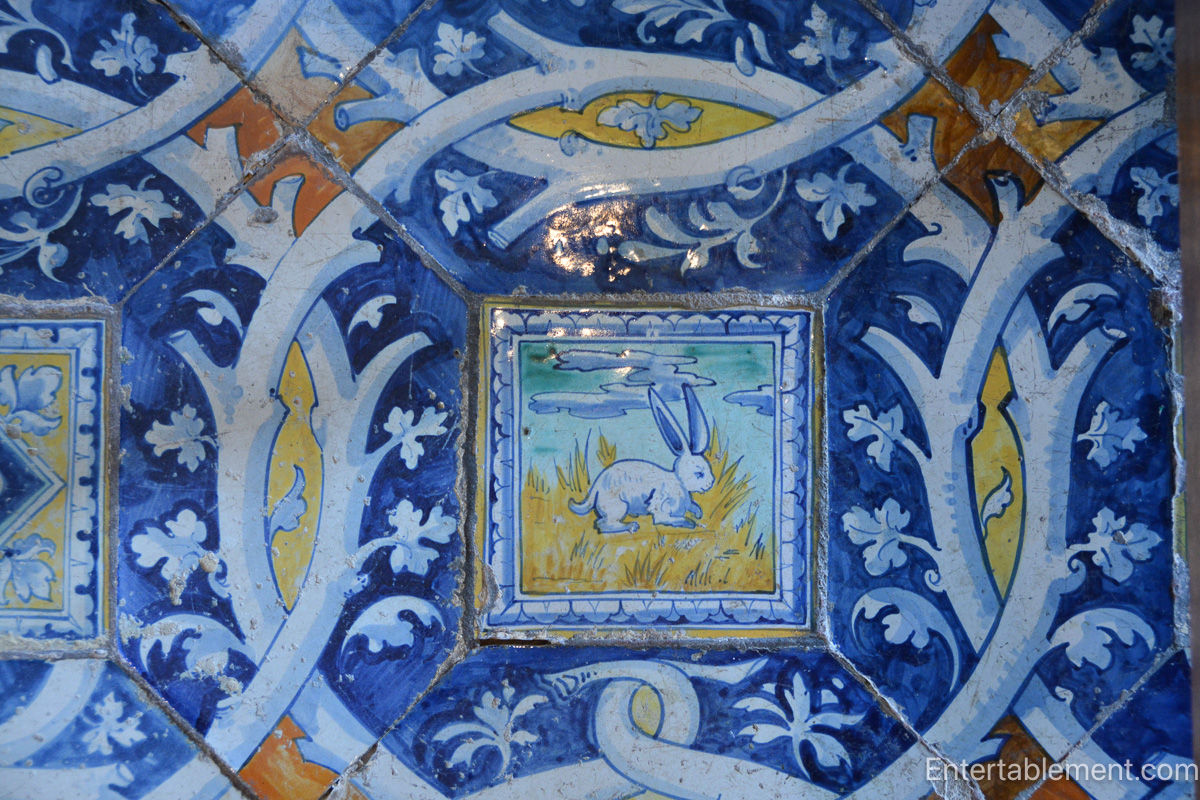
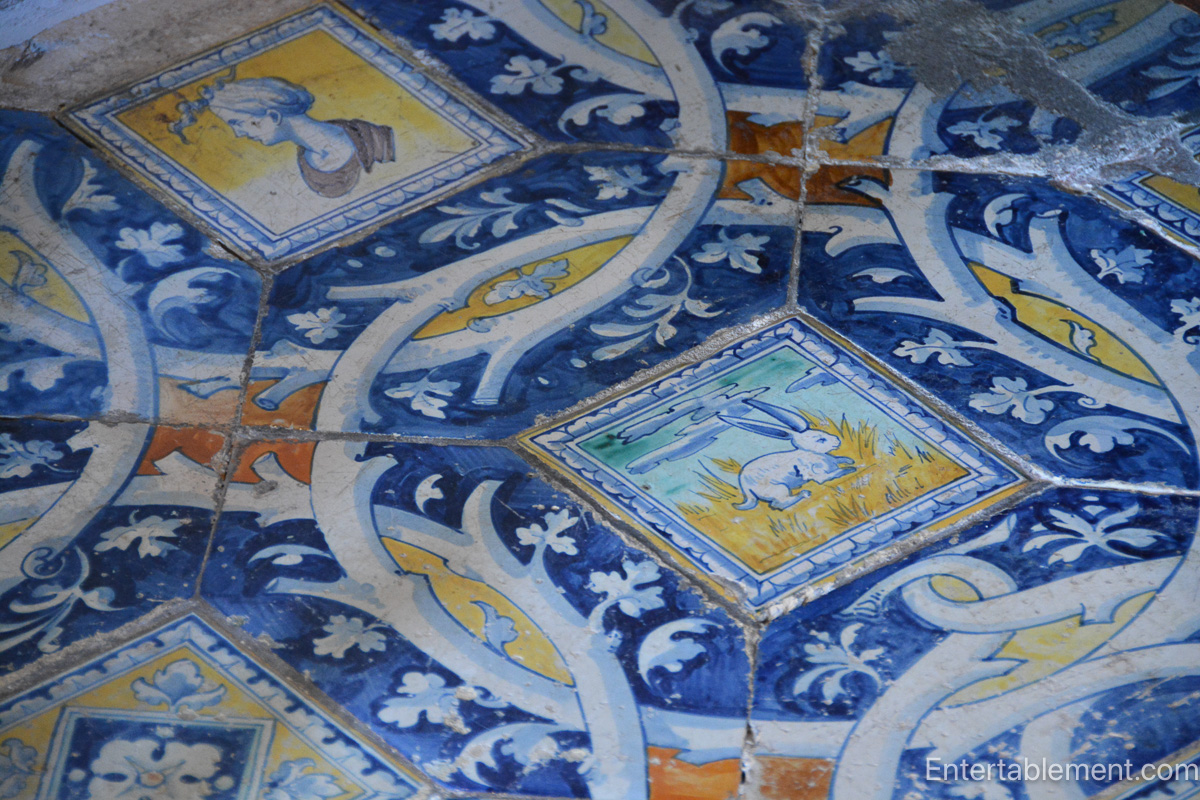
A favourite: a bright rabbit tile nestled among deep blue scrollwork.
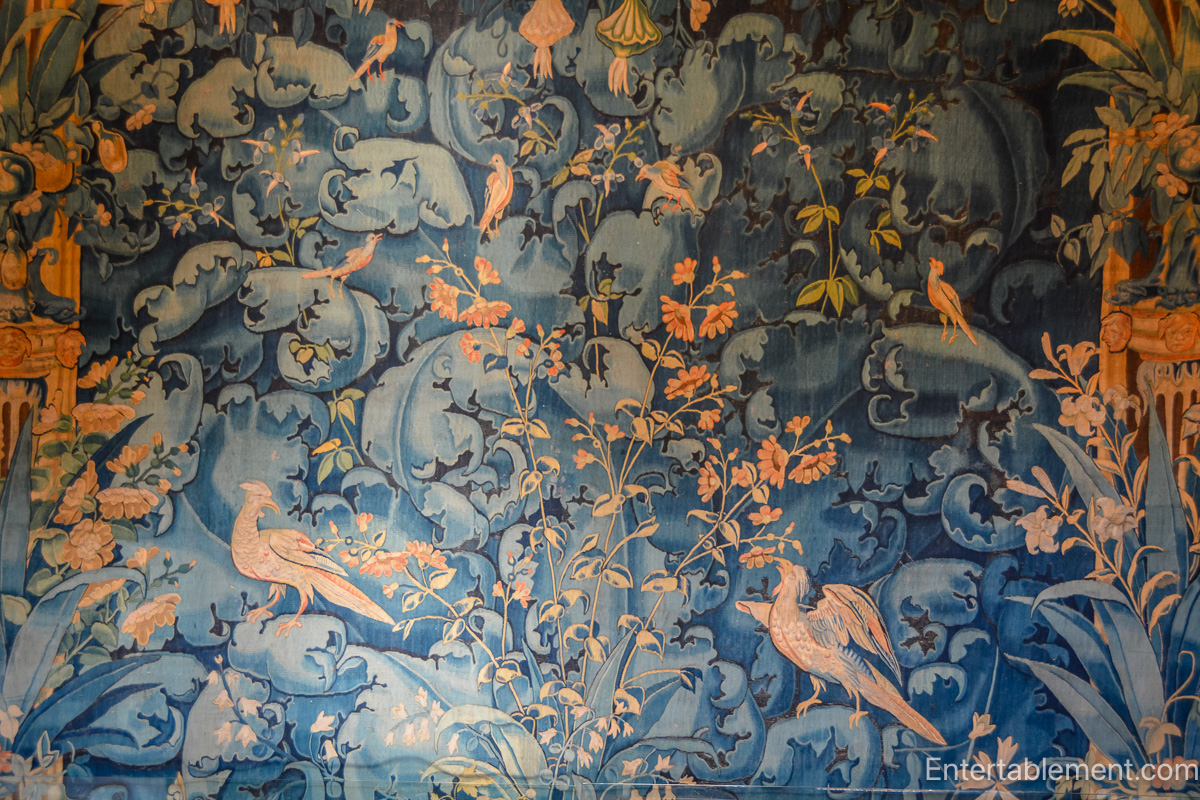
Another delight: the floral-and-bird tapestry in soft blue and rose tones.
Rooms of Remarkable Women
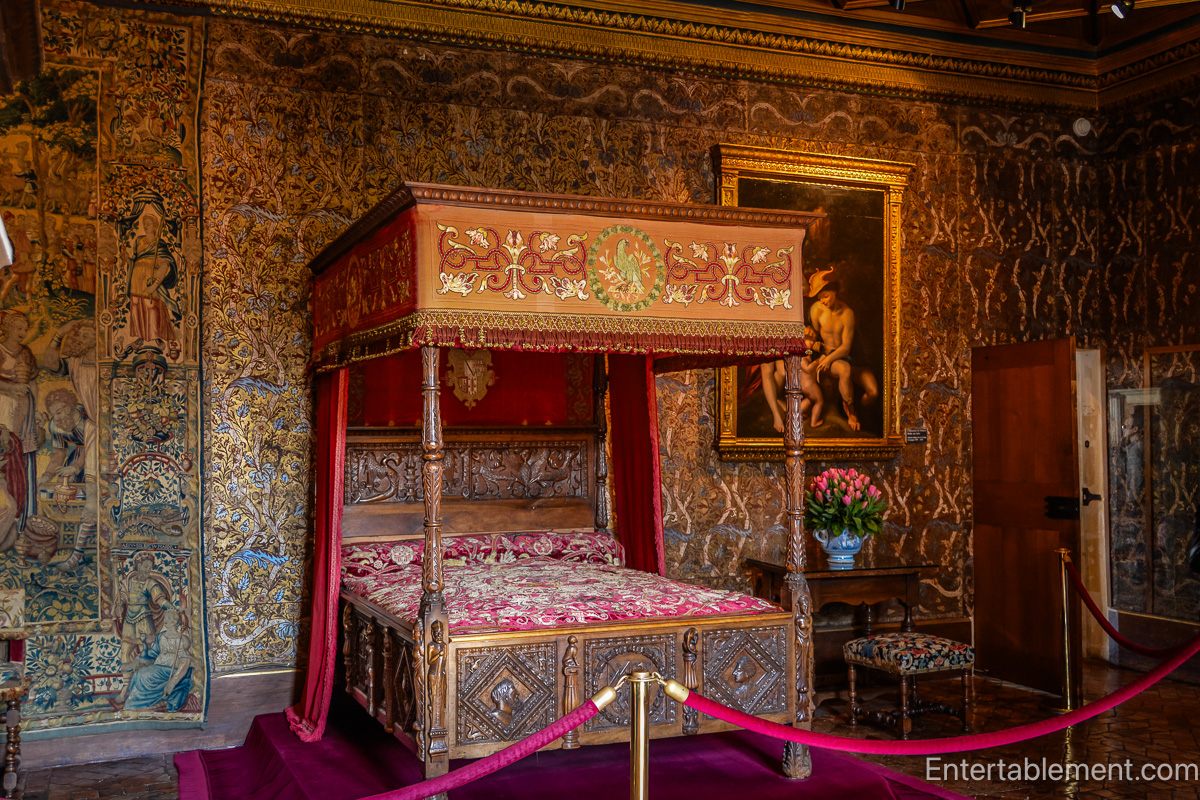
The richly adorned red bedroom is the Chambre des Cinq Reines, or the Room of the Five Queens. It honours five remarkable women: Catherine de Medici and her daughters Marguerite de Valois and Elisabeth of Valois, Elisabeth of Austria, and Mary Stuart (Mary, Queen of Scots), all of whom held positions of power and influence across France and Europe. Each had ties to Catherine through either blood or marriage. The room’s opulent textiles and regal furnishings pay tribute to these royal women whose lives were marked by grandeur, diplomacy, and, all too often, personal tragedy.
Mary, Queen of Scots, was briefly Queen Consort of France after marrying Francis II, then the Dauphin, in a political alliance between Scotland and France. Though she was celebrated at the French court, her time as queen was tragically short—Francis died just over a year after ascending the throne. Mary returned to Scotland, where her reign and personal choices would lead to scandal, imprisonment, and ultimately execution. A woman of beauty and passion, she remains one of history’s most romantic—and tragic—figures.
Henry II gifted Château de Chenonceau to Diane de Poitiers, his powerful and elegant mistress. Her taste and influence are reflected in the château’s architecture and décor. The blue bedroom, often associated with her, radiates restrained sophistication, featuring dark panelling, subtle detailing, and rich sapphire tones. It contrasts the theatricality of Catherine de Medici’s additions, and remains a testament to Diane’s enduring presence at Chenonceau—even after Catherine reclaimed the château following Henry’s death.
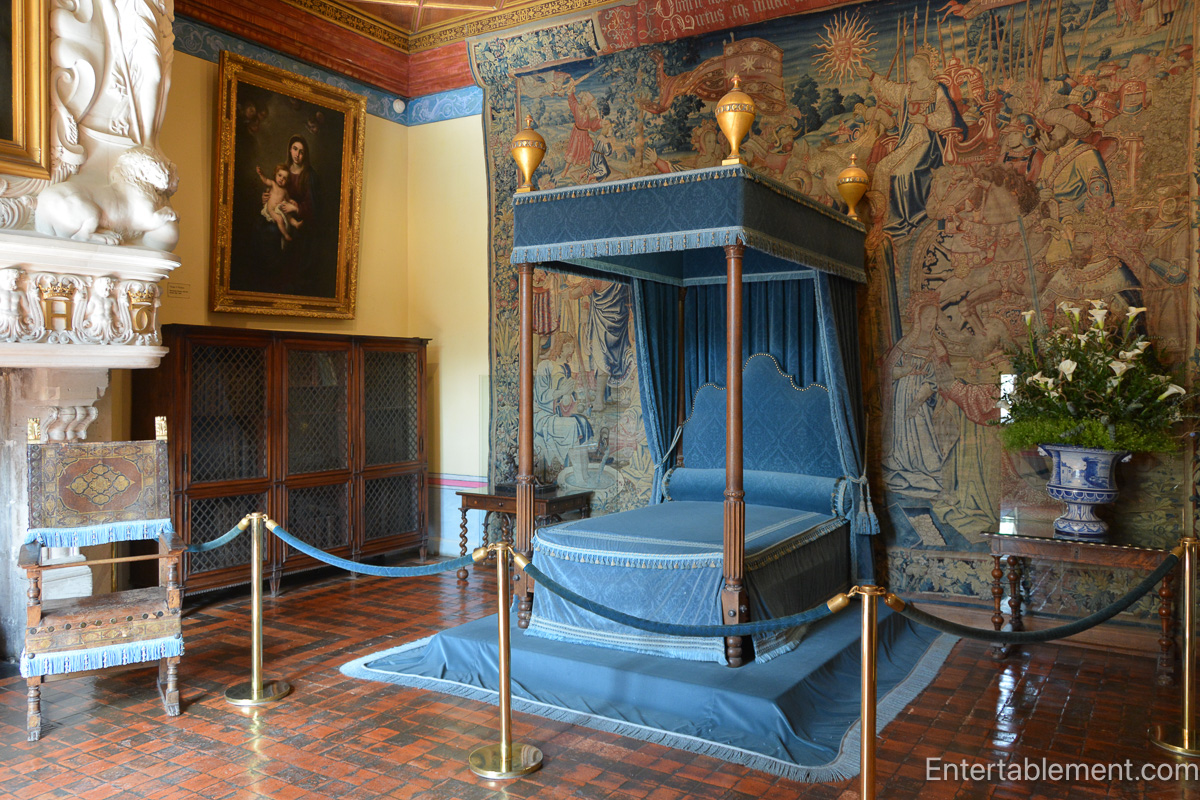
Though the “blue room” was used by Diane de Poitiers, it must have been a bit galling for her to see the initials of her rival, Queen Catherine de Medici, emblazoned on the fireplace.

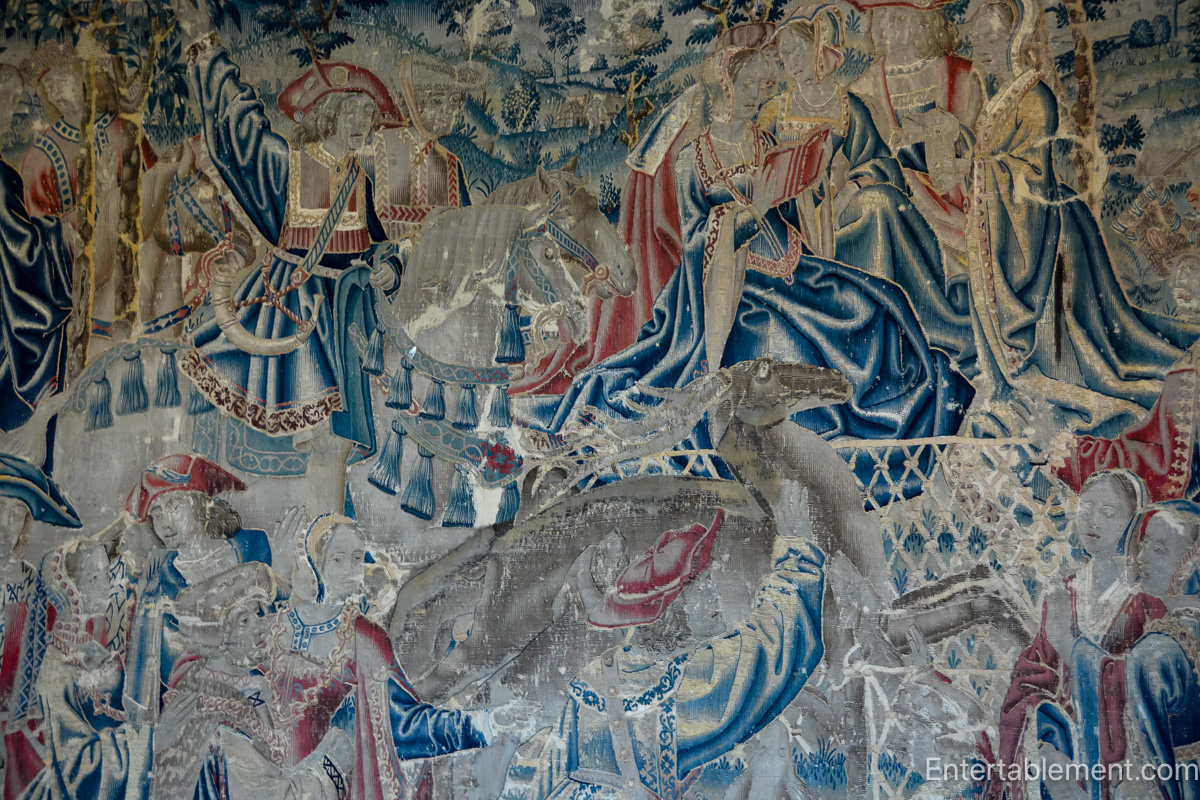
Tapestries of historic scenes surround the four-posters, whispering courtly intrigues.
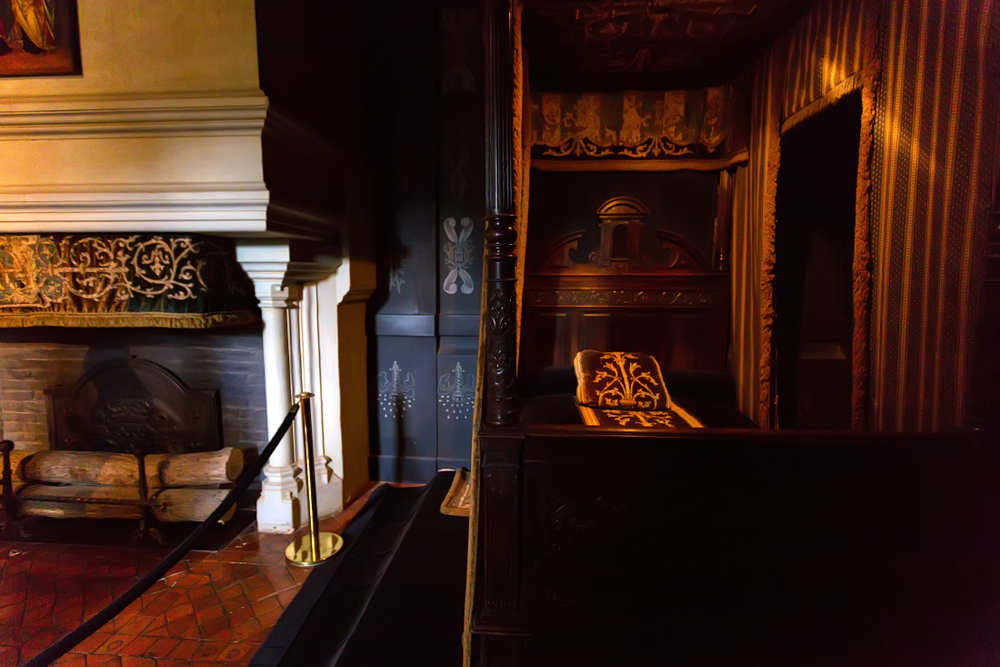
One of the château’s most emotionally charged spaces is the mourning room of Louise of Lorraine. After the assassination of her husband, King Henry III, she withdrew from court life and lived in seclusion at Chenonceau. Draped in black and embroidered with silver symbols of grief, her bedroom is sombre and introspective.
Shutterstock


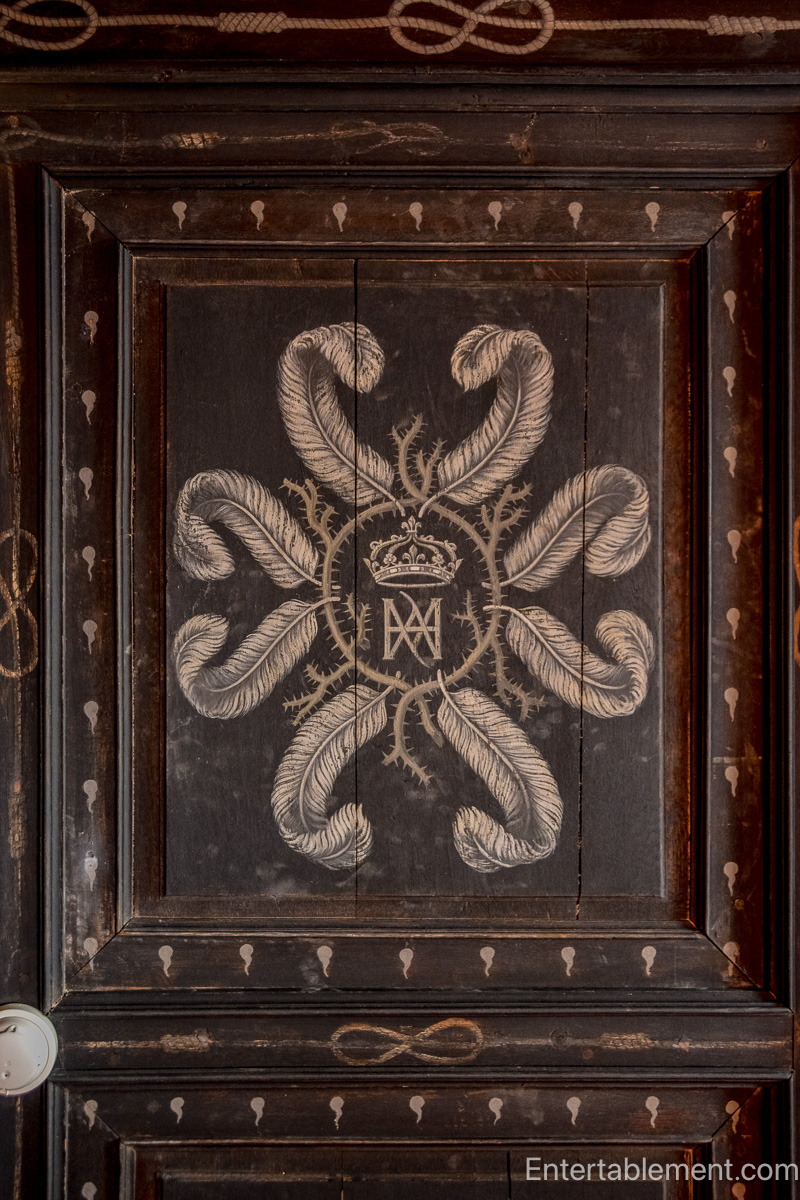
The panel to the left of the bed shows the crowned monogram “MA” surrounded by feathers and thorns, symbolizing sorrow. Crowns of thorns and the intertwined Greek letter lambda reflect Louise’s prolonged mourning after the king’s assassination. Her deeply personal iconography transformed her rooms at Chenonceau into a sanctuary of grief, where she lived in white mourning robes and spiritual contemplation, earning her the title “The White Queen.” A woman of beauty and passion, she remains one of history’s most romantic—and tragic—figures.
More tapestries line the hallways.

Carvings, Fireplaces & Vaulted Halls
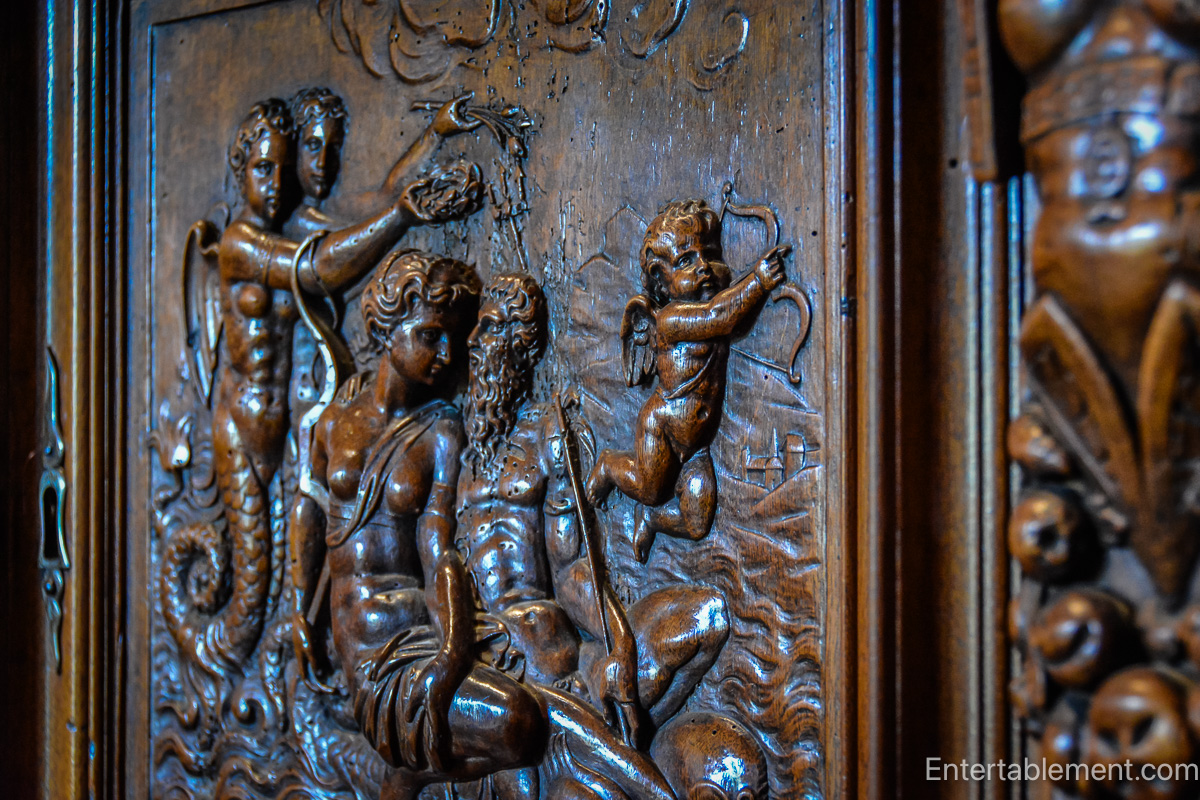
Details abound: mythological wood panels where cherubs draw bows and sea creatures cavort…
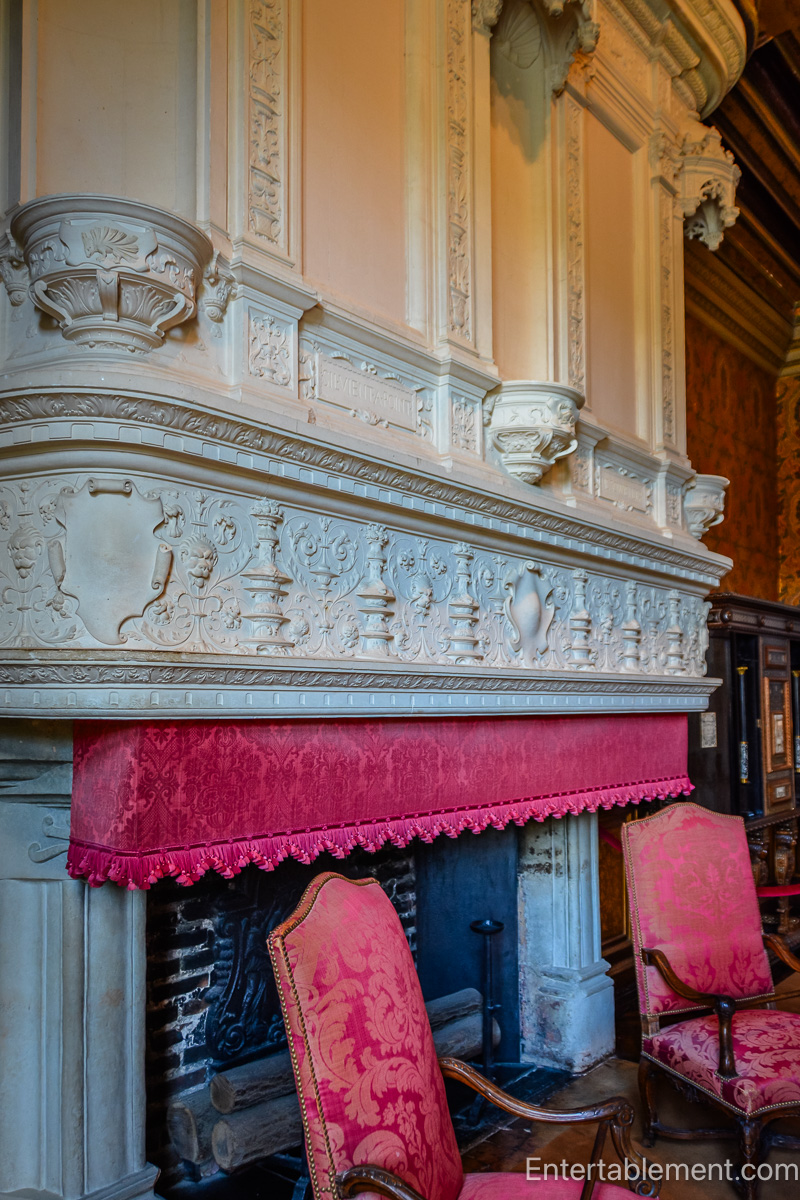
…white sculpted fireplaces of incredible depth…

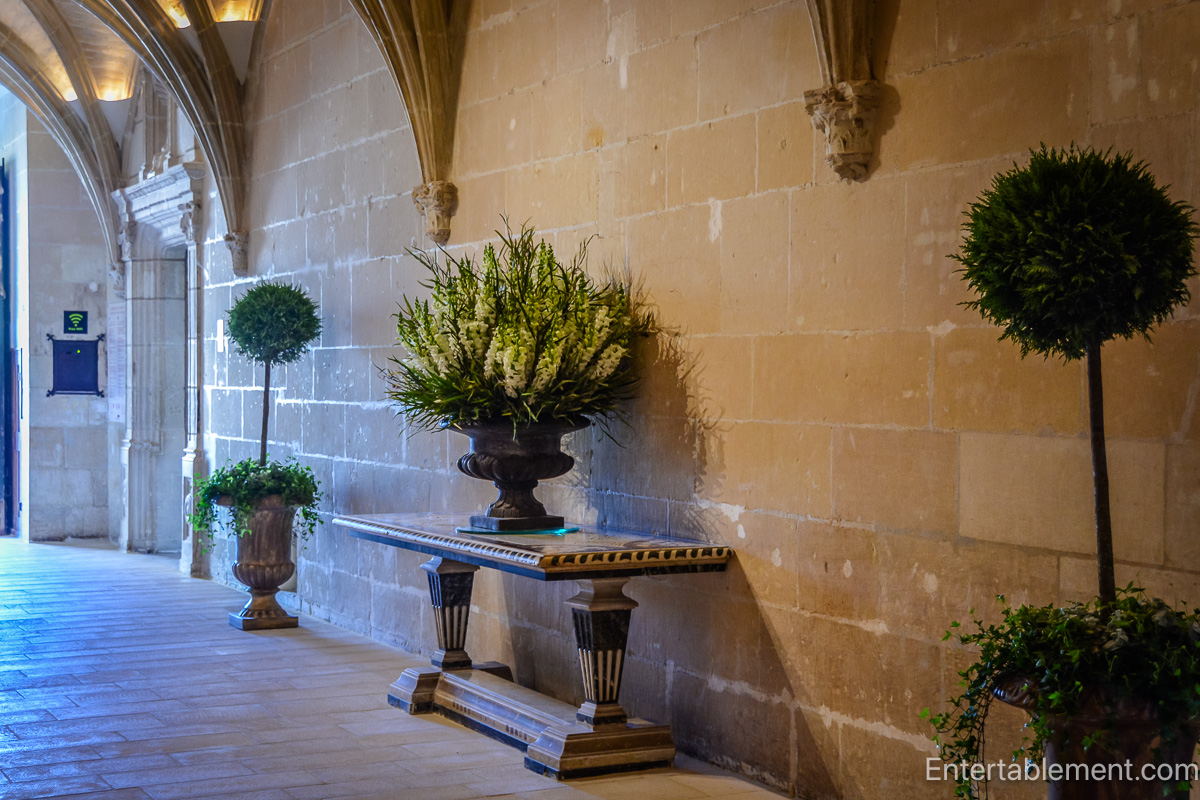
And vaulted ceilings lit with soft amber light.


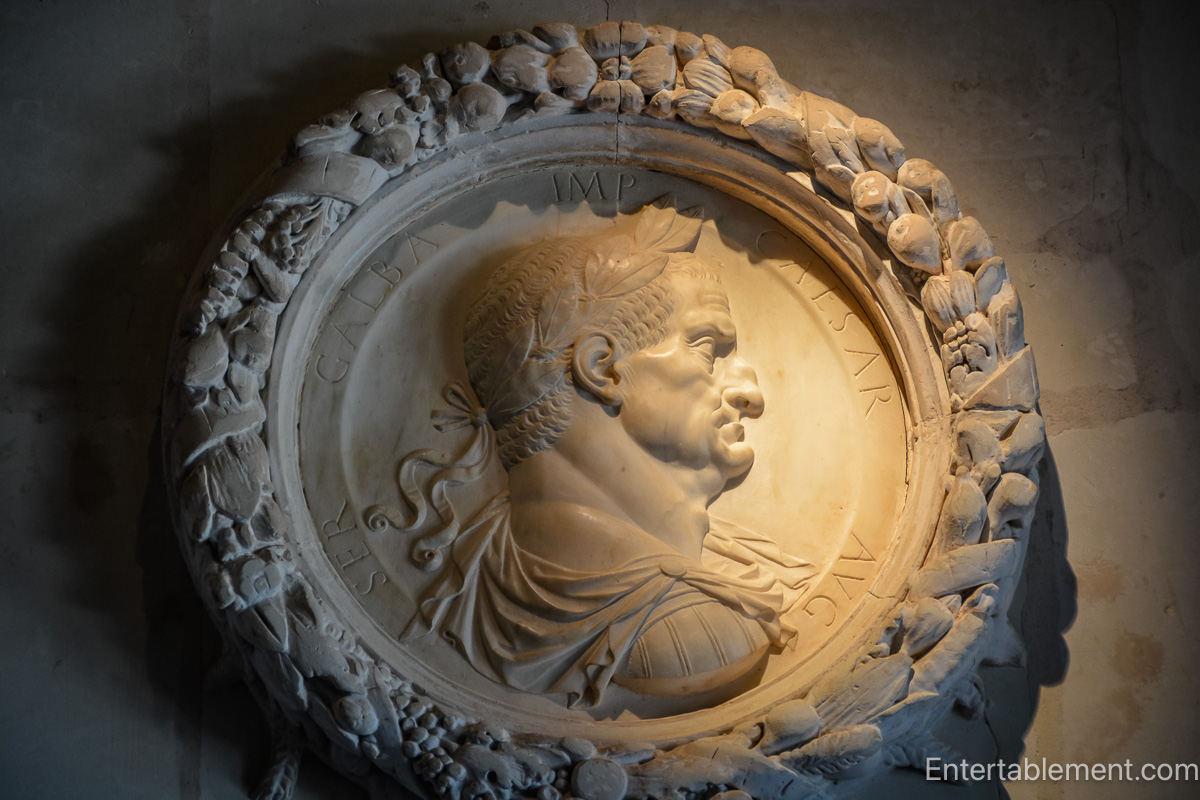
A marble medallion of Roman Emperor Galba watches from the wall with imperial solemnity.
Ever-Blooming Interiors
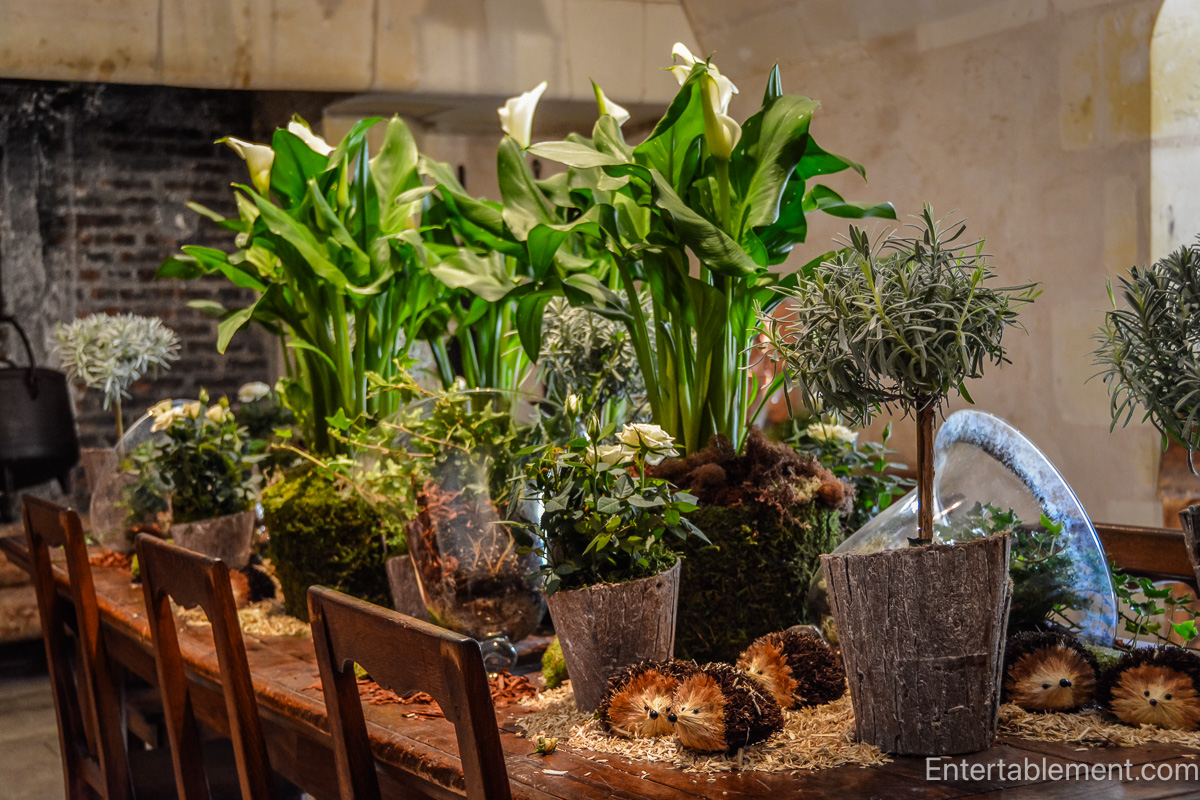
What surprised and enchanted me most was the floral artistry throughout the interior.
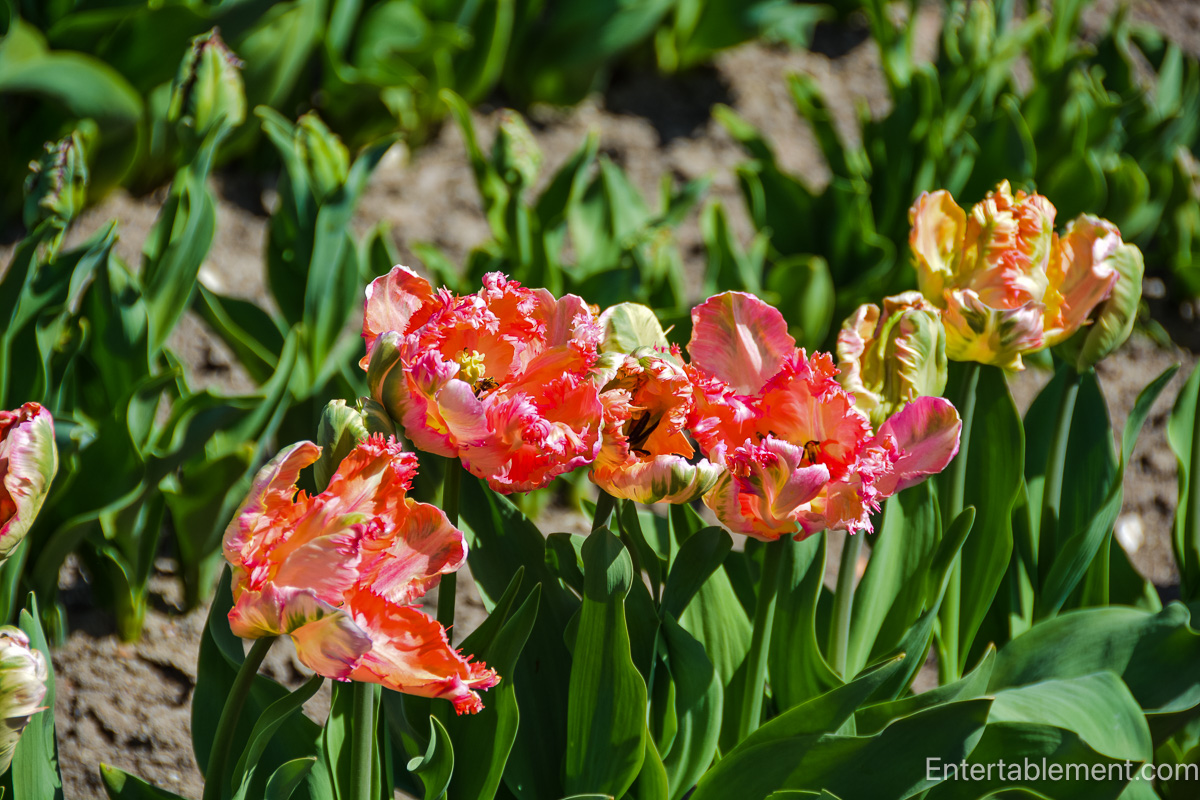
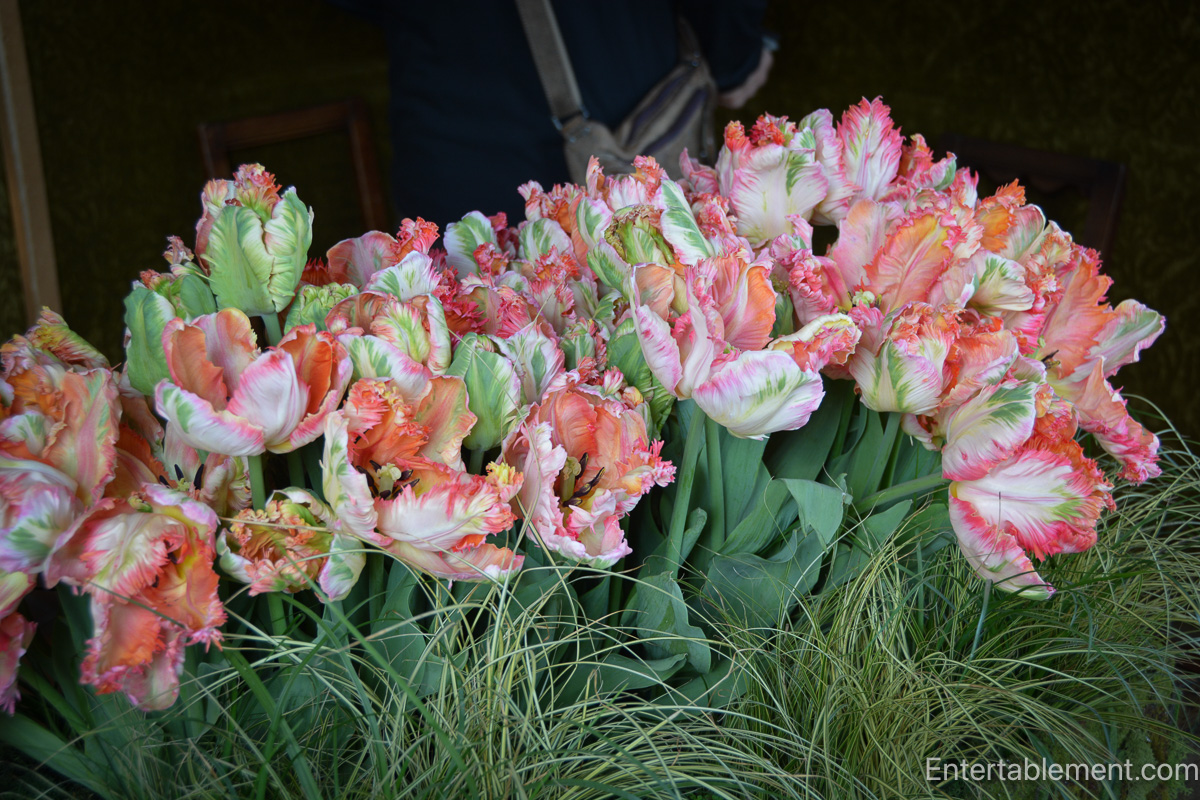
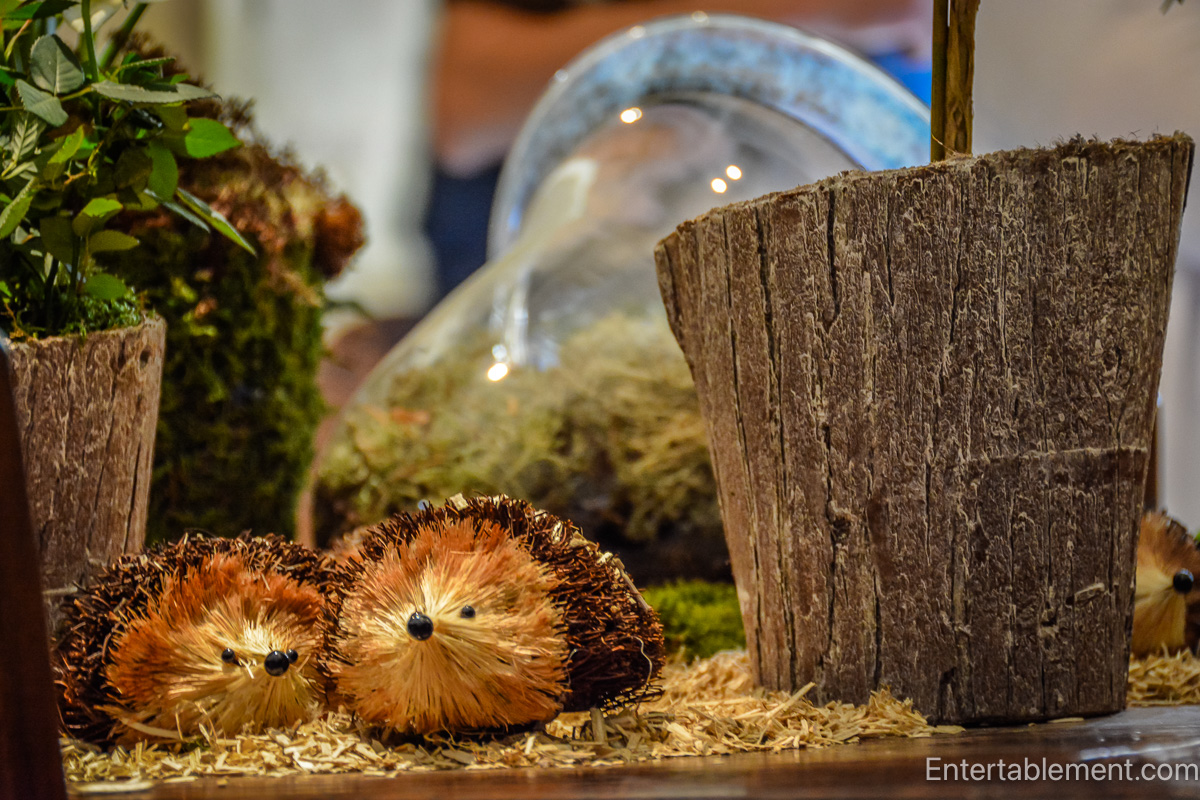
Elaborate seasonal arrangements fill rooms with colour and fragrance. Parrot tulips, moss, and wild grasses spill from bark-covered containers and antique urns.
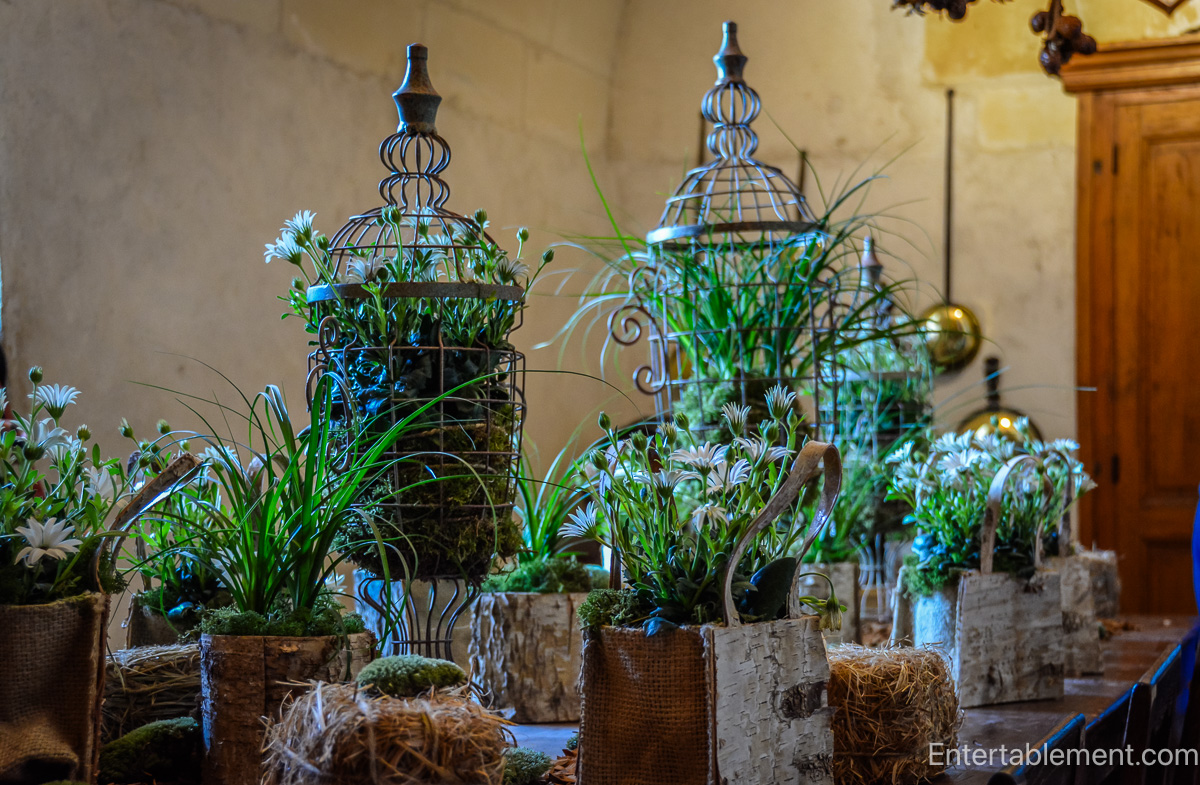
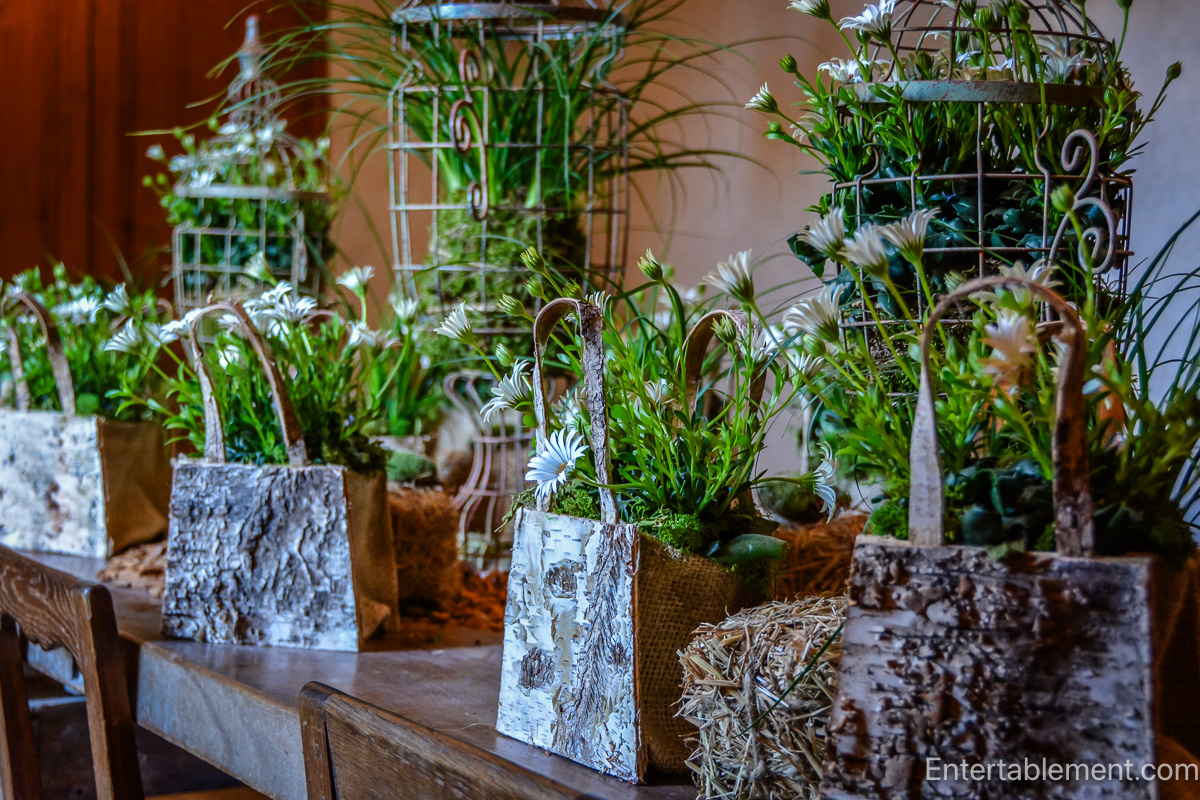
I fell in love with the exuberant parrot tulips.
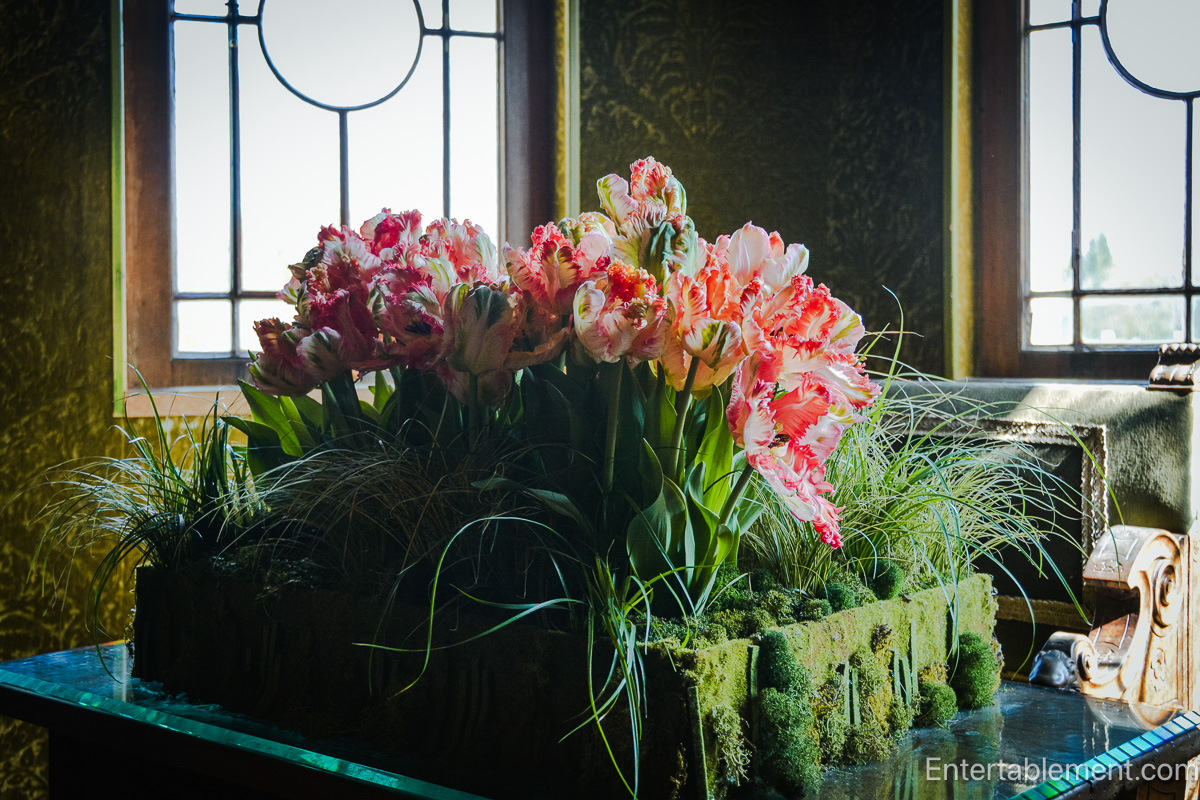
I think this was the first time I had truly appreciated how magnificent they are when clustered en masse.
And who can resist those hedgehogs?
The castle extends over the river Cher from the leaded window.

The Humble Heart of Chenonceau
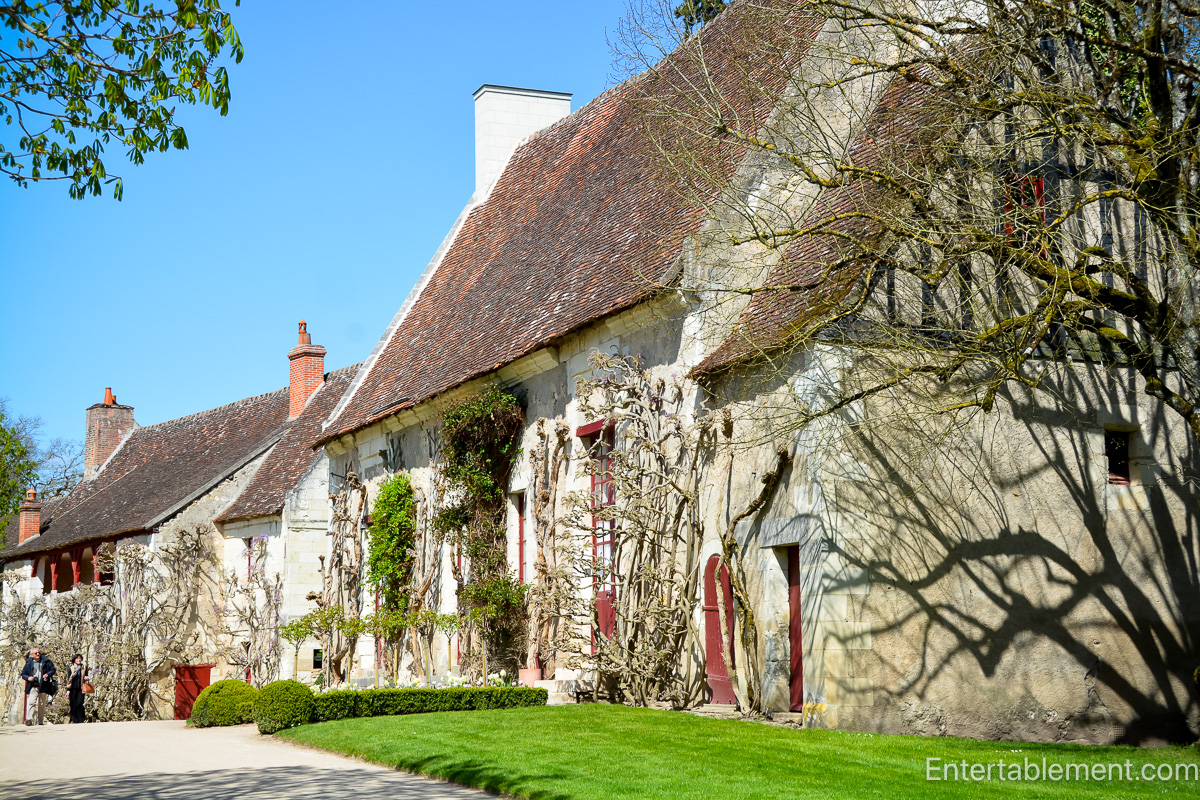
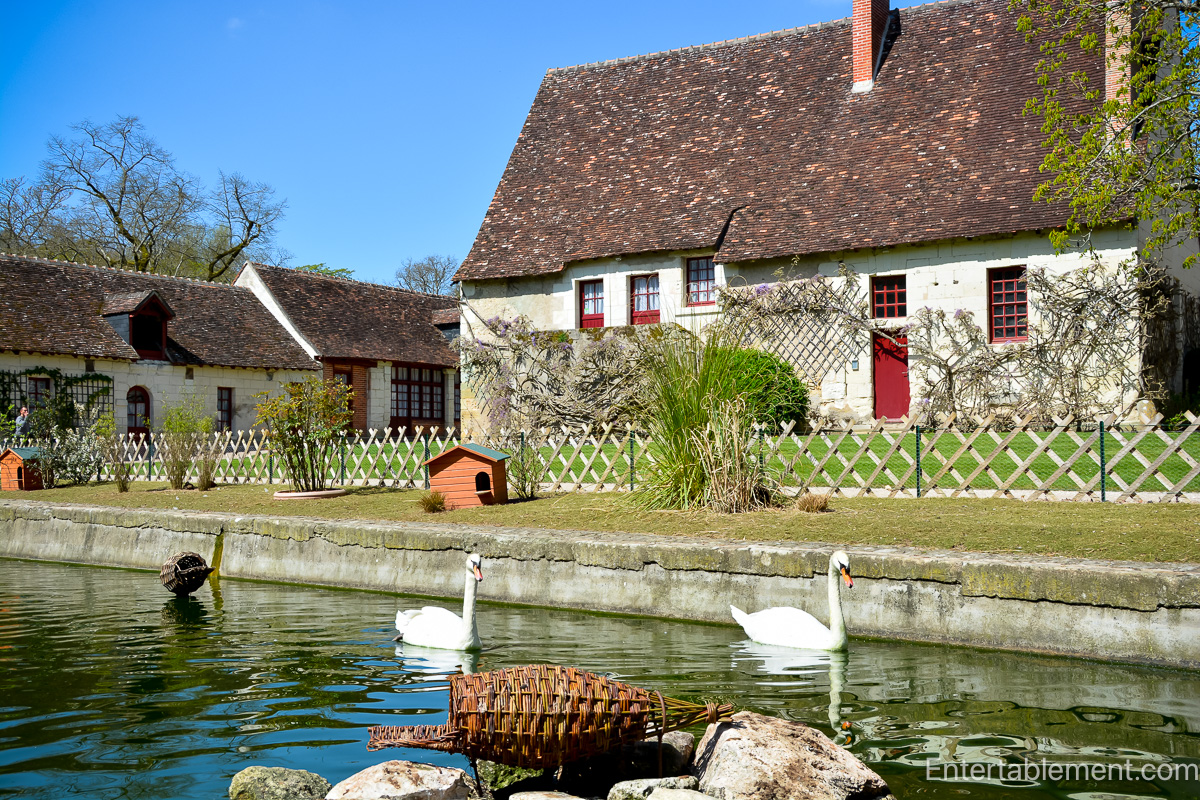
Beyond the grandeur of the galleries and salons lies another, quieter charm: the working estate that still pulses with rustic life. Chenonceau’s service buildings—originally used for laundry, kitchens, and staff quarters—are beautifully preserved, their red shutters and climbing vines looking as picturesque today as ever.
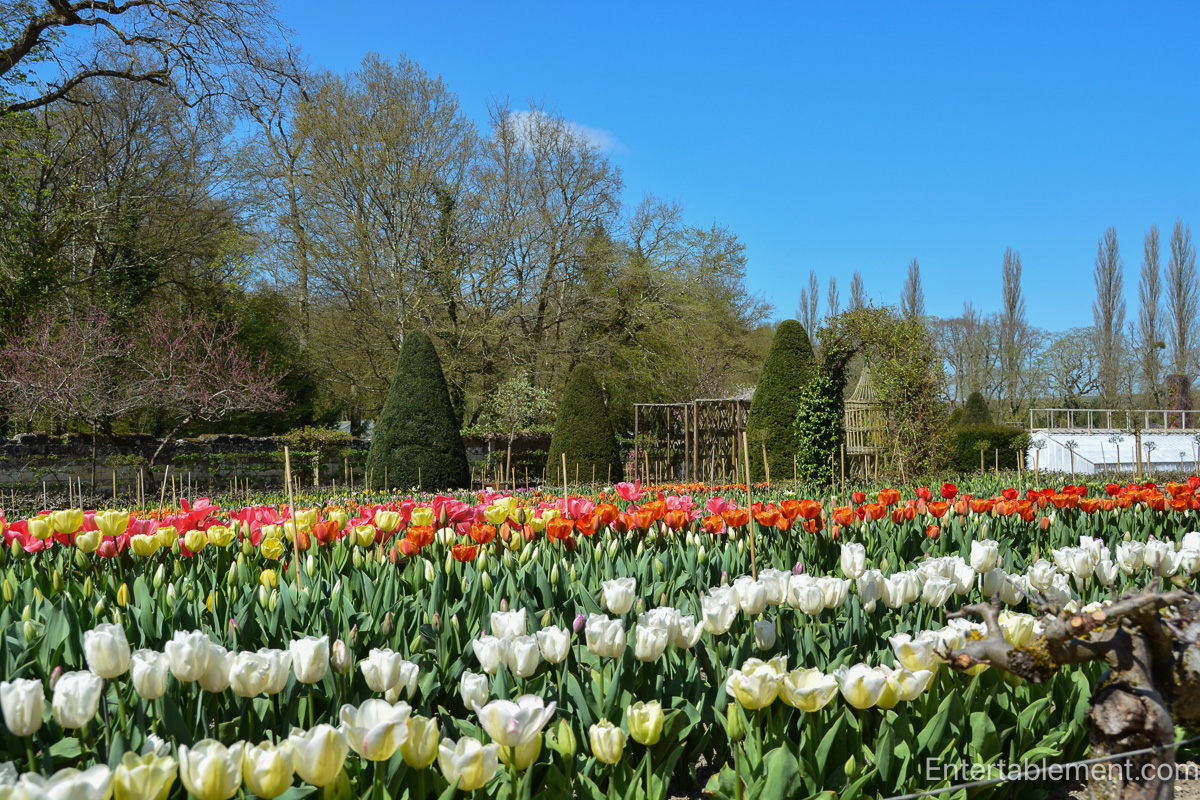
The cutting garden bursts with seasonal blooms, fueling the château’s stunning floral arrangements. Every bouquet that graces the royal chambers is born from this living palette—planned, grown, and harvested just steps from the château’s elegant salons.

The florists’ artistry begins in the soil, where rows of tulips, daffodils, and rare blooms are cultivated with care.

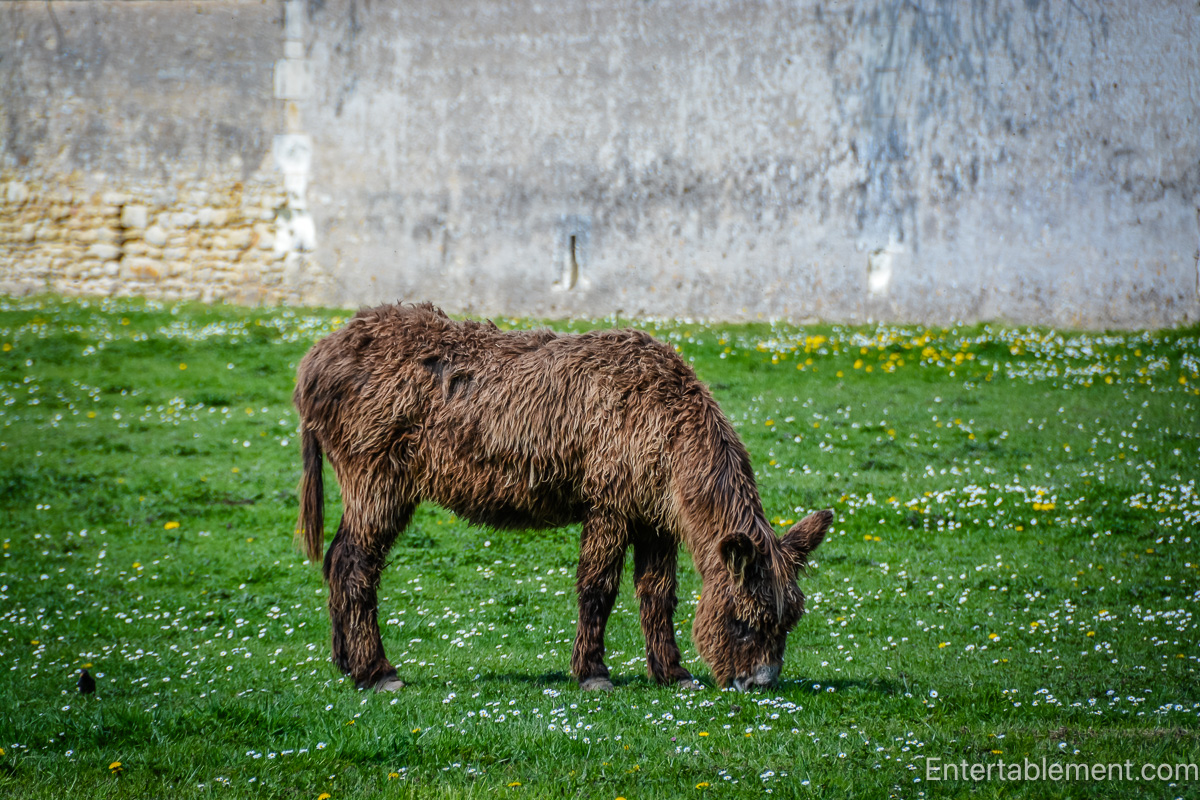
Swans drift across the moat just beyond the formal borders, and an endearing shaggy Poitou donkey grazes contentedly near the orchard. These details remind us that Chenonceau was not just a royal showpiece, but a lived-in, self-sustaining domain.
Final Thoughts
Chenonceau remains a castle, shaped by queens, protected by mistresses, and admired by all. Every visit reveals more of its layered story. If you find yourself in the Loire, don’t miss it—and if you’ve already been, it’s well worth a second look.

Ah, the Romantic Loire Valley and its exquisite Chateaux!
This post is part of the Loire Valley Château Series—a journey through the elegance, history, and charm of France’s most beloved estates.
Explore the full series: