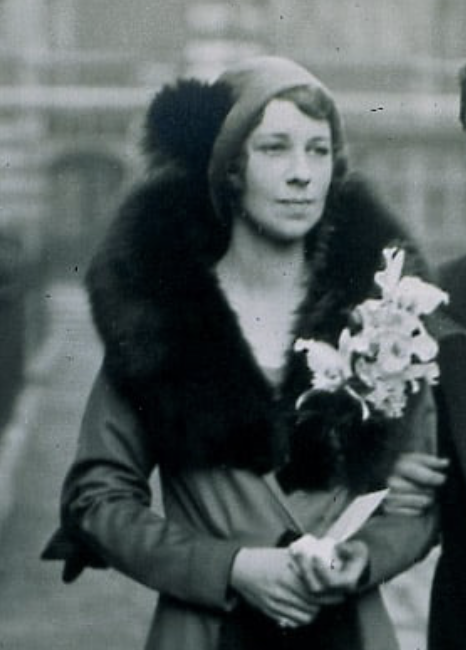
Lady Baillie’s vision and wealth rescued, restored, and redefined Leeds Castle in the 20th century. An American heiress with impeccable taste, she transformed the medieval fortress into one of the most glamorous private residences of her time, entertaining royalty, politicians, and Hollywood elites, all while securing the castle’s future as one of Britain’s most beloved historic landmarks.
Born into vast wealth but with an independent spirit, Lady Baillie proved that the Anglo-American connection in preserving Britain’s stately homes extended far beyond the so-called Dollar Princesses. Rather than merely marrying into an aristocratic estate, she actively shaped and safeguarded its legacy.
A Gilded Age Heiress with an Eye for Elegance
Olive Cecilia Paget was born in 1899 in New York City, the daughter of Almeric Paget (later the 1st Baron Queenborough), an English nobleman and industrialist, and Pauline Whitney, the daughter of the American financier William C. Whitney. As a result, Olive straddled the worlds of old English aristocracy and American wealth, much like contemporaries such as Consuelo Vanderbilt and Jennie Jerome Churchill.
Raised in Britain and America, she was exposed to the refinement of English country life while retaining the confidence and modernity of a Gilded Age heiress. Her fortune gave her access to the grandest circles of European high society, and her natural charm ensured she became a key player in the social and political worlds of the interwar years.
Acquiring and Restoring Leeds Castle
Olive purchased Leeds Castle in 1926 after her second marriage, recognizing its historical significance and potential for transformation. The castle was in serious disrepair at the time, having been used as a private home since the Tudor period but lacking modernization.
Determined to respect its medieval grandeur while making it a luxurious residence, she embarked on a meticulous restoration, hiring renowned French designer Armand-Albert Rateau to refurbish the interiors. Her renovations emphasized:
- Elegantly understated luxury, blending period authenticity with modern comforts.
- Sumptuous yet intimate entertaining spaces are suitable for hosting influential guests.
- Impeccable gardens and landscaped grounds inspired by classic European designs.
Her vision turned Leeds Castle into one of England’s most glamorous and well-appointed country houses.
A Hostess of Influence: Entertaining the Elite
Lady Baillie’s transformation of Leeds Castle wasn’t just architectural—it became one of the tremendous social hubs of the 20th century. She hosted an extraordinary array of guests, including:
- Winston Churchill was a frequent visitor before and during WWII.
- The Prince of Wales (later Edward VIII) and Wallis Simpson found refuge at Leeds Castle during their controversial romance.
- Hollywood stars like Charlie Chaplin and Errol Flynn reflect Olive’s connections to the transatlantic social elite.
- Political figures and wartime strategists, as the castle, played an informal role in diplomacy during the lead-up to WWII.
Her ability to bring together people of political, artistic, and aristocratic importance mirrored the role played by Nancy Astor at Cliveden but with an even greater emphasis on transatlantic connections.
Leeds Castle’s Lasting Legacy
Rather than allowing Leeds Castle to fall into uncertain inheritance disputes, Lady Baillie ensured its long-term preservation by establishing the Leeds Castle Foundation in 1974. This act guaranteed that the castle would remain open to the public and maintained for future generations to experience its beauty and rich history.
Thanks to her foresight, Leeds Castle is now one of the most visited historic sites in Britain. It is known not just for its Tudor history but also for the glamour and grandeur she infused into it.
Why Olive, Lady Baillie Still Matters
- She was a hands-on preservationist, not just an heiress maintaining an estate.
- Her renovations respected the past while embracing the present, creating a home as comfortable as it was historic.
- She helped redefine Leeds Castle‘s role, ensuring it remained a cultural landmark rather than fading into obscurity.
- She was a transatlantic power figure, demonstrating the lasting impact of American wealth in sustaining British heritage.
Without Lady Baillie’s vision, resources, and commitment, Leeds Castle might have become another forgotten relic of Britain’s aristocratic past. Instead, it stands today as one of the country’s best-preserved and most beloved historic houses, a fitting tribute to her extraordinary life and legacy.