

A Church with Deep Roots
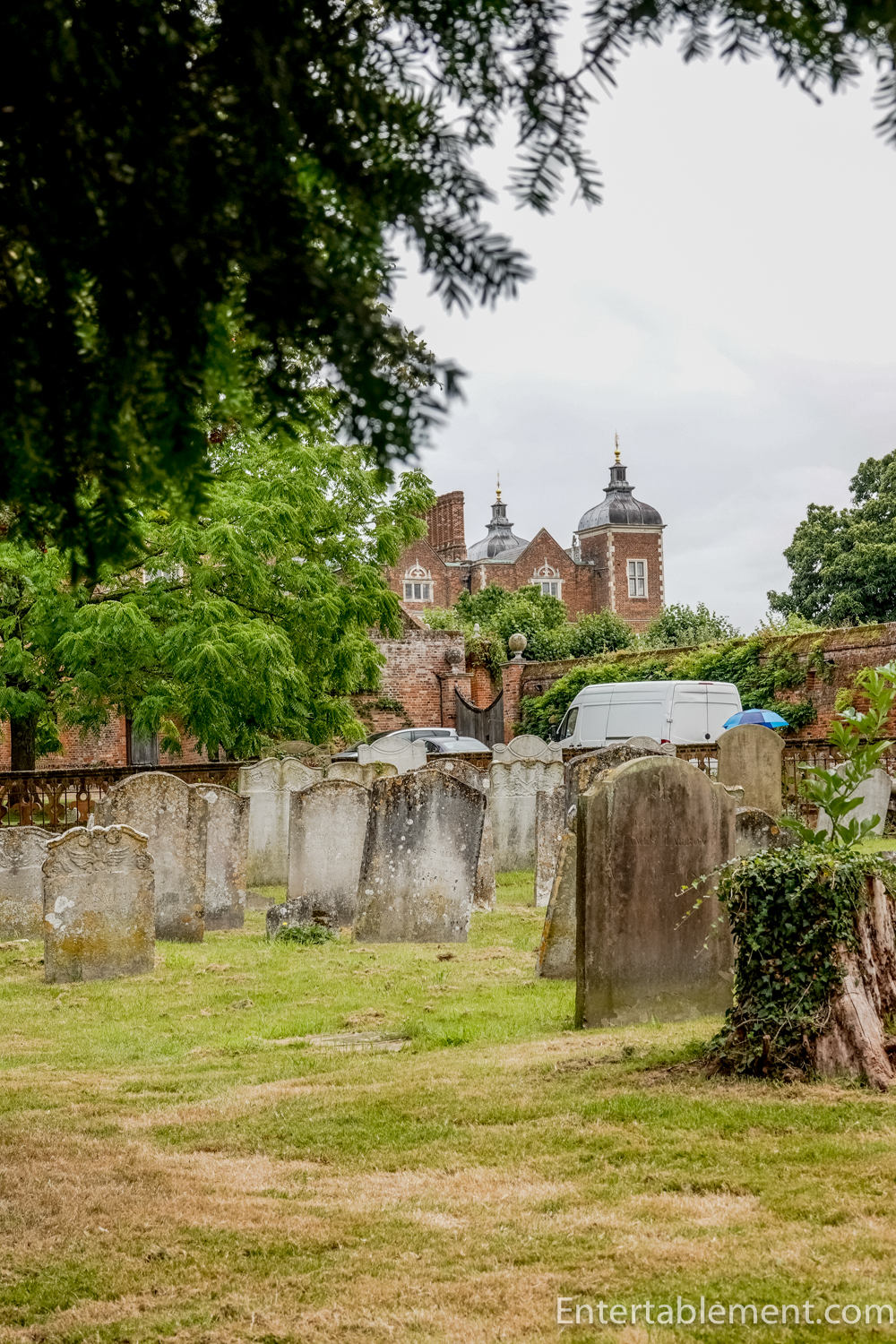
St. Etheldreda’s Church stands just outside the grounds of Hatfield House, deeply entwined with the history of the Cecil family and the broader Tudor and Stuart political landscapes.

While its origins date back to the medieval period, much of the church as we see it today reflects Victorian restoration, layered atop centuries of noble patronage.

The church is dedicated to St. Etheldreda, a 7th-century Anglo-Saxon princess turned abbess, known for her piety and asceticism.
Though much of her legend is tied to Ely Cathedral, the dedication here at Hatfield reflects the reach of her veneration.
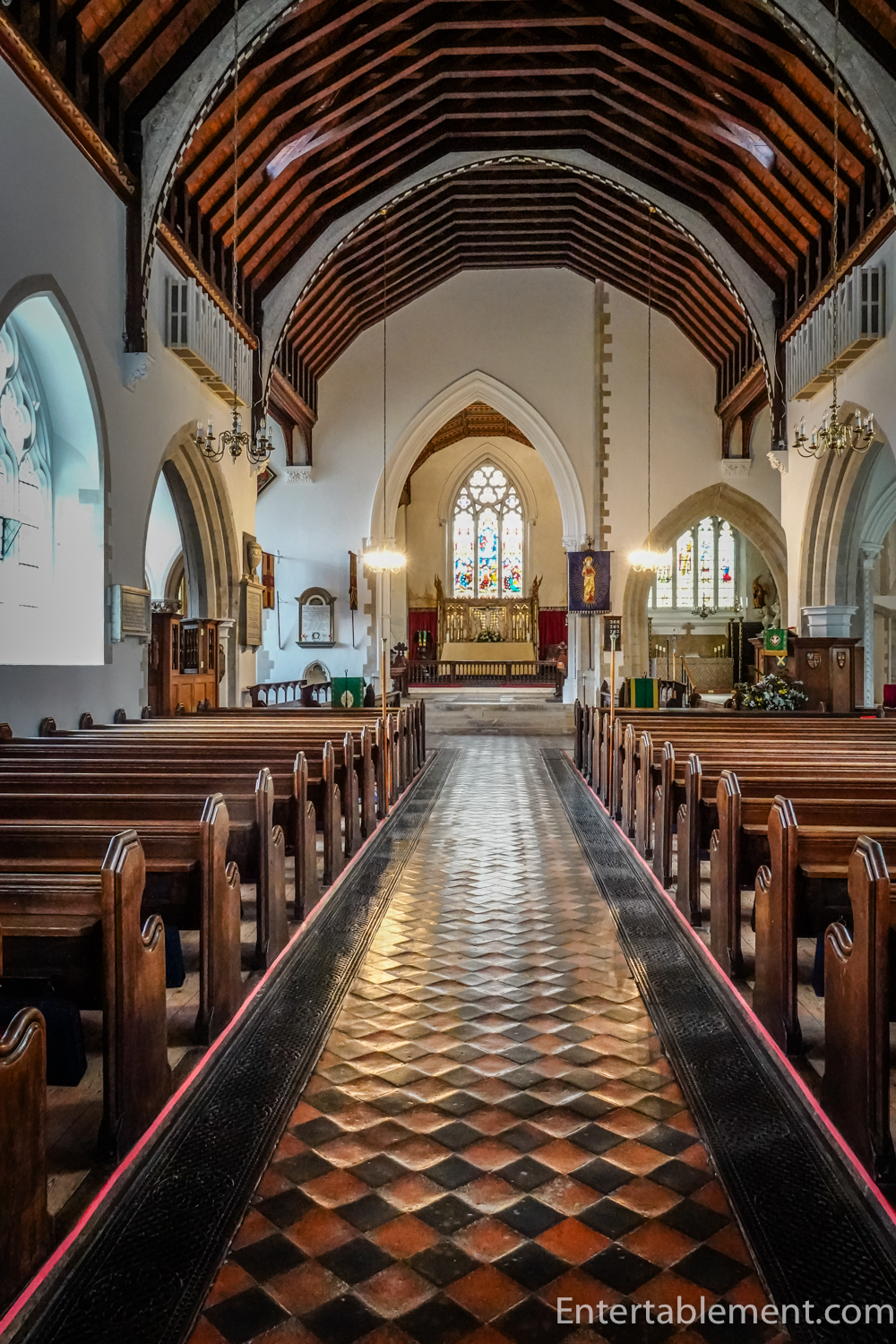
Architectural & Artistic Highlights
The Ornate Font
The baptismal font is a stunning piece of stone craftsmanship.
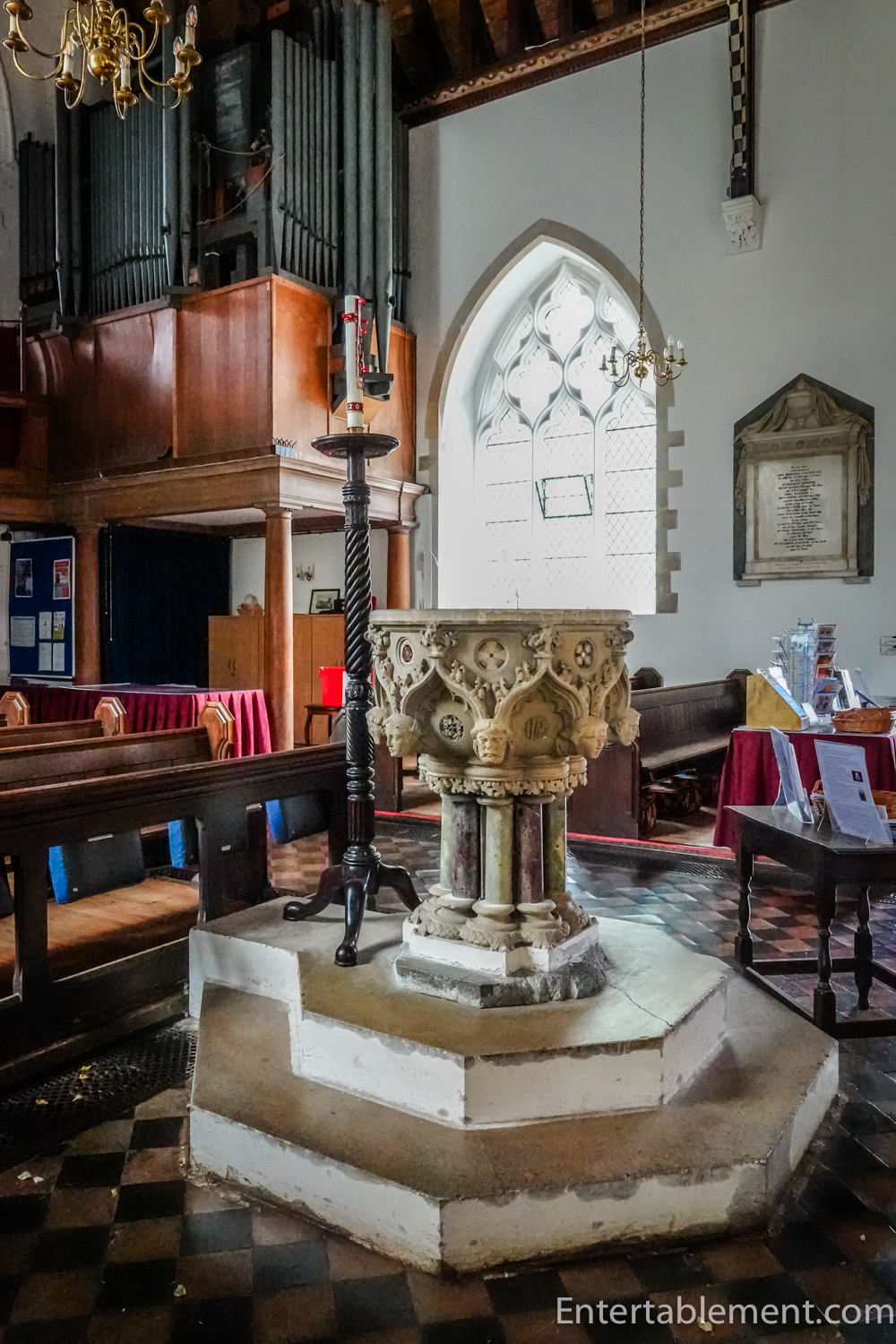
The carved faces surrounding it give an almost cathedral-like sense of grandeur, reinforcing the importance of religious ceremony in the church’s history.
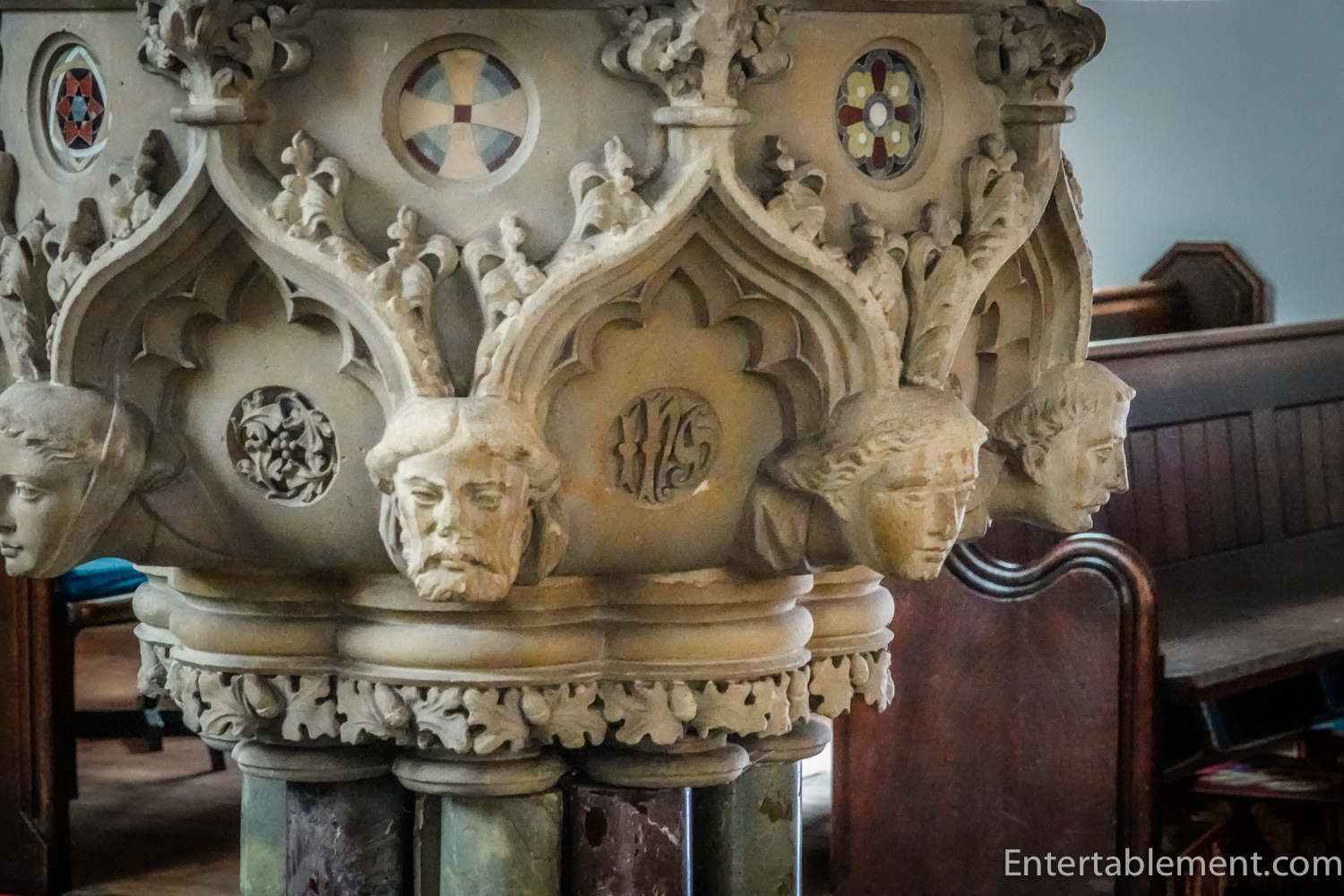
The tracery and decorative details suggest Victorian Gothic Revival influences, likely part of the later restorations.

The Ceiling: A Canvas of Faith and Heraldry
The church’s ceiling is a masterpiece of painted decoration, richly adorned with IHS Christograms, crowned motifs, and heraldic symbols.
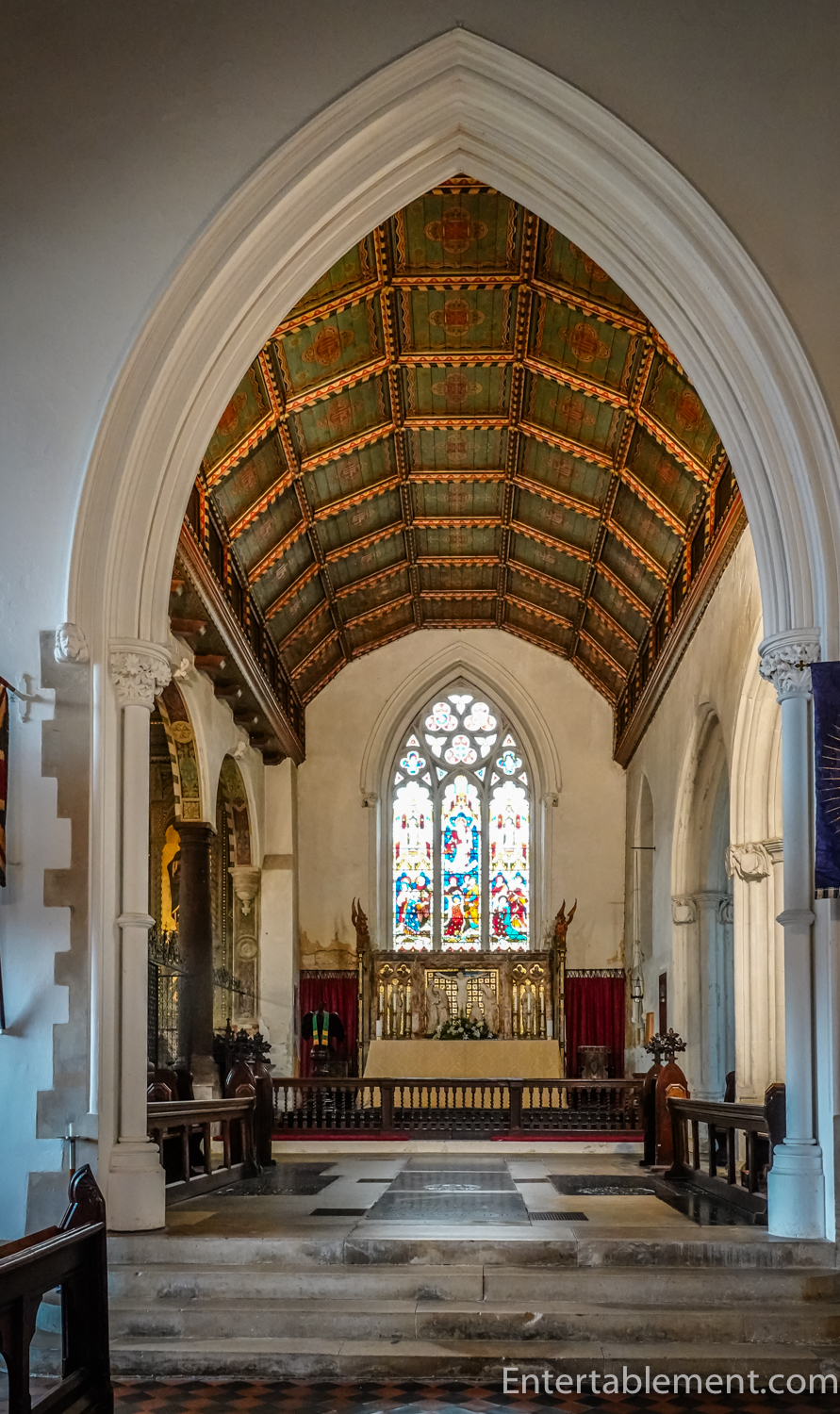
The blue-green backdrop, punctuated with reds and golds, is a striking example of ecclesiastical design meant to inspire awe.
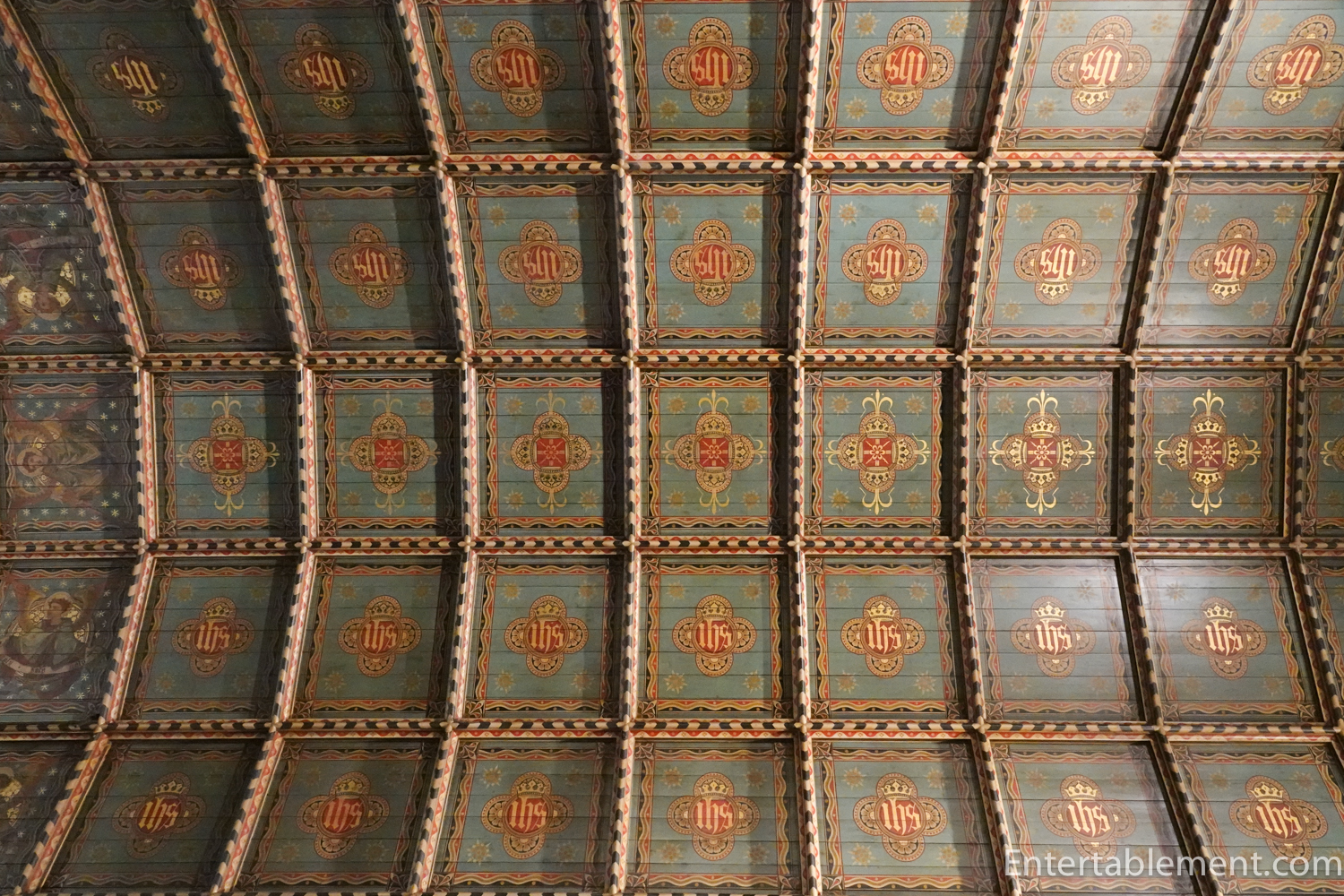
The coat of arms in the paneling speaks to the church’s noble connections, reinforcing its role as a place of worship for the aristocracy, particularly the Cecil family.
The High Altar & Stained Glass
Moving to the high altar, we see a spectacular Gothic Revival reredos, its intricate marble work framing the crucifixion scene.
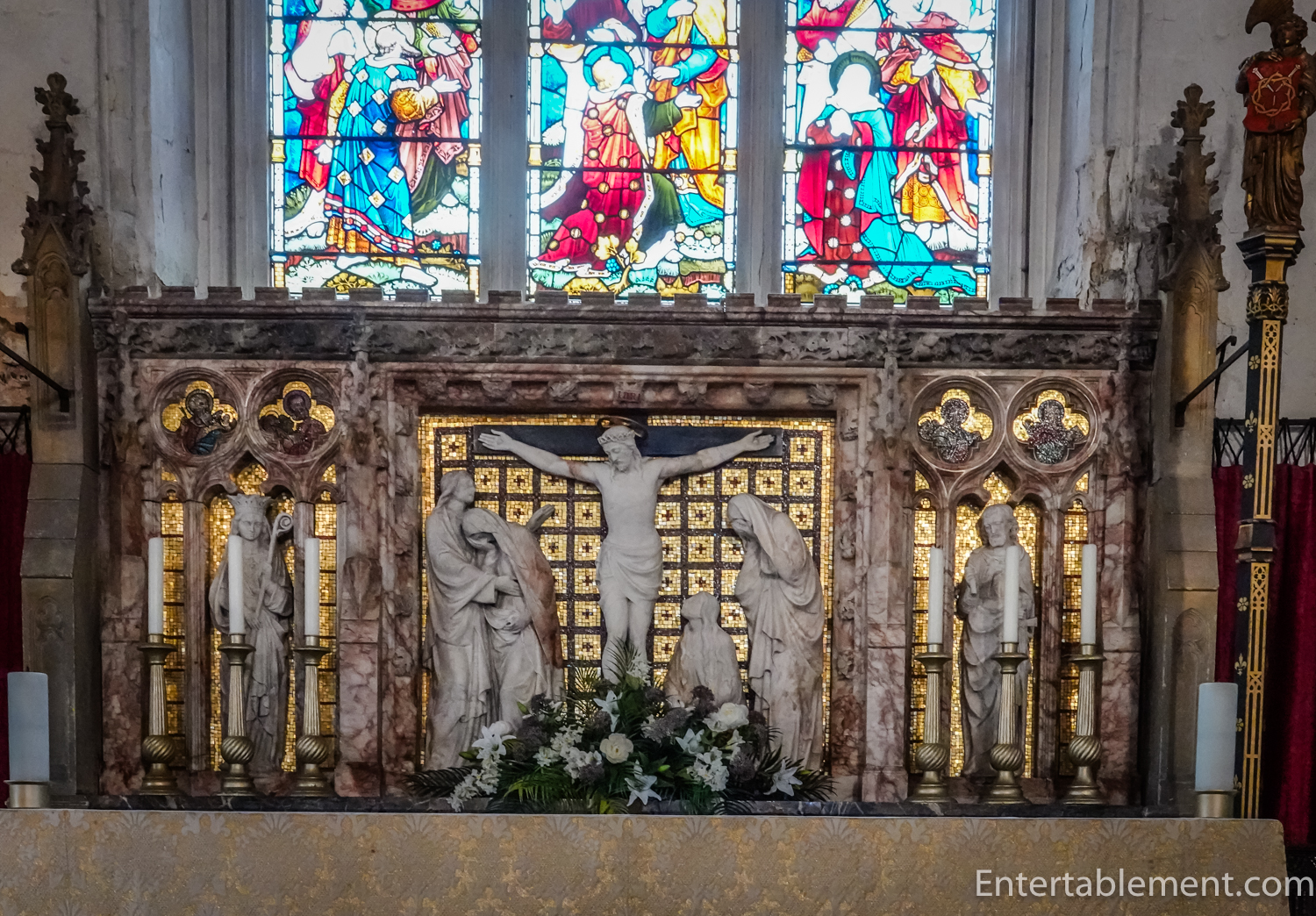
The vibrant stained glass windows above cast a celestial glow, bringing the stories of saints and biblical figures to life.

The gold and mosaic accents evoke continental European influences—perhaps Italian or Byzantine Revival—blending with the English Gothic elements of the space.
The Cecil Chapel
Perhaps the most dramatic tomb in St. Etheldreda’s is the elaborate, multi-figured Robert Cecil monument. Maximilian Colt made it from a modern chosen by the Earl himself.

Robert Cecil is shown in his Garter robes, holding his wand of office as Lord High Treasurer. He became Secretary of State in 1596 and served Queen Elizabeth 1 and King James I/VI.
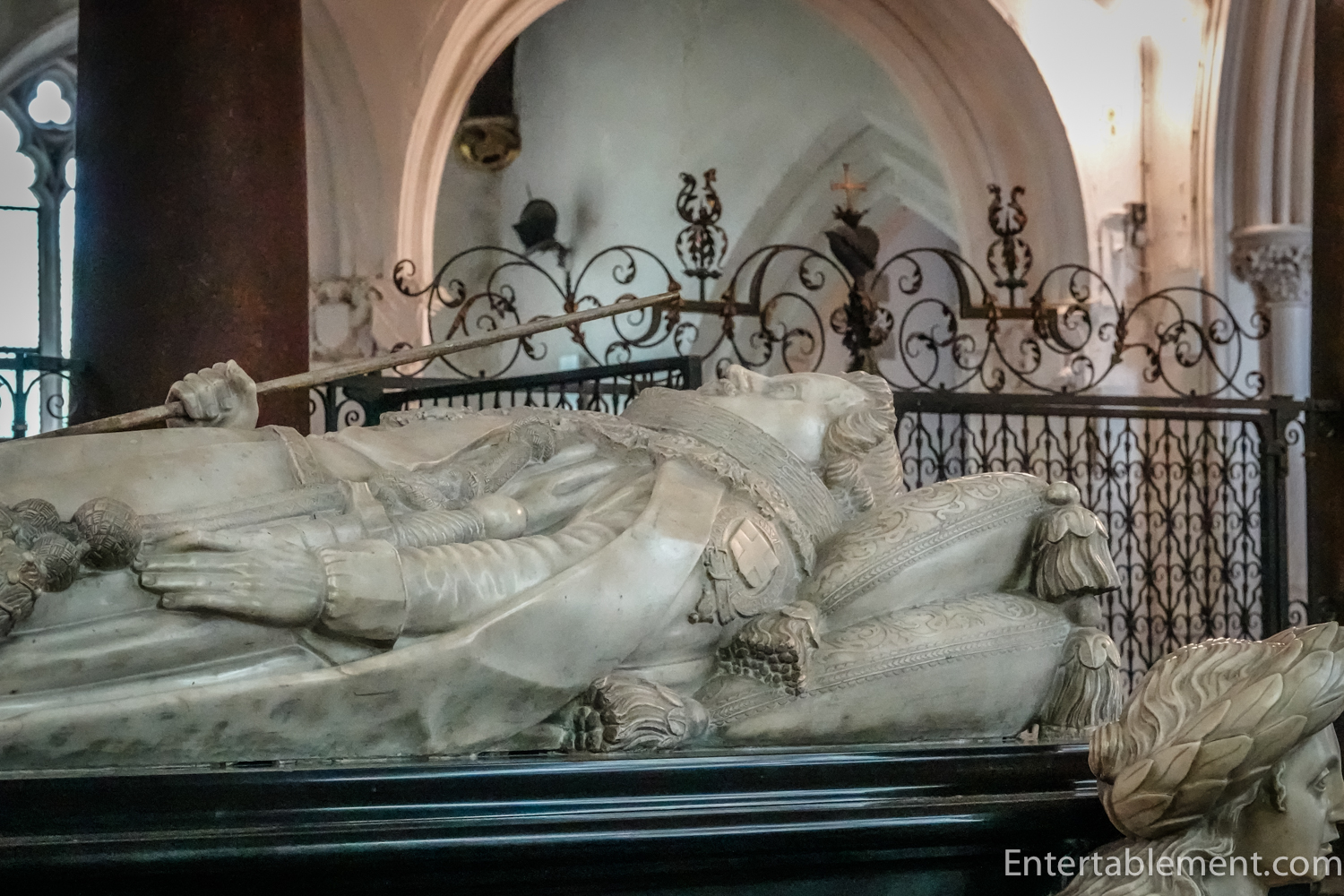
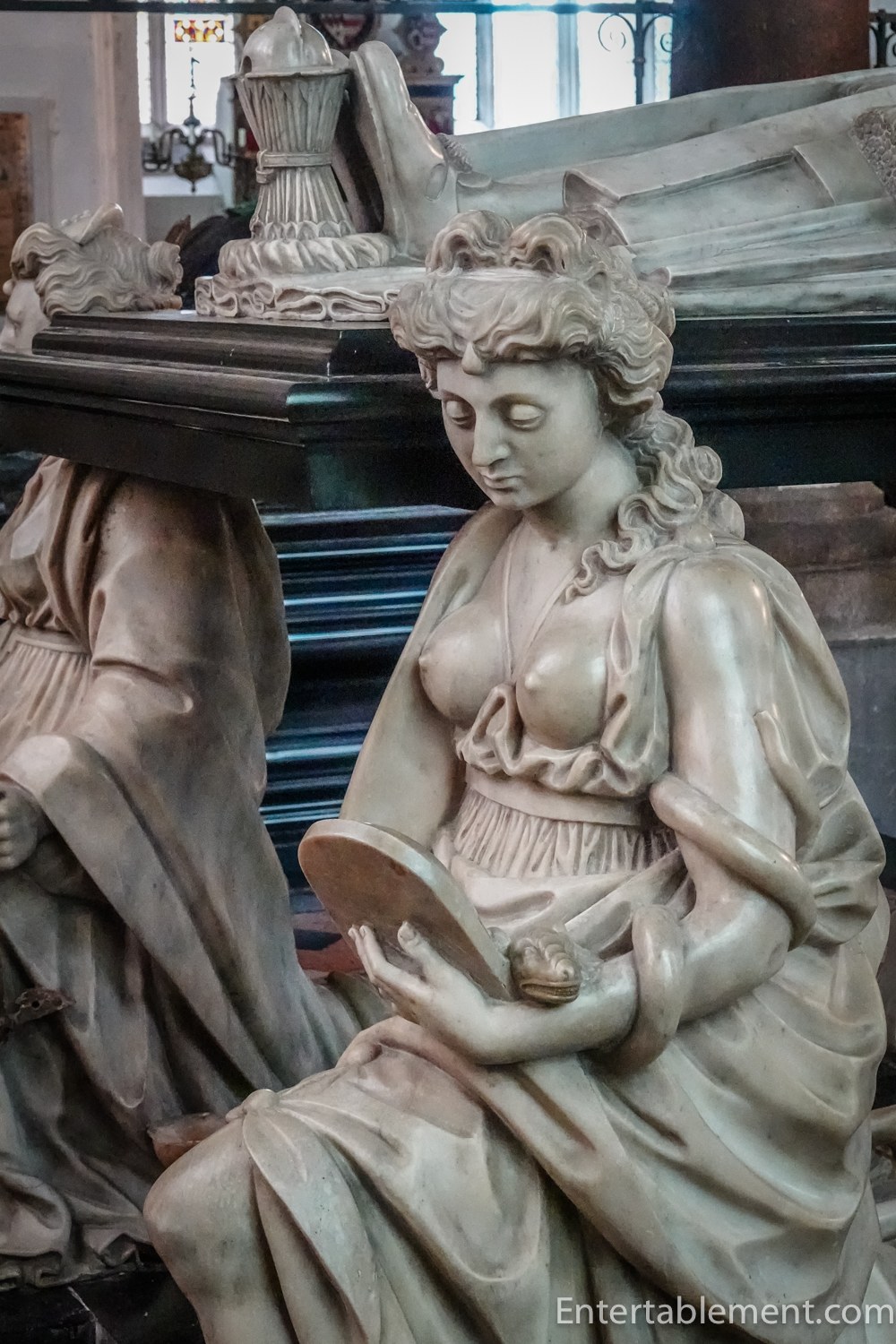
The platform on which his effigy rests is supported by life-sized allegorical statues representing the Four Cardinal Virtues:
Justice – Holding a sword, symbolizing fairness and moral integrity.

Fortitude – Wearing armour with a laurel wreath, representing courage and perseverance.

Temperance – Holding a large vessel, symbolizing moderation and self-restraint.

Prudence – Gazing into a mirror with a serpent coiled around her arm, symbolizing wisdom and foresight.
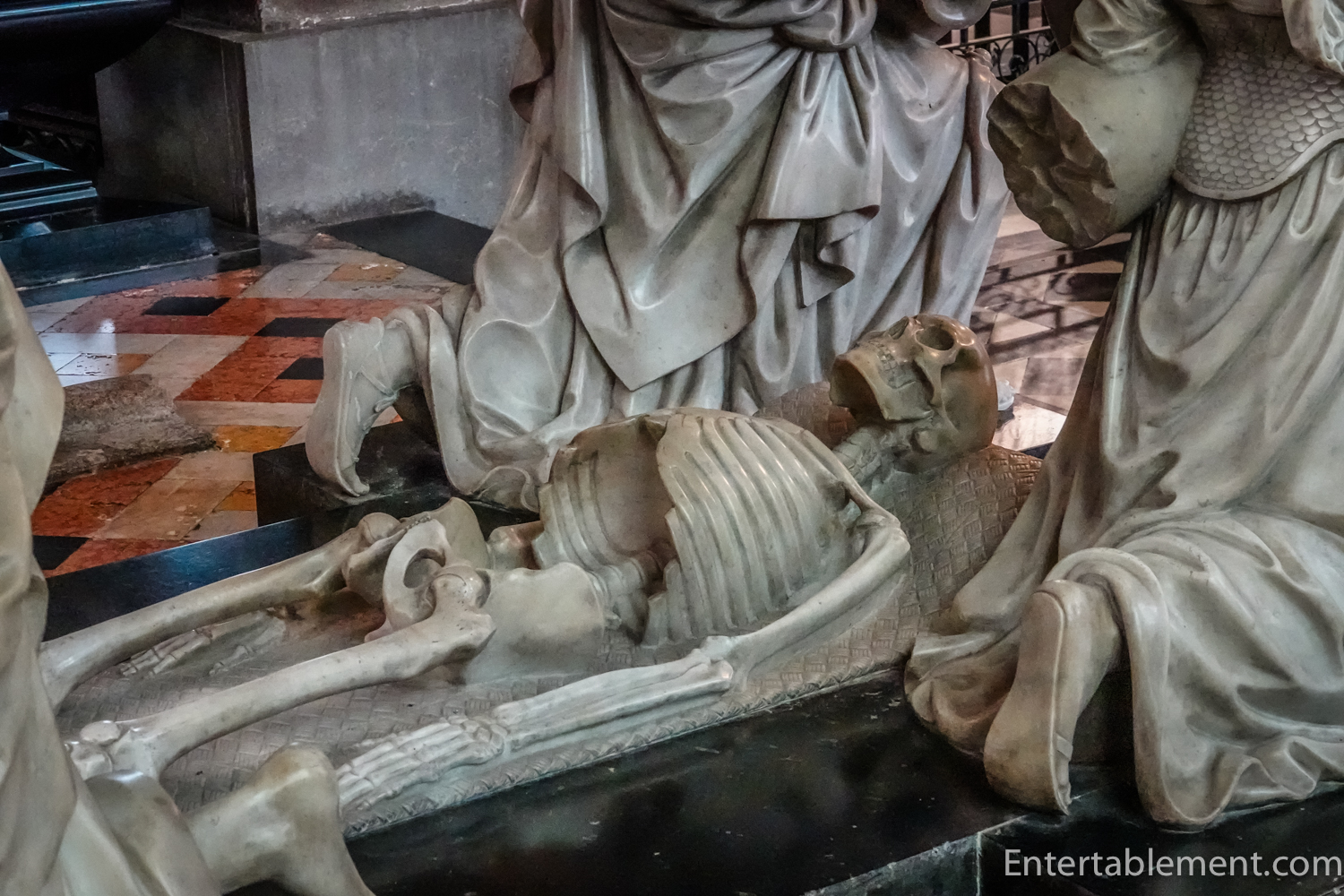
Skeletal imagery alongside these figures makes for a powerful memento mori, reflecting Renaissance and early Baroque attitudes toward death and the afterlife.
The Painted Vault & Chapel Details
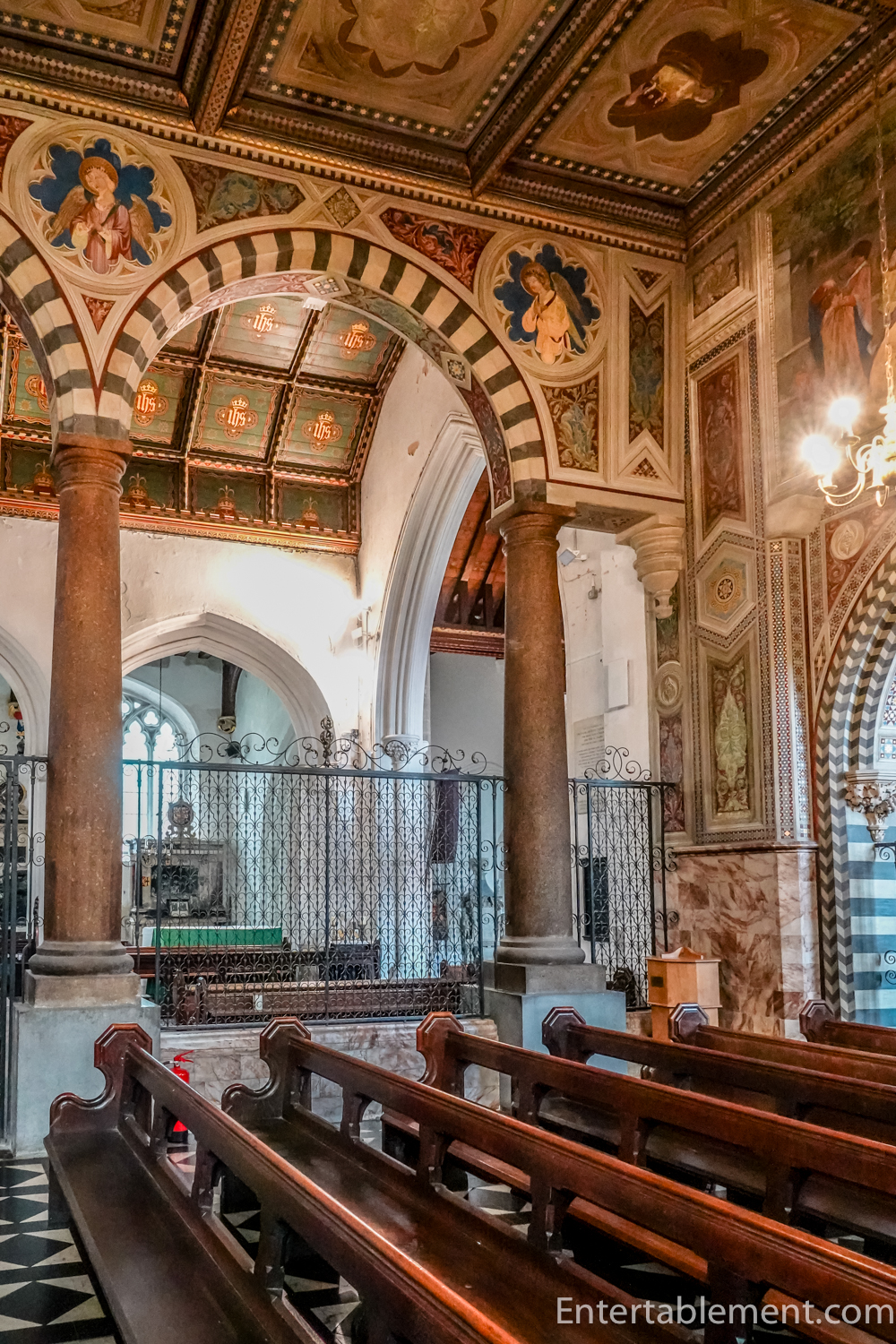
Like the main nave, the chapel’s ceiling is a triumph of Victorian polychrome decoration. Angels, saints, and biblical symbols are interwoven with geometric patterns and classical motifs.

The striped arches and decorative borders evoke Italianate or Byzantine styles, making this an unusually colourful example of ecclesiastical art for an English parish church.

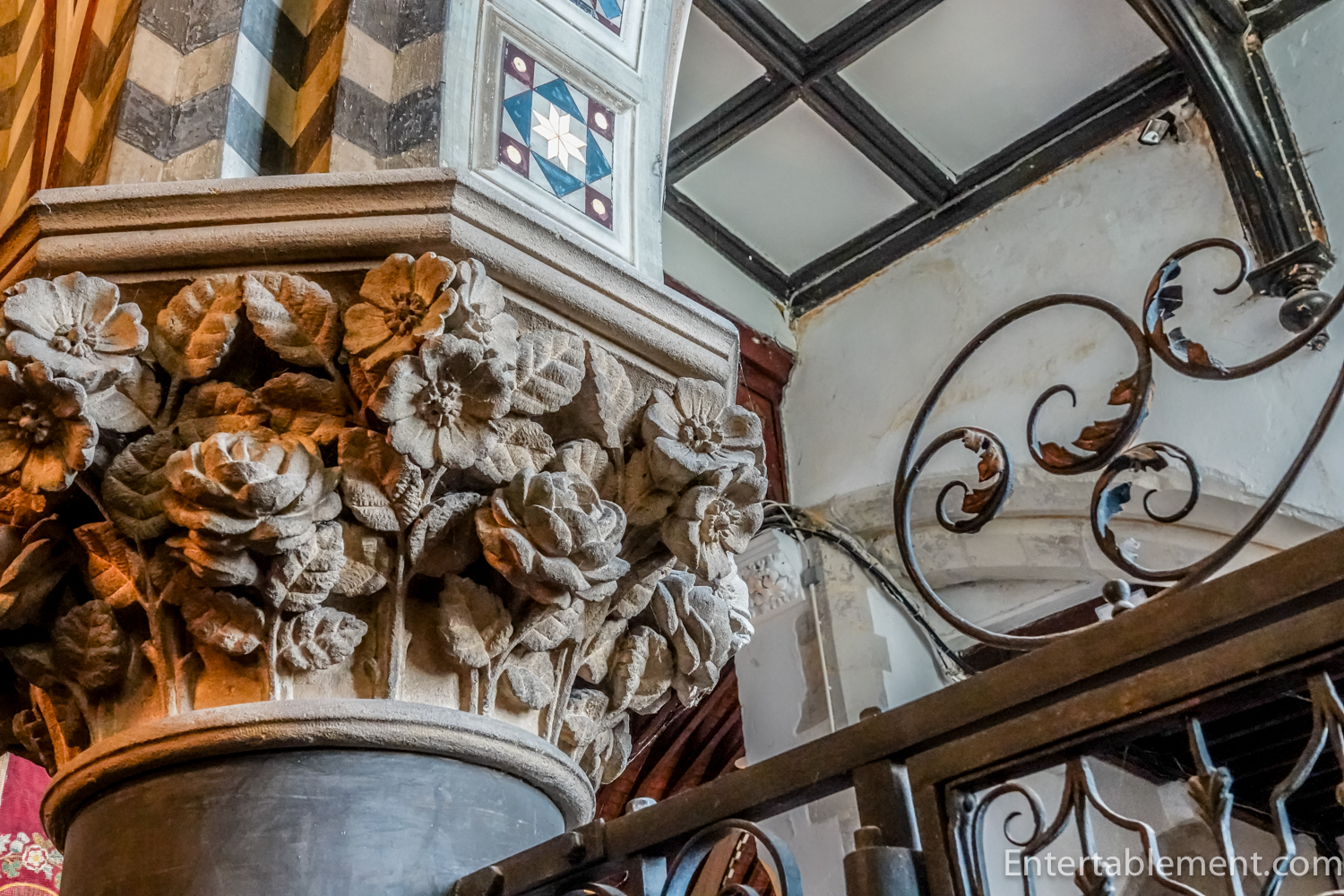
The wrought iron screen enclosing the Cecil chapel is another reminder of noble patronage, subtly separating the family’s private space from the wider congregation.

The Brocket Chapel
Brocket Hall (of Lord Melbourne, Queen Victoria’s “Lord M” and husband of the notorious Caroline Lamb, who had an affair with Lord Byron fame) used to be in the parish of Hatfield. The chapel was built in the 13th century and rebuilt in the 15th century.
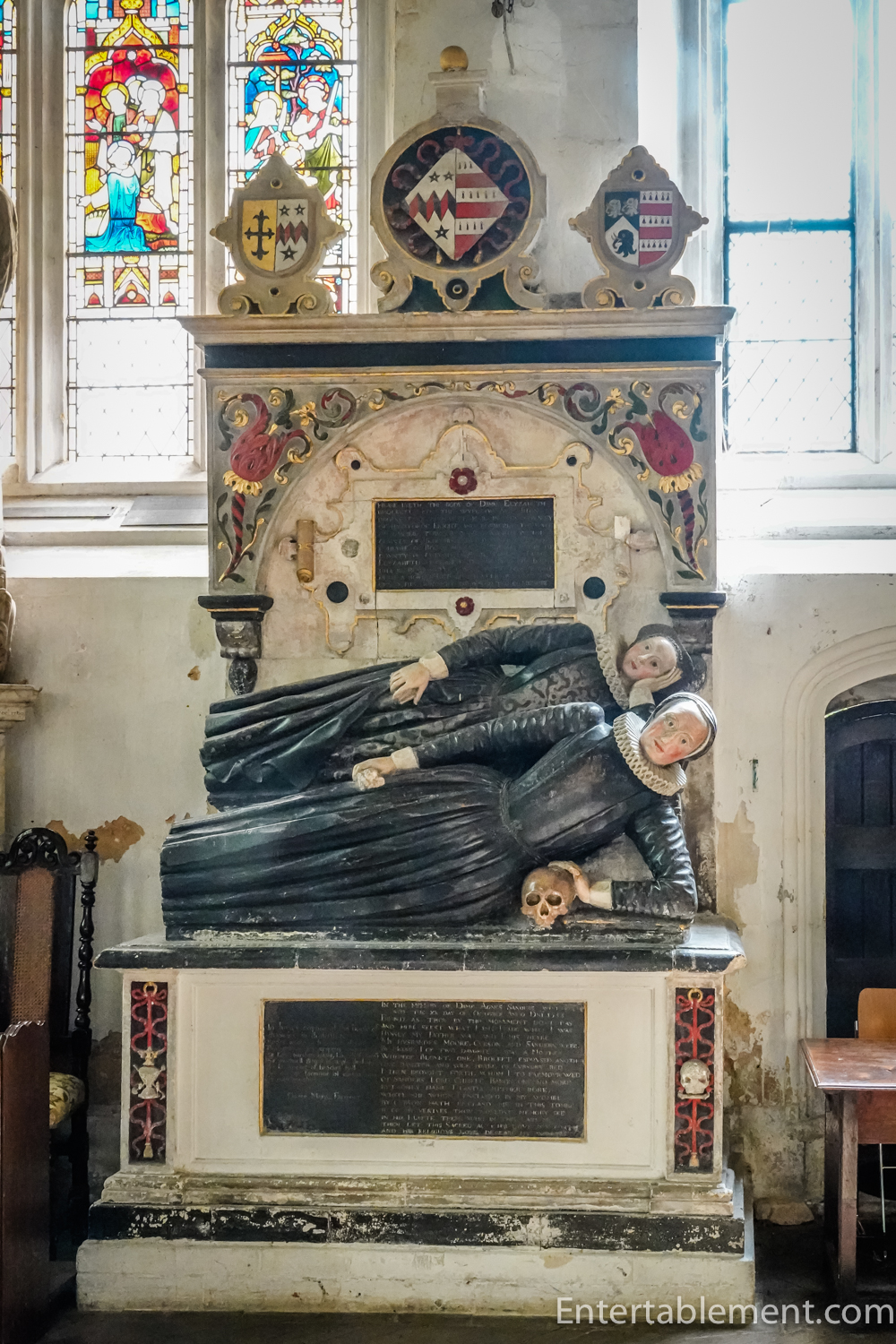
A most interesting monument is dedicated to Elizabeth Moore, the second wife of Sir John Brocket. Her tomb is an example of Elizabethan funerary art. I always think those figures have just awoken from a nap and are about to demand a snack.

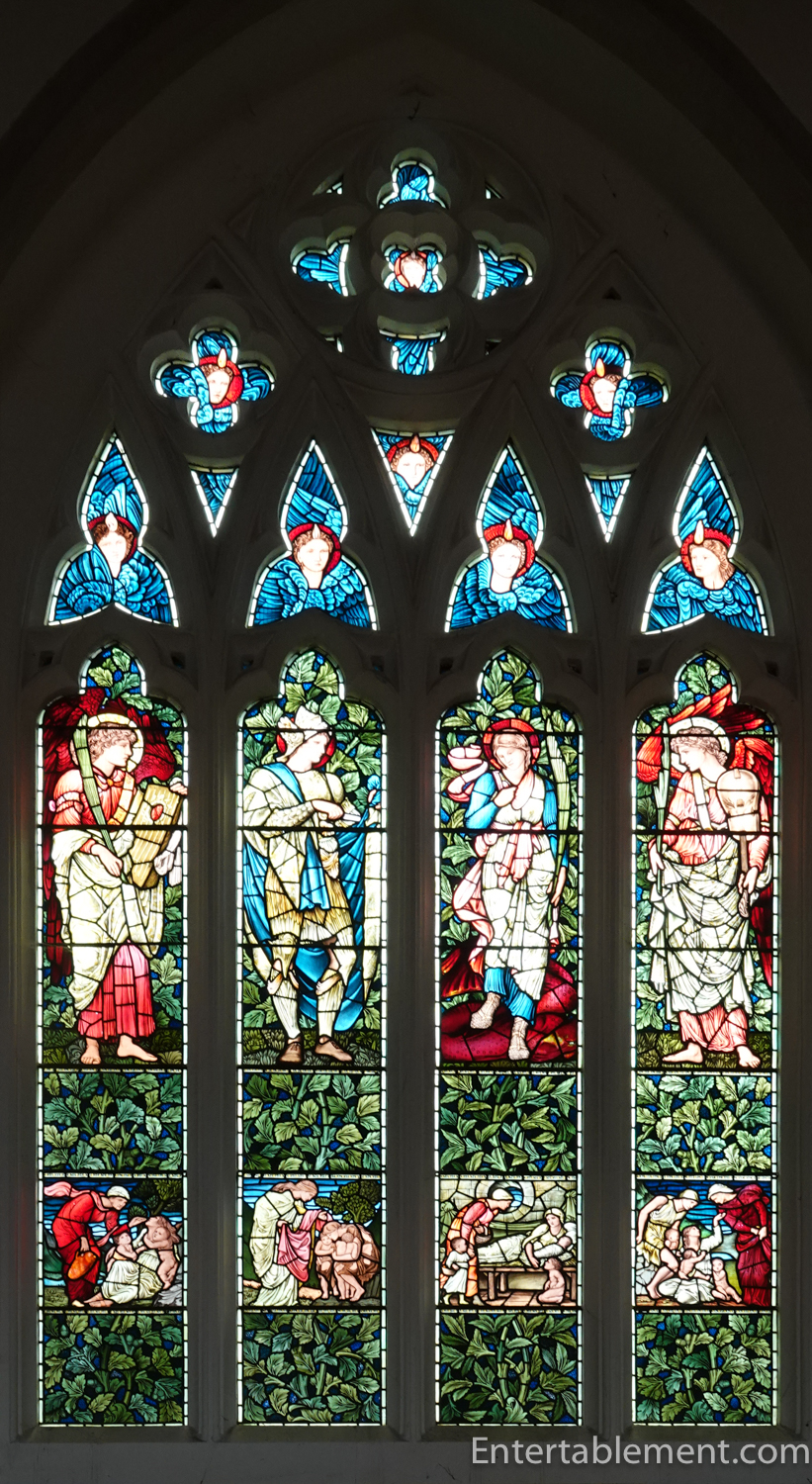
The memorial window to Mrs.Charles Drage was designed by Sir Edward Burne Jones and made in the William Morris workshop (the original sketch is in the William Morris library). Mrs. Drage was the widow of Dr. Charles Drage, who had a large practice in London and whose tomb is in the churchyard near the vicarage.
A Place of Worship, Power, and Memory
St. Etheldreda’s remains a place of quiet reflection, its artistic splendor layered with centuries of aristocratic history. The Cecils built Hatfield House as a political powerhouse, but this church was their spiritual home—where they were christened, married, and ultimately laid to rest.
It is rare to find a parish church with such a rich combination of history, architectural beauty, and artistic grandeur, but St. Etheldreda’s delivers on all counts. Like Hatfield House, the church is a testament to the endurance of power, faith, and legacy.




Excellent overview of St Ethelreda and great photos which so clearly illustrate the beauty and history of the church.
Thanks Carolyn! It was a beautiful church.