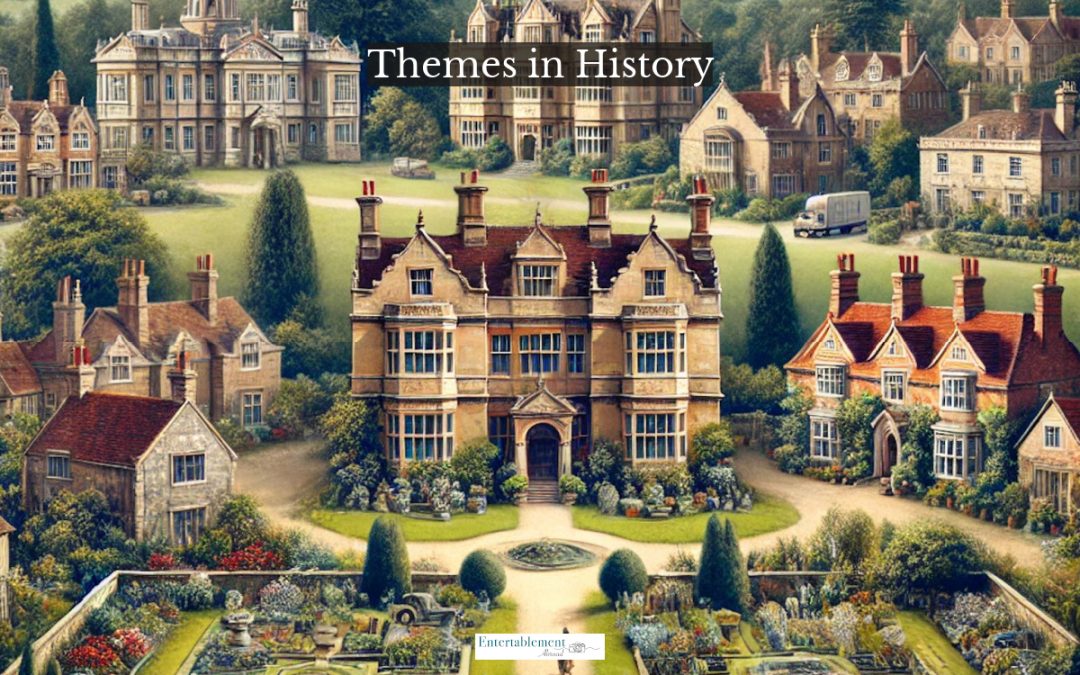
The story of rescuing Britain’s country houses is a testament to the enduring importance of heritage. Four key players are at the heart of this mission: the National Trust, English Heritage, Historic Houses, and private trusts. Each contributes to preserving and revitalizing these architectural marvels, ensuring their survival in an age of profound social and economic change.
The National Trust: Pioneers of Public Stewardship
The National Trust, uniquely positioned in the preservation landscape, blends public and private stewardship elements. Founded in 1895, it was one of the first organizations to address the threats posed to Britain’s country houses by economic shifts and urbanization. Its role grew significantly in the mid-20th century, as many landowners, overwhelmed by high inheritance taxes and maintenance costs, began gifting their estates to the Trust. In exchange, these houses were secured from the threat of demolition and made accessible to the nation.
The National Trust’s multifaceted approach combines restoration, conservation, and public education. Recently, it has attracted a good deal of justified criticism for straying from its conservation remit and embracing too much social activism. The Trust’s mandate encompasses preserving over 500 properties, from grand estates to modest country homes, and presenting them as living monuments to Britain’s cultural heritage. In addition to its staff of curation experts, its dedicated volunteers work hard to ensure that millions of domestic and international people experience and appreciate the grandeur of Britain’s country houses each year.
English Heritage: Custodians of the Iconic
English Heritage has long been recognized as a preeminent force in preserving the country’s most significant historical properties. Emerging as a formal organization in the mid-20th century, it took responsibility for rescuing many country houses at risk of collapse, particularly during the rapid post-war decline. The organization’s approach prioritizes national significance, focusing on properties of extraordinary architectural or historical merit.
While English Heritage has excelled in restoring and opening iconic estates—offering the public access to houses rich in artistry and history—it operates within government funding constraints and must, therefore, be selective. Properties of lesser renown often fall beyond their remit, requiring alternative avenues for preservation.
Historic Houses: Advocates of the Private Domain
Historic Houses represent the many private owners who are the backbone of country house preservation. Unlike state-supported organizations, Historic Houses champions independently owned estates, providing guidance, advocacy, and resources to ensure their survival. Its members, numbering in the hundreds, face the immense challenge of maintaining these historic homes without public funding.
Private owners must balance heritage with innovation, turning their estates into dynamic, income-generating venues. Whether through weddings, film productions, or seasonal public openings, they breathe new life into their properties while retaining their historical character. Historic Houses is the voice of these stewards, advocating for policy changes and support to ensure that private ownership remains viable amid ever-increasing financial pressures.
Private Trusts: Saviours of the Overlooked
Private trusts, often born of necessity and passion, are integral to the survival of lesser-known or underfunded properties. These trusts frequently emerge when families or communities band together to save a house from abandonment. Organizations like the Landmark Trust excel at finding creative uses for smaller properties, converting them into holiday accommodations or community spaces. Private trusts fill an essential gap in the preservation landscape by focusing on properties overlooked by larger organizations.
The interplay between these groups reveals a tapestry of shared commitment and ingenuity. While English Heritage and the National Trust often take on grander projects of national importance, Historic Houses and private trusts excel at preserving individuality and innovation. Collaboration is not uncommon: a house might transition from private ownership to the National Trust or rely on Historic Houses for operational advice while benefiting from local trust fundraising efforts.
The preservation of country houses is far more than the conservation of bricks and mortar. These estates embody Britain’s historical, artistic, and social fabric, reflecting centuries of architectural innovation, shifting class structures, and cultural evolution. They are time capsules that tell the stories of their aristocratic owners and the artisans, workers, and local communities tied to their histories. Moreover, they serve as vital economic assets, drawing millions of tourists annually and supporting local economies through associated industries.
Through the combined efforts of the National Trust, English Heritage, Historic Houses, and private trusts, Britain’s country houses remain enduring symbols of heritage and identity. Each organization contributes its own strengths to this monumental task, ensuring that these storied homes are not lost to history but preserved for the enrichment of future generations. Their work is a testament to the enduring power of collective stewardship in safeguarding the nation’s architectural and cultural legacy.