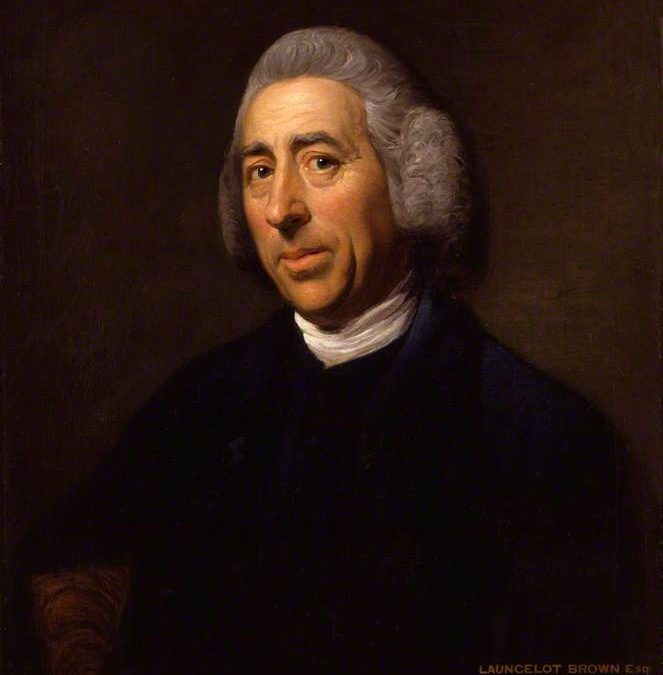
Lancelot “Capability” Brown is one of the most influential landscape designers in British history, often called “England’s greatest gardener.” His work transformed the estates of the British aristocracy, replacing formal, geometric gardens with sweeping, naturalistic parklands that defined the English Landscape Garden style.
Early Life and Career
Born in 1716 in Northumberland, Brown trained as a gardener at Kirkharle before working under William Kent at Stowe, where he developed his signature style. By the 1750s, Brown had established himself as the foremost landscape architect in England, securing commissions from the highest ranks of the nobility, including King George III.
Design Philosophy
Brown’s approach to landscape design emphasized:
- Sweeping Lawns & Serpentine Lakes – He reshaped natural features to create vast, rolling landscapes that appeared effortless yet meticulously engineered.
- Ha-ha Walls – Cleverly concealed ditches that created uninterrupted views while keeping livestock away from the main house.
- Clusters of Trees & Woodlands – Strategically planted to frame views, create contrast, and provide seasonal interest.
- Naturalistic Approach – Unlike the rigid symmetry of earlier gardens, Brown’s designs mimicked nature while subtly guiding the visitor’s experience.
Notable Works
Brown worked on over 170 estates, including:
- Blenheim Palace – One of his most famous transformations, replacing rigid Baroque gardens with rolling parkland.
- Stowe – Where he honed his skills alongside William Kent.
- Chatsworth House – Redesigned elements of the parkland to enhance its grandeur.
- Burghley House – A prime example of his sweeping vistas and naturalistic plantings.
Legacy
Brown’s influence reshaped the British countryside, creating iconic landscapes. His designs not only defined 18th-century taste but also inspired generations of landscape architects. Although some critics viewed his work as overly formulaic, his ability to create harmonious, picturesque settings remains unparalleled.
Brown’s work marked a turning point in garden design, paving the way for his successor, Humphry Repton, who further refined and documented landscape theory. His landscapes, many of which remain intact, continue to be admired and enjoyed today.