
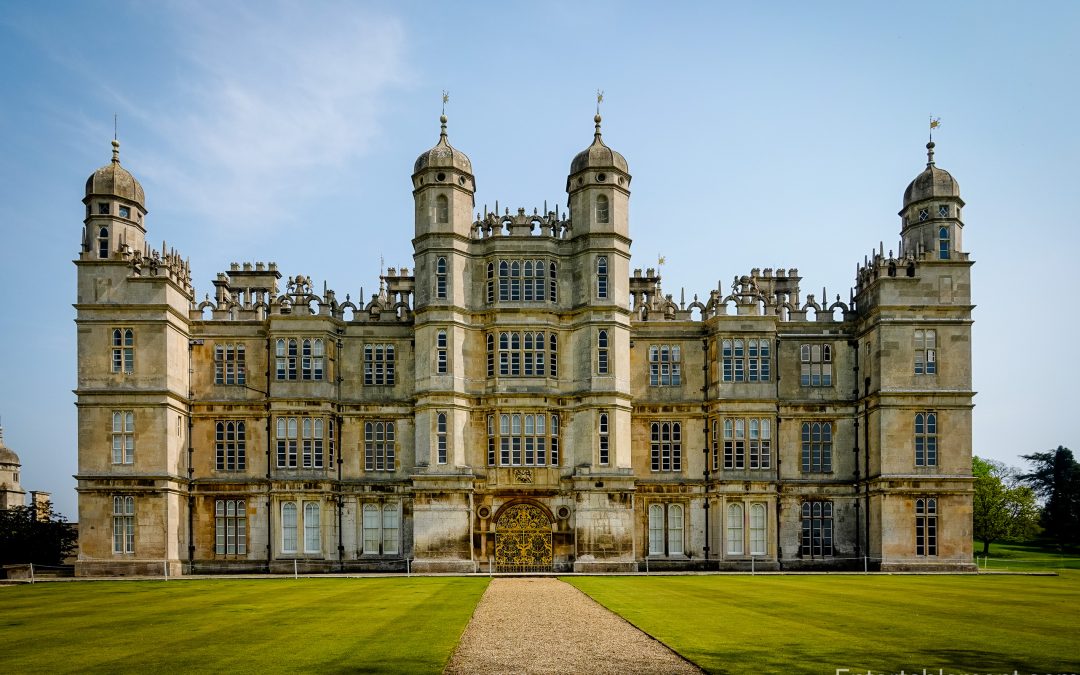
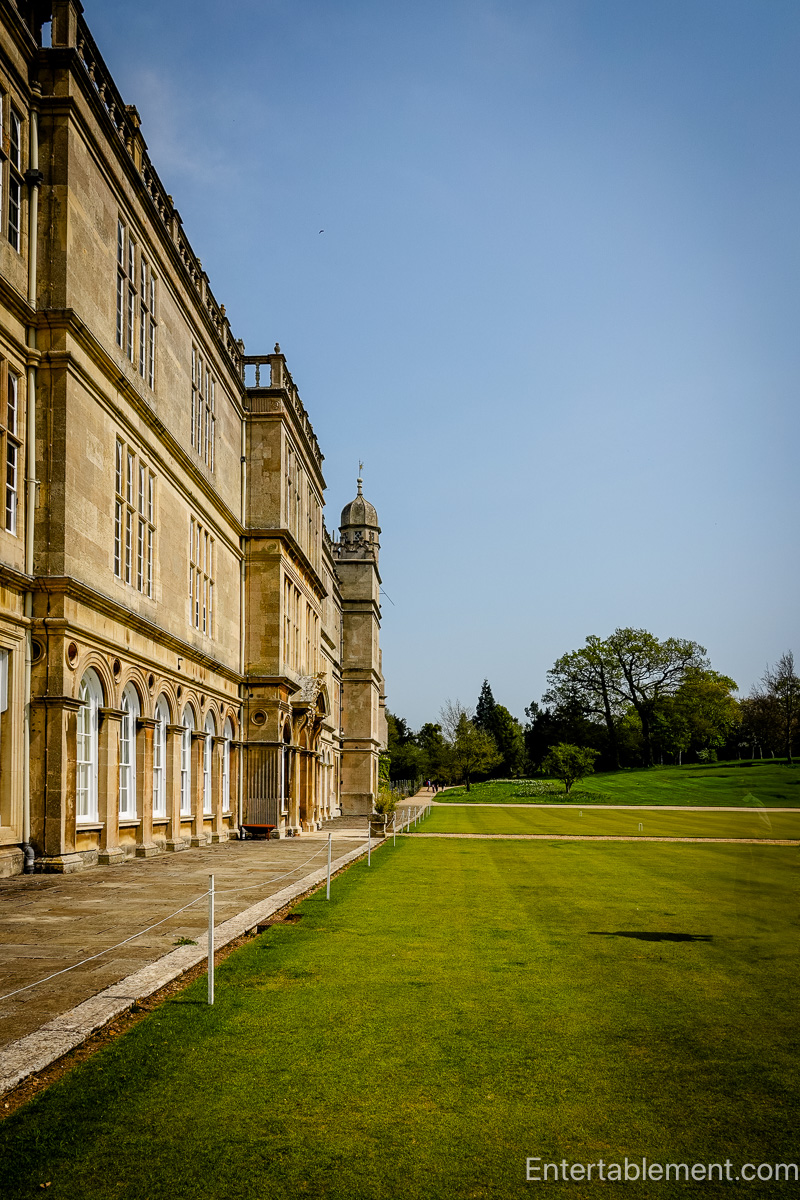
Few country houses in England can rival the grandeur, artistry, and sheer theatricality of Burghley House.

Rising like an opulent stage set on the edge of Stamford, Burghley is the ultimate expression of Elizabethan power and prestige—a house built not just to be lived in but to impress, astonish, and dazzle.
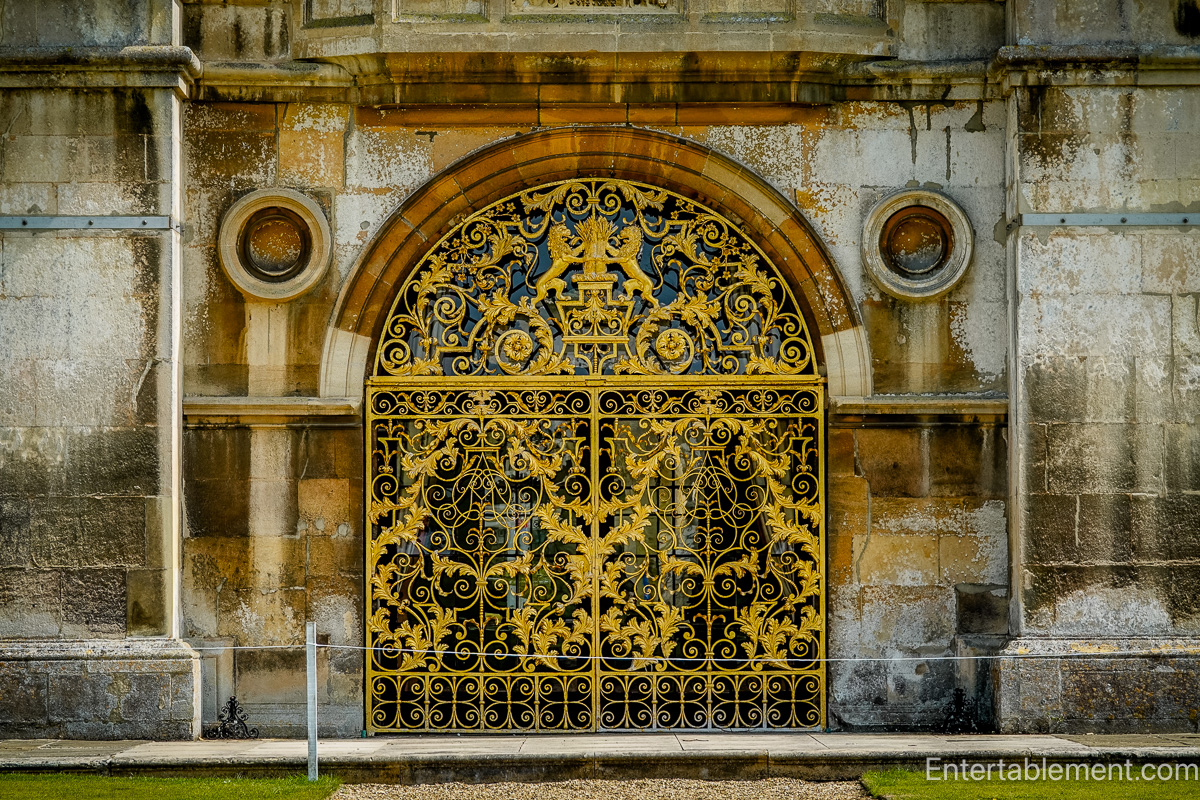
A Palace Fit for a Queen—Even If She Never Stayed
Queen Elizabeth I’s most trusted minister, Sir William Cecil, built Burghley House in the late 16th century. He intended it as a family home (can you imagine?) and a monument to his service and status (that fits much better).
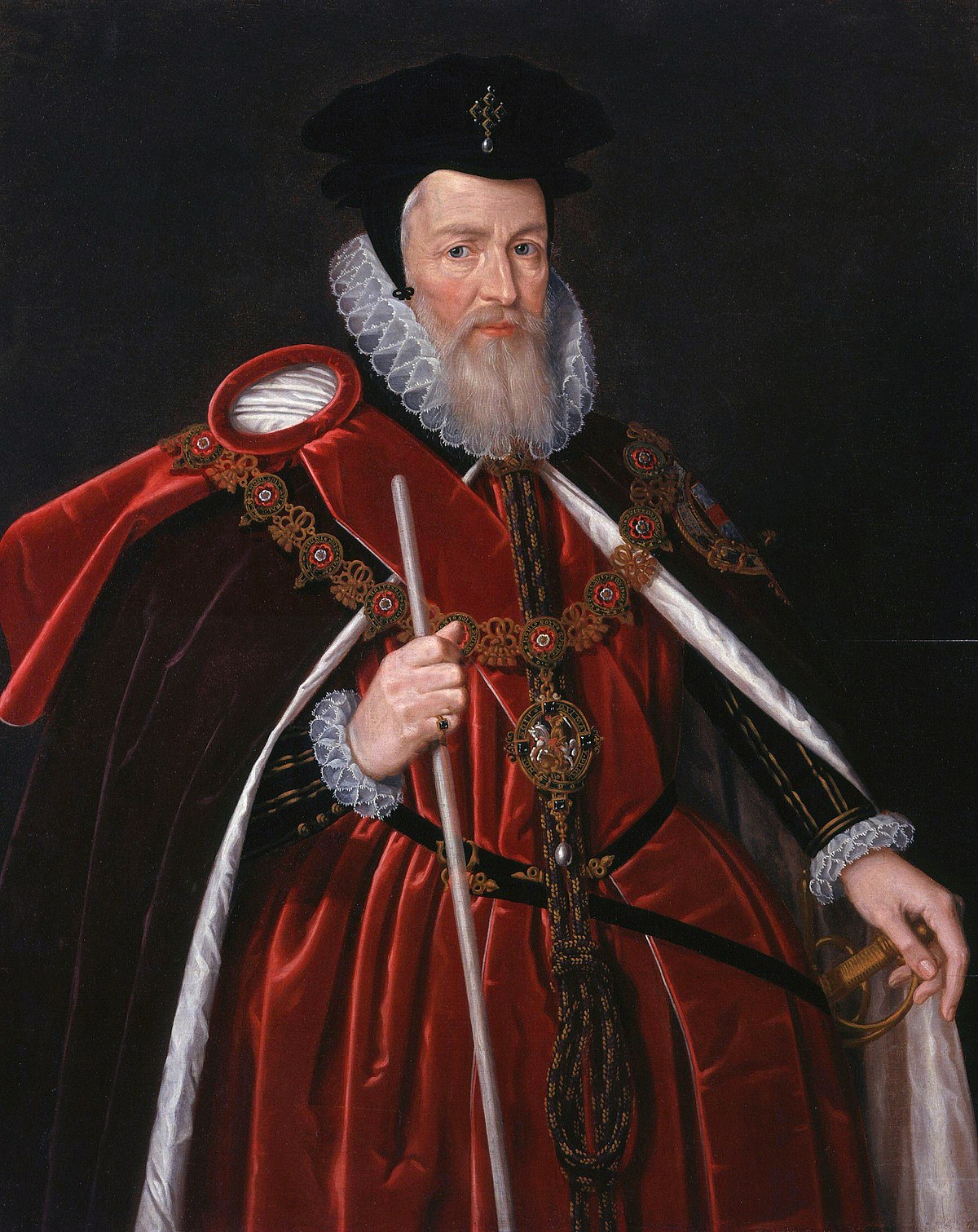
Cecil wielded immense influence as Lord High Treasurer, and Burghley reflects his ambition. The house is a classic example of the Elizabethan prodigy house—a style defined by extravagant scale, intricate ornamentation, and a deliberate showcase of wealth.
However, its design—towering turrets, vast windows, and a commanding presence—clearly signalled its owner’s standing in her court.

Today, Burghley remains one of the grandest survivors of its kind, still owned by Cecil’s descendants.
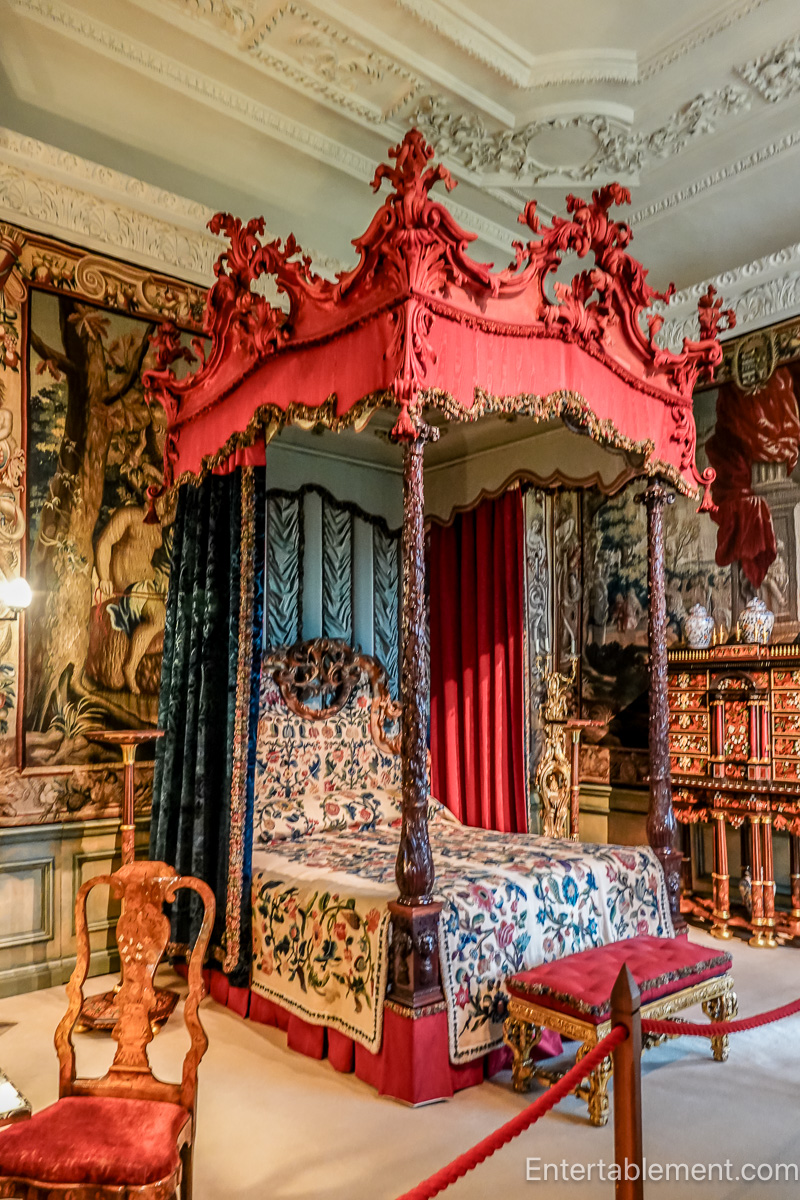
Queen Elizabeth I frequently visited William Cecil at his other houses, but when she came to Burghley in 1566, she could not stay there due to an outbreak of smallpox in the household. The incredible state bed and suite of chairs in Queen Elizabeth I’s Bedroom date from the 17th century and were fully restored in 1985.
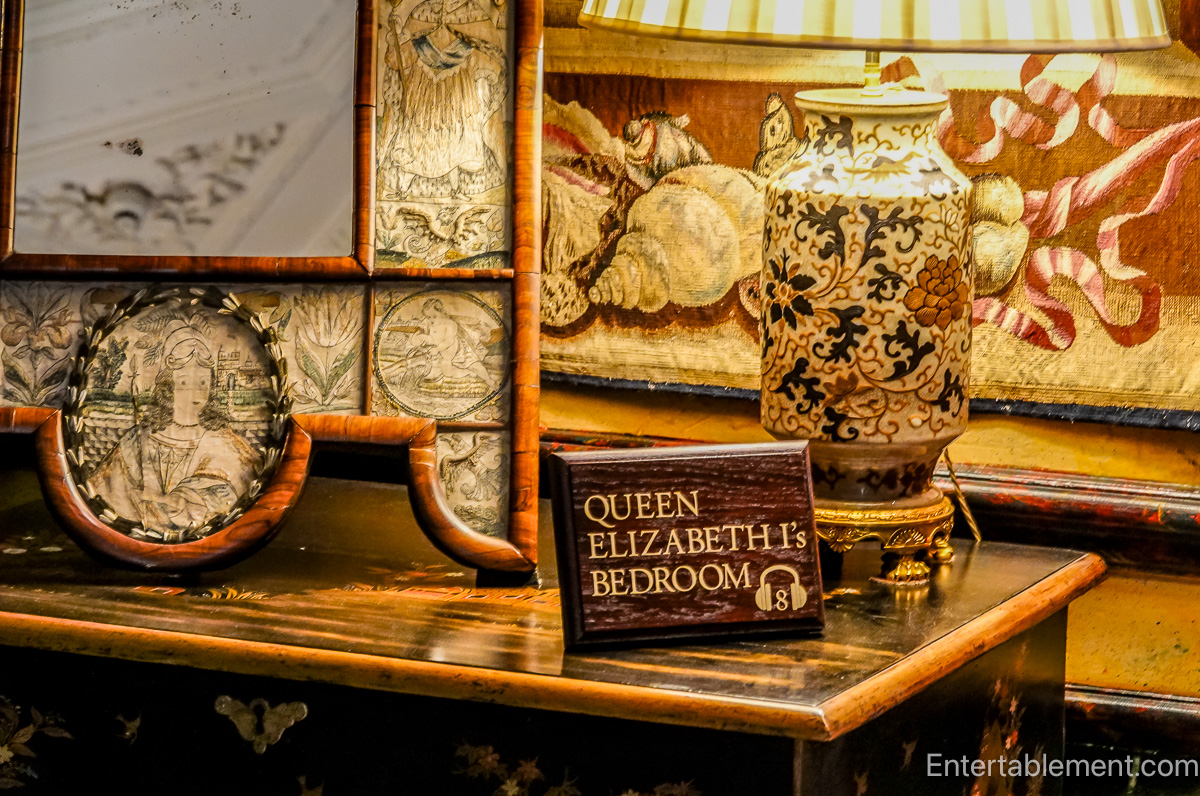

Just look at the rich details of the fabrics and the gilded carving of the headboard.

The canopy over the bed is a work of art on its own.

The House That Wowed the Georgians
While Burghley’s exterior retains its Elizabethan splendour, the interiors tell a more layered story. The most remarkable changes came in the 17th and 18th centuries when the house was adapted to fit new tastes.

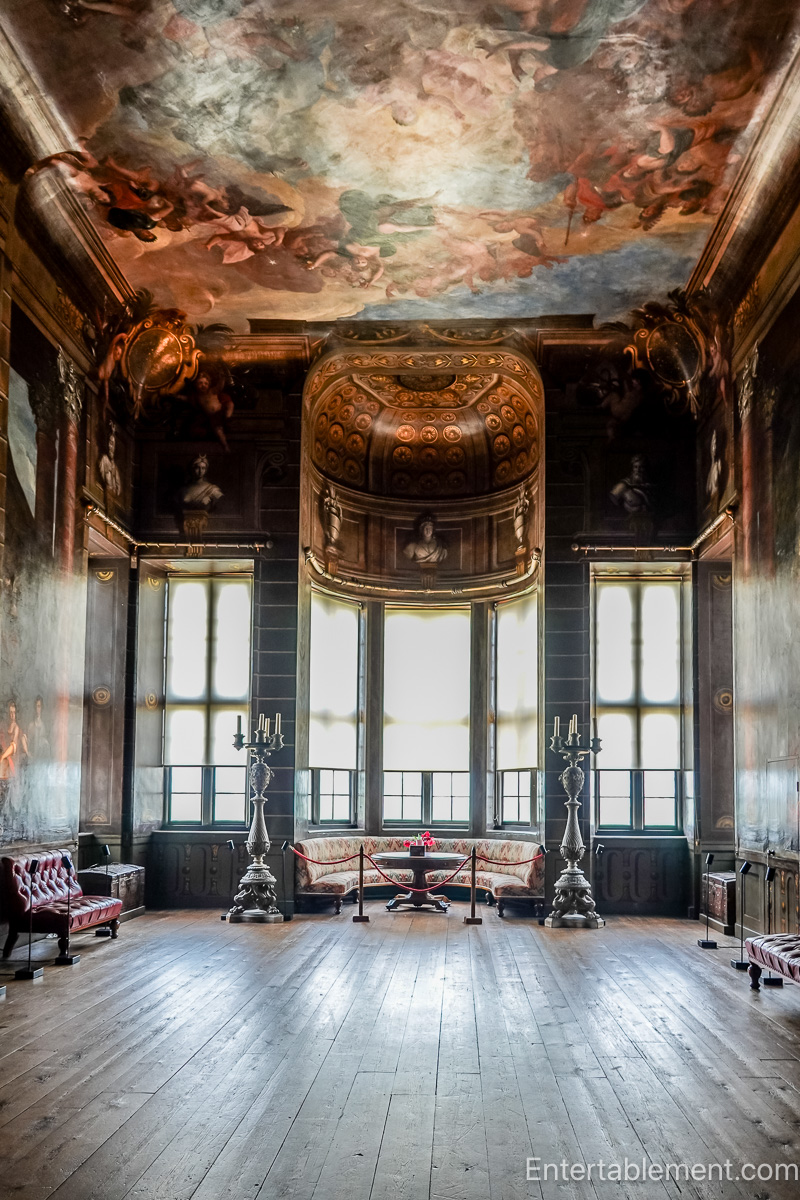
The 5th Earl of Exeter undertook the most dramatic transformation, bringing in the Italian painter Antonio Verrio to cover entire rooms with dazzling murals.
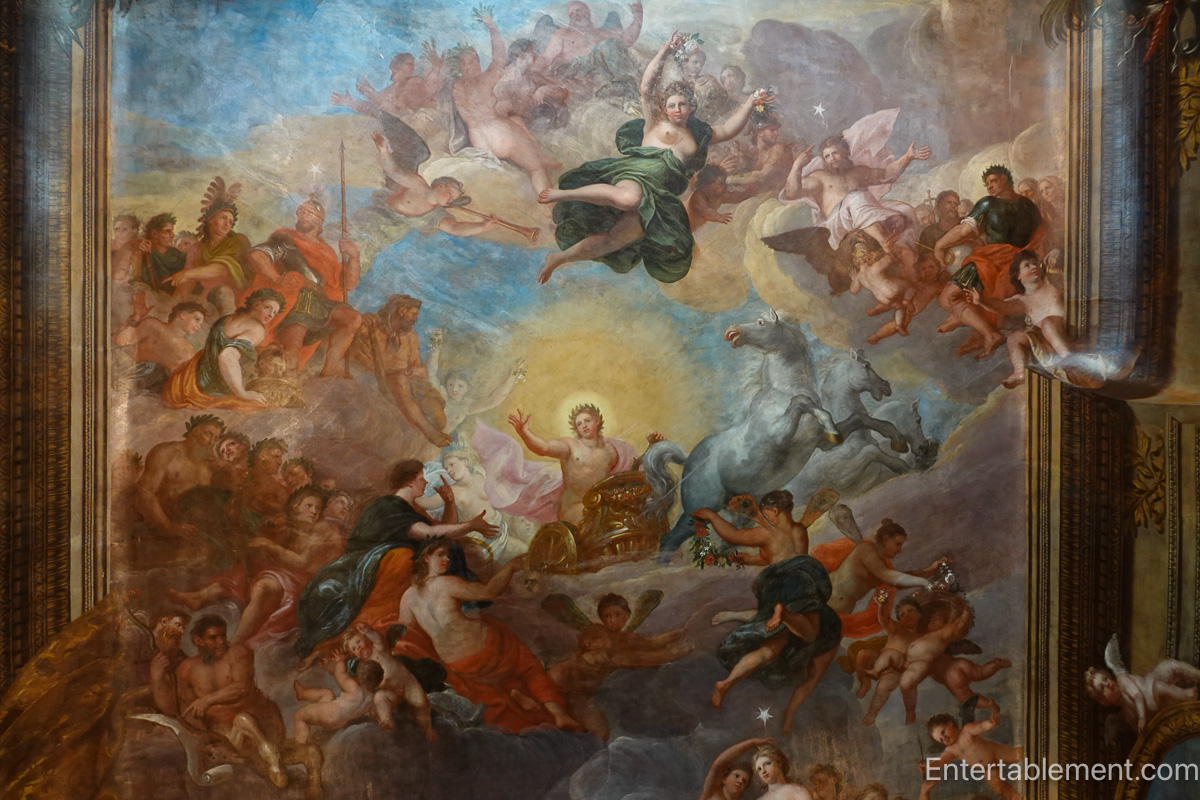
The result? A house that doesn’t just display art—it is art.
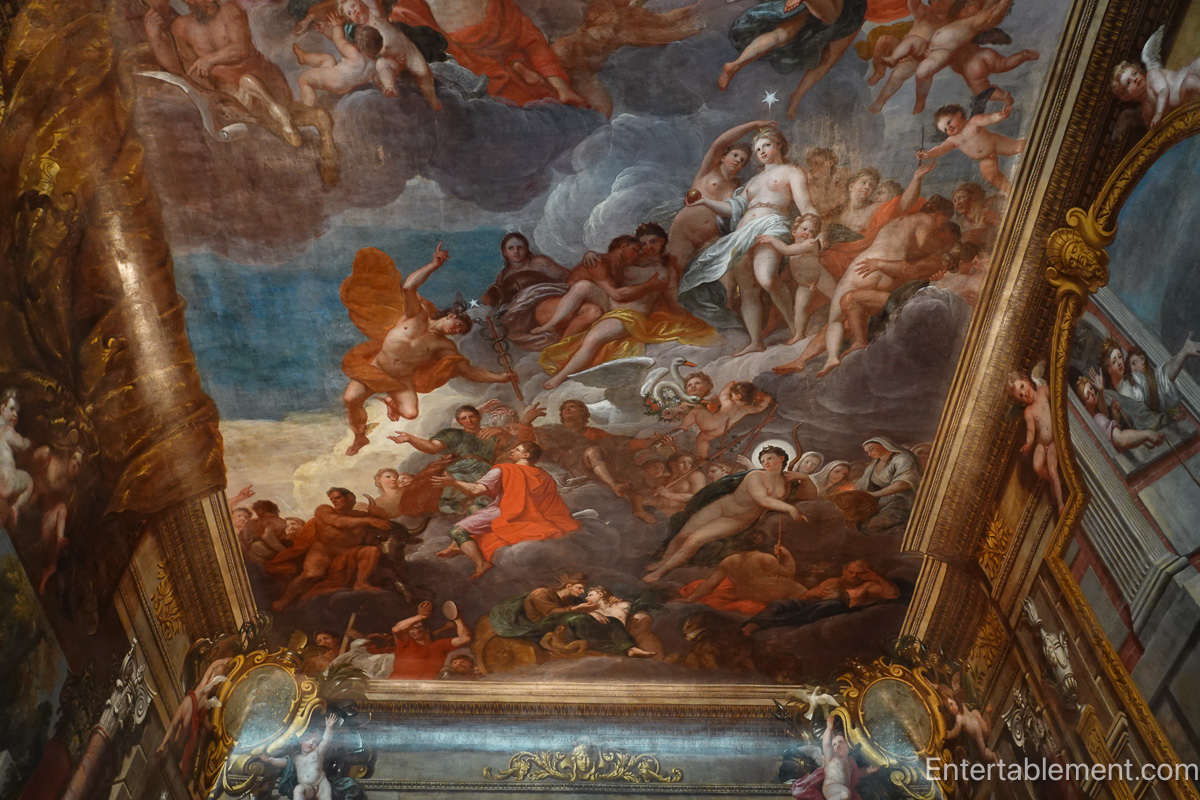
Walk into the Heaven Room, and you are immediately enveloped in a riot of Baroque excess.
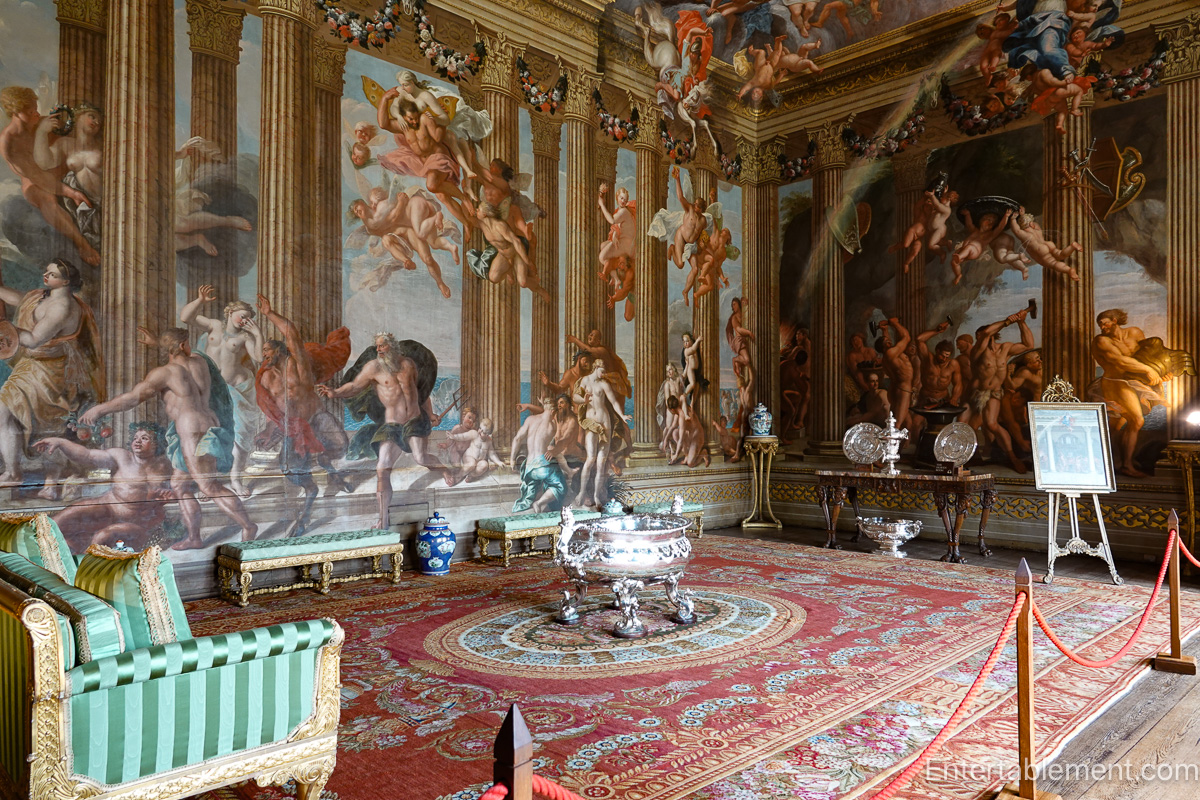
Verrio’s frescoes depict gods, goddesses, and heroes swirling amidst gilded columns and pastel-hued clouds.

The artist, Verrio, included a self-portrait among the figures on the mural.
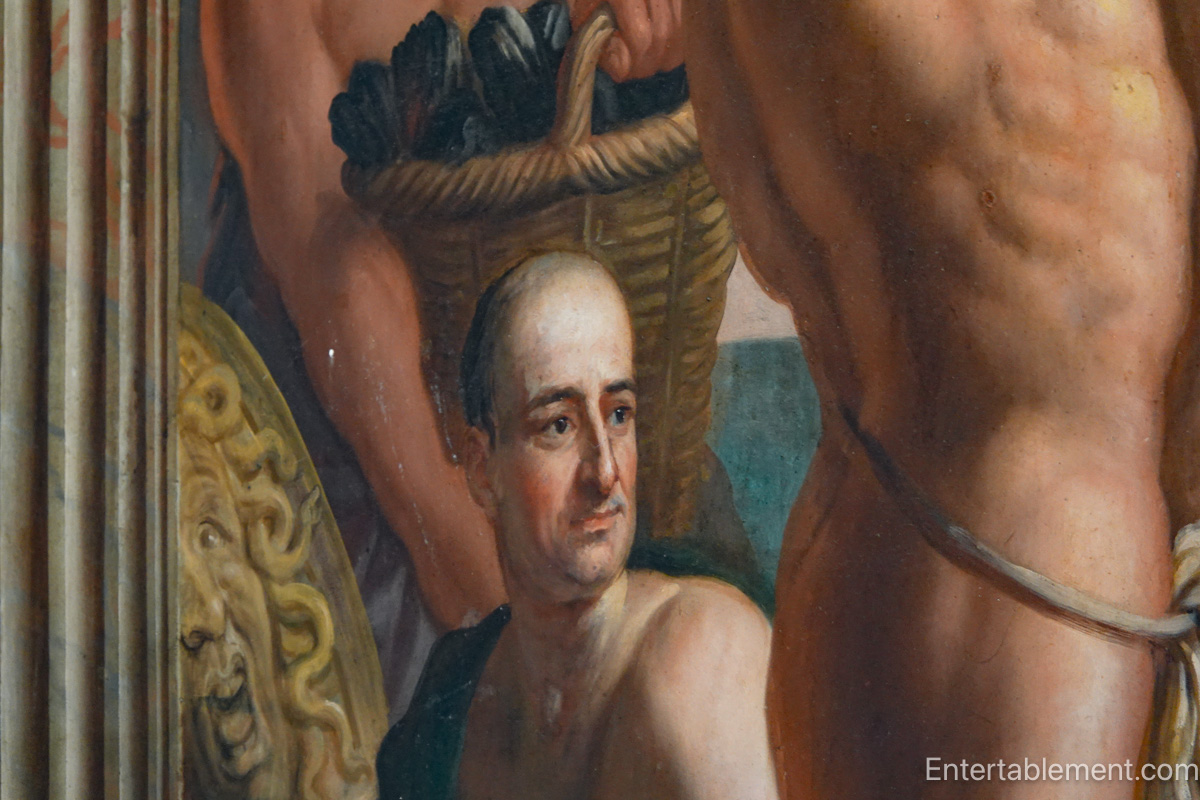
The effect is so overwhelming that visitors oscillate between awe and sensory overload. It is very hard to take it all in! Between absorbing the details of the murals and appreciating the Huguenot craftsmanship in the massive wine cooler, you are spoilt for choice.
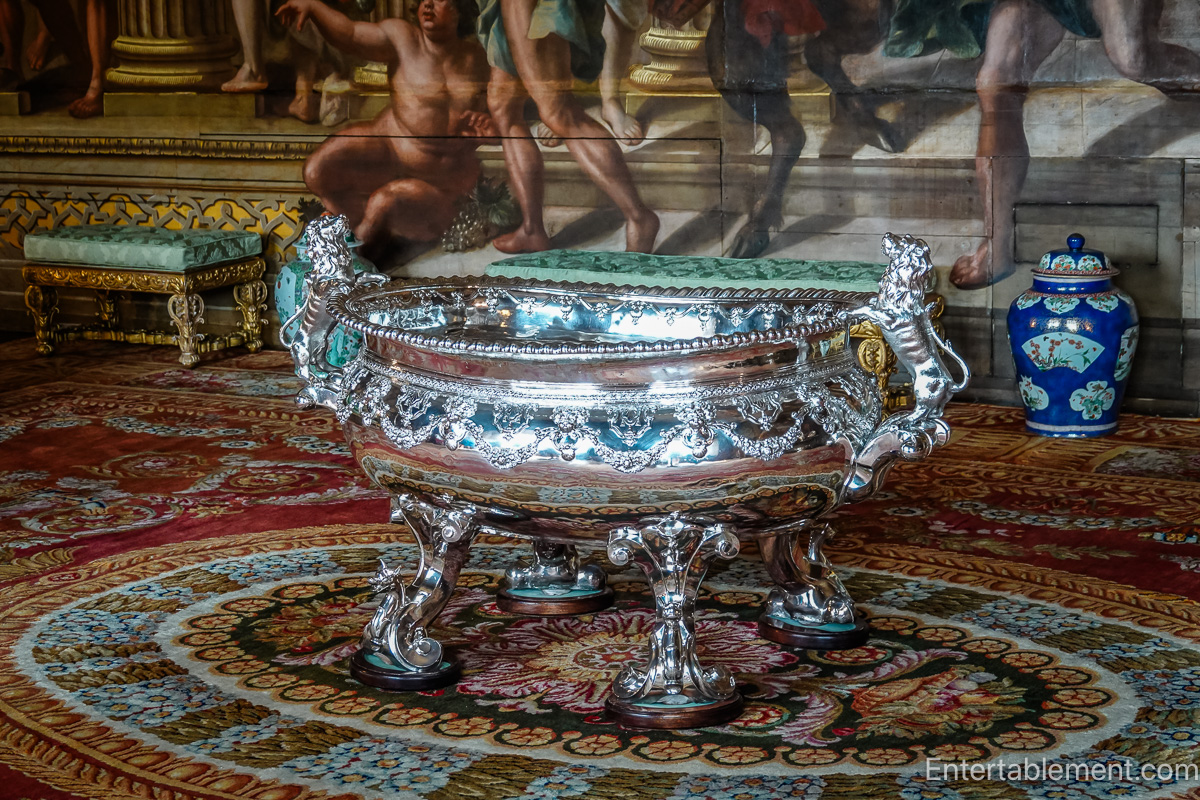
Made by Phillip Rollos in 1710, the solid silver wine cooler is the largest in existence and weighs more than 230 pounds. Before being filled with ice and wine!

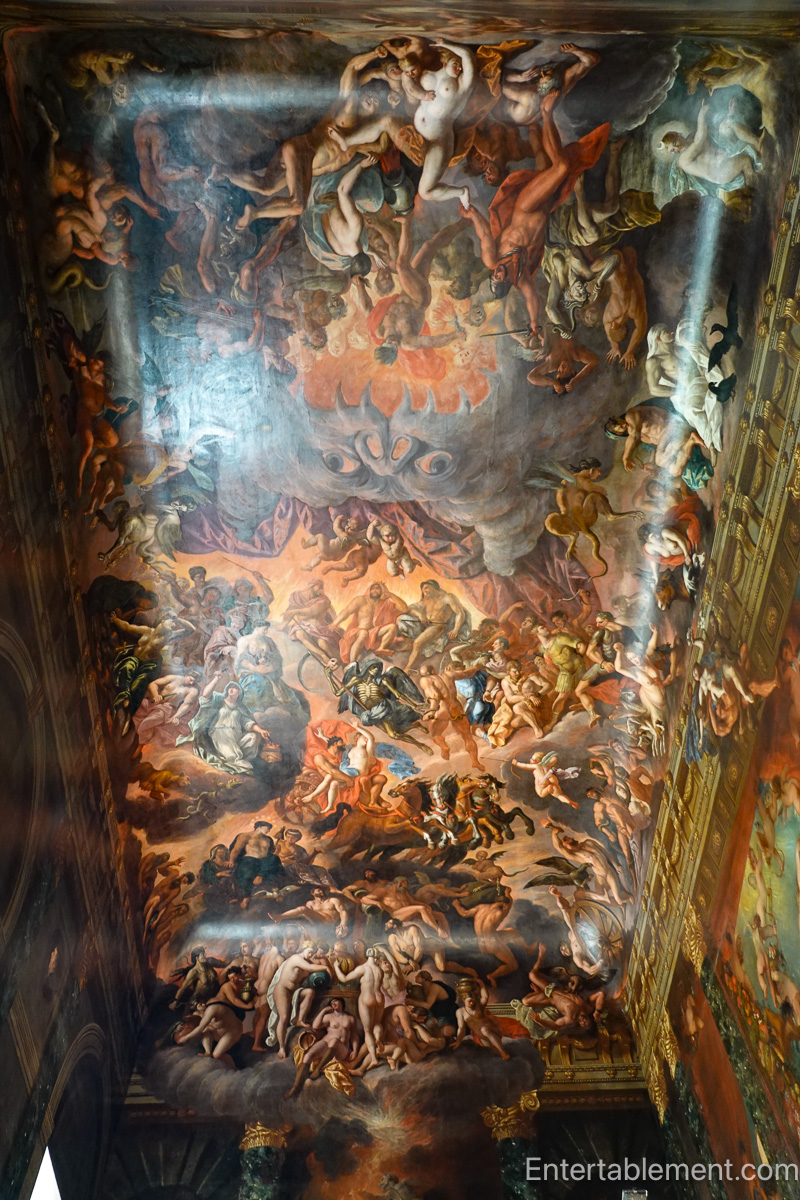
Across the way, the Hell Staircase provides a startling contrast. Its vast ceiling teems with demons, fire, and writhing sinners, emphasizing the stark juxtaposition of celestial splendour and infernal chaos.
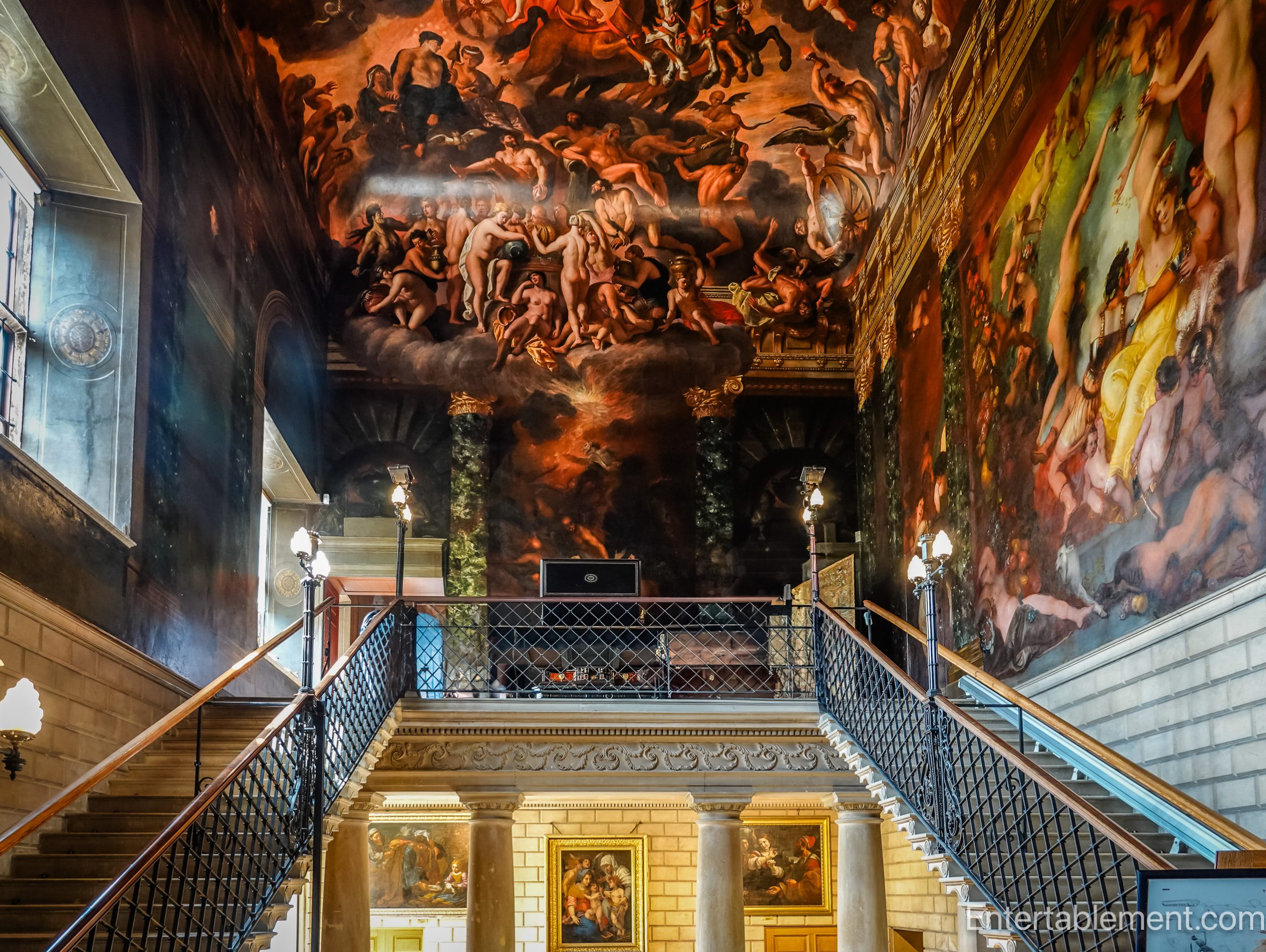
Not precisely restful, is it?

The Great Hall: A Stage for Royalty
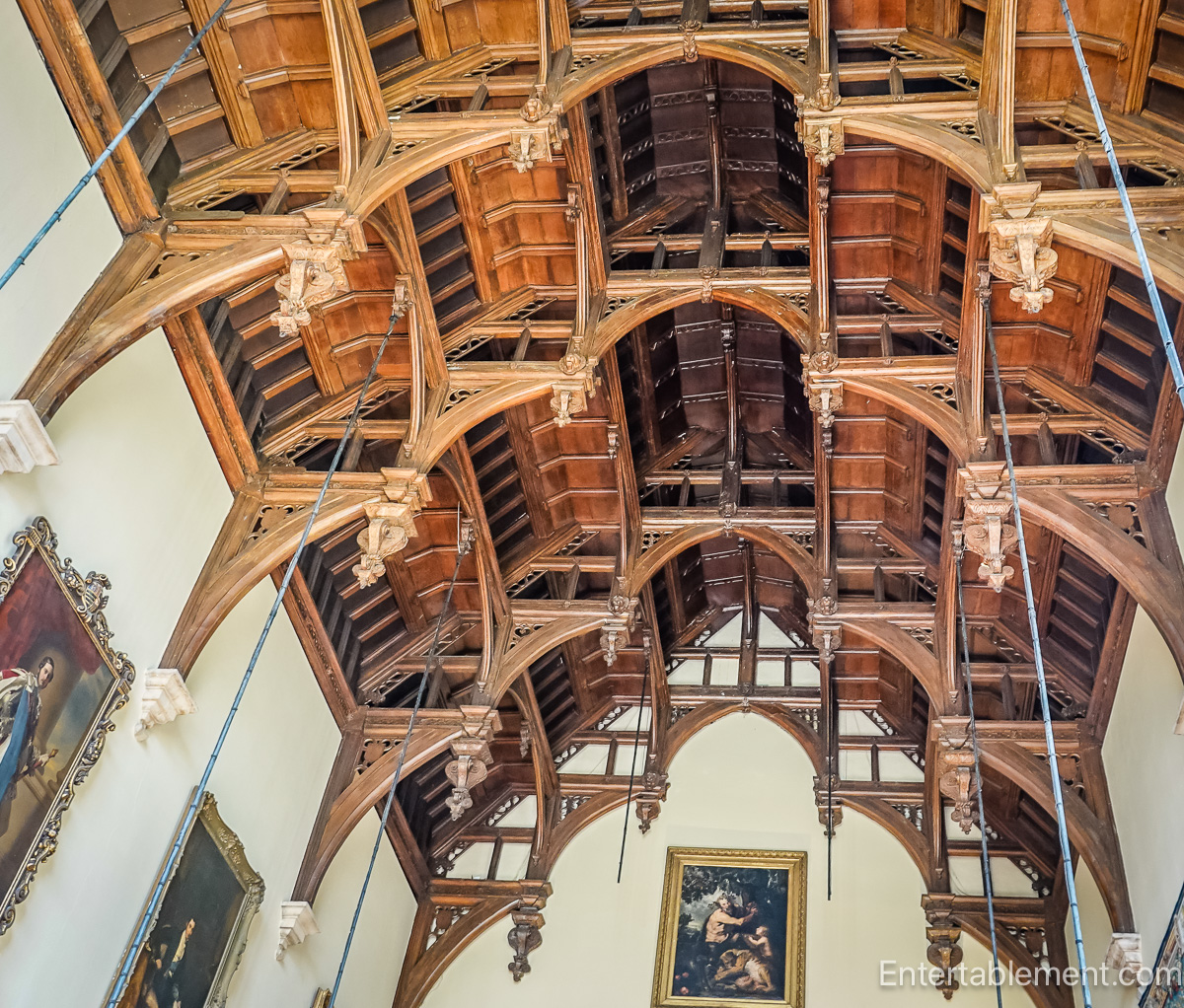
The Great Hall is at the heart of Burghley House, and it has witnessed grand entertainments and royal visits for centuries. Originally a focal point of Elizabethan hospitality, it was revived when Queen Victoria visited in 1844. The bookcases were installed during the 19th century.

The soaring double hammer-beam roof is an engineering marvel, spanning the hall, which is 68 feet long and 30 feet wide. The Great Hall remains a testament to Burghley’s role as both a stately home and a place of national significance.
The Pagoda Room: A Family Portrait Gallery
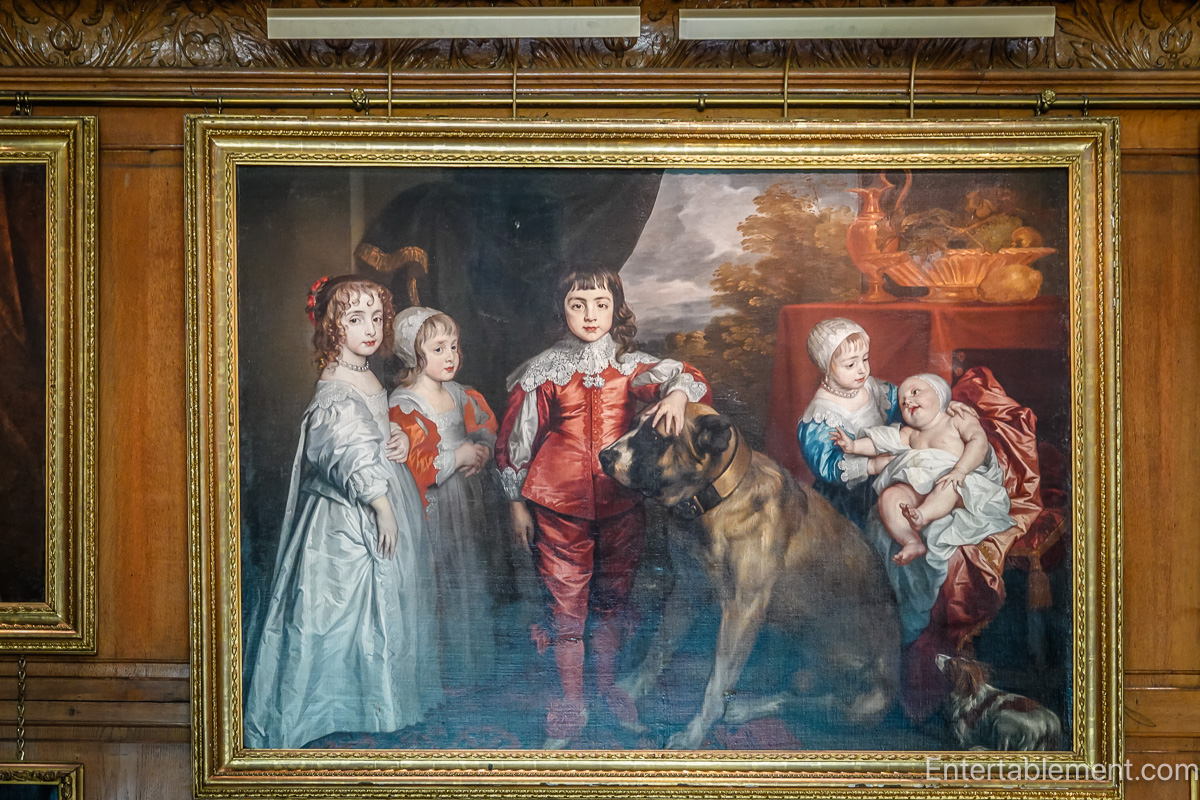
One of Burghley’s most intriguing spaces is the Pagoda Room, a treasure trove of the Cecil family history. Lined with portraits spanning centuries, the room provides an intimate glimpse into the figures who shaped Burghley’s legacy. The exquisite plaster ceiling won my heart.
 .
.
Among the collection are striking depictions of key political players, noble patrons, and family members who played pivotal roles in England’s governance and culture. The carefully curated selection highlights the continuity of the Cecil lineage and reflects the evolving artistic styles through the ages.
Tucked away to one side of the Pagoda Room are two small closets added in 1675. This one is laid out as it would have been in the early 20th century, with clothes and accessories belonging to the 5th Marquess and Marchioness.

In later years, the second room was modified to accommodate indoor plumbing. Note the portrait of the indefatigable Lancelot “Capability” Brown, whose natural parklike landscapes were in demand in the 18th century. He worked on more than 170 projects for stately homes, blending man-made elements with the existing landscape.

The Blue Silk Bedroom
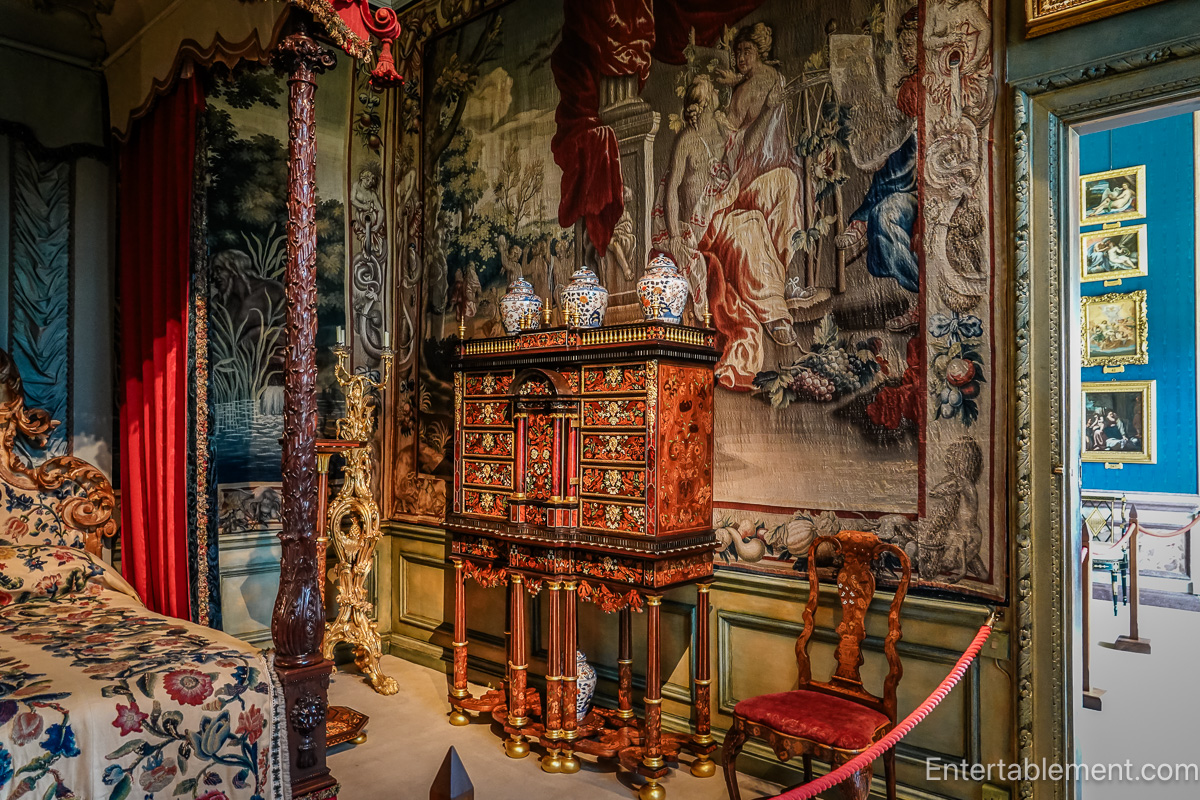
I was a bit puzzled by the name of this room, as the most notable feature is the red state bed that consumes the space. The canopy and headboard are in the 17th-century style, the canopy covered with velvet, skilfully applied to a carved wood frame. The bedspread and headboard are English crewelwork.
The incredible cabinet dates from 1664 and comes from the Gobelin workshop of Pierre Gole, one of the principal furniture makers to King Louis IV. It is one of the earliest known examples of floral French marquetry.
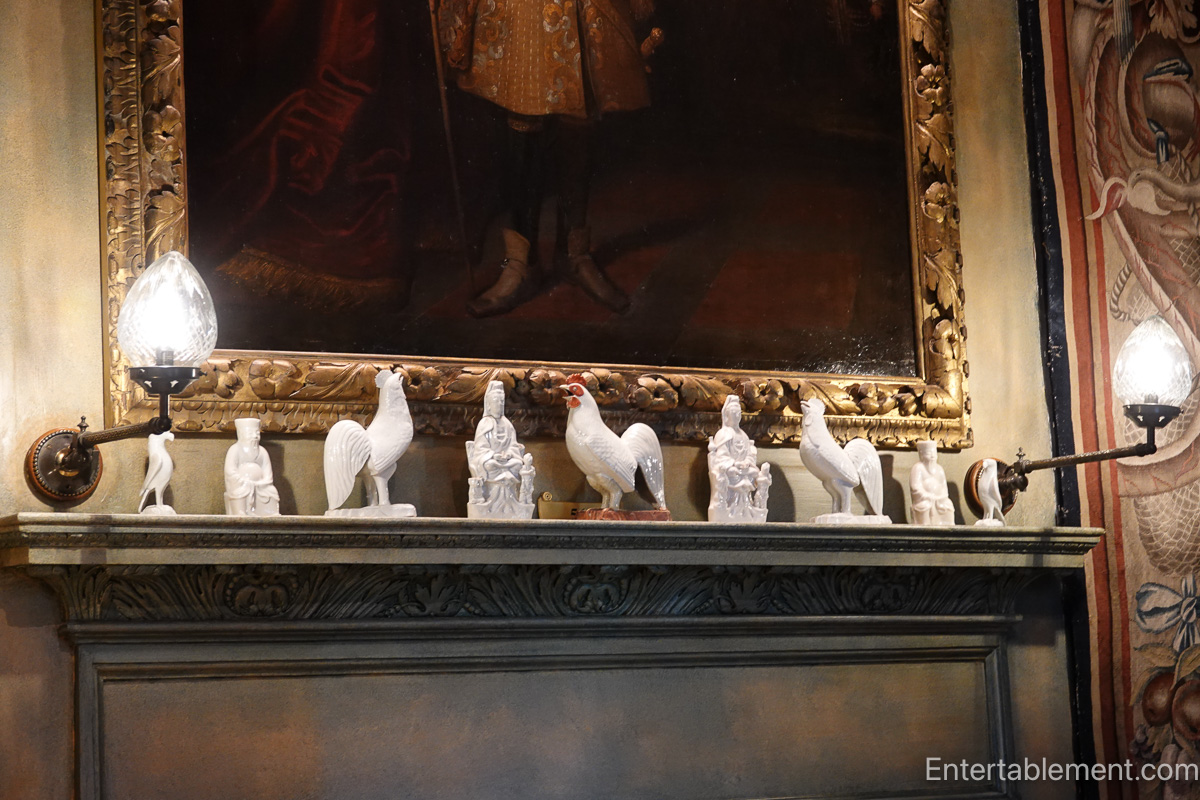
The figurines on the mantlepiece include a rooster—so very French!
The Four George Rooms: Royal Accommodations
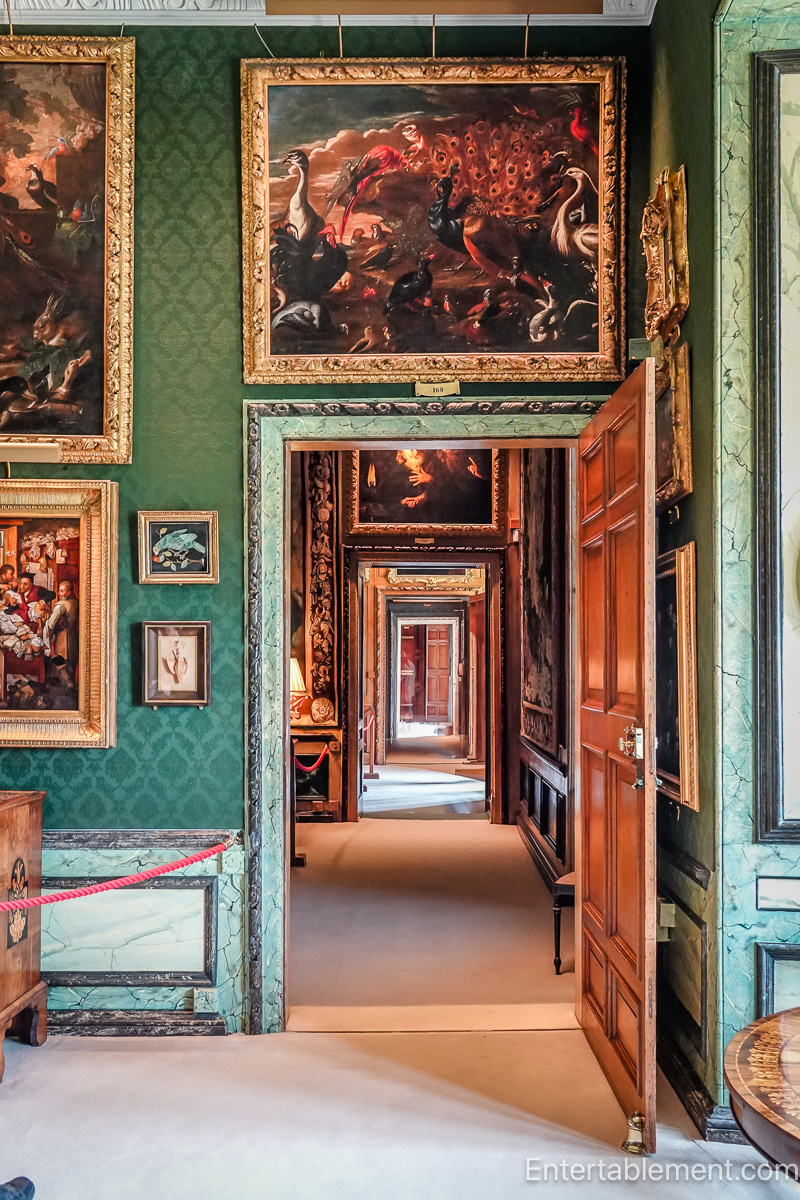
The Four George Rooms, great State Rooms on the South side of the house, are named after the four Kings George (I–IV), highlighting Burghley’s past connection with the Royal family. Arranged enfilade, the rooms display a rich collection of paintings, exquisite furniture, and a sense of regal luxury. The 5th Earl employed Antonio Verrio to paint the magnificent ceilings. I can only surmise that Antonio was at Burghley for an extended period, as scarcely a surface escaped his busy paintbrush.
The First George Room was the only one finished when the 5th Earl died in 1700. The 9th Earl finished the rest as the 18th century ended. The 2nd Marquess refurbished them for Queen Victoria and Prince Albert’s visit in 1844.
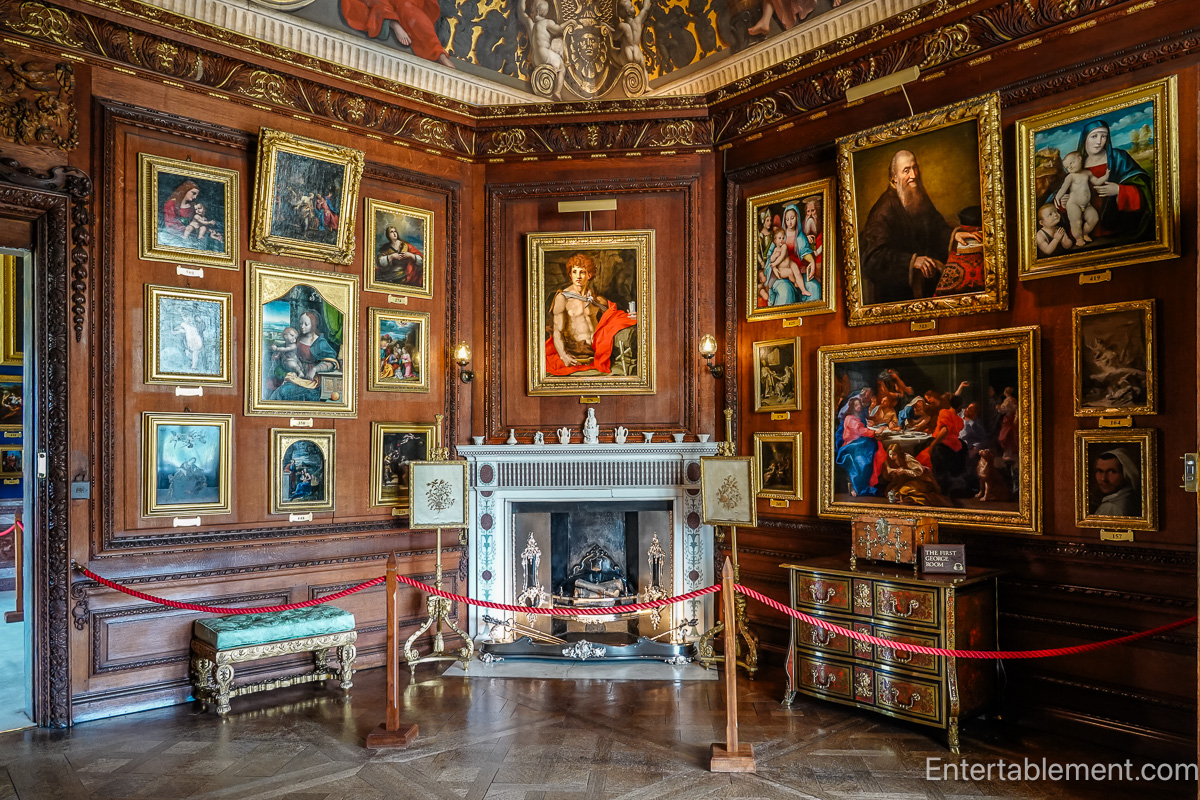
The ornate carvings over the doors in the George Rooms, while often attributed to Grinling Gibbons, were likely crafted in the style of his work rather than by the master himself. Given that much of Burghley’s grand refurbishment took place after Gibbons’ time, it is more likely that later artisans, influenced by his intricate foliage and swag designs, continued the tradition. The carvings bear all the hallmarks of his signature style but belong more accurately to the broader school of exquisite Baroque woodwork that followed in his wake.

Queen Victoria and Prince Albert used the second George Room during their visit in 1844.
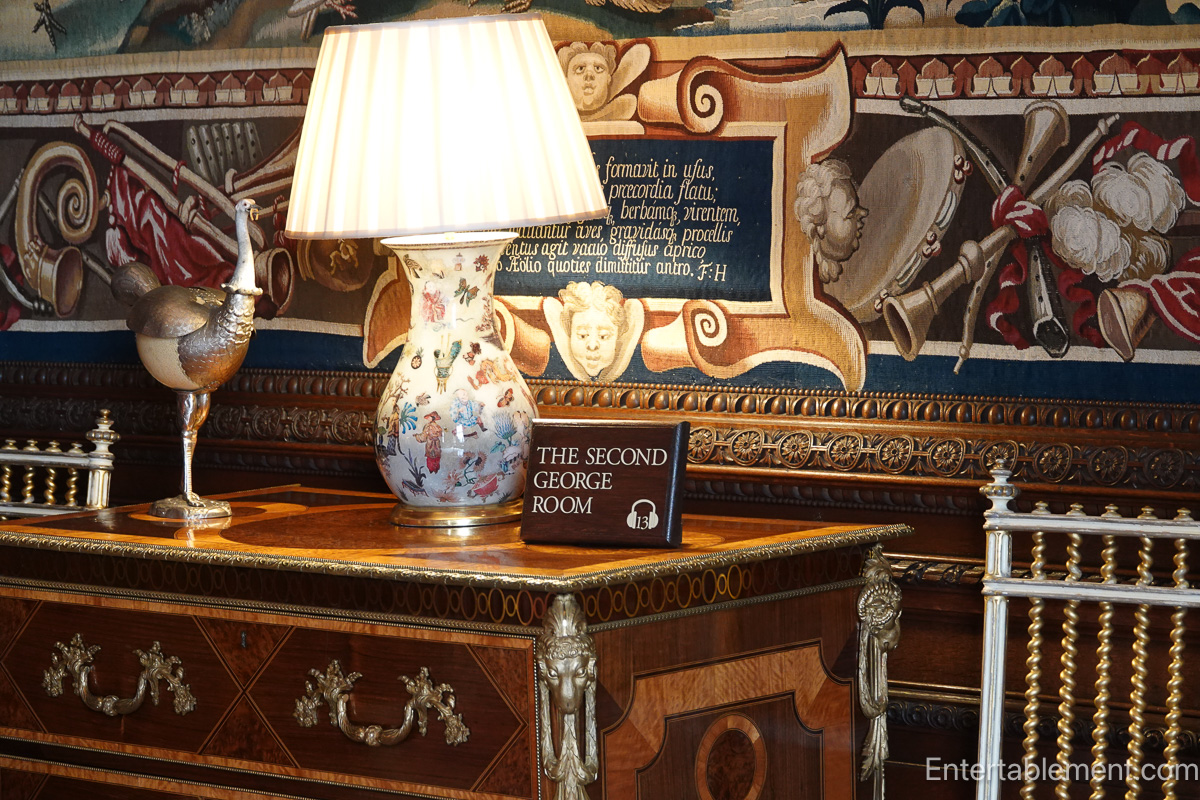
The bed and curtain hangings made by the London firm Fell and Newton in 1795 were modified to prepare for their visit. The bed was made smaller (?!).
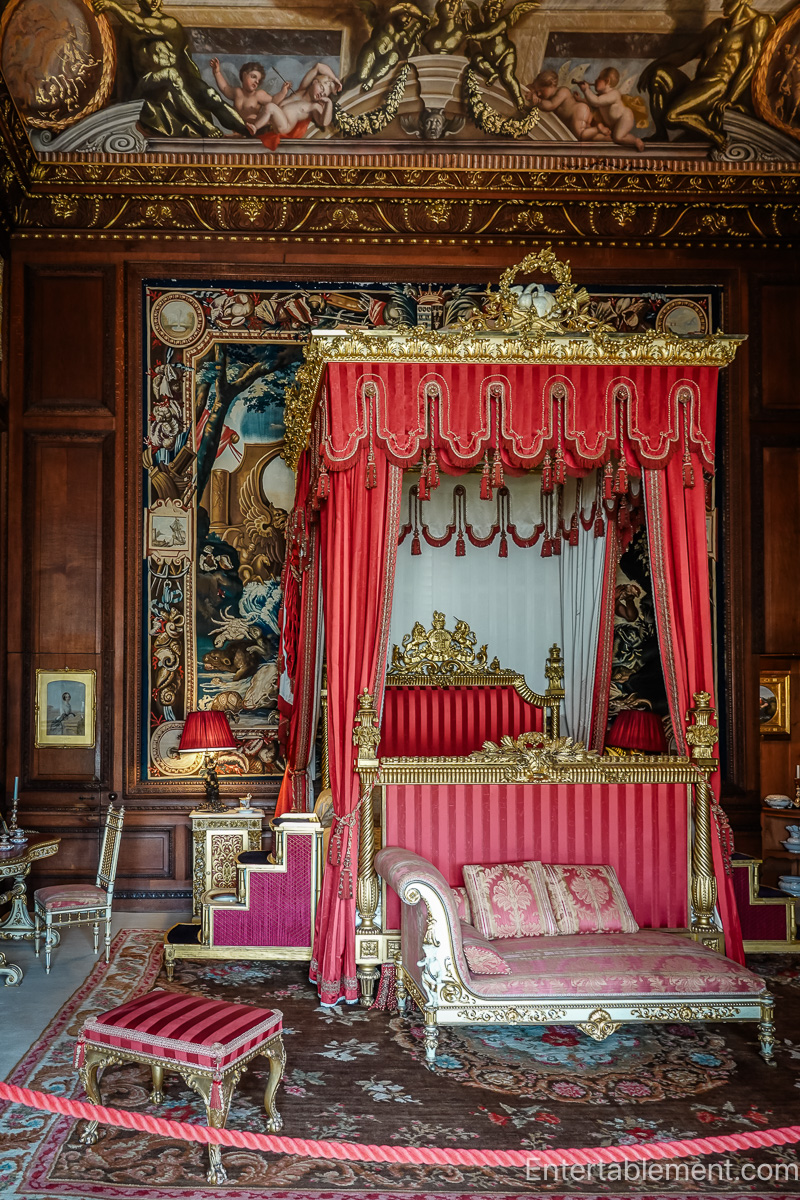
I can imagine the famously diminutive Queen Victoria using the steps to get into the bed. The dogs and cats would no doubt use them in our house.

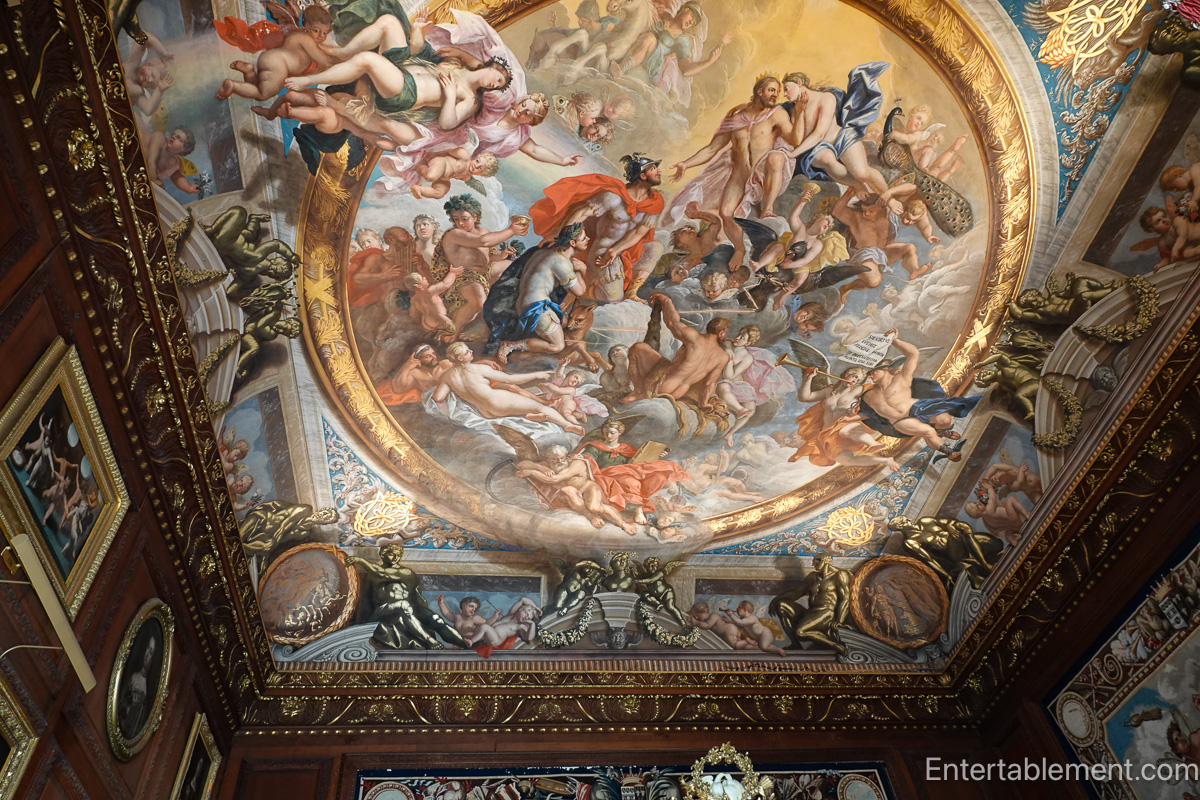
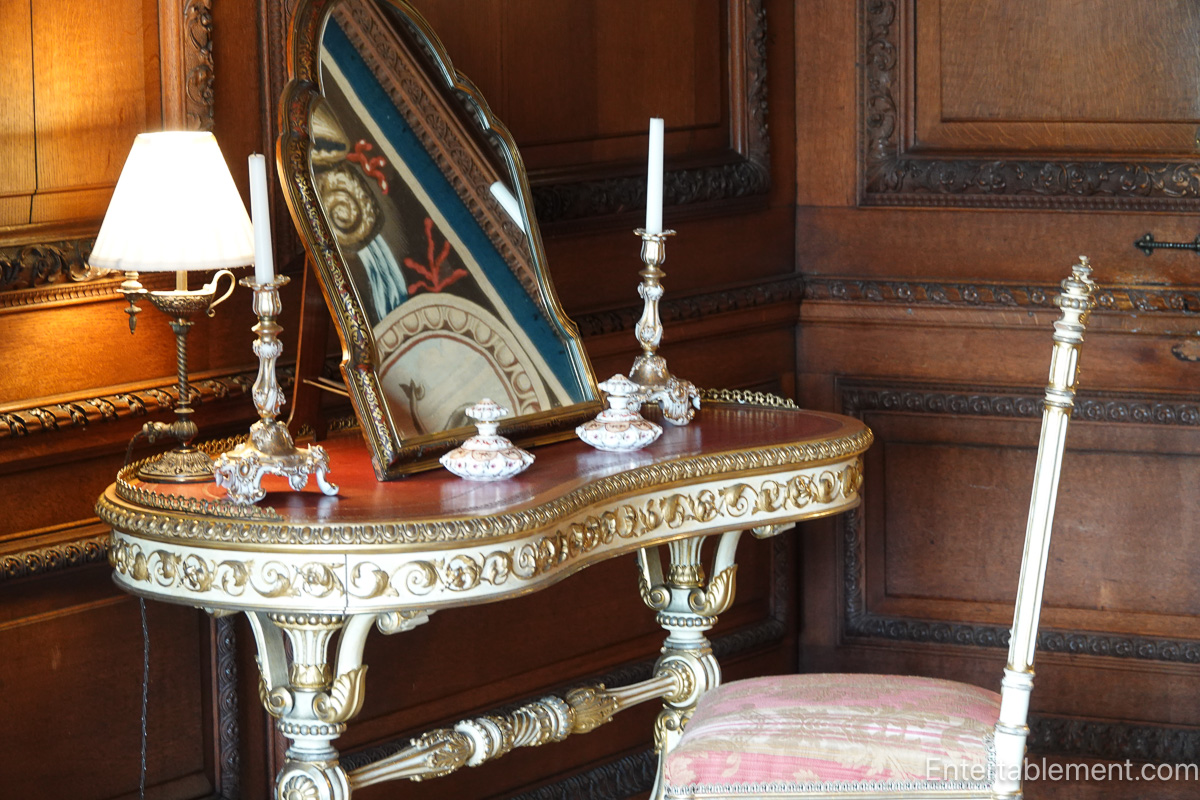
The Third George room is an elegant sitting room. Verrio’s ceiling portrays the Reunion of Cupid and Psyche, surrounded by lesser deities and their attendants.

John Richter, a renowned artisan of his time, crafted the fireplace in the Third George Room. He was known for his exquisite marble inlay work, and this fireplace is a testament to his craftsmanship. Its elegant design evokes the elegant style of Robert Adam.


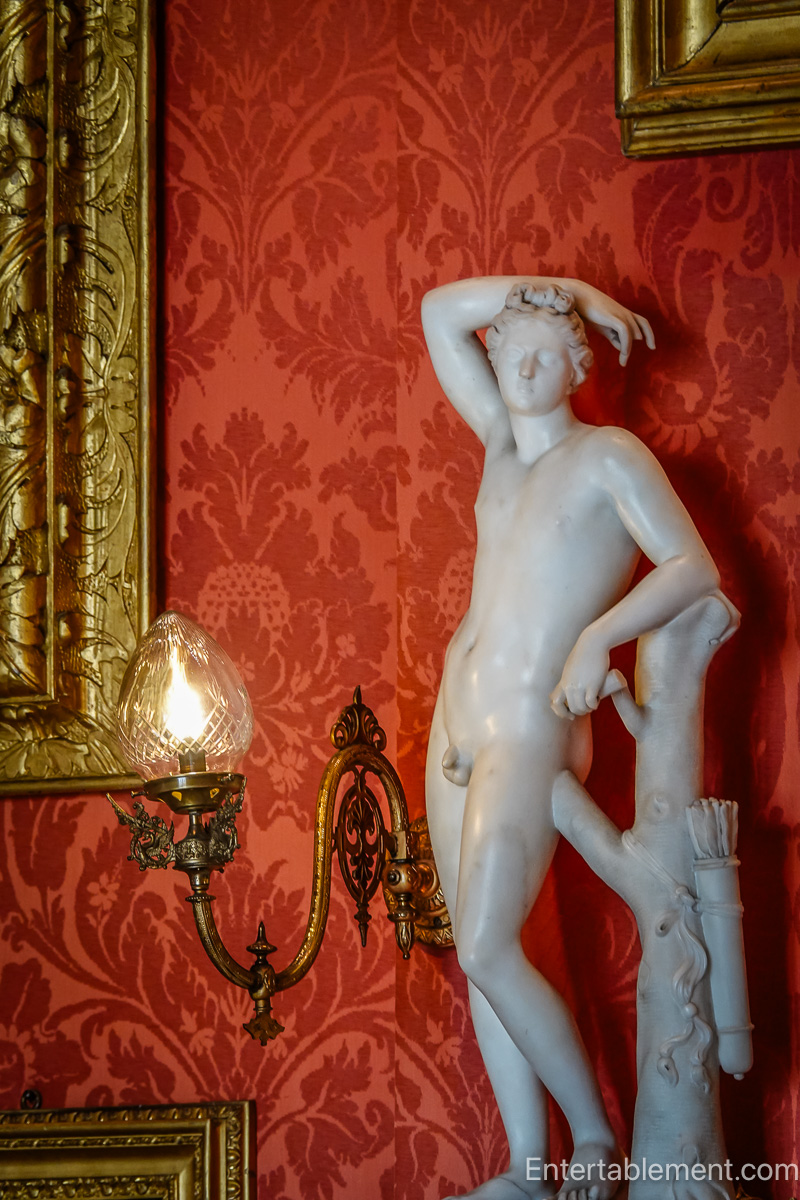
Queen Victoria used the Fourth George Room as a withdrawing room, panelled throughout in oak.

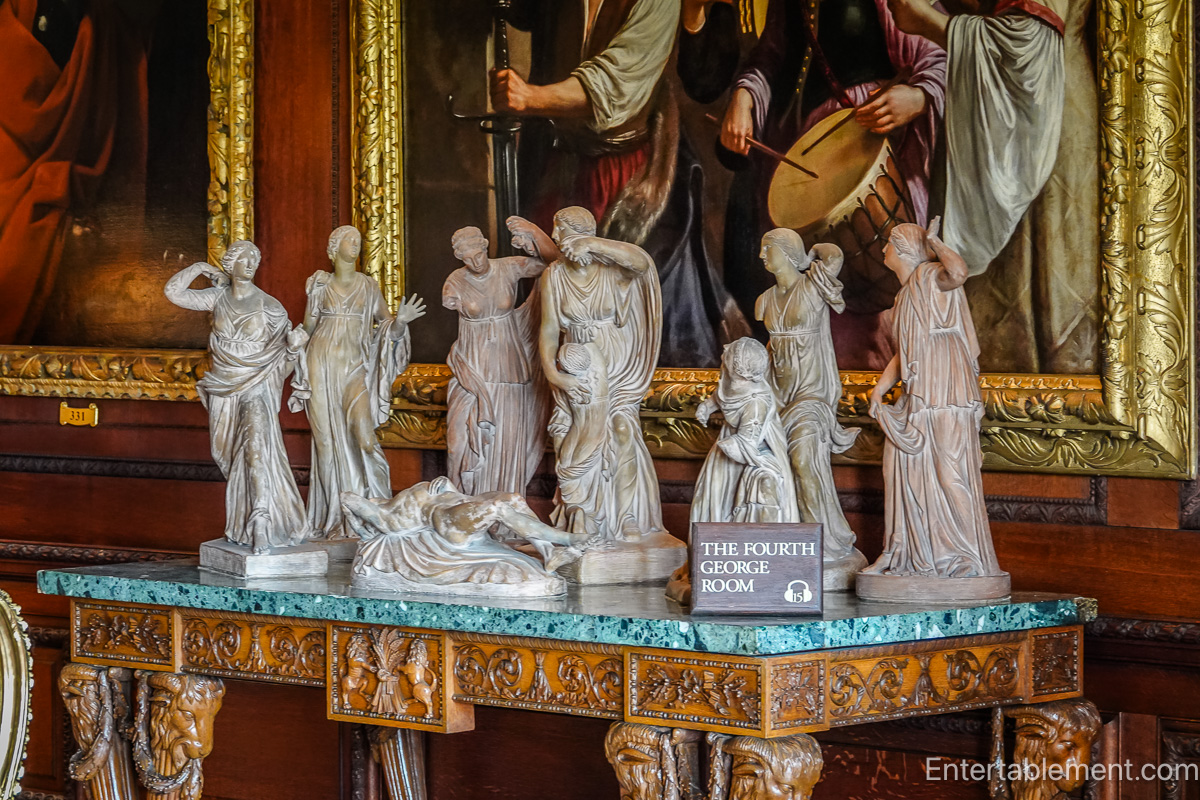
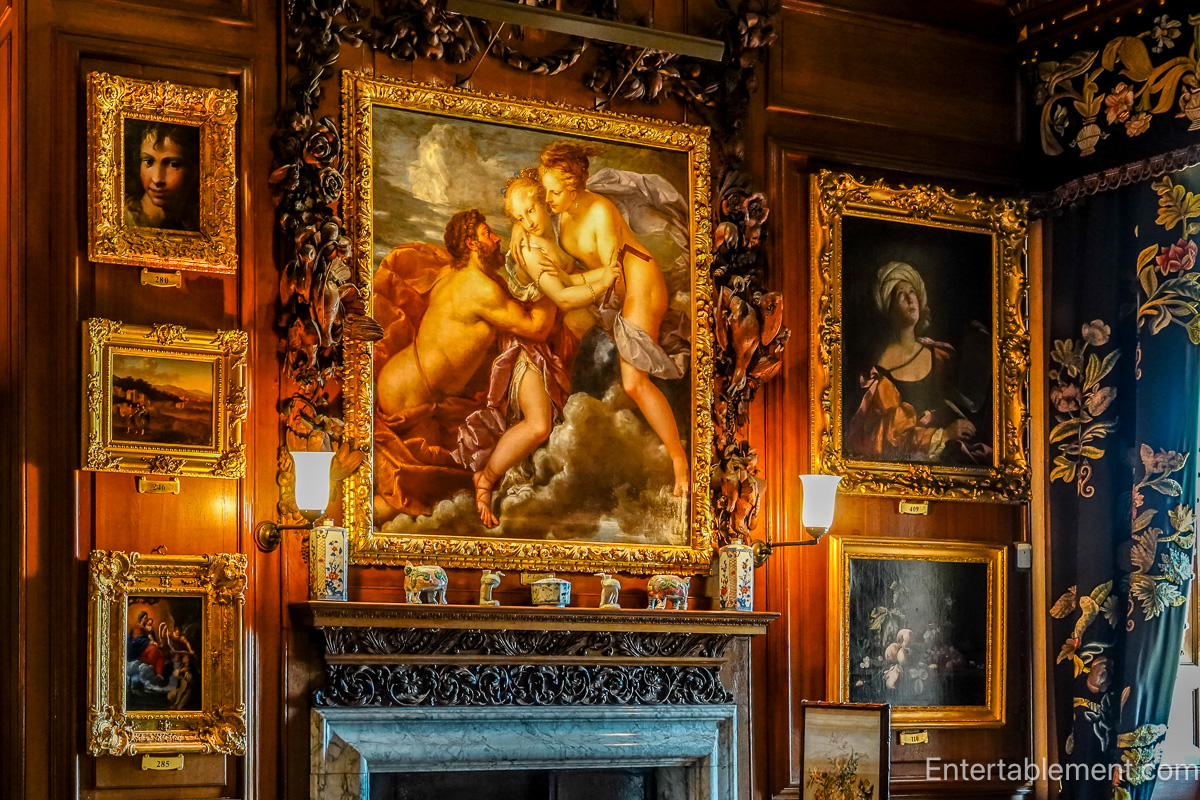
Further on, the Black and Yellow Bedroom was used by King George VI and Queen Elizabeth, the Queen Mother (then the Duke and Duchess of York), when they stayed at Burghley. The room’s striking colour scheme, ornate furnishings, and historical significance make it one of the most remarkable guest quarters in the house.

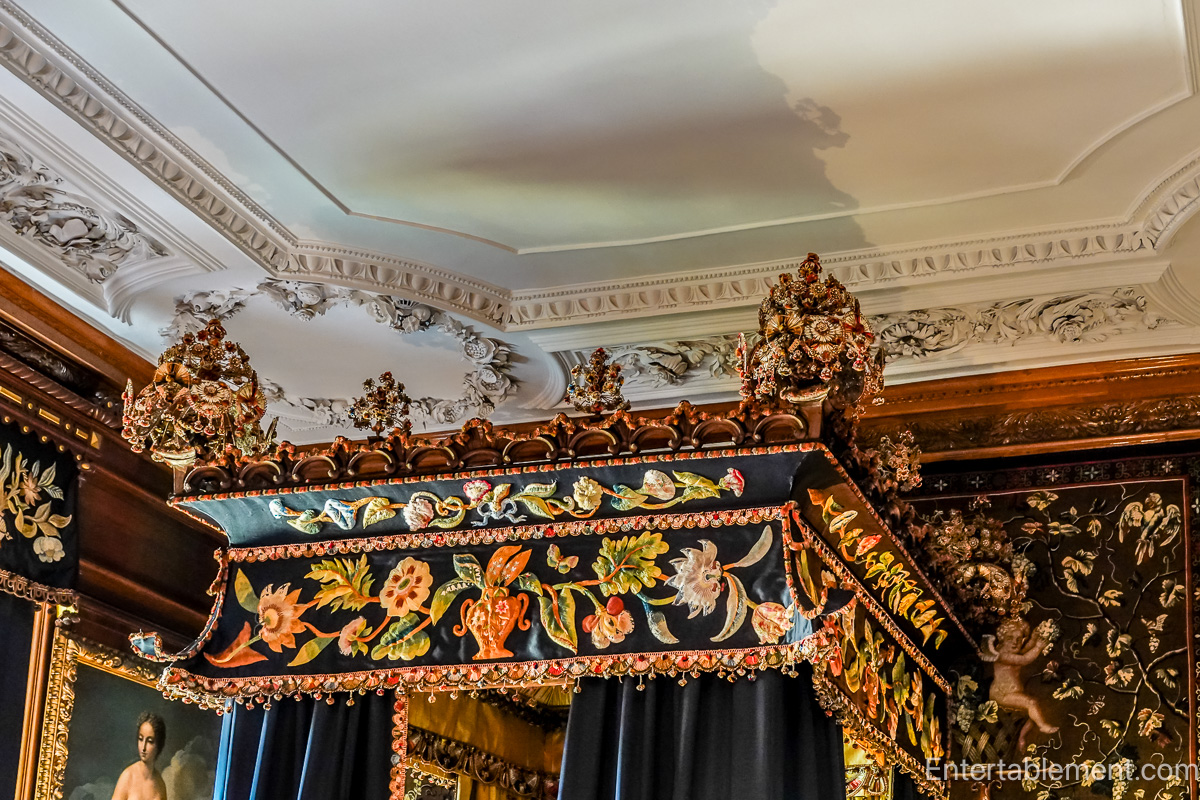
The dark background with exquisite boldly coloured embroidery is stunning.
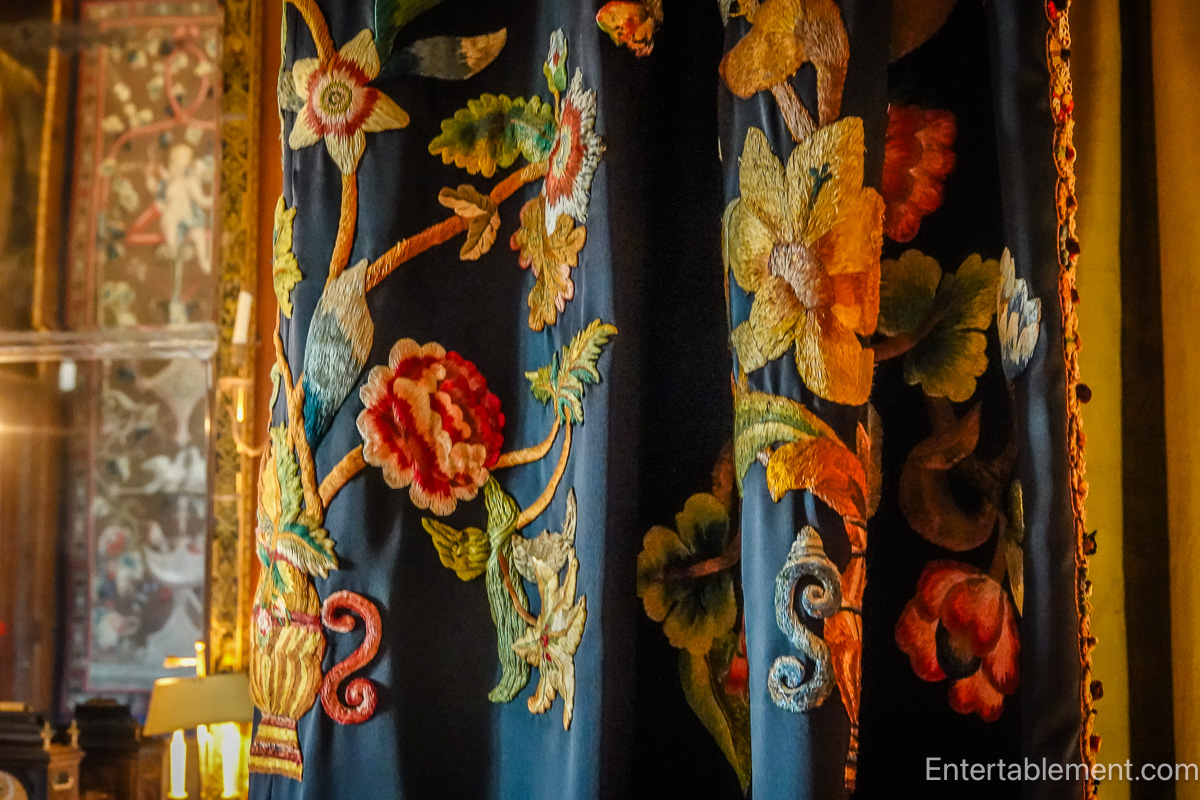
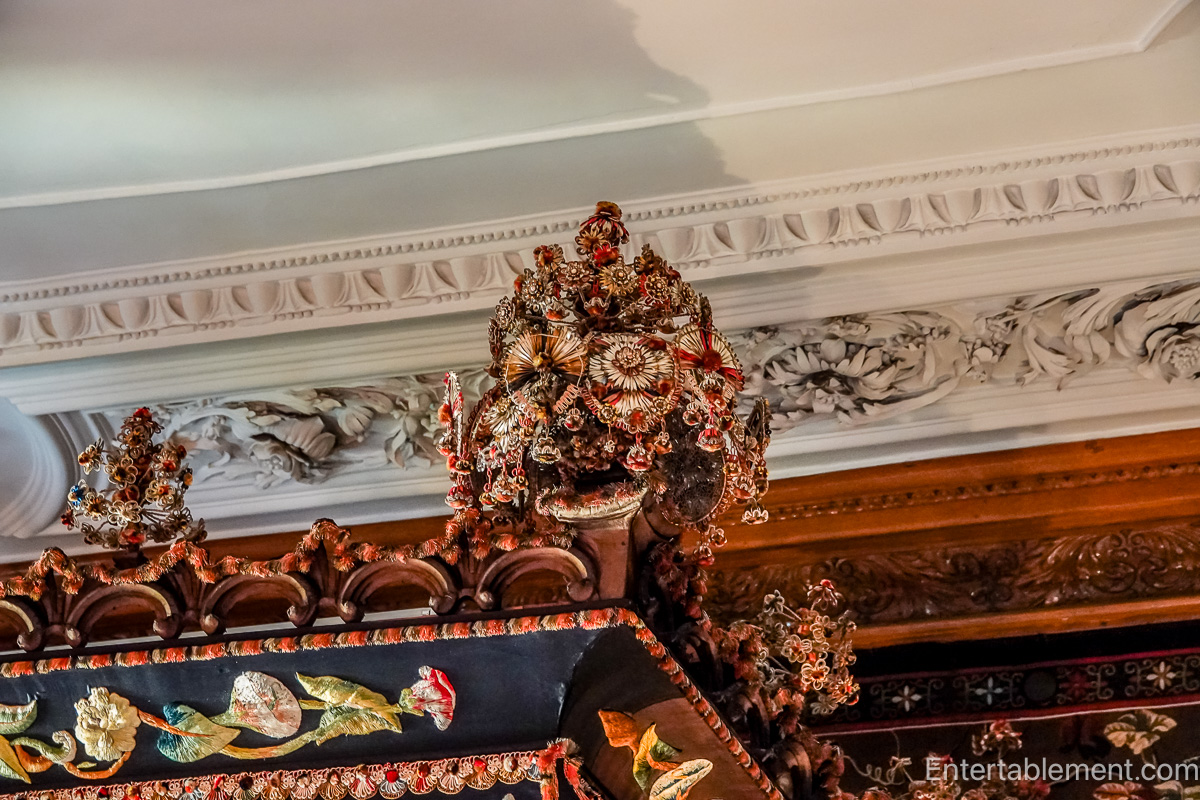
As is the phenomenally intricate top of the canopy.
The Chapel: A Place of Reflection
The Chapel at Burghley is another remarkable space, blending ornate woodwork with religious iconography. The plasterwork ceiling by Capability Brown—apparently more than just a landscaper—and large paintings create an atmosphere of reverence, reflecting the importance of faith in the lives of the Cecil family.
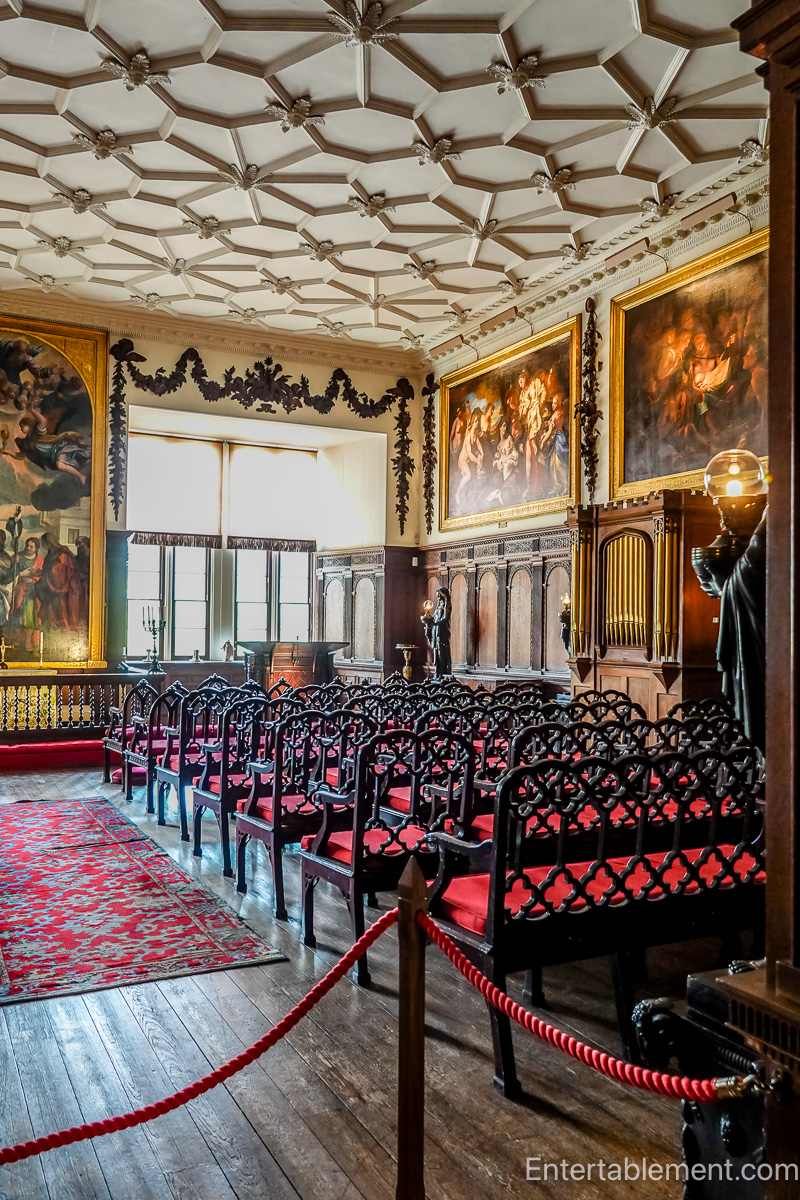

The Chapel continues to be a space for quiet contemplation amidst the house’s grandeur.


The Ante Chapel
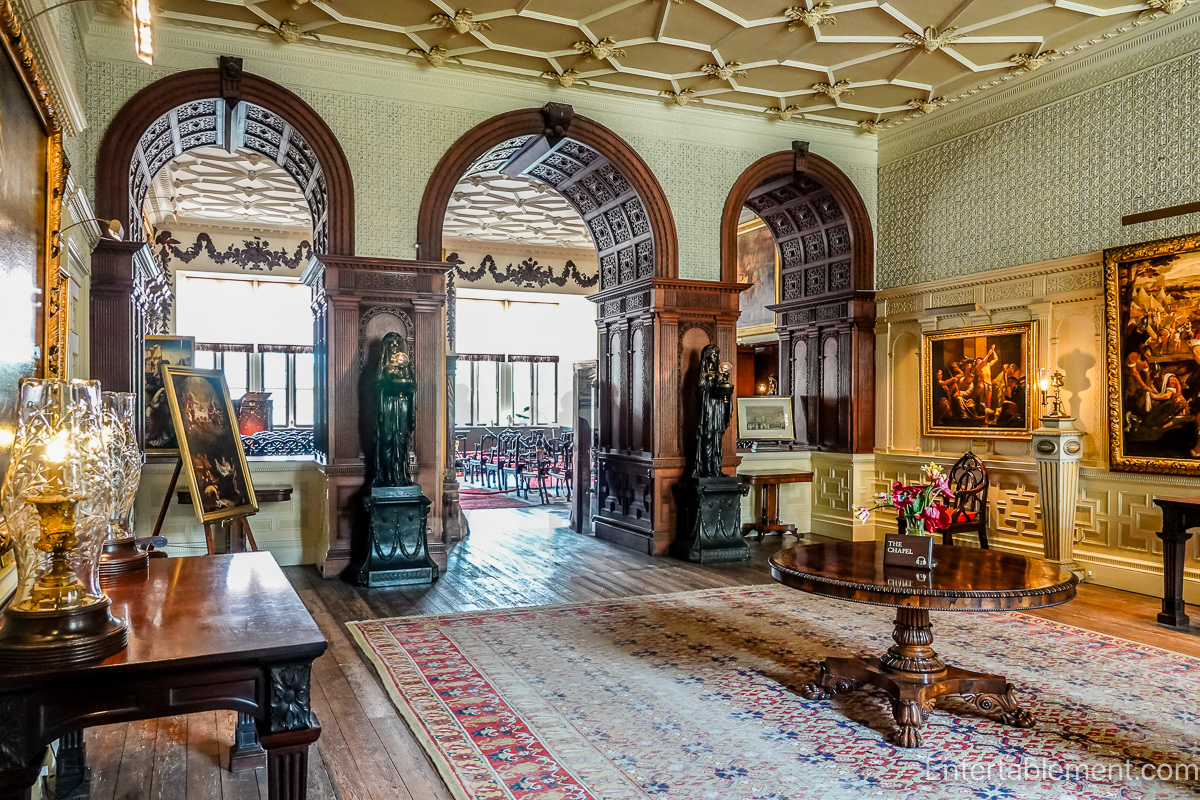
While the family and guests assembled for prayers in the Chapel, the household staff attended the service in the outer room.
The Servants’ Quarters: A Glimpse Below Stairs
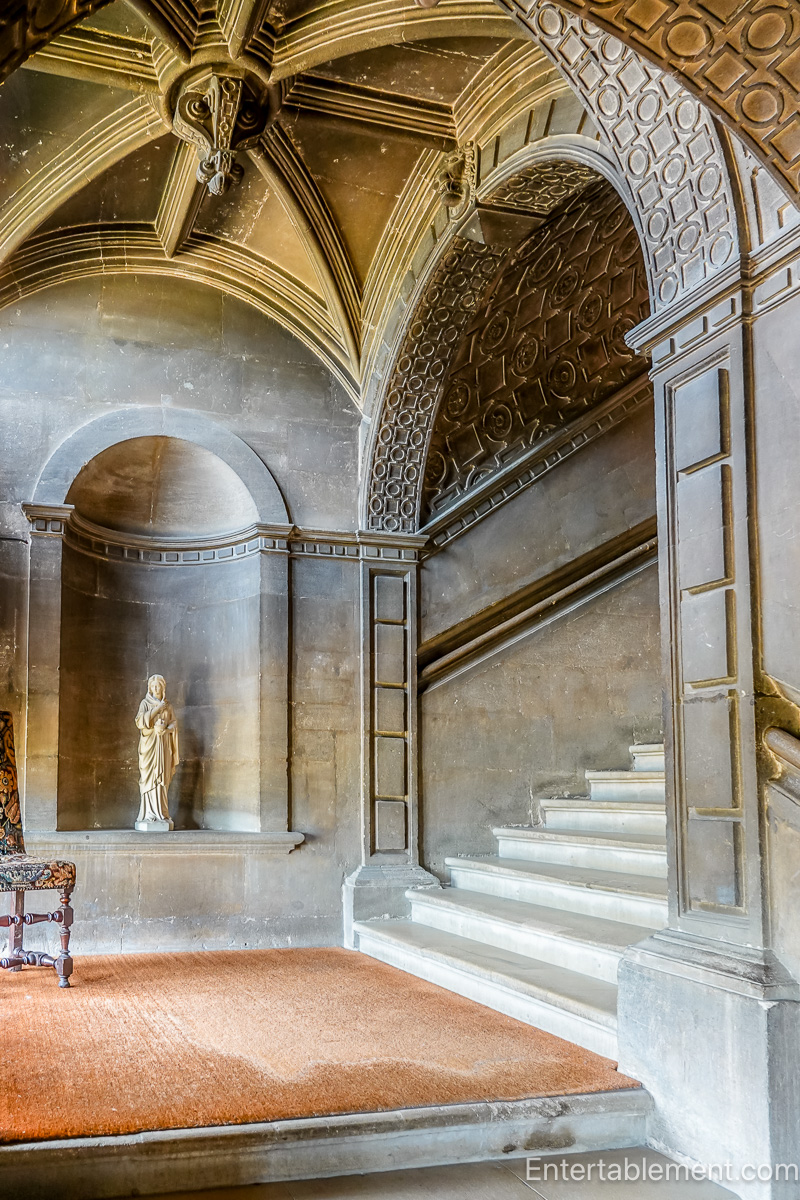
Below the opulent staterooms, Burghley also reveals fascinating insights into the workings of a great house; down the stairs, we go.
Hogs Passage: A Grand Swine Transport?
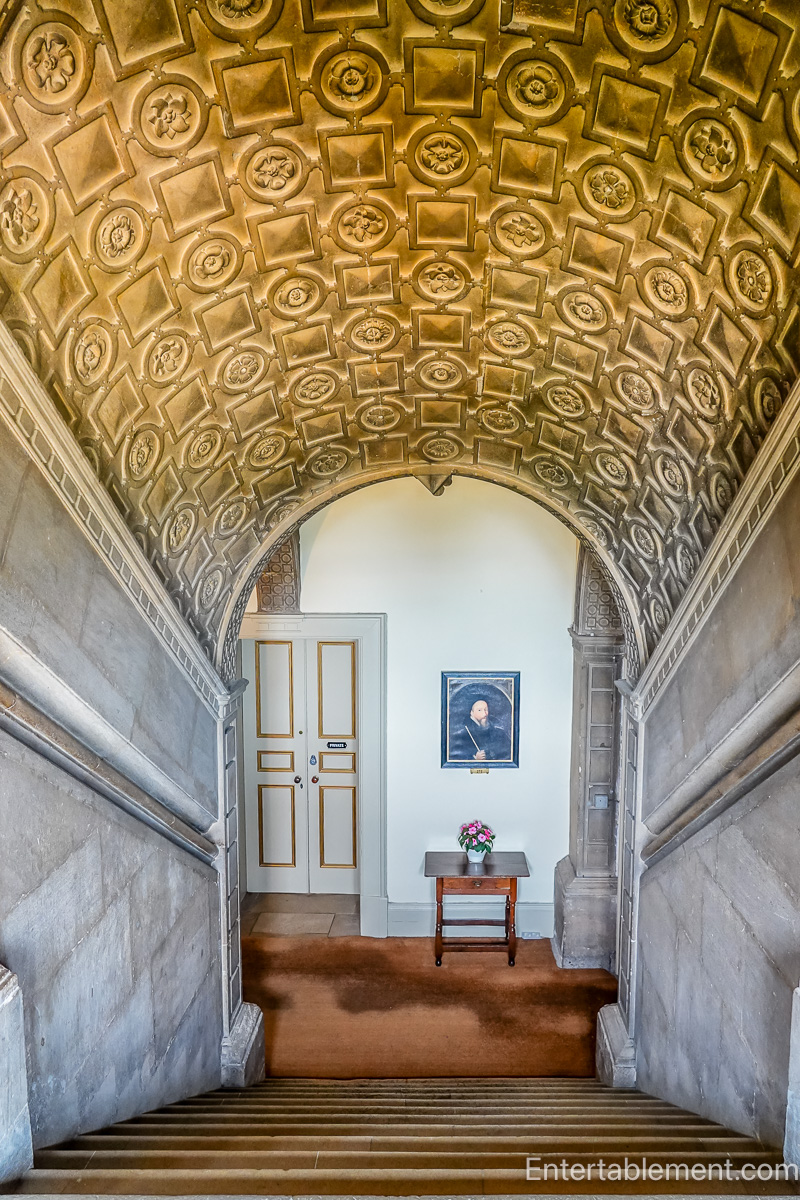
Nestled within the basement of Burghley House, just outside the kitchen, lies the curiously named Hogs Passage. While one might expect a dark and functional corridor, Burghley’s version is far more elegant—a rather luxurious setting for what was historically a practical necessity.
The name likely stems from its original use as a route for moving livestock, particularly pigs, from outdoor pens to the kitchen. In large estates, efficiency in food preparation was paramount, and designated pathways for transporting animals ensured the seamless running of the household. While its function may have been humble, Hogs Passage is anything but—it serves as yet another example of how even the most utilitarian spaces at Burghley were crafted with an air of refinement.
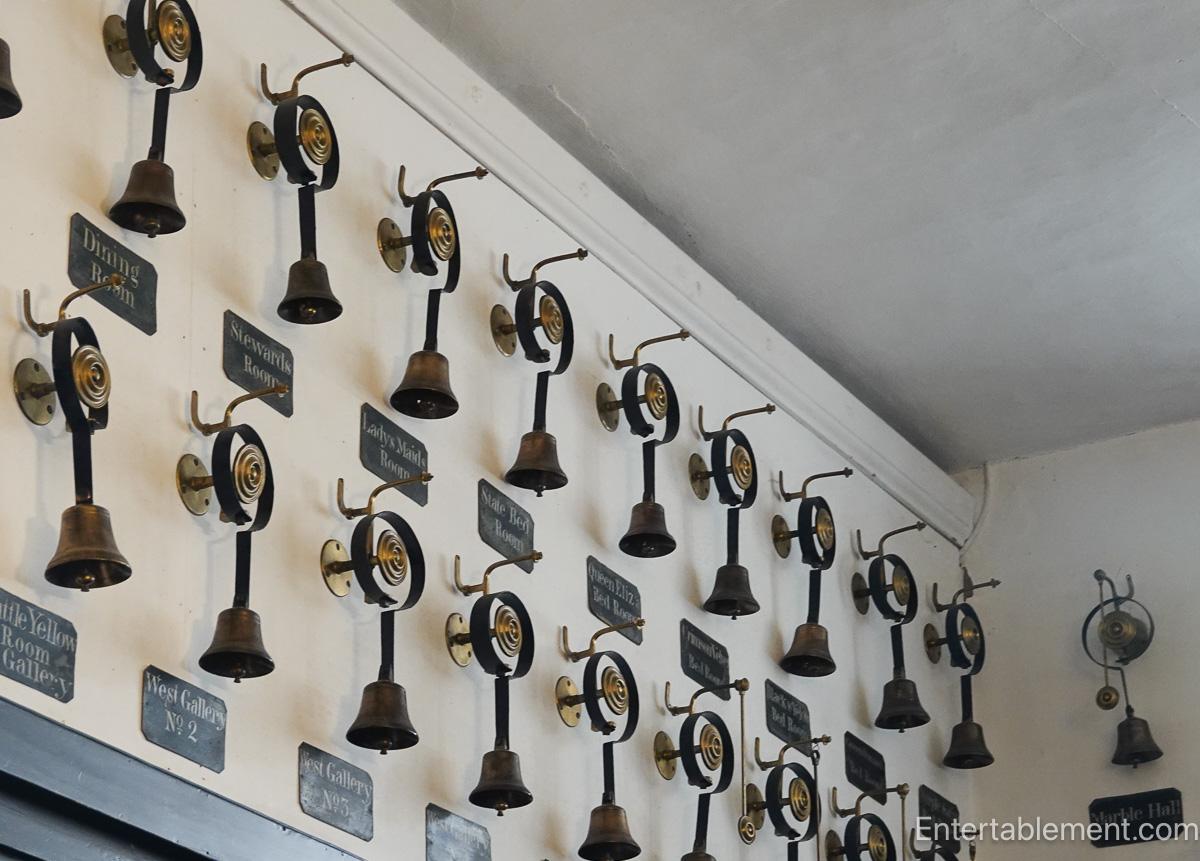
The servants’ bells hanging in neat rows give a tangible sense of the constant activity required to keep the house running.
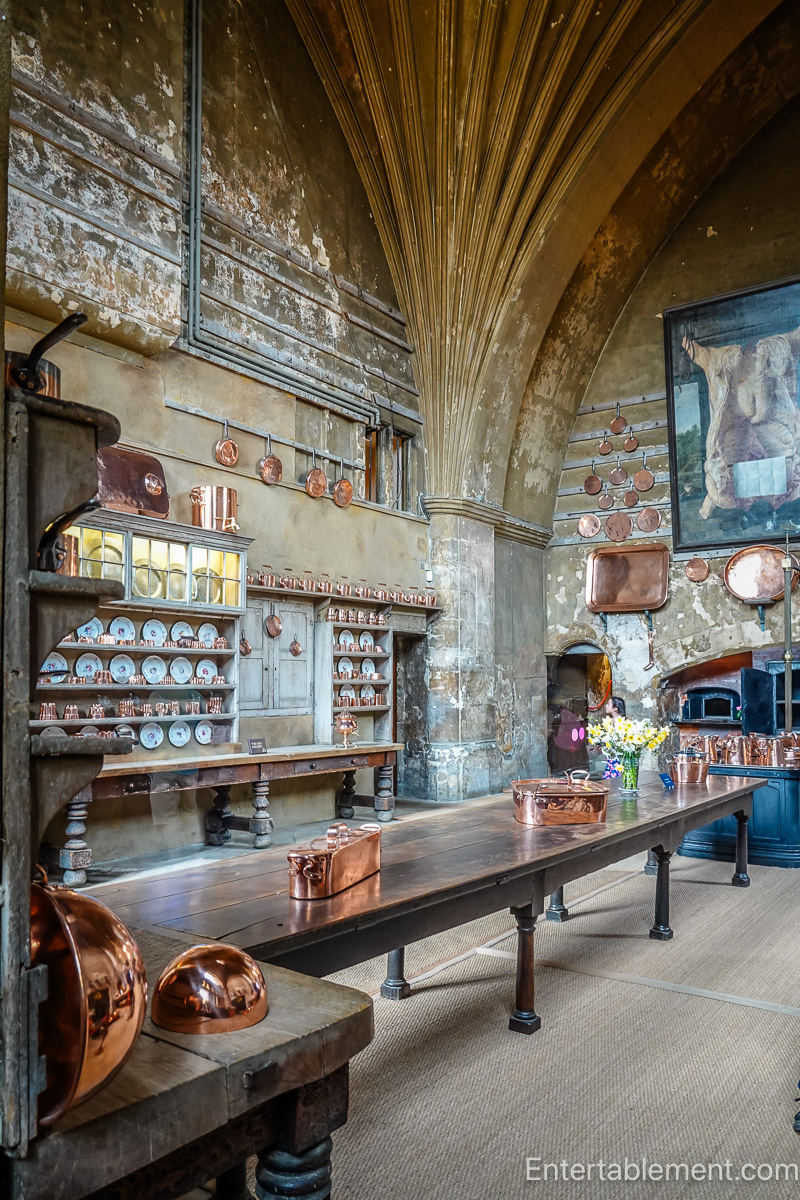
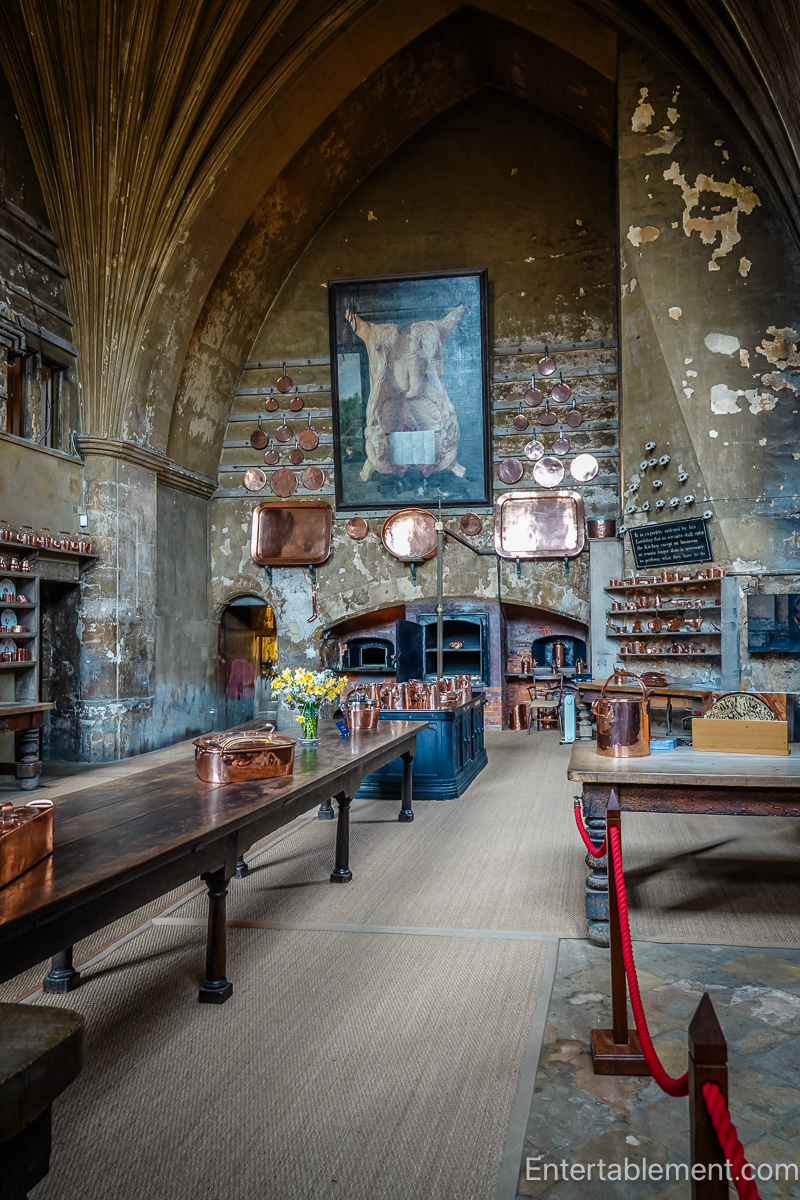
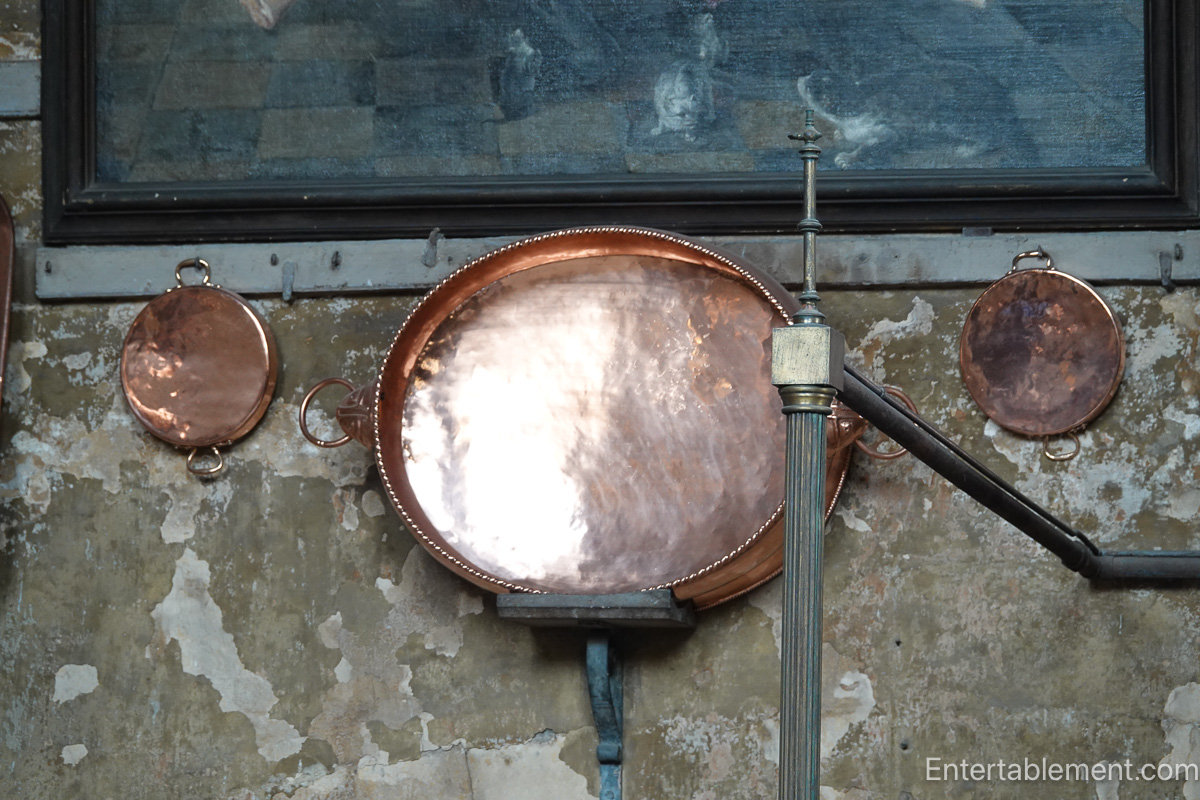
The historic kitchens, gleaming copper pots and vast fireplaces are remarkably well-preserved, a reminder of the house’s Tudor origins.
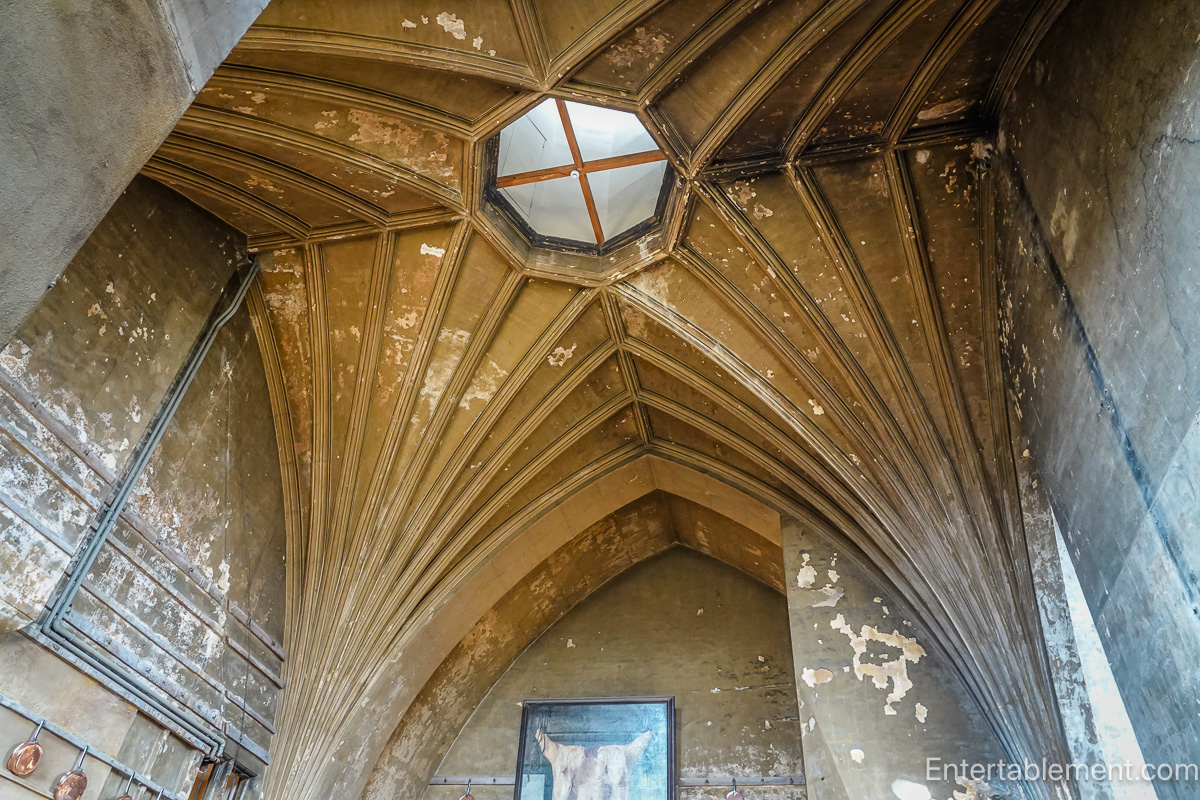
They offer a look into the lives of those who worked behind the scenes. The rib-vaulted ceiling contains an aperture for releasing smoke and fumes.
The cavernous spaces, vaulted ceilings, and rows of polished utensils evoke a world where meals for grand banquets were orchestrated with precision.

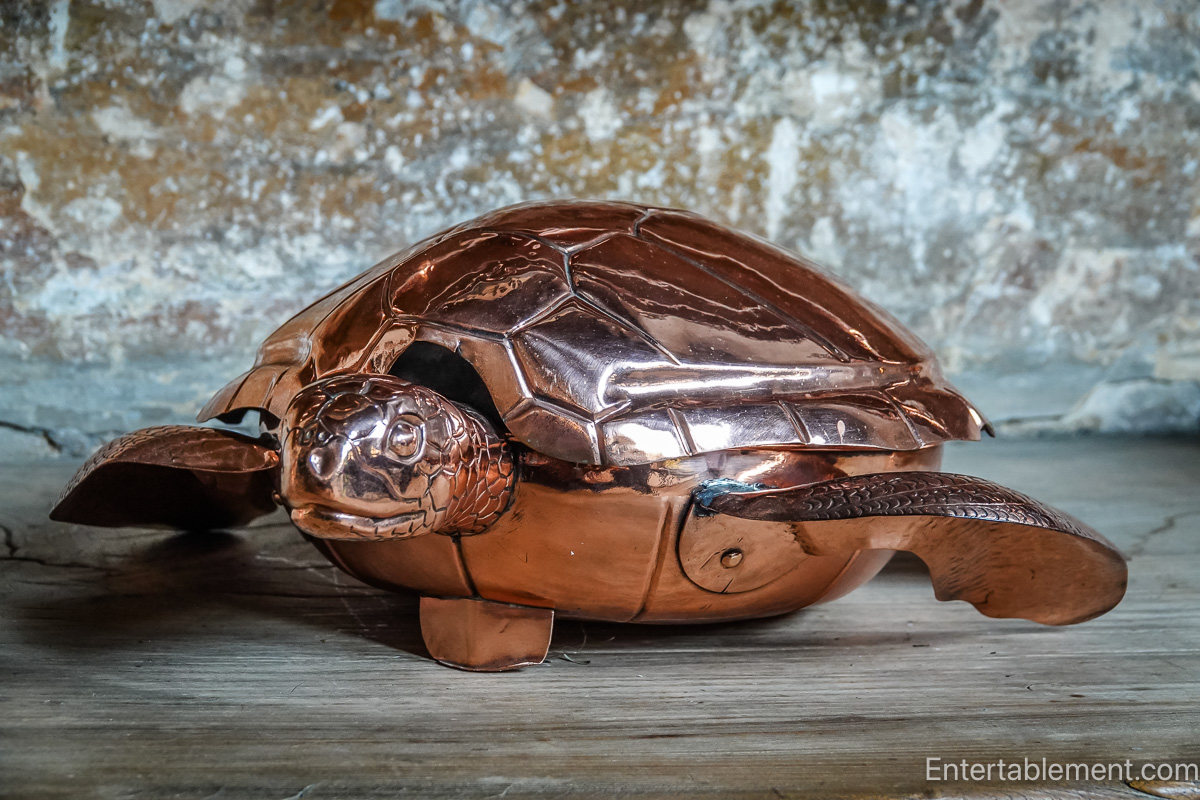
The adorable copper turtle is a soup tureen, which became a centrepiece when turtle soup was on the menu!
The Gardens: A Whimsical Escape
Burghley’s gardens offer an equally engaging experience. The Sculpture Garden and the Garden of Surprises pay tribute to the playful side of aristocratic life. Inspired by 18th-century water gardens, the latter is full of hidden fountains, mirrored rooms, and unexpected jets of water that bring a touch of humour to Burghley’s stately grounds.

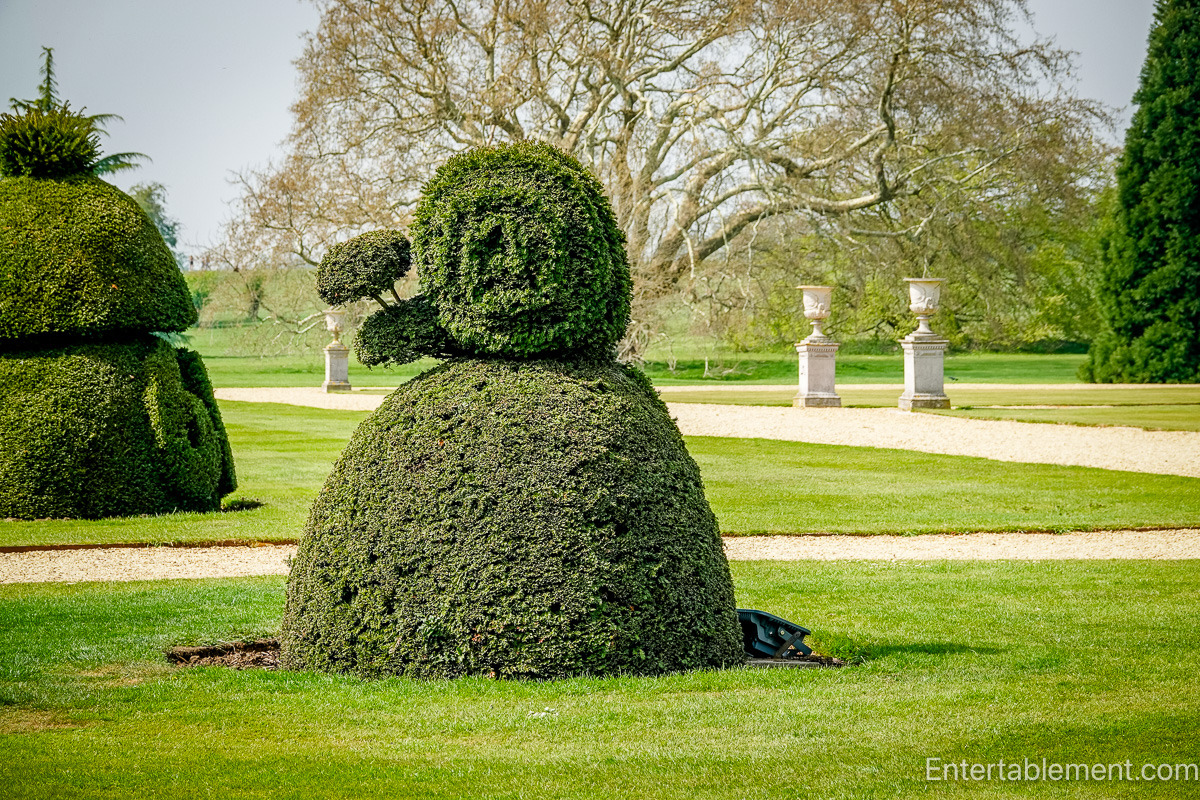
But perhaps the most famous outdoor feature is Burghley’s topiary garden, home to a remarkable collection of sculpted yews. Among them, a particular favourite is a whimsical hedge clipped into the shape of a playful character—a fitting nod to the house’s blend of grandeur and personality.
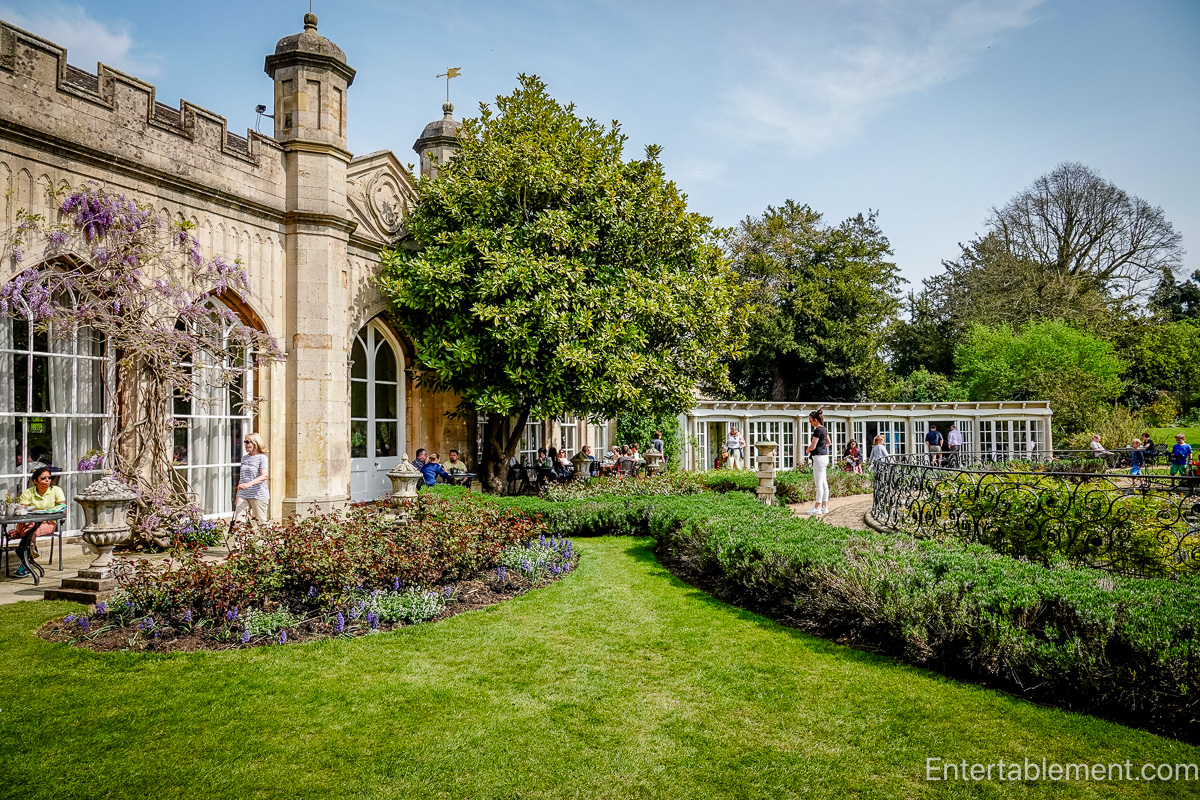
Our minds buzzing with information and beauty overload, we took the opportunity to enjoy lunch at one of the outdoor tables.
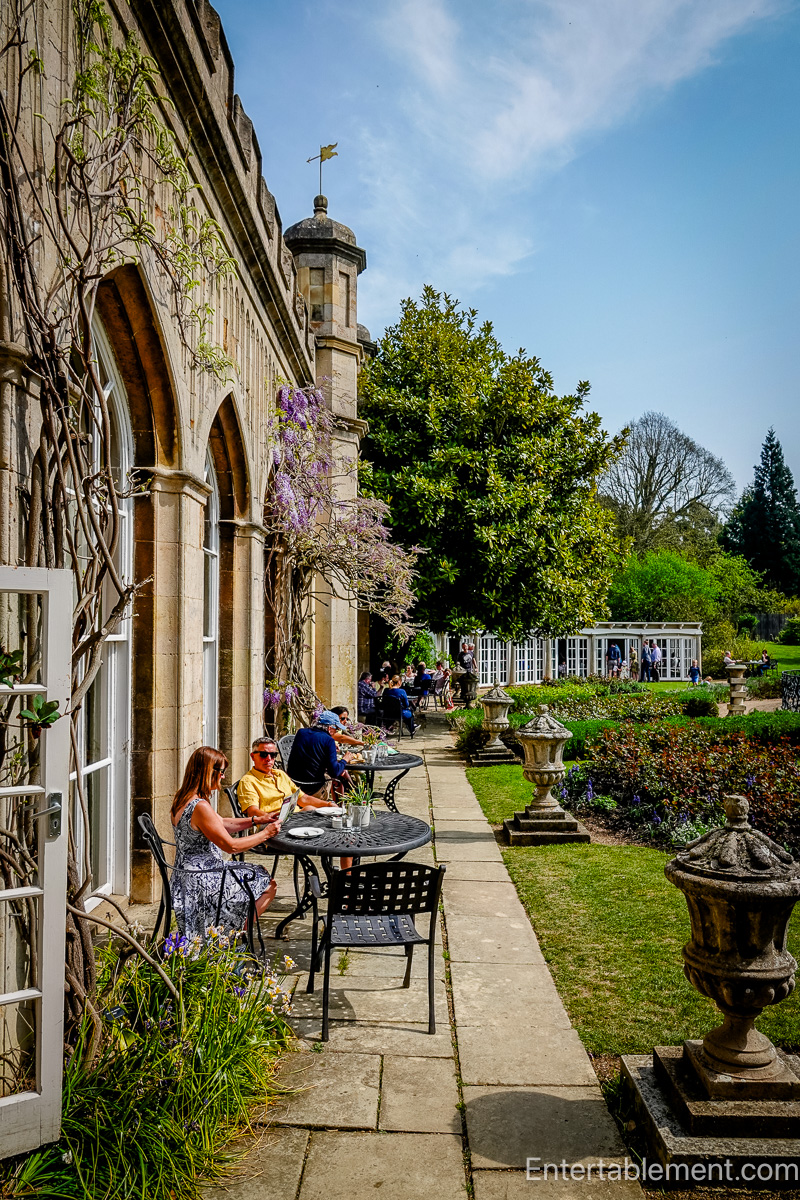
The wisteria was blooming.

As were the tulips.
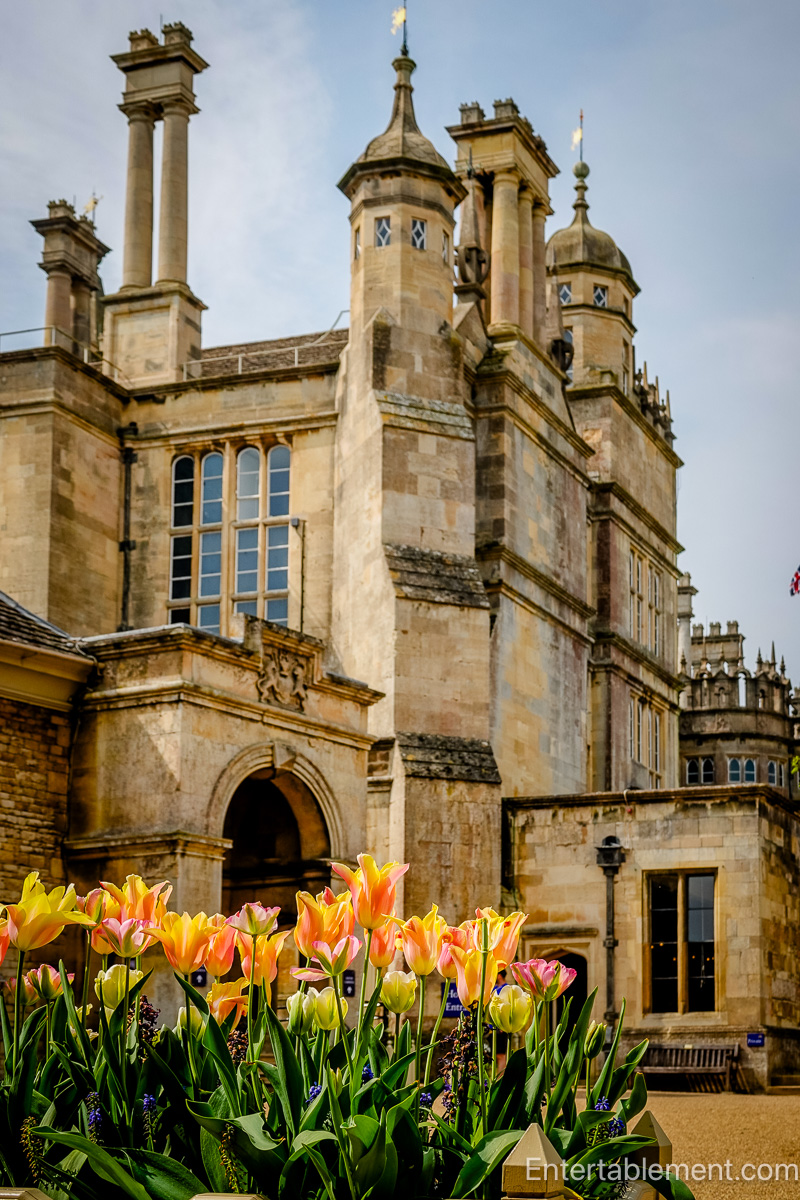
What a place!
Burghley’s Enduring Legacy
Burghley House remains a living estate, still under the stewardship of the Cecil family after more than 400 years. The current owners balance preservation with public access, ensuring visitors can experience the house’s grandeur while supporting its future.
Today, Burghley is more than just a historic site—it is a cultural landmark. It hosts the Burghley Horse Trials, one of the world’s most prestigious equestrian events, drawing thousands of spectators annually. Meanwhile, its art collection, tapestries, and furniture make it a treasure trove for art lovers and historians alike.
Why Burghley Still Matters
What makes Burghley House so compelling is its ability to transport visitors across centuries. from the ambition of Elizabethan England to the grandeur of the Baroque era and the practical elegance of the servant quarters, it is a house that has always known how to captivate an audience. It reminds us that history is not just something to be studied but something to be experienced.

For those who love architecture, art, and the drama of England’s past, Burghley House is an unmissable destination that continues to delight, intrigue, and inspire, just as it has for centuries.




FXD.jpg)
Carolyn and I are now reading about this magnificent house. Mind boggling! I think I passed it many years ago on a ride with the girls but never went in. A must if we have time when we’re there next. Great house with wonderful history.
It’s unbelievable. And I’d love to go again with you. The frescoes take your breath away. Glad you guys liked it! Love to Carolyn while you’re there.
Dear Helen, Thanks for a visit to a house that, of course, I knew about but never visited. I do wish I could have seen it before the Baroque excesses, when its bones would have been especially striking. Wonder how many of these gorgeous old properties are still owned by the same families that built them? Wonderful pictures!
Thanks, Beatrice! Baroque excess sums it up. Those frescoes are dizzying.
It’s funny you ask, because I often wonder about how many families still own their properties. I keep discovering new ones the more I dig around. I just found Badminton last week when I was looking for properties designed by William Kent. It turns out he did The Worcester Lodge. They’re often below the radar, but used for film sets or private hire. Many belong to Historic Houses and are open only a few days a year—they’re a mixed bag. Some are fantastic, like Burghley. Others a complete disappointment, like Stratfield Saye (Duke of Wellington’s country property) which is a complete contrast to Apsley, now in the hands of English Heritage, who do a great job.
I hope all is well with you!
Best,
Helen