

Stonehenge, which predates the Egyptian pyramids, is Britain’s earliest known work of architecture if we consider architecture to imbue a structure with purpose and meaning rather than merely being functional. Its builders, skilled in wood joinery, adapted their techniques to stone despite lacking metal tools (!!). They aligned the massive stones with the solstices, indicating a connection to seasonal cycles and likely agriculture.
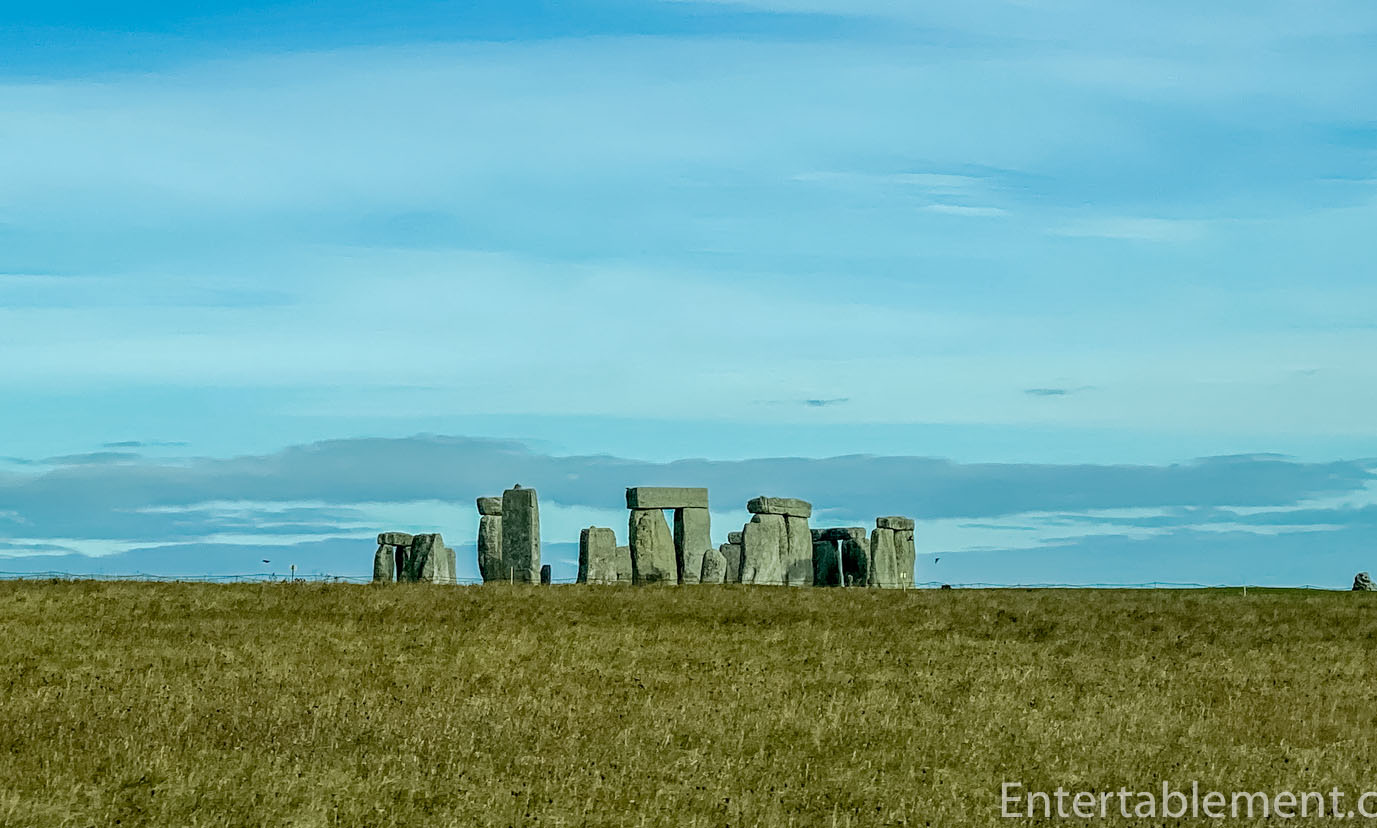
Scrapings from the inner ring of bluestones, transported from Wales, were found in burial pouches; perhaps they were held to have healing properties. Nearby, the 3 km long Neolithic Greater Cursus (a long barrow) was likely used for ceremonies or sports
.
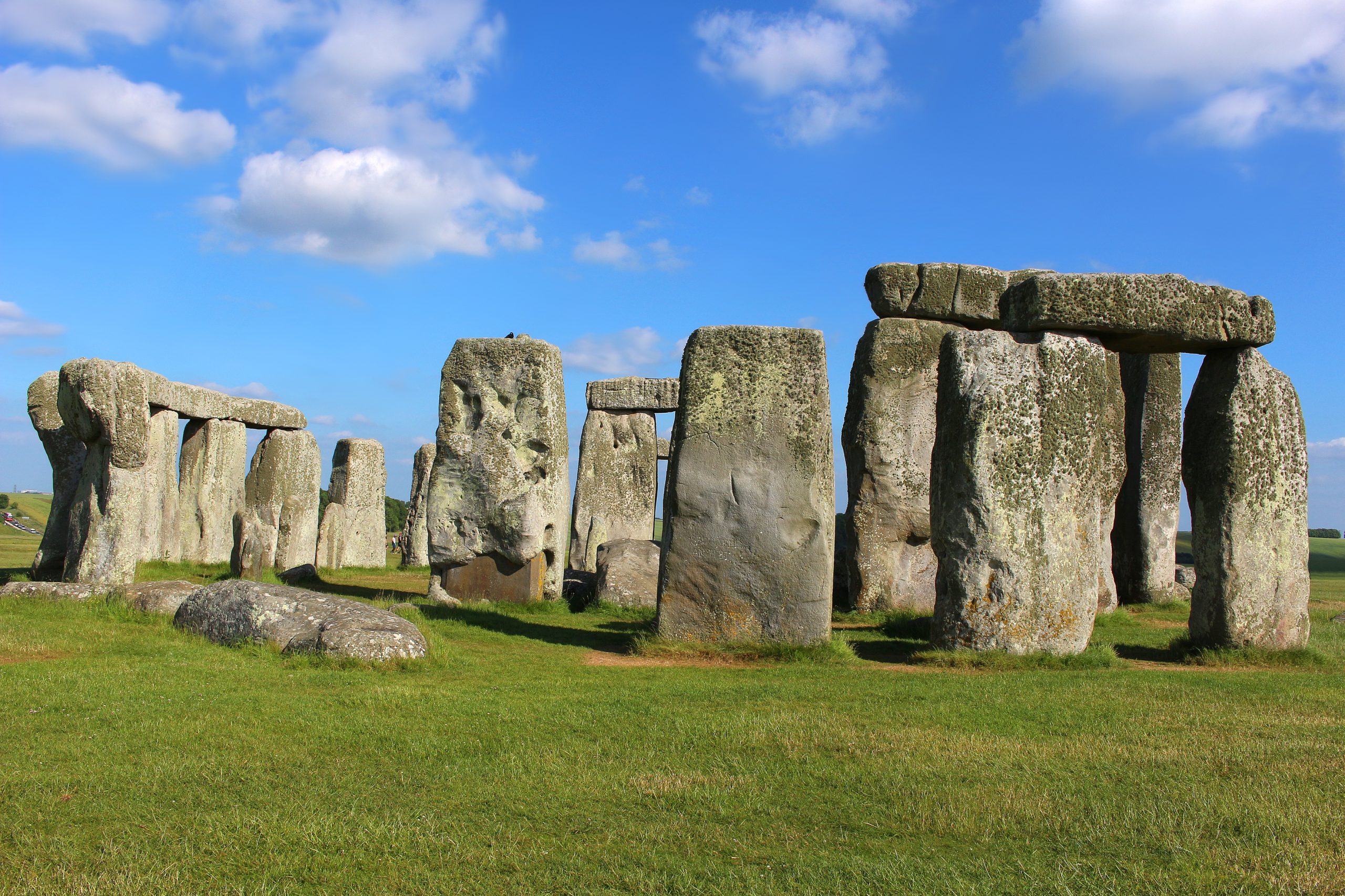
Source: Shutterstock
In the 17th century, eager to understand Stonehenge’s origins, the ever-curious King James I asked his favourite architect, Inigo Jones, to investigate. Jones stated firmly, if inaccurately, that the Romans had built it, drawing on classical principles. Later in the century, antiquarian John Aubrey attributed it to the Iron Age Druids, a theory that William Stukeley later reinforced.
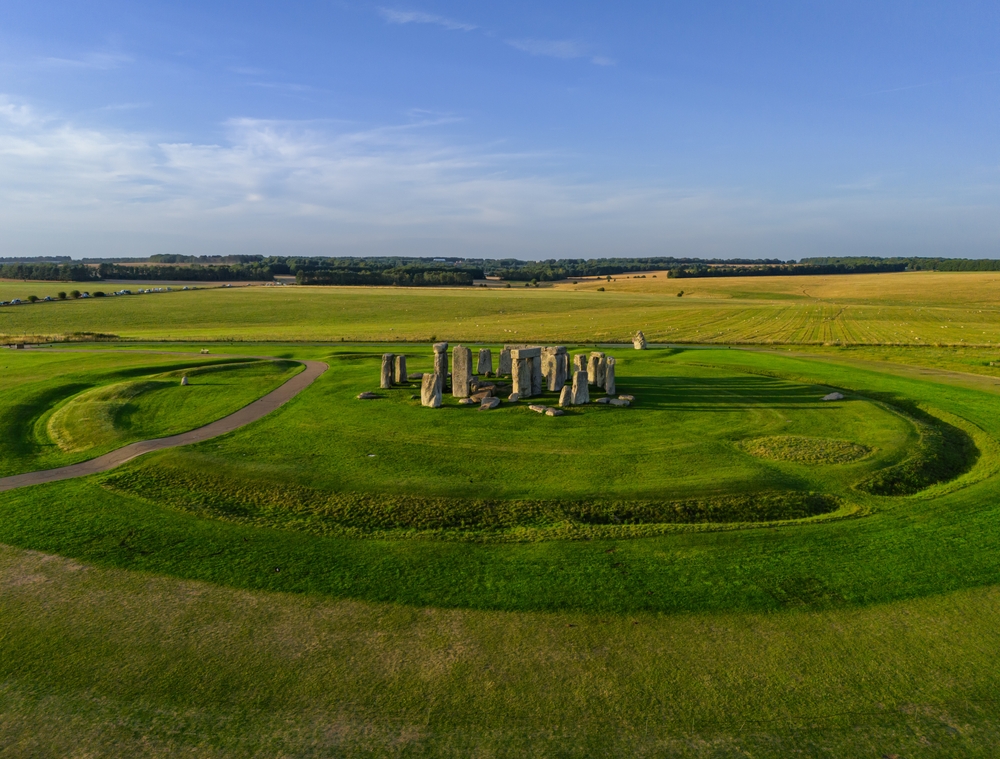
Source: Shutterstock
John Wood, the architect of Georgian Bath, was not as interested in Stonehenge’s origins as inspired by them. When designing Bath’s Circus, with its radiating terraces, he drew heavily on the Greater Cursus, a design later repeated in London’s Piccadilly and Oxford Circus.
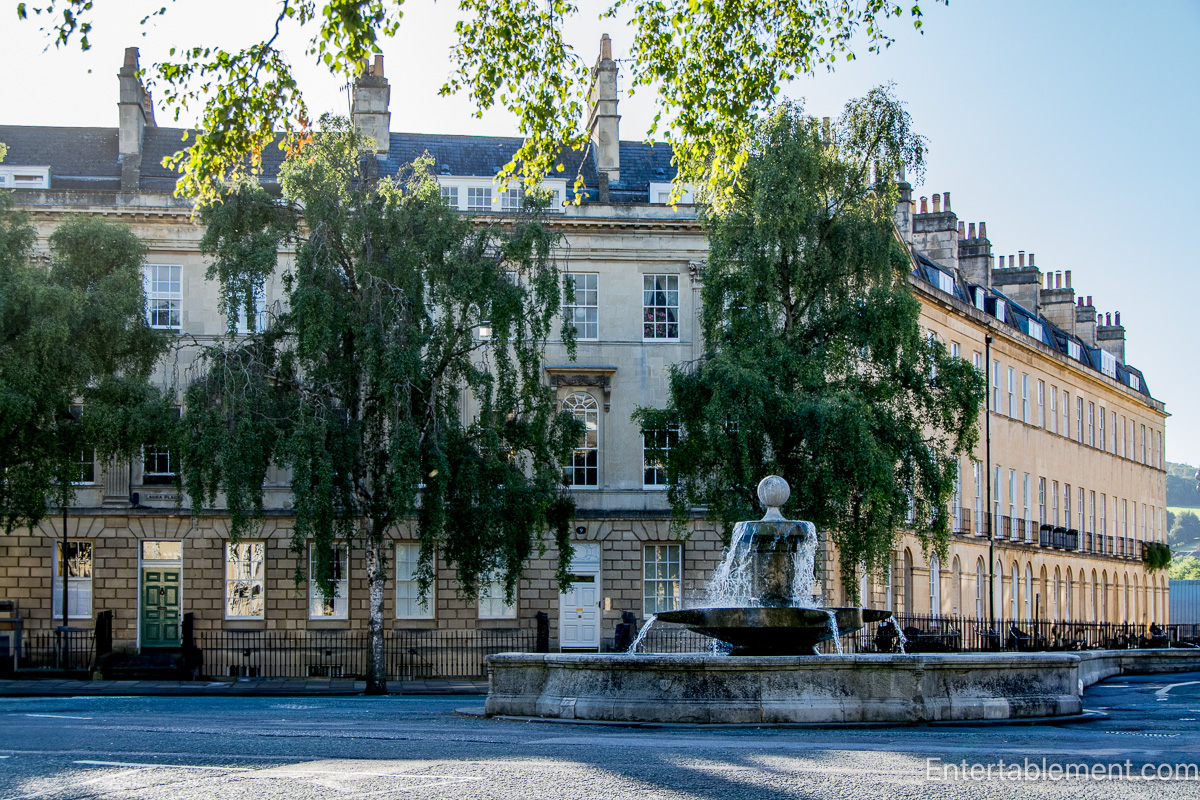
Circus in Bath
After Stonehenge, there was architectural crickets for almost two millennia. Silence during the Bronze Age, Europe’s prehistoric “industrial revolution,” The Iron Age produced hillforts, which likely served as communal gathering places for agrarian tribes—not architecturally compelling, but highly functional. One of the best-preserved, Tre’r Ceiri — the “Place of Giants” — in Northern Wales housed 150 thatched huts and remained occupied even through Roman rule.

Tre’r Ceiri Shutterstock
The Roman conquest of Britain, beginning with Julius Caesar’s brief incursion in 55 BC and extended under Emperor Claudius in AD 43, transformed the landscape. By AD 85, the Romans had built a triumphal arch in Kent, modelled on Rome’s Arch of Titus. Over the next four centuries, the industrious Romans covered Britannia with roads, towns, and grand structures, particularly in England and Wales. Scotland proved more challenging to tame, however. Hadrian’s Wall marked the northernmost boundary of their influence, sealing off much of Scotland (no doubt to the immense relief of the Scots).
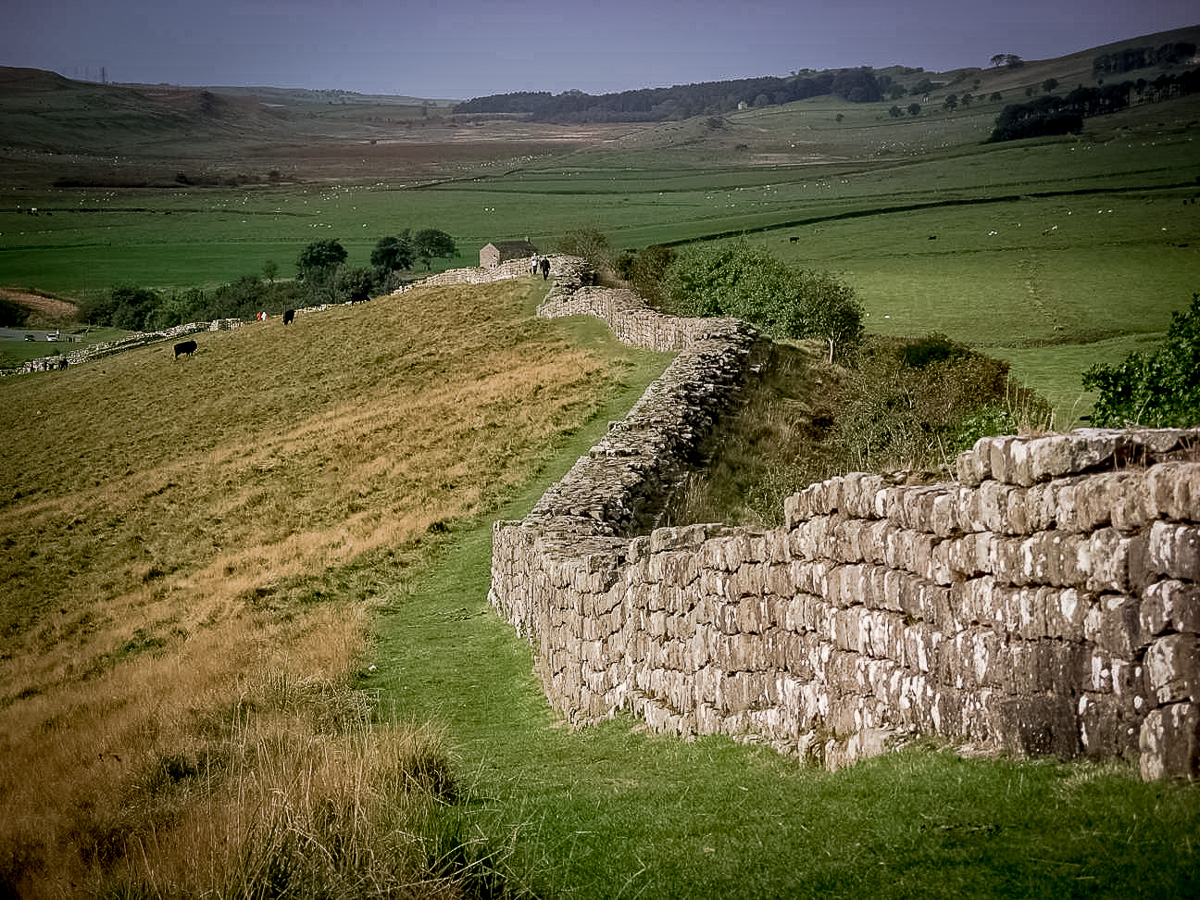
Within a century of conquest, the Romans had founded 28 new towns, many of which—such as London, York, and Colchester—still retain parts of their original Roman walls. But the most lasting impact of Roman engineers is the remarkable 2,000 miles of roads linking military forts, towns, and countryside estates from what is now Exeter in the south to Newcastle in the north. Paved, drained, and maintained, Roman roads provided the efficiency of communication and transport unmatched until the 18th century’s network of post roads appeared.
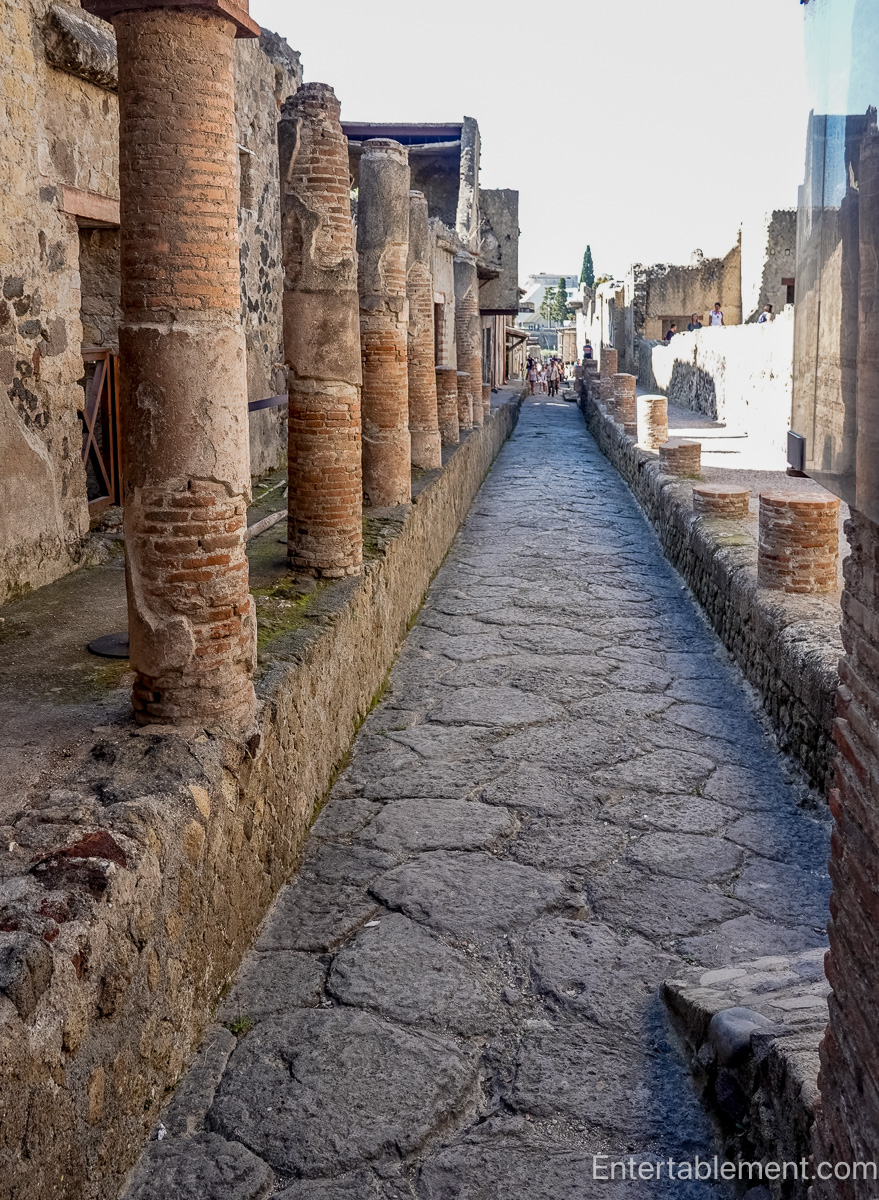
Roman street in Herculaneum
Roman towns followed a deliberate plan, with a rectangular grid centred around a basilica, forum, and baths.
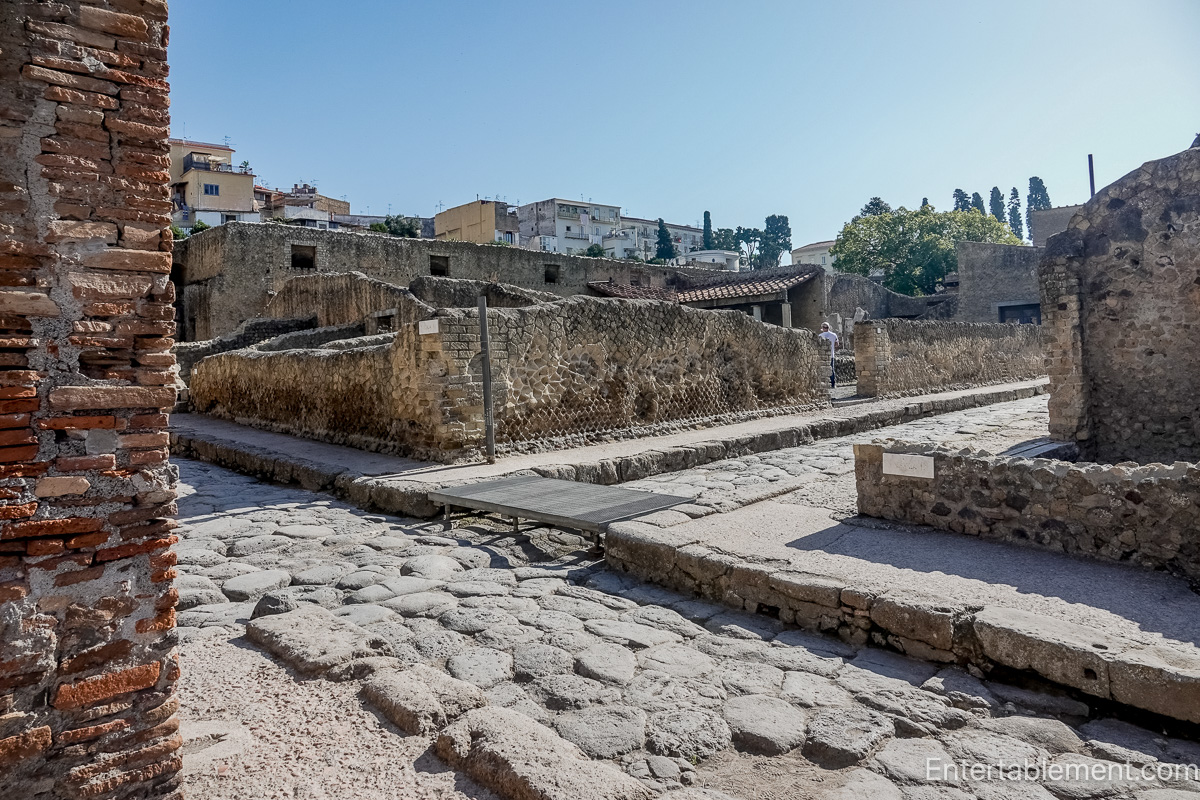
Street in Herculaneum
The finest Roman buildings in Britain were its villas. Scattered across the countryside, these grand estates thrived under Roman law and order. Builders used stone and brick, topped roofs with red tiles, and decorated interiors with mosaics and frescoes.

Many villas boasted underfloor heating so efficient that fireplaces were a rarity.

They had hot and cold running water, baths, and even glass windows. Fishbourne Villa in Sussex, begun as early as AD 75, covered a vast area suspected to be more than 100 rooms with 50 mosaic floors. More to come if archaeologists ever get to excavate the 75% of Fishbourne currently under the A27. Chedworth Villa in the Cotswolds featured an advanced plumbing system, plunge baths, and mosaics depicting everything from women’s fashion to Christian worship.

Fresco in Herculaneum
These enormously sophisticated villas offered a level of comfort that Britain wouldn’t see again until Victorian times, once the Roman legions packed up and left in 410.
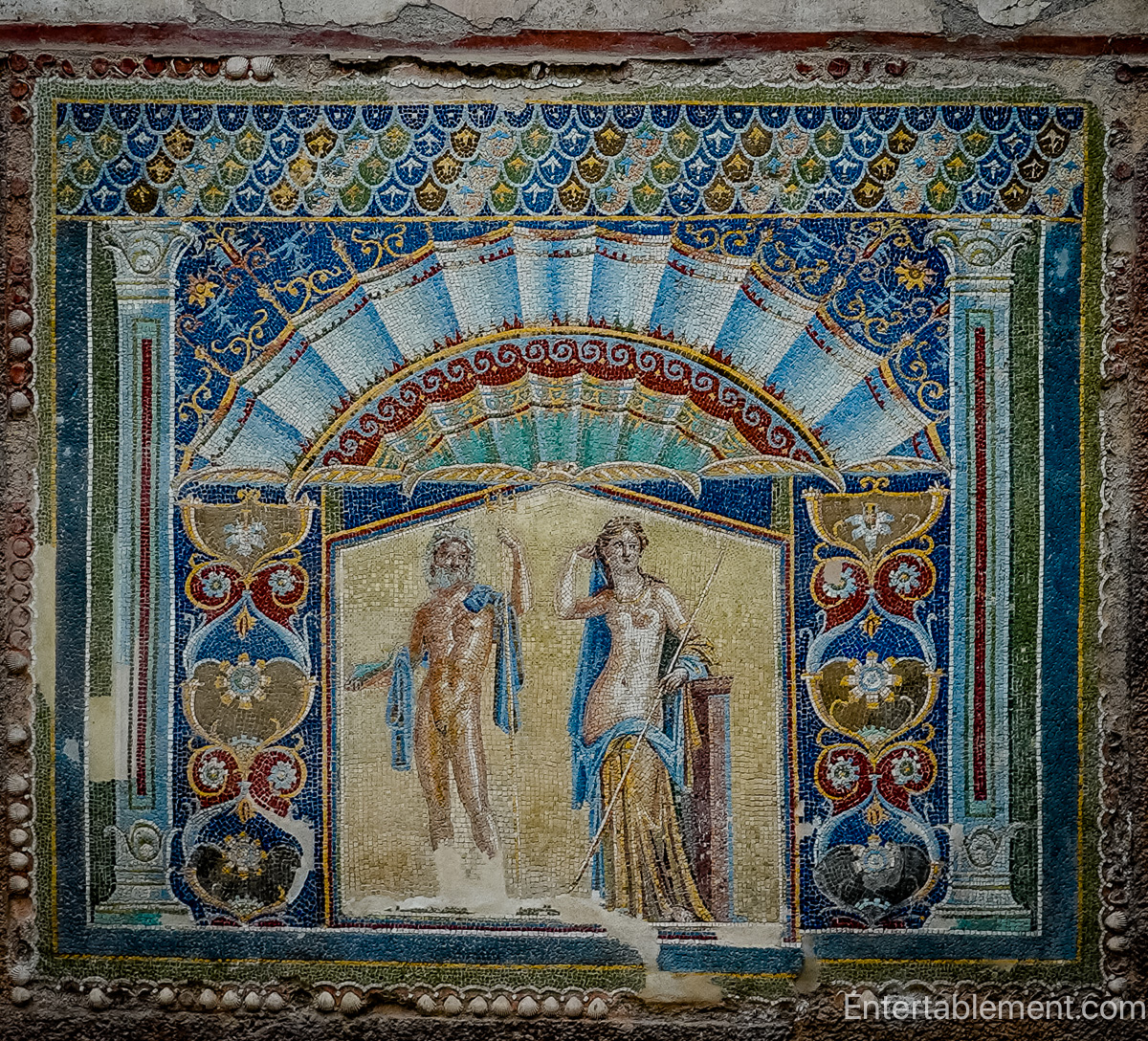
Mosaic in Herculaneum
However, most of Romano-Britain made do with an Iron Age roundhouse. Only about 15% of the population resided in Roman-style towns or villas,

Prehistoric Britain to the Romans (3000 BC–410 AD) was a period of early civilization, cultural development, and Roman influence in Britain. The Early Middle Ages followed.




.jpg)
