
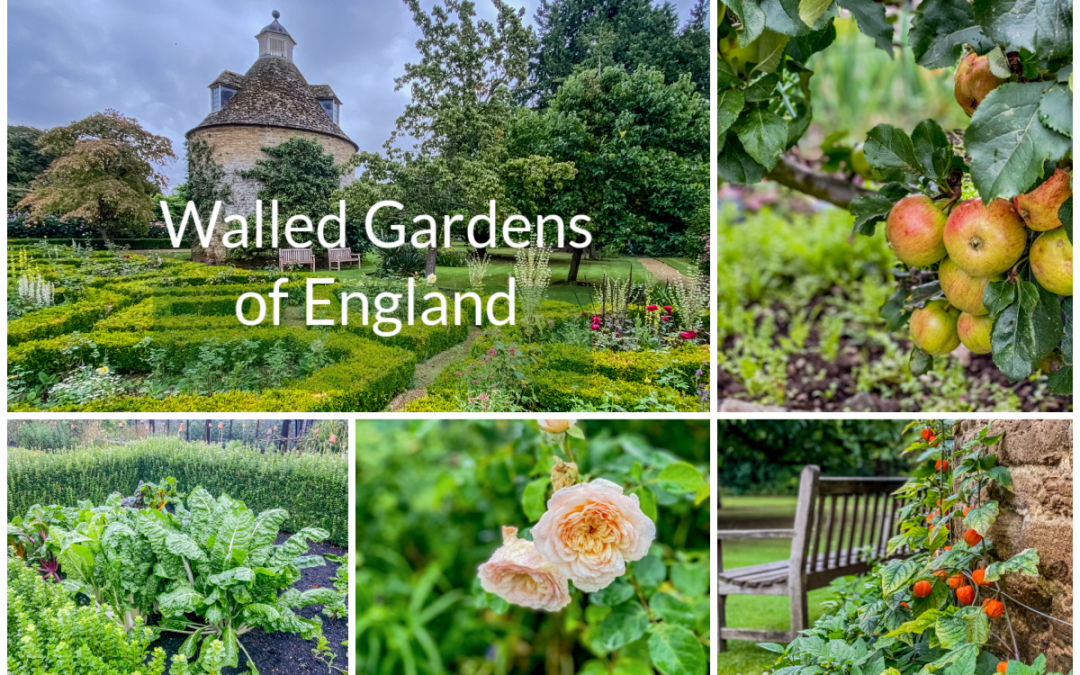
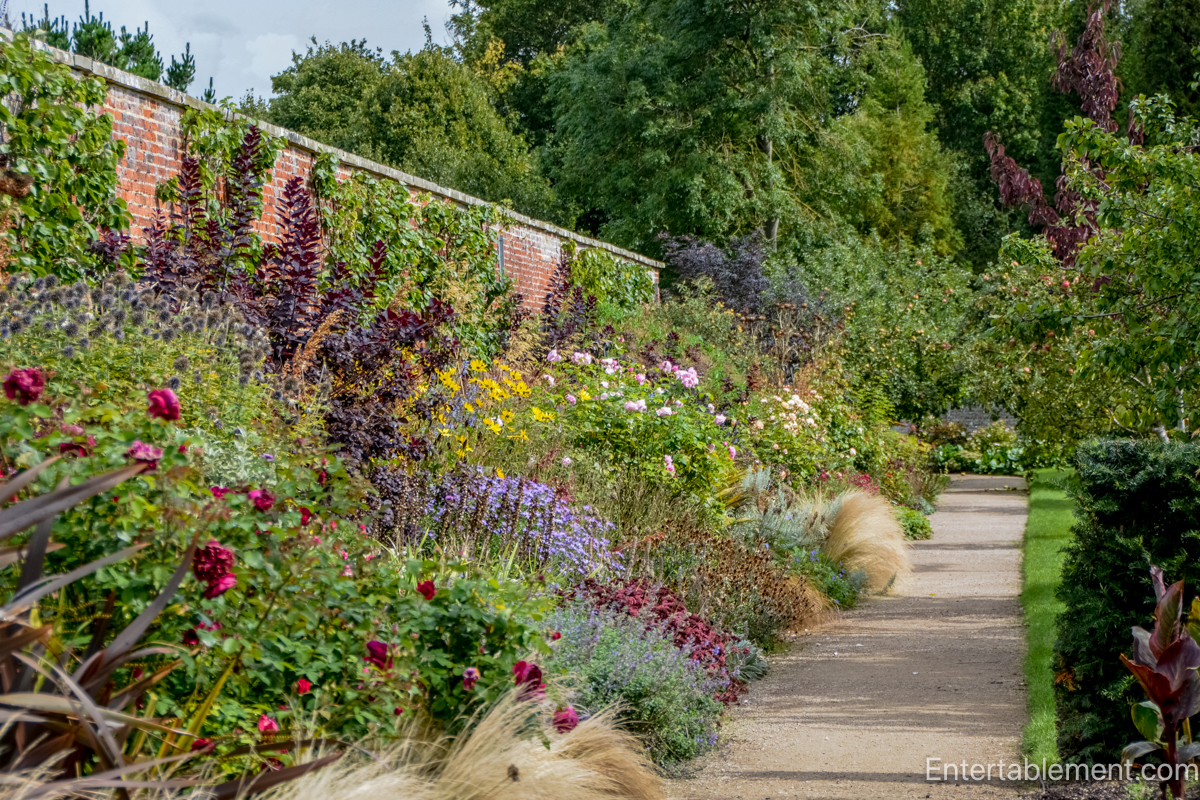
The high walls, usually brick, create a warm micro-climate, affording plants an earlier spring start and protecting them from unfavourable elements and predators, human and otherwise.

Large country houses of a bygone era invariably had a huge kitchen garden to feed the household. There were no takeaway meals or Deliveroo in those days! An aerial shot of the kitchen gardens at Audley End, which we visited in the spring, gives you some sense of the scale. The central walled garden alone is over two acres; the entire complex covers almost ten acres within its red brick perimeter walls.
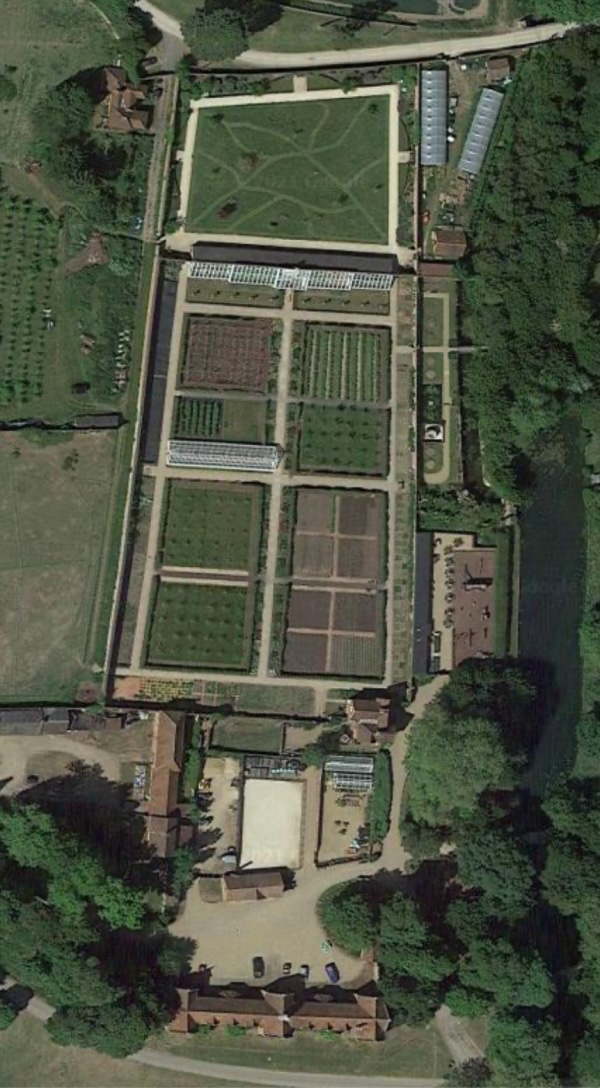
Audley End Walled Garden from Google Maps
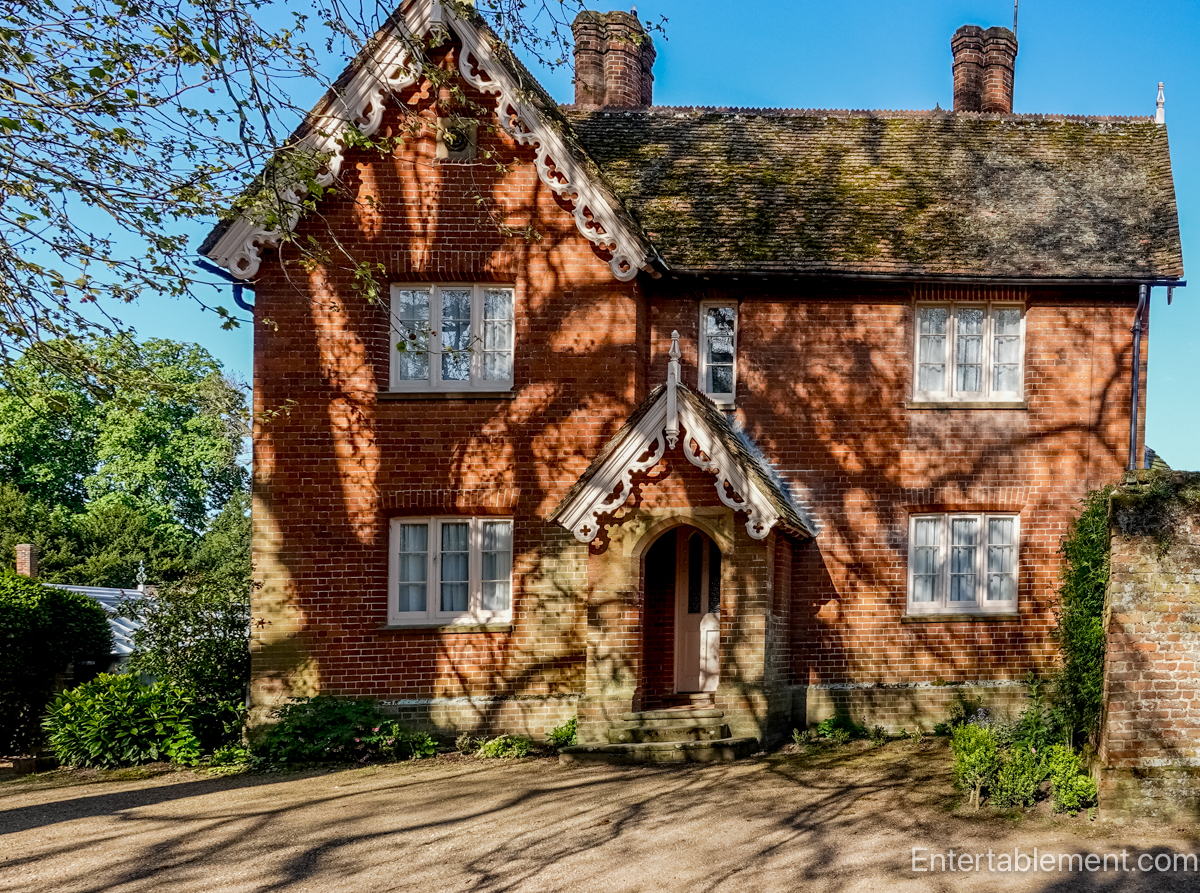
The role of Head Gardener on estates such as Audley’s End provided enough produce to feed an entire community; it must have been a very satisfying job. Besides, the house that came with the job was pretty great, all on its own.
The Head Gardener oversaw a large labour force, part of the medieval craft guilds, which exercised control over the practice of their particular crafts and ensured proper training through the apprenticeship system. As far back as 1345, The Worshipful Company of Gardeners is mentioned in City of London Corporation records. Then, in 1605, after existing for centuries as a mystery or fellowship, the Guild was incorporated by Royal Charter. The operations controlled by the Company were identified as The trade, crafte or misterie of gardening, planting, grafting, setting, sowing, cutting, arboring, rocking, mounting, covering, fencing and removing of plants, herbes, seedes, fruites, trees, stocks, setts, and of contryving the conveyances to the same belonging….
The Company’s motto is a quotation from Genesis: In The Sweat Of Thy Brows Shalt Thow Eate Thy Bread. Its gorgeous coat of arms features Adam digging into the ground with a spade.

The Royal Company of Gardeners no longer exists as a regulatory authority for the sale of produce in London. It’s now a charitable institution. One of their endeavours is the Future Gardeners program, which provides horticultural and “work-ready” training to people who have been unemployed for a long time or have faced challenges and would benefit from gaining confidence, skills, training, and employment. The program has been enormously successful, with more than 80% of those graduating becoming employed, most within the horticultural sector. Don’t you love it? A fusty holdover from medieval times repurposes itself to become a springboard to help people into productive lives.
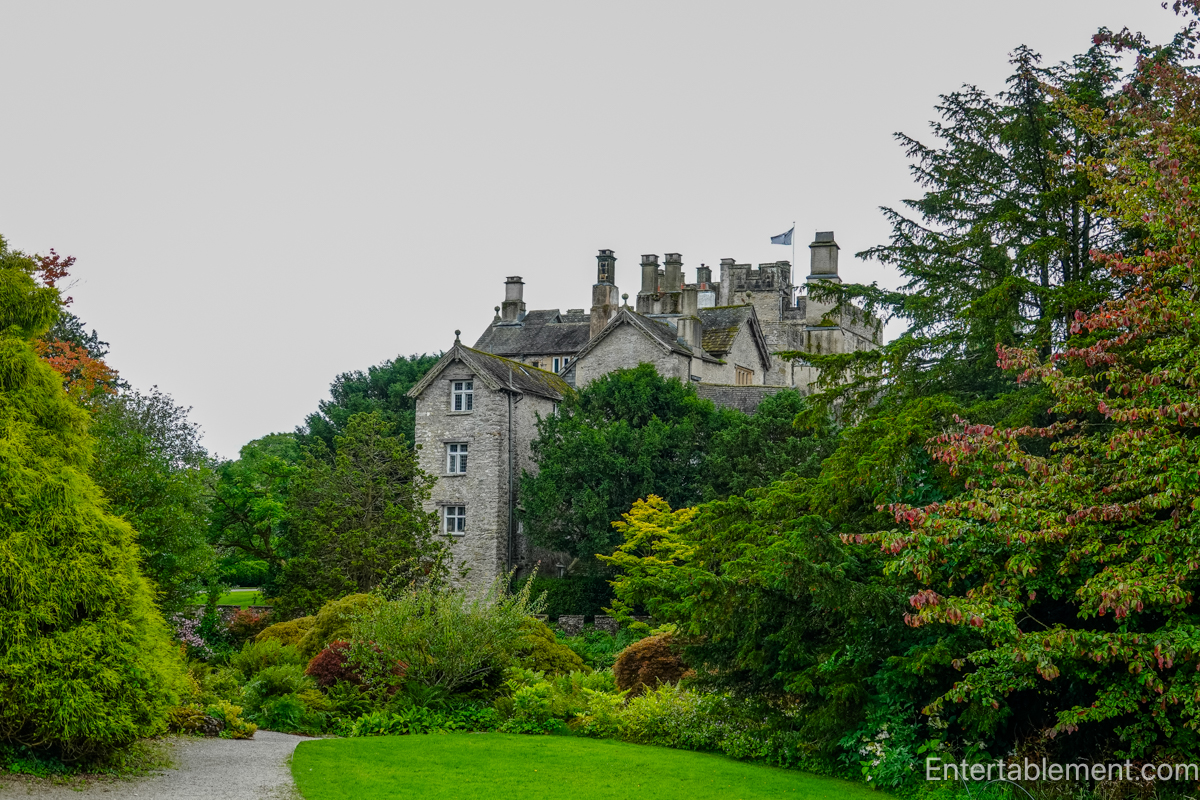
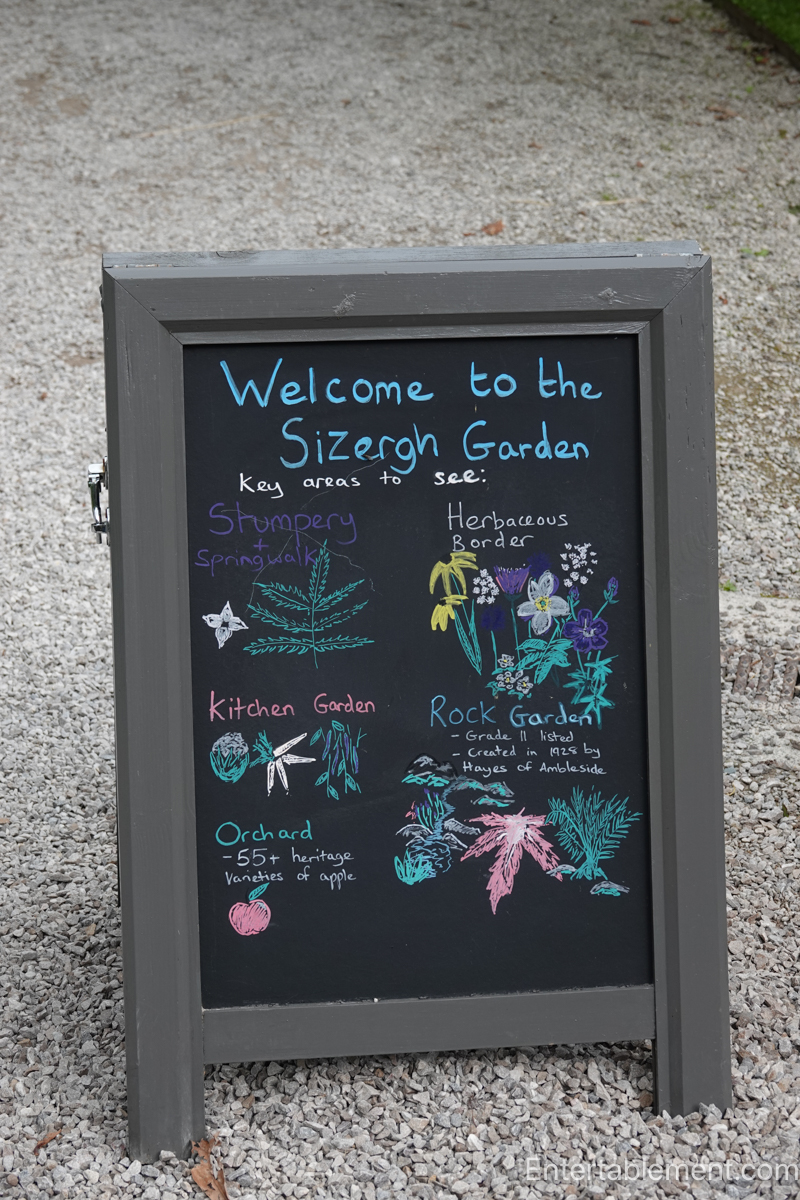
Now, back to our regularly scheduled program. Though the households of yore have long since moved on, many of the gardens at the great country houses have been restored. Sizergh, in the Lake District, is a great example. It is under the care of the National Trust, and the family still lives there.


The bright yellow “companion plants” draw voracious insects away from the edible lettuce plants.

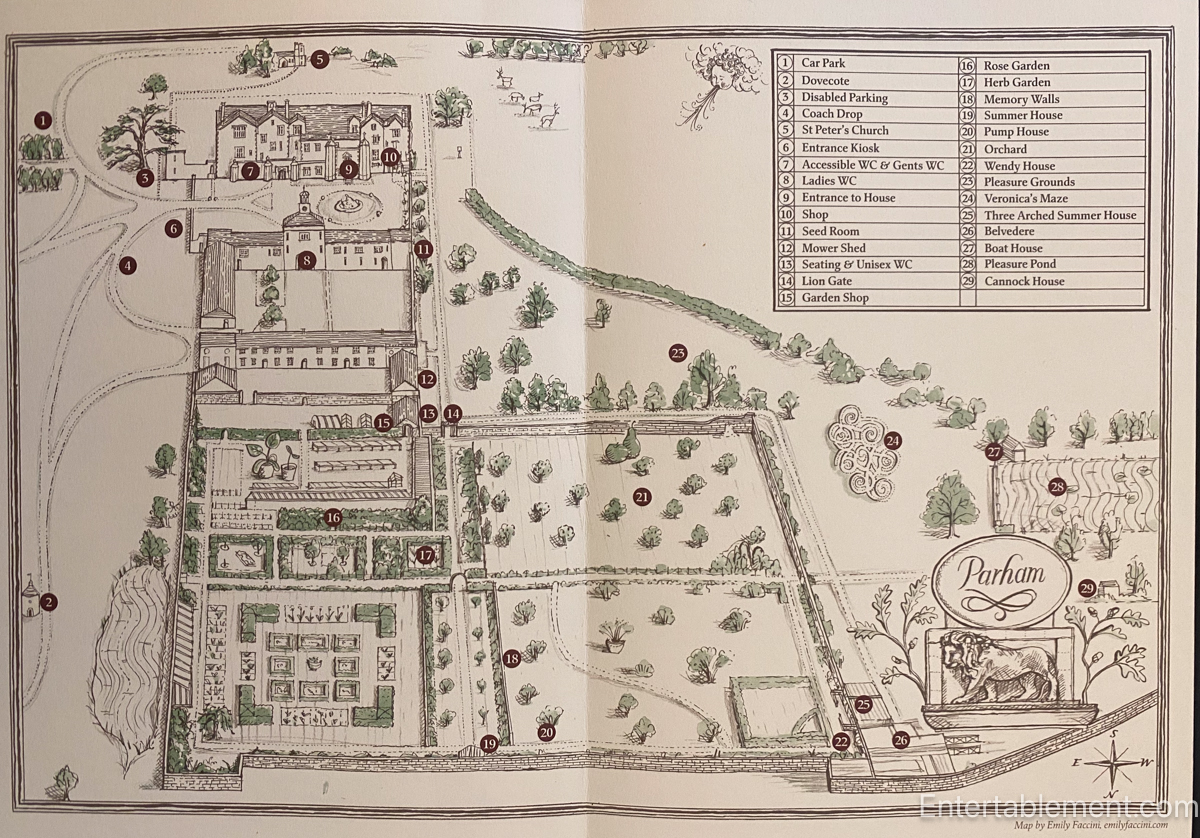
We paid a bit of a flying visit to Parham House & Gardens. The lovely Elizabethan house is open during fairly restrictive hours, so we had to miss it, much to my disappointment. But we will be back! It’s one of only 20 five-star houses out of Simon Jenkins’ 1000 Best Houses; I’ve seen 18 and about half of his 80 four-star houses. Challenge accepted.

Clive and Alicia Pearson bought the Estate in 1922 and restored the house over the next four decades. They opened its garden to visitors in 1948.

It was bucketing down with rain, but we girded our loins and toured the gardens. We were awed by the sheer scope of the seven-acre Pleasure Grounds and four-acre Walled Garden, which contains wide herbaceous borders, a rose garden, a cutting flower garden, a vegetable garden, and an orchard.

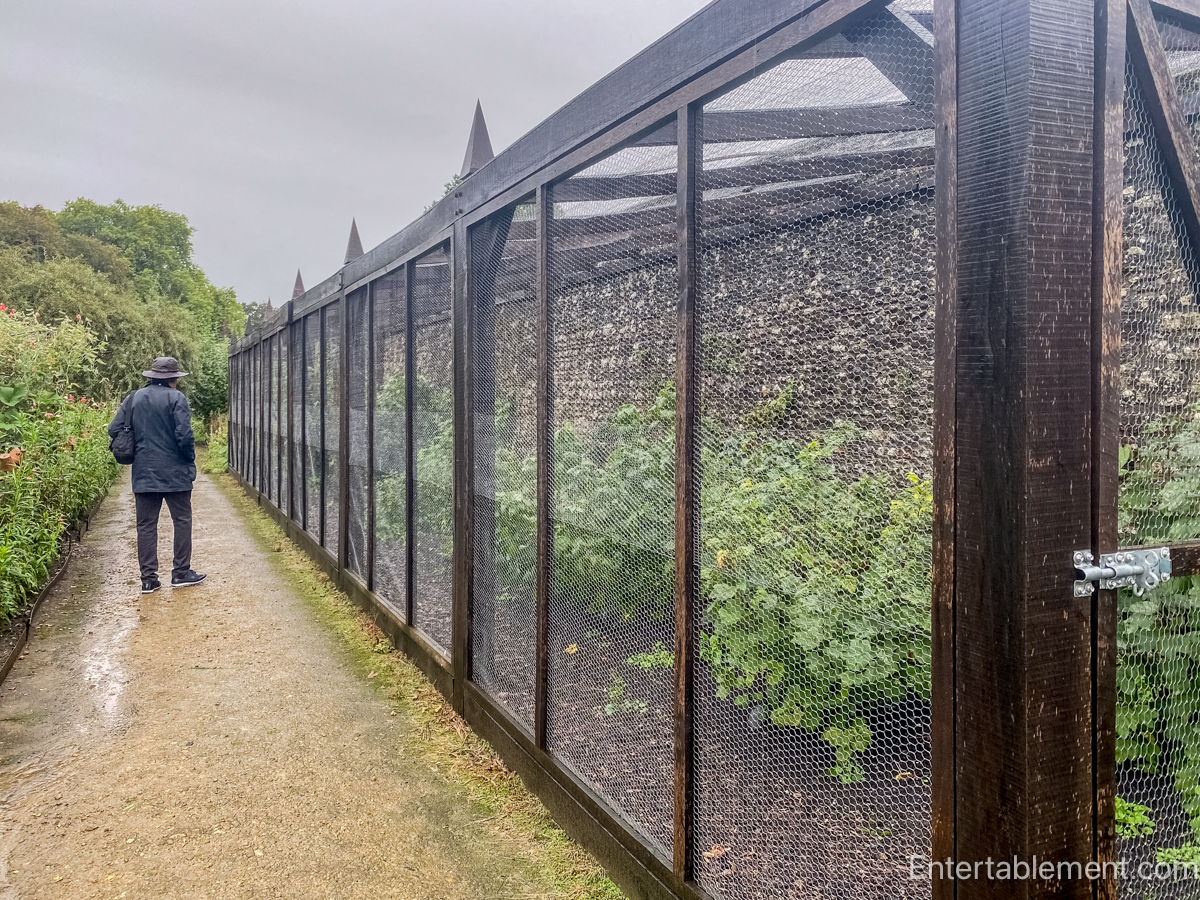
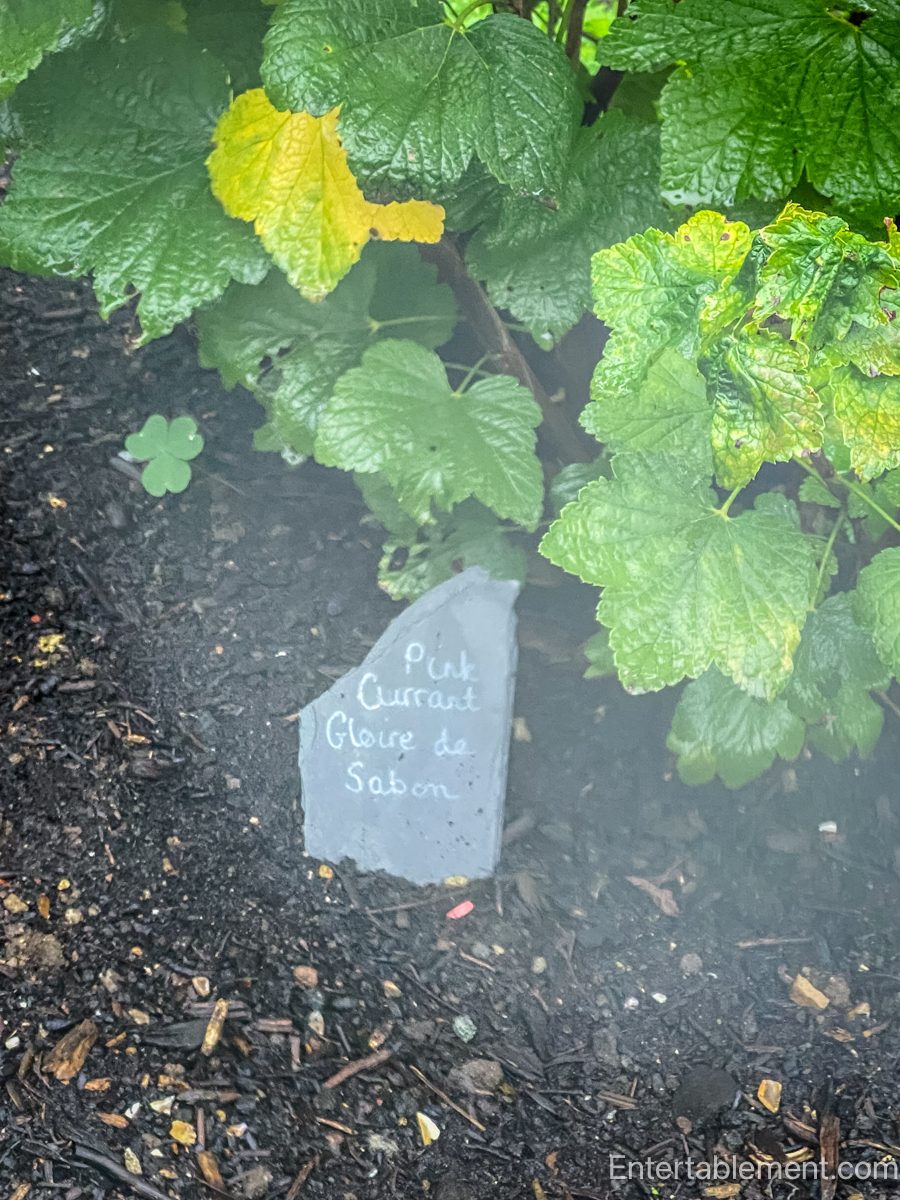
I was intrigued by the substantial cages surrounding the raspberries, gooseberries, and currants, which protected the fruit from rapacious birds.

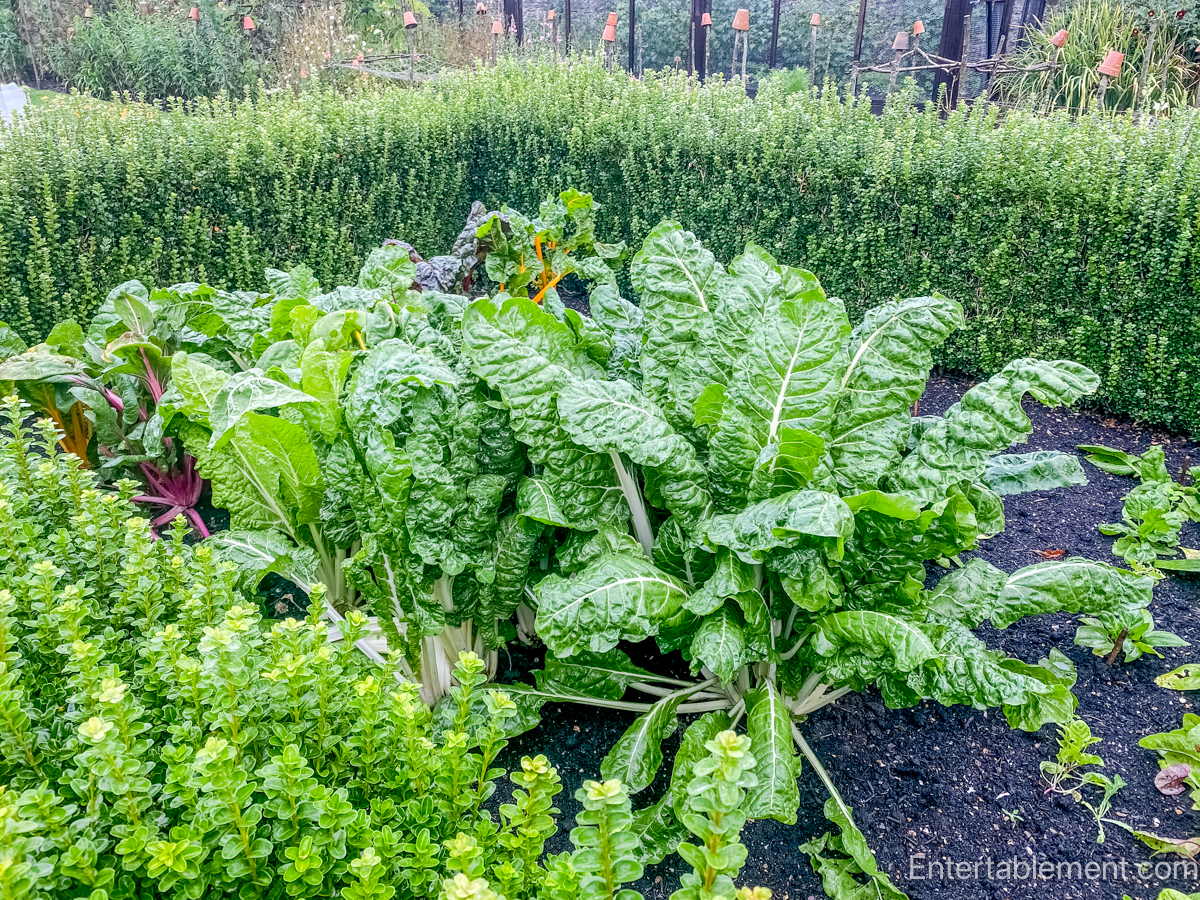
The Swiss Chard made my mouth water. I was itching to take some home to whip up a hearty White Lasagne with Swiss Chard, Spinach and Gruyere, a perfect antidote to our soggy, chilled state.
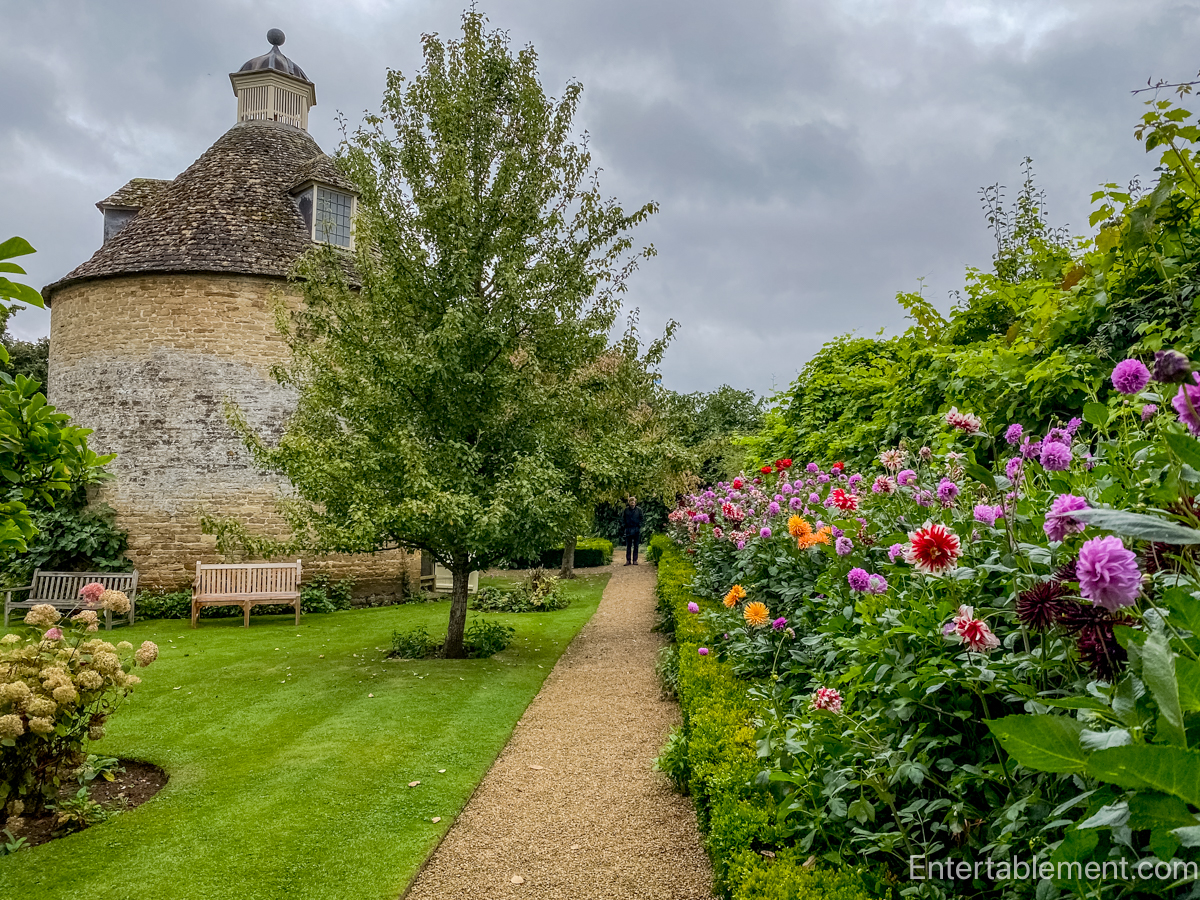
Rousham House & Gardens maintains the garden as if the entire family and full staff still live there! The house is open occasionally to host a small concert or similar event. But the dovecot still shelters doves, and the hedges contain innumerable rose bushes.

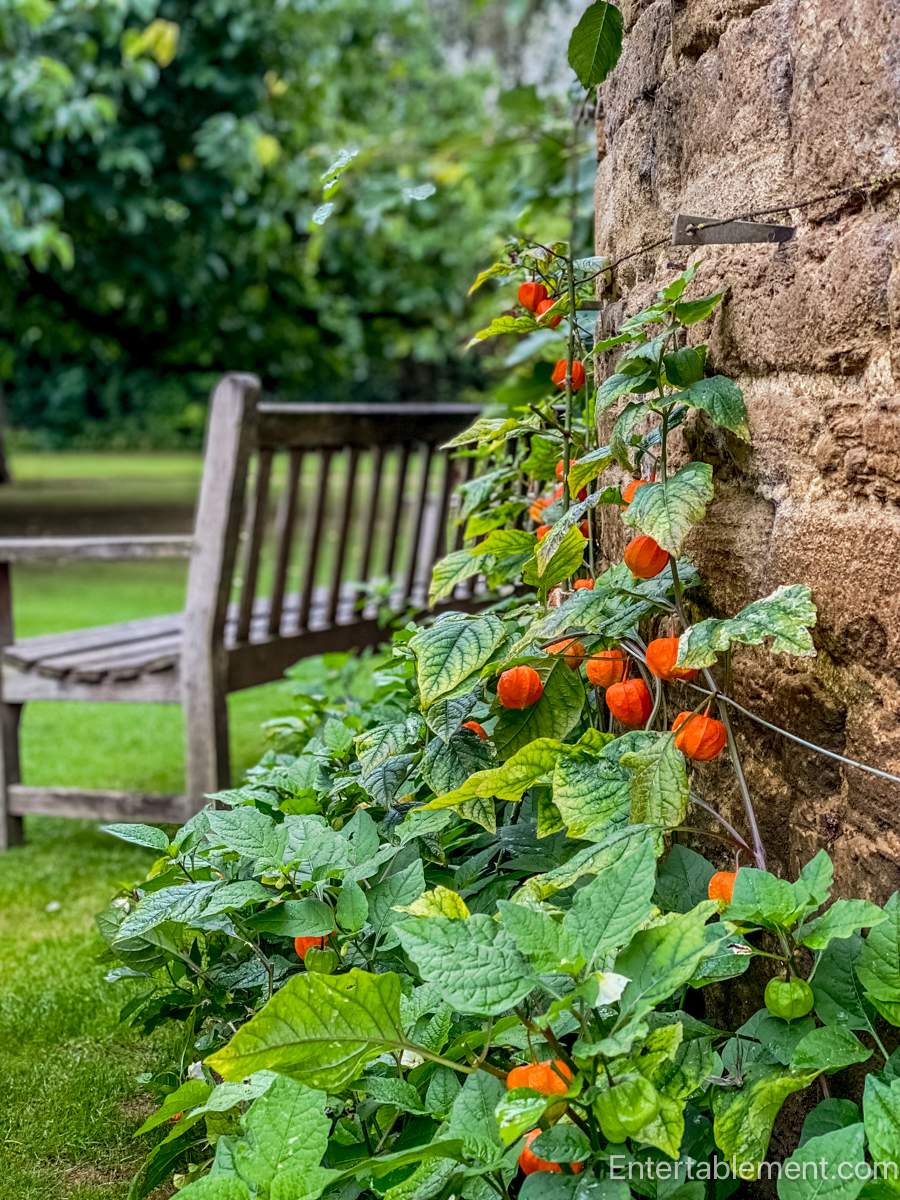
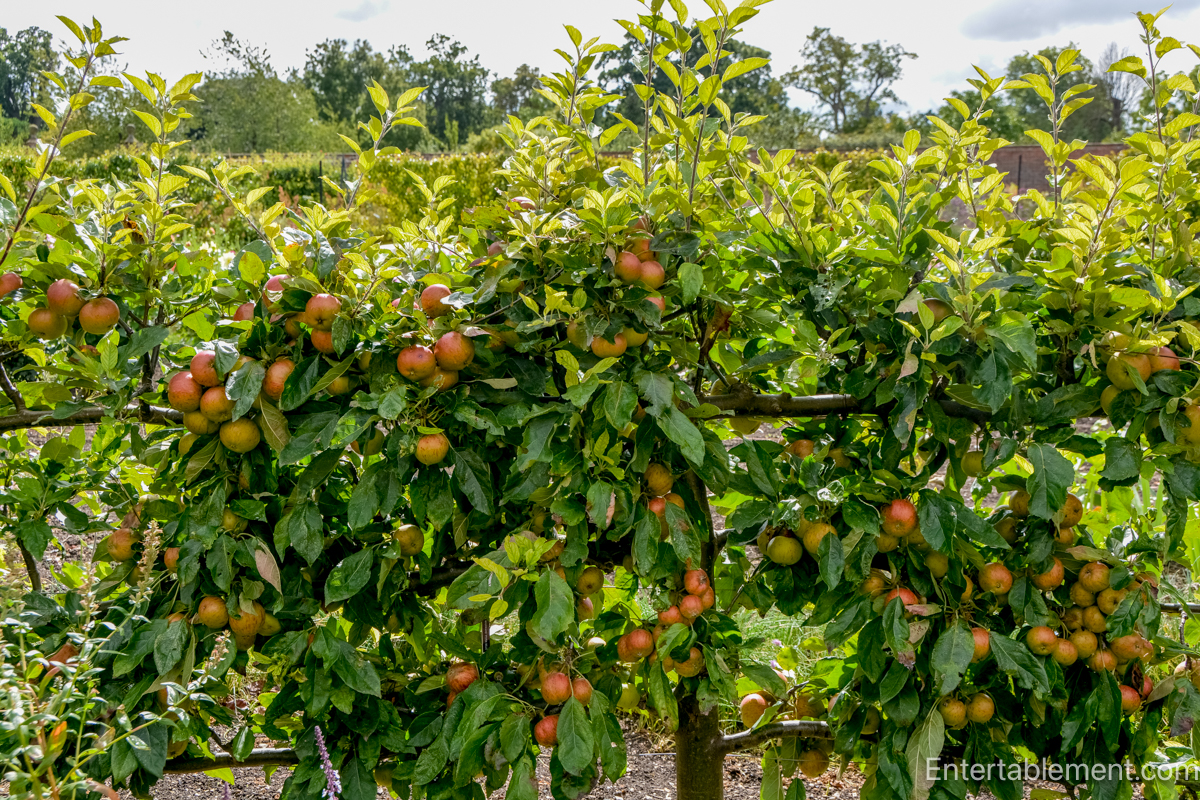
Rousham has a large orchard, but also many espalier pears and apples. How convenient for picking!

Wimpole Estate, featured in Entertablement’s Autumn Quarterly 2021, is another large country property with an enormous walled garden.

Espalier apples climb the rosy brick perimeter walls.

More trees form fences within the central garden, separating different garden beds.

Box hedges mark the edges of the broad borders, filled with flowers whose shallow roots don’t compete with the fruit trees against the walls.

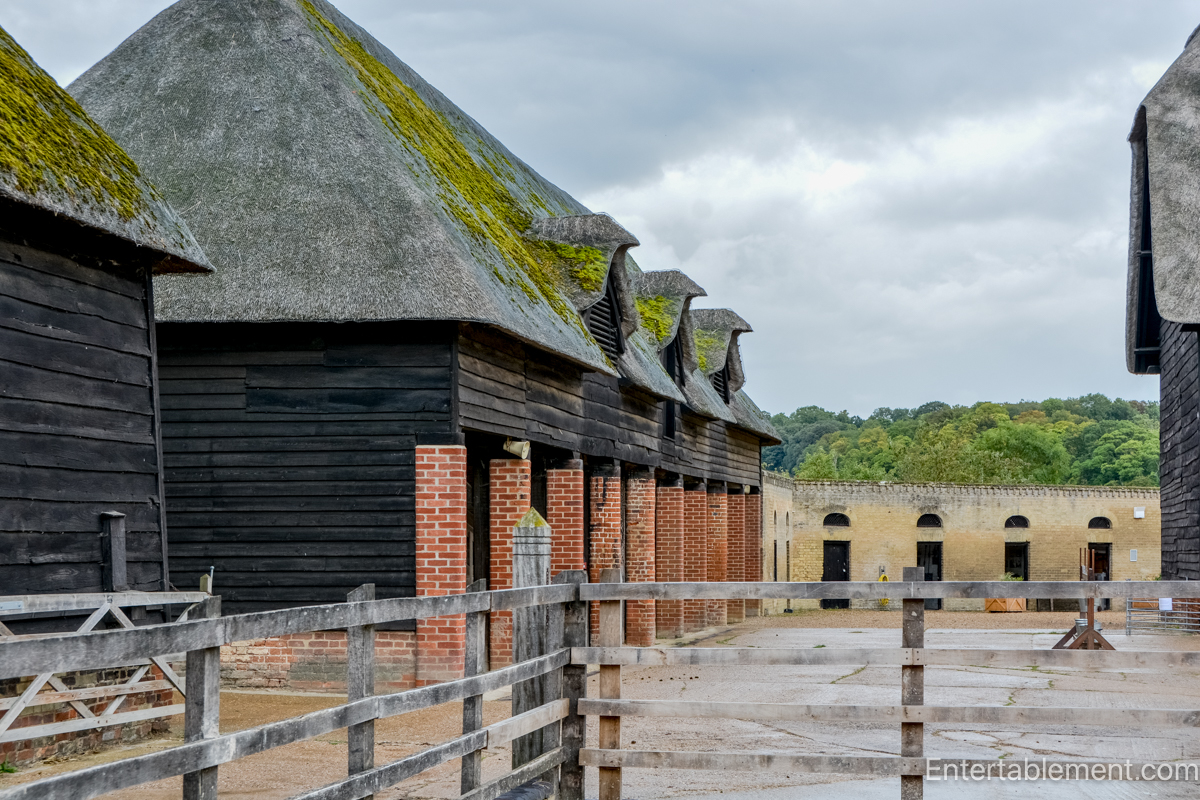
Wimpole is also a working farm.
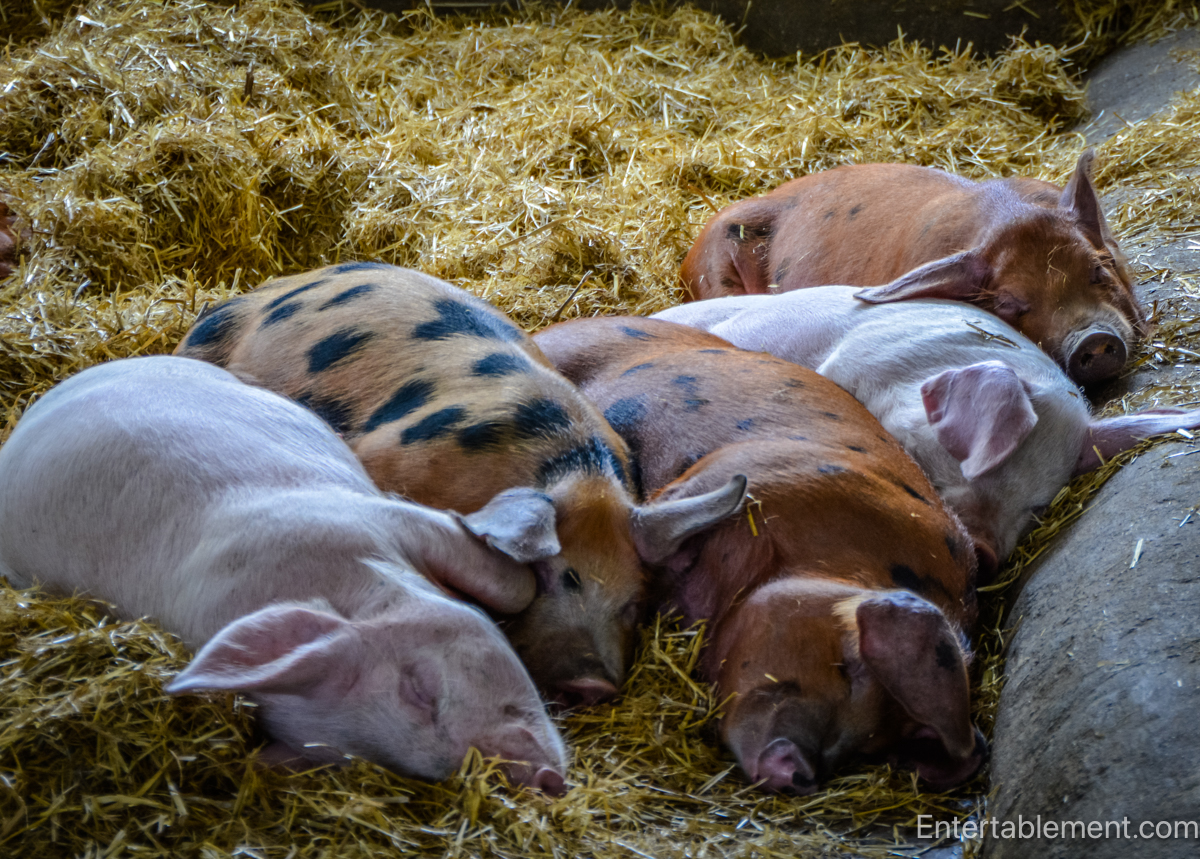
They raise heritage pork breeds such as the spotted Oxford Sandy and Black.
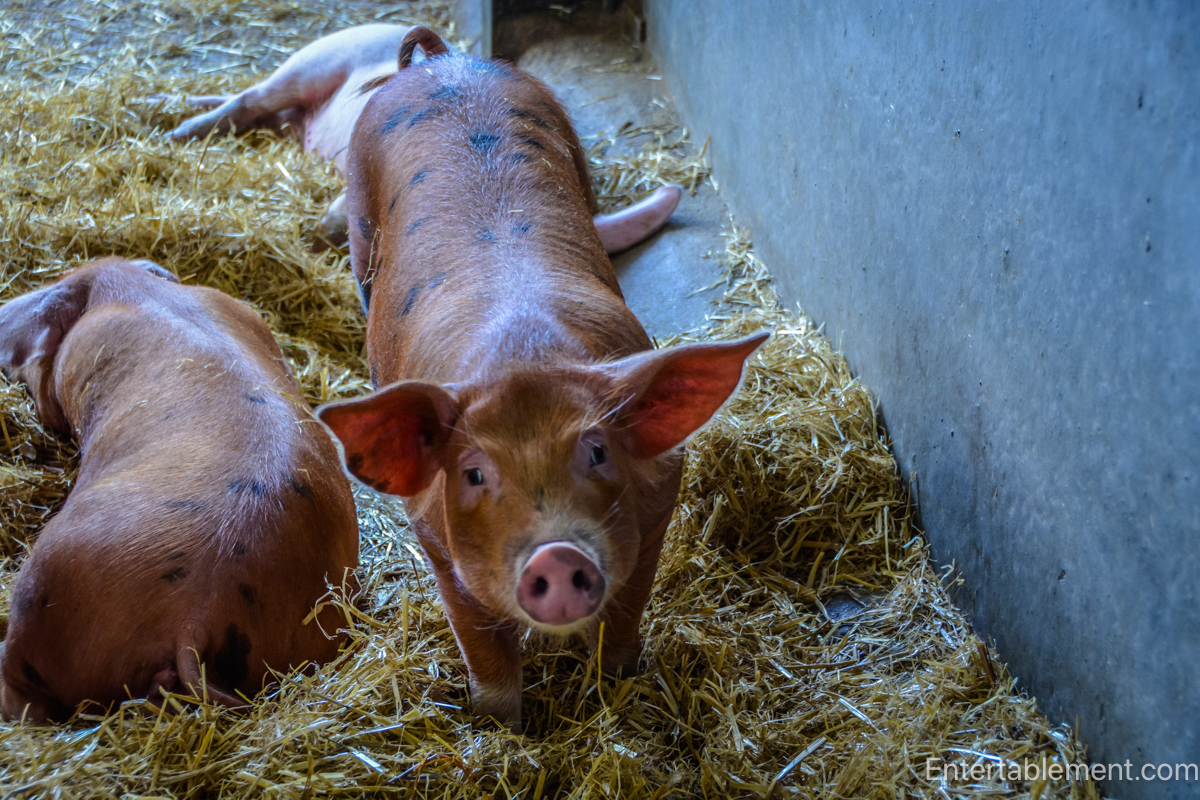
Just look at that face! Priceless.
Highland Cows (called “coos” in Scotland) graze around the property.

Walmer Castle, a fortress built during the Tudor era to defend the southern shores of England, is surrounded by more than eight acres of gardens. It later became a grace-and-favour summer home for the Lords Warden of the Cinque Ports, including the Duke of Wellington and the Queen Mother.
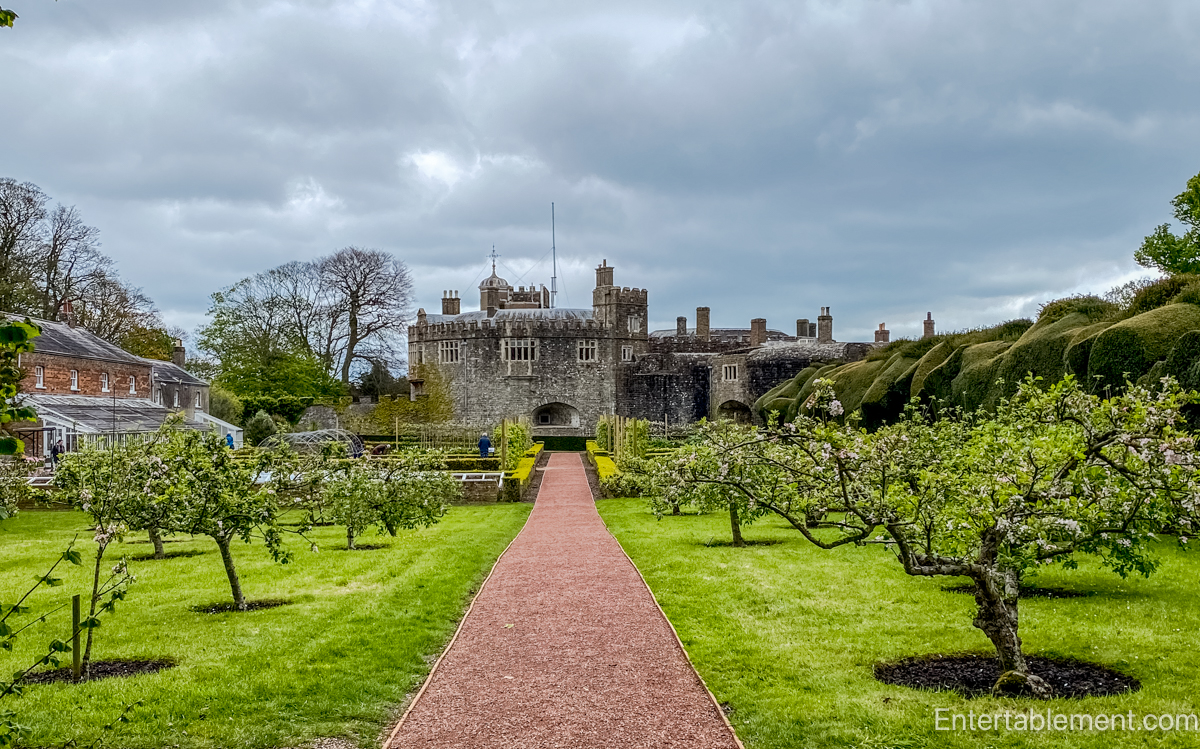
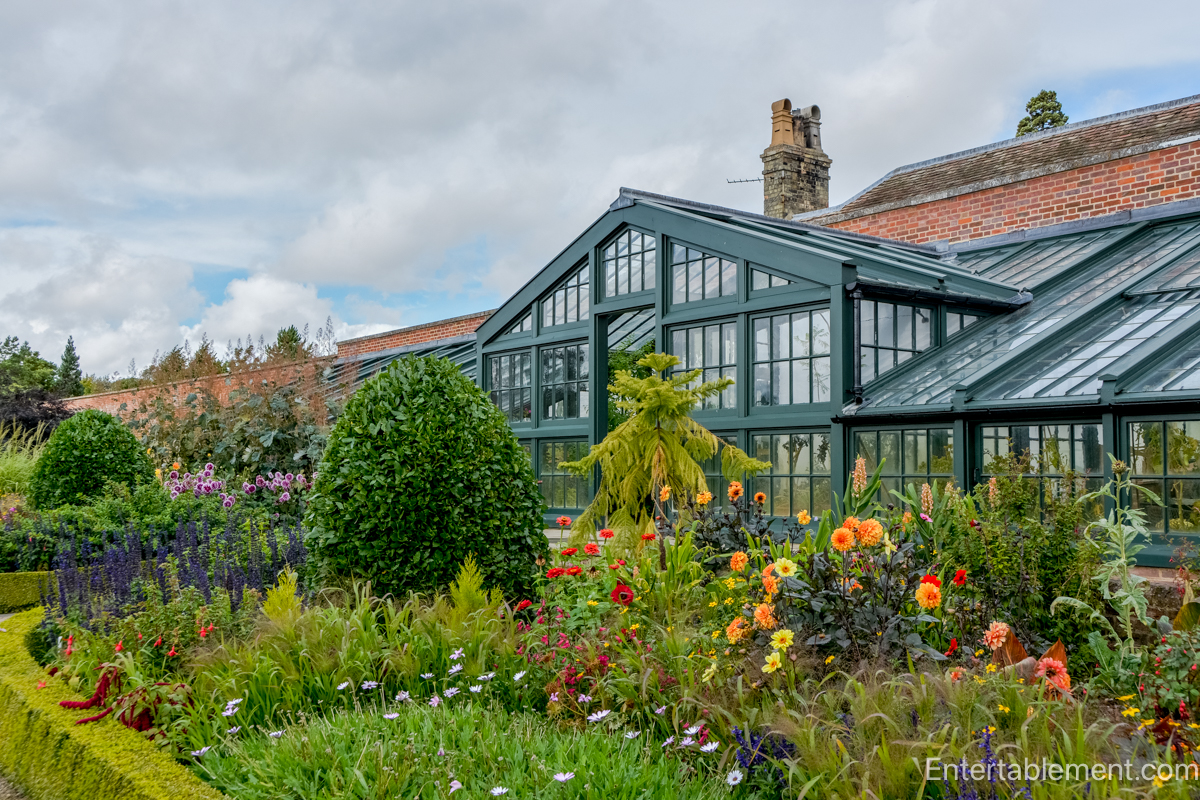
The garden contains excellent “business areas” examples, including cold frames and glass houses.


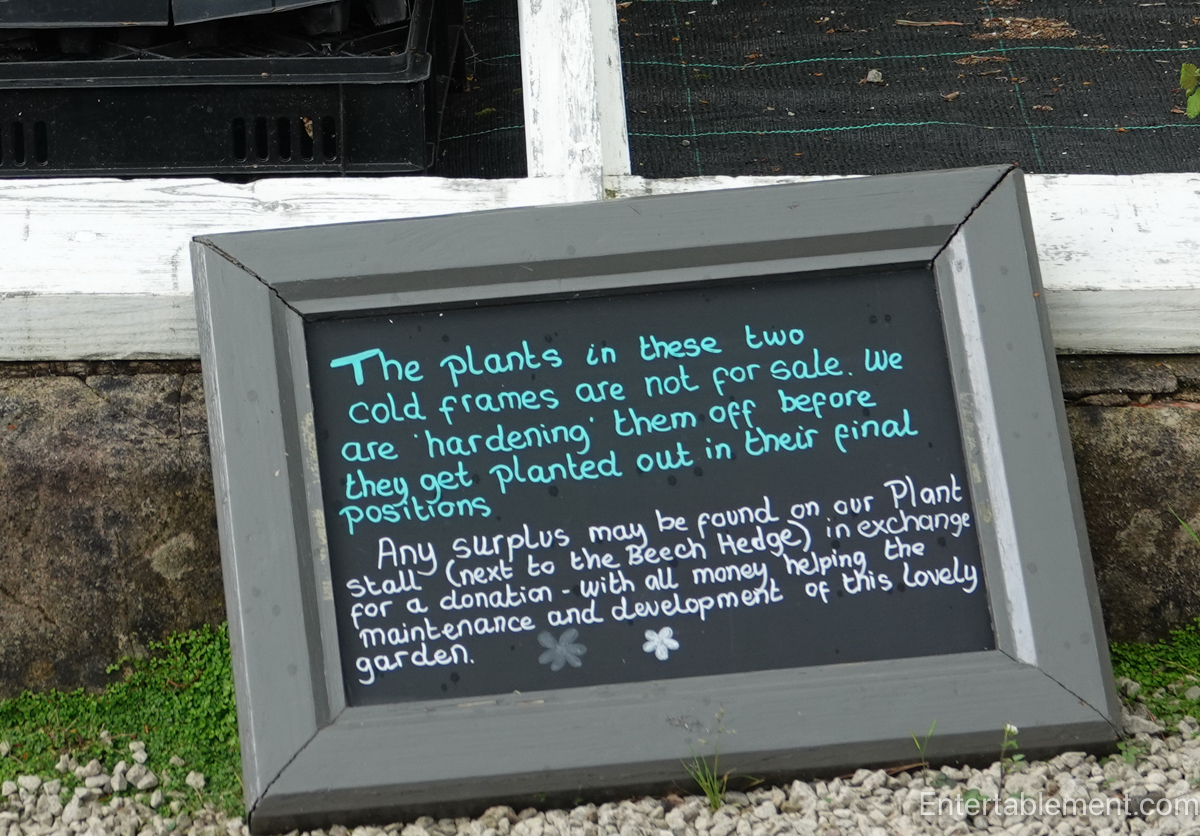
Cold frames provide a transition spot to “harden off” seedlings as they make their way from the warmth and comfort of the glass house to take their chances among the elements in their final position in the garden itself.

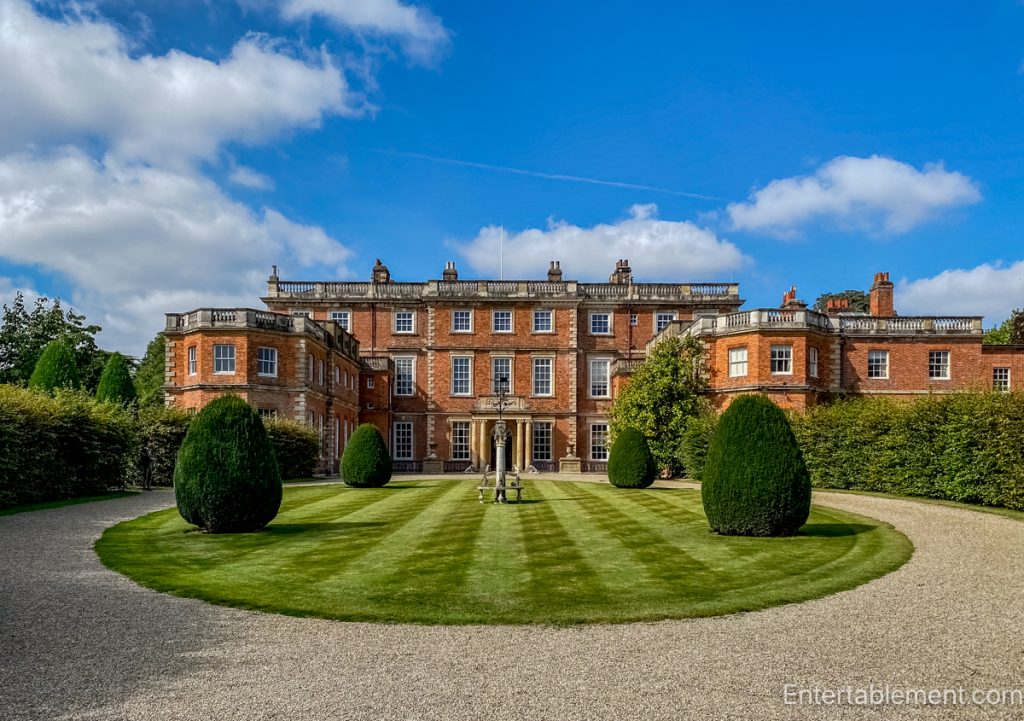
Newby Hall, a gorgeous Robert Adam house, is an absolute gem with spectacular gardens. Unusually for North Yorkshire, the house is built of brick. We enjoyed the guided tour immensely, but no interior pictures were allowed as the house is still privately owned.
While walking in the garden, we recognized Lucinda Compton, lady of the house, from her portrait. Gracious and down to earth, she was working away, accompanied by one of the other gardeners. We chatted about their incredibly lush dahlias. She told us that specially ordered 4″ square netting had been placed over the nascent plants in early spring, and by the time the dahlias had reached their full glory, the netting had disappeared from view but supported the top-heavy blooms beautifully. (cue HK searching on Google for such netting…)
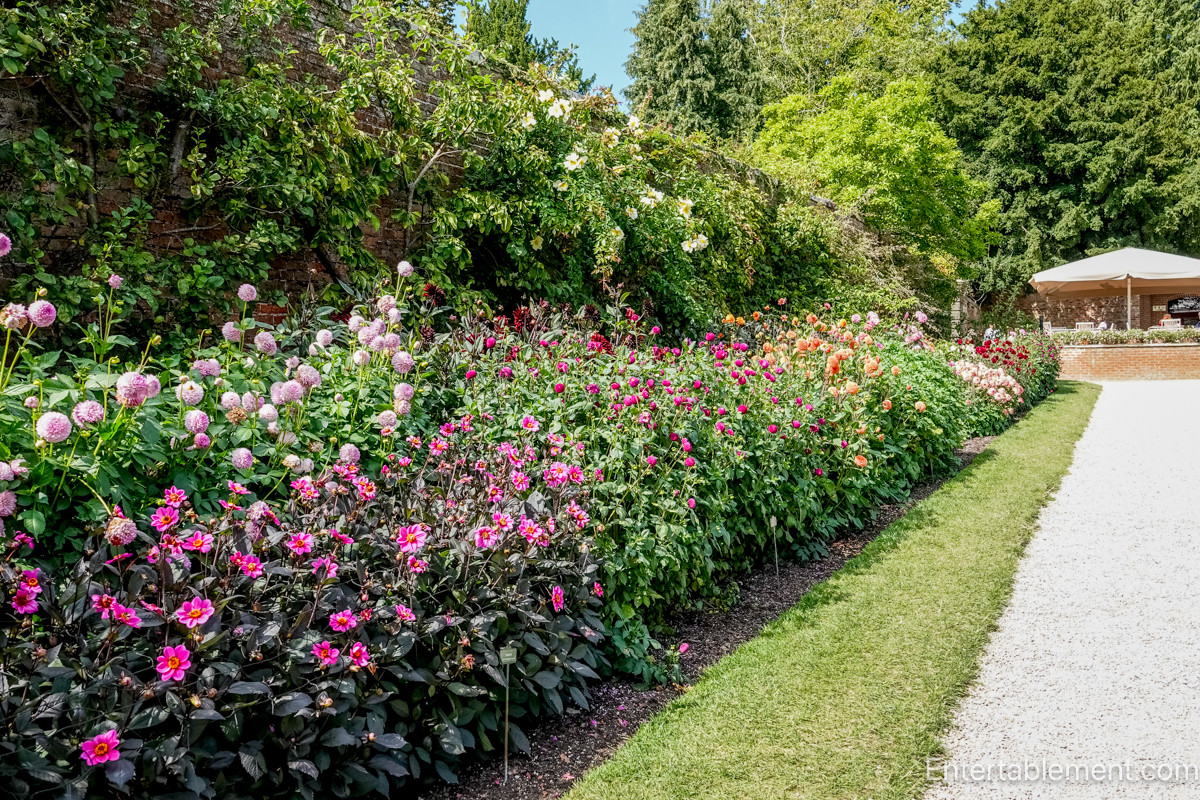
The utter exuberance makes my heart sing.

Now happily immersed, I’m learning more about the life of a Head Gardener and have begun reading Toby Musgrave’s The Head Gardeners and Diary of a Victorian Gardener: William Creswell and Audley End.
We visited these gardens in early spring and late summer. When we (reluctantly) left Audley End in the spring, the many varieties of peonies were coming into bud; I’m dying to see them in full bloom. Another trip!





I love to see all these gardens vicariously with you Helen! Thanks so much for the tour and the history – I’m fascinated!
It’s a lot of fun having you along, Barb! Thanks so much for joining.