
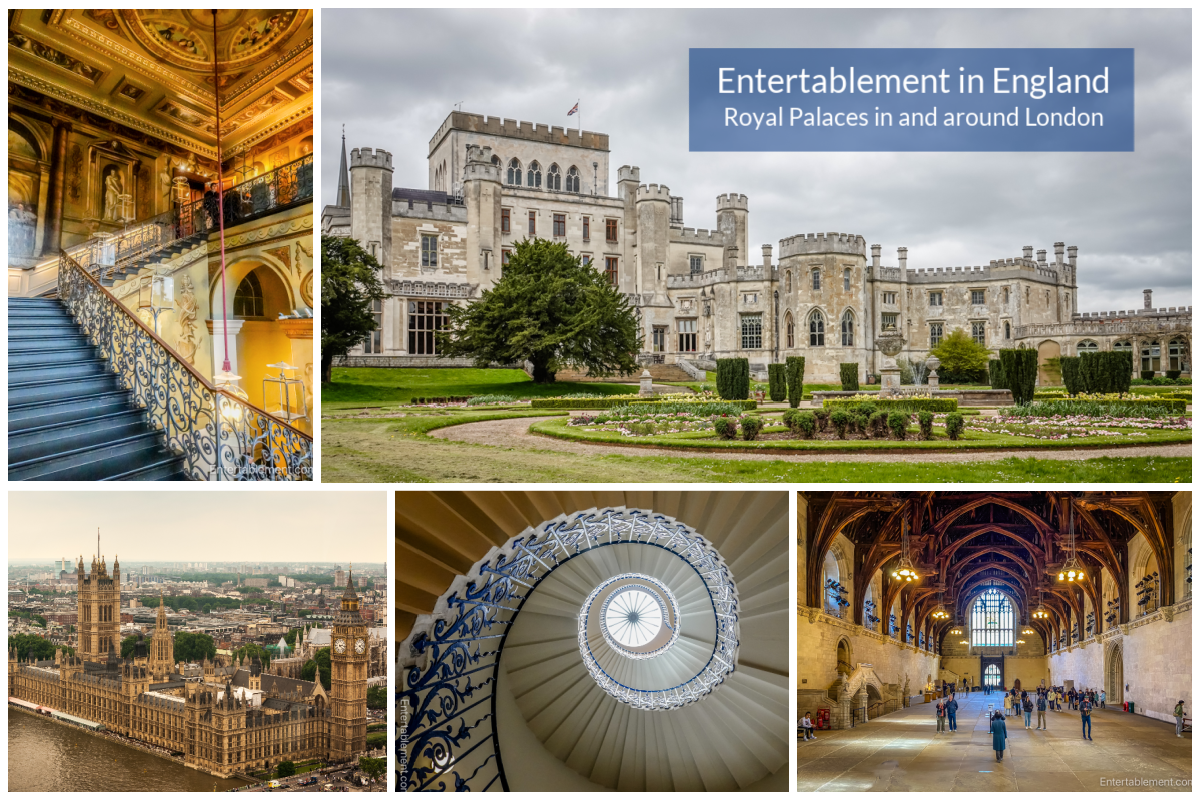
Though we were in England for only ten days on this trip, it was jam-packed with houses, castles, and gardens. The first leg of our journey was exploring the Royal Palaces In and Around London.
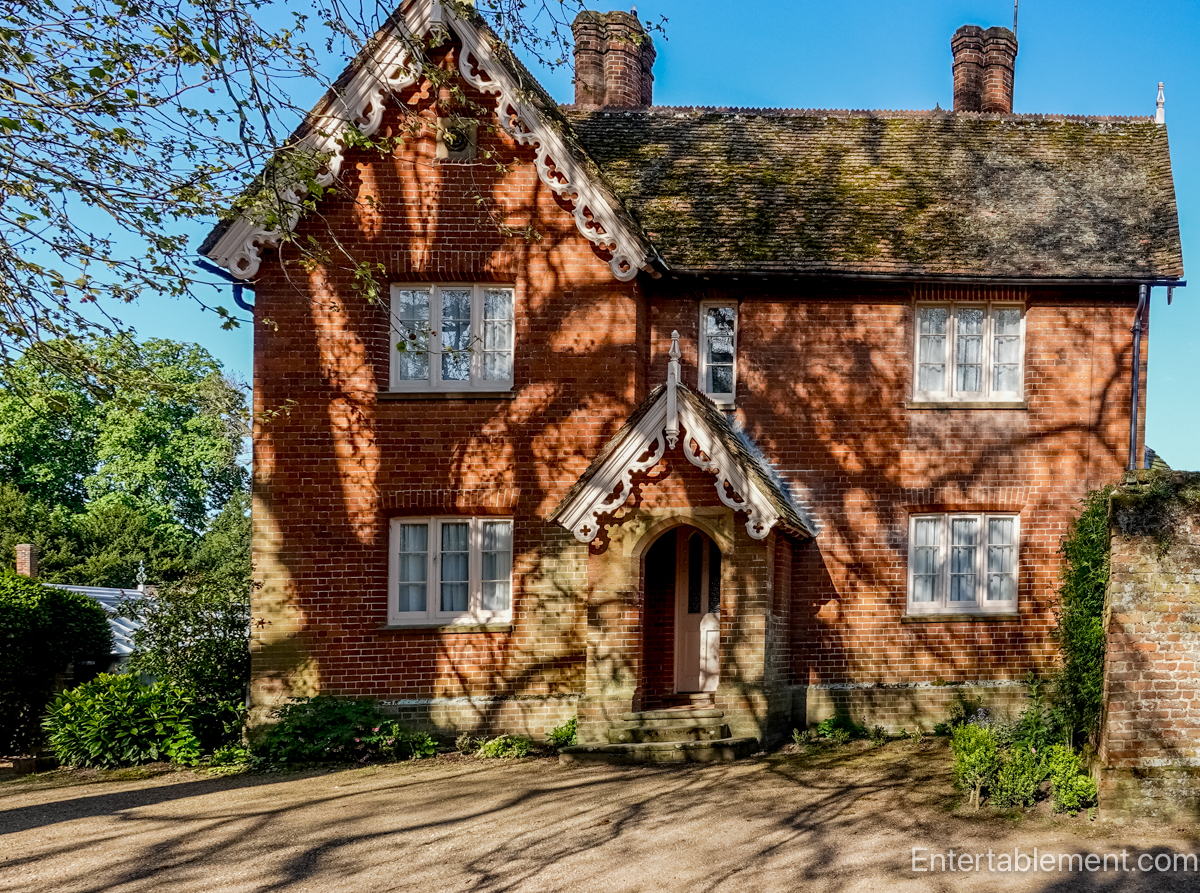
From there, we drove to Essex to The Head Gardener’s House at Audley End, where we were booked for the next four days. The house was built in 1875 as a family home for Audley End’s Head Gardener, one of the property’s most senior staff members. It was recently renovated to provide a state-of-the-art kitchen and energy-efficient interior climate control. It was extremely comfortable and beautifully decorated with wallpaper in modern interpretations of William Morris’s patterns.
Our arrival was rather spectacular, in an unfortunate sort of way. Following the emailed instructions, we looked for the delivery entrance to Audley End. We were to find a place to park and lug our baggage to the house.

Said entry is reached across the busy road in a small layby, very close to what turned out to be the exit rather than the entrance. Down the exit we went, and unbeknownst to us, our approach set off a bunch of alarms. Sublimely unaware, we drove around a bit and found the Head Gardener’s house. We were unloading our luggage when two very cross men in a gardening jeep came steaming up.

We explained; they glared. Reluctantly, they allowed us to enter the house to drop off our luggage before escorting us back along the exit. They pointed out the delivery entrance from which we found the parking lot and left our car. We apologized profusely. Though they were cheerful in a very forced way (we were guests, after all), we could see the thought bubble above their heads, “Stupid Yanks”.

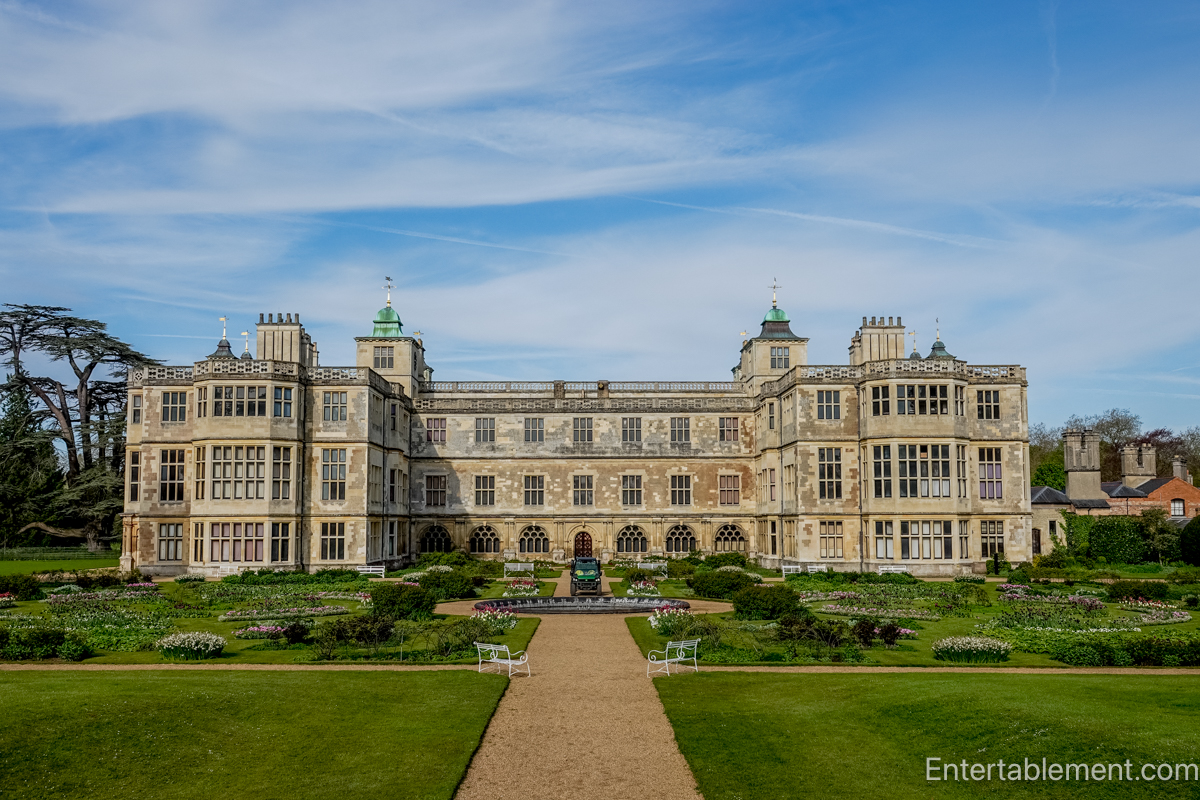
Audley End is looked after by English Heritage, which offers “A Postcard from Audley End”. One of the prodigy houses, it was built to entertain Royalty and their entourage as they made their stately progress around the country. At that time, the house was several times larger than it is curently.

From the back, you can see the two separate wings. The one on the left was designated for the Queen’s use. The King was housed in the wing on the right. It brings new meaning to separate bedrooms, no?
We decided to tour the house later in the week. The following morning, we set off for one of English Heritage’s sister properties, Wrest Park.

As an aside, there are two prominent charitable trusts for historic properties in England.
English Heritage was founded in 2015; it manages over 400 prehistoric sites, medieval castles, Roman forts, and country houses. It’s much more focused on telling the story of English History from Saxon times onwards. They do an excellent job of bringing historical context to life. One of their policies, it turns out, is small, discreet signage, hence our arrival debacle at Audley End.
National Trust was established in 1895, and some of the British aristocracy donated their furnished, stately homes to them for tax purposes. Taxes were 85% of capital at their peak in the 20th century. Country houses were being demolished at the rate of one a week until the National Trust launched a preservation campaign in the 1970s.
We are members of both organizations. Most unfortunately, National Trust has taken a sharp turn away from preservation towards social justice activism, much to the annoyance of its members. Their latest endeavour involves making their scones “accessibly vegan” by using a palm oil margarine, which tastes as one might expect.

The house is attractive; the gardens are spectacular. Though it was a cold, cloudy and sometimes very wet day, we happily tromped all over the grounds.
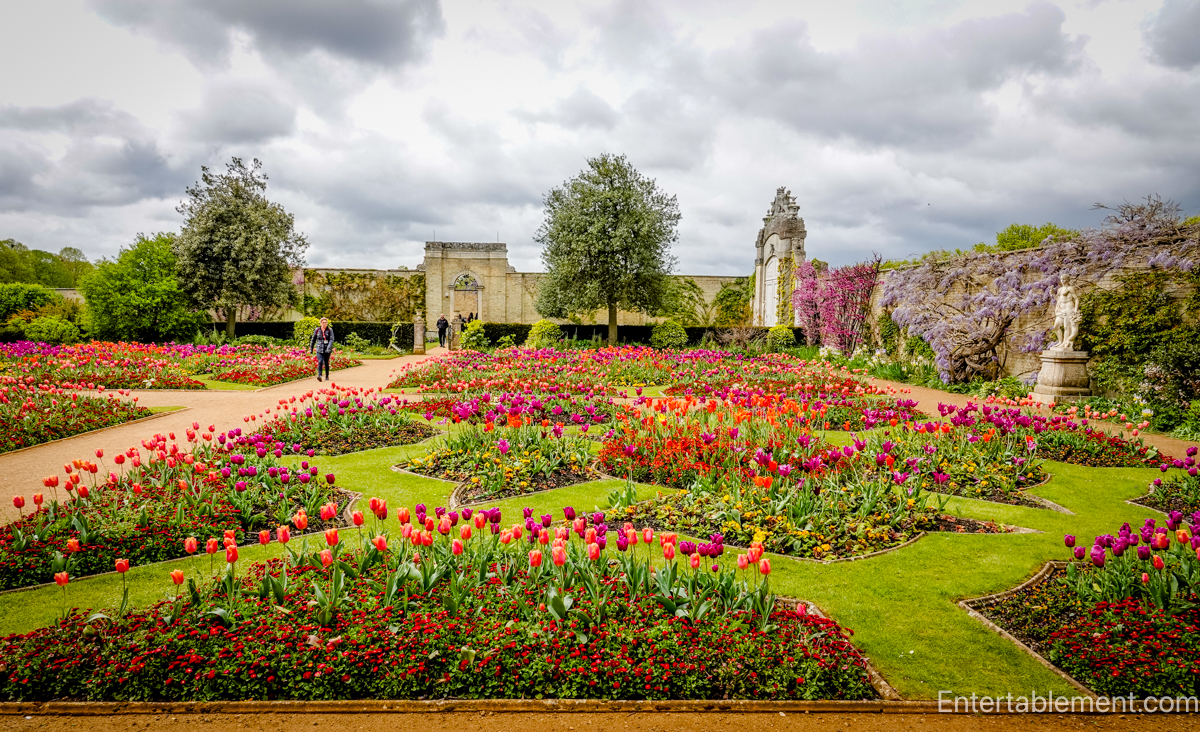
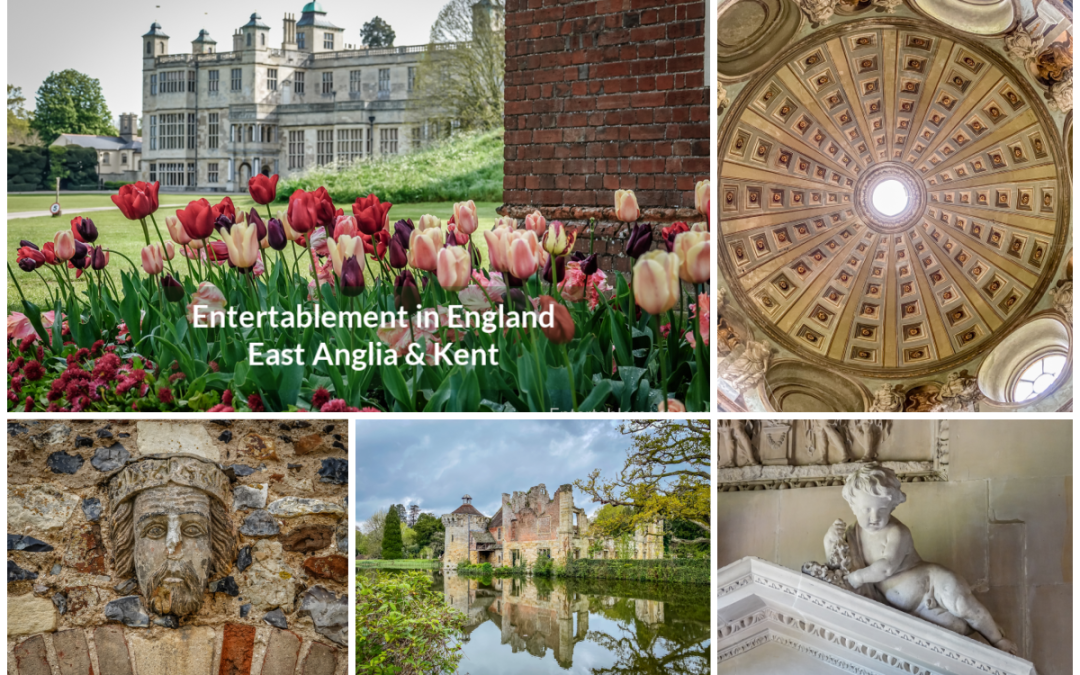
Of the follies and orangeries dotted around the landscape, my favourite was the Baroque Archer Pavilion. Built by Thomas Archer between 1709-11, it provides a focal point at the end of the long water.

The tromp l’oiel ceiling inside is a masterpiece. I loved it!

The following day, we set out for Framlingham Castle, where Queen Mary I prepared to fend off the troops raised by the Duke of Northumberland, who had managed to place Lady Jane Grey on the throne for a brief nine days before Mary I succeeded in 1553.

Framlingham is essentially a ruin, but the story is well told by — you guessed it — English Heritage in this quick video. The red brick workhouse tucked up against the interior of the castle curtain walls houses a very good display.
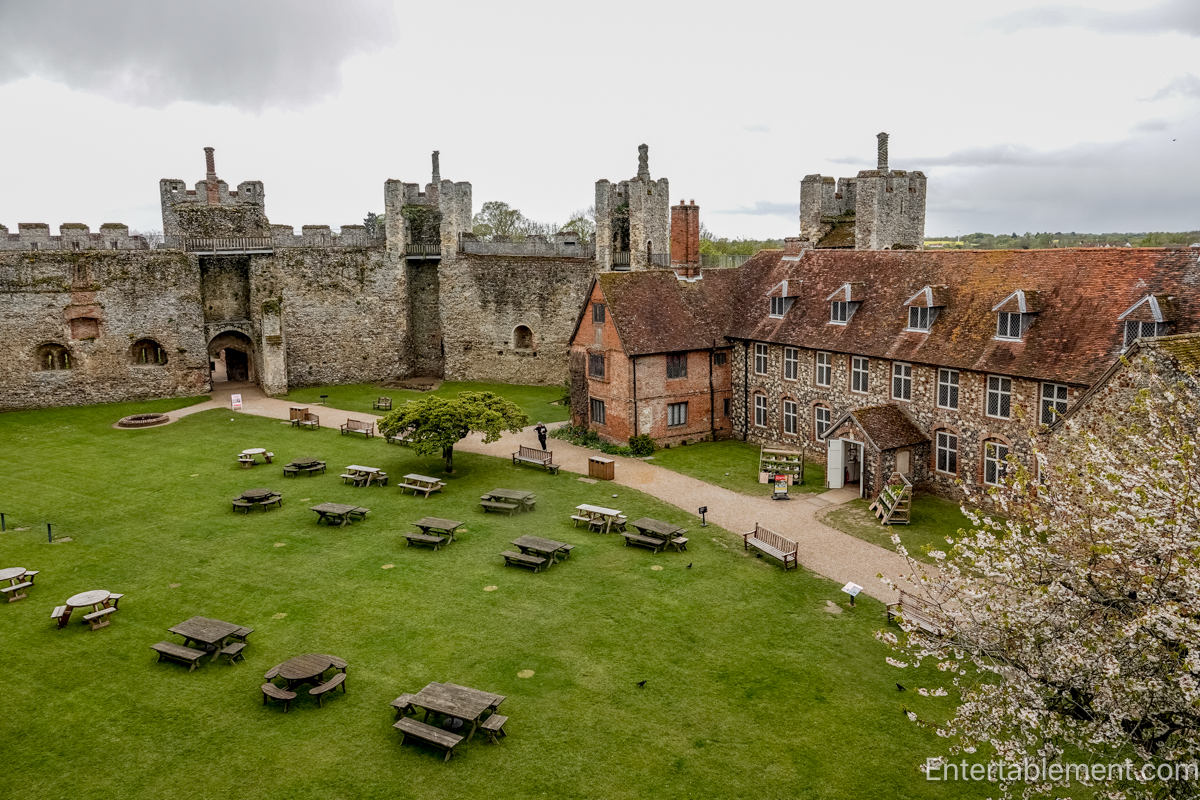
The Tudor chimneys have decorative brickwork in different patterns. Remarkably, they’ve survived for over 500 years.


The parapet has been repaired; you can walk around the curtain walls and see how the battle unfolded.

Teddy, fond of castles, came along for his photo opportunity with his trusty companion, Penny, the penguin. Gustus (short for Augustus) is always happy to visit his native England since he was rescued from the gift shop in the Roman Baths in Bath on an earlier trip.

On our final full day in East Anglia, we went to Houghton Hall in Norfolk. I’ve longed to see it, but as it’s privately owned, it is open only a few days a year. They couldn’t have made us more welcome.

Full interior photos allowed, much to my astonishment. Take note National Trust and other private houses. It can be done!!
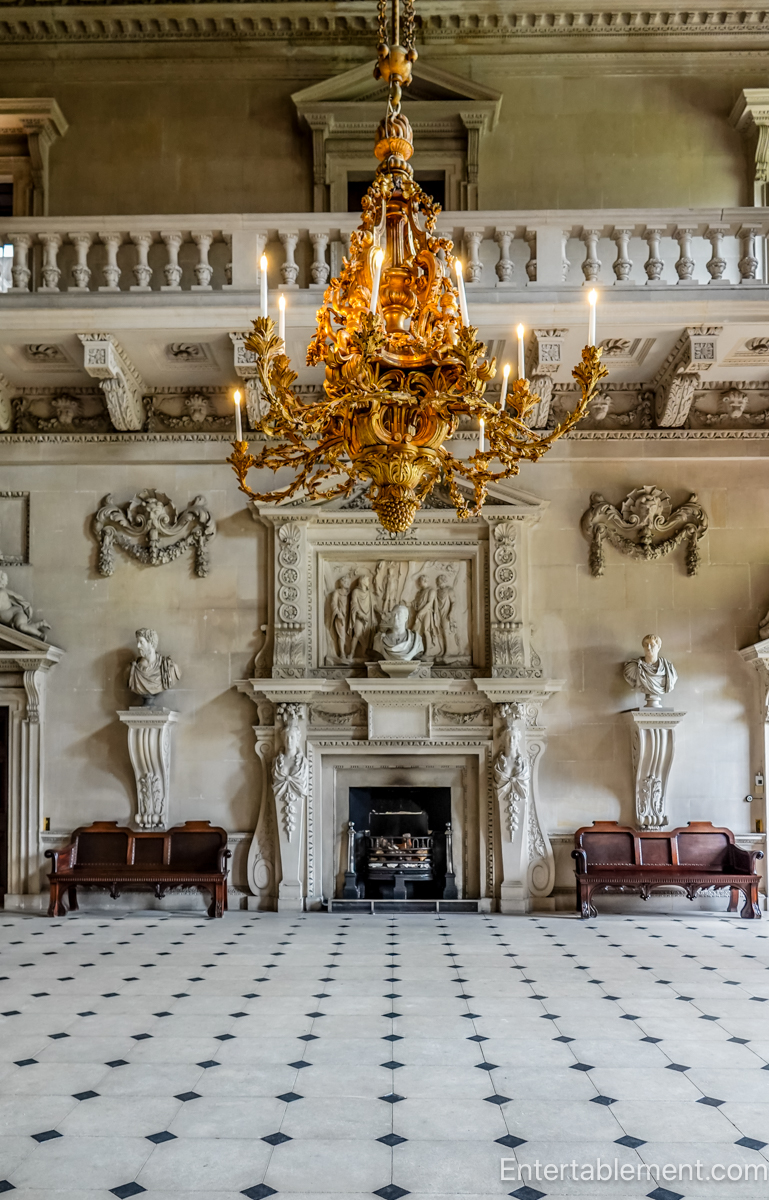
Houghton Hall was built in the 1720s for Britain’s first de-facto Prime Minister, Sir Robert Walpole. His descendants still own it, and it is now the country property of the 7th Marquess of Cholmondeley (pronounced “chumly”). Don’t ask…
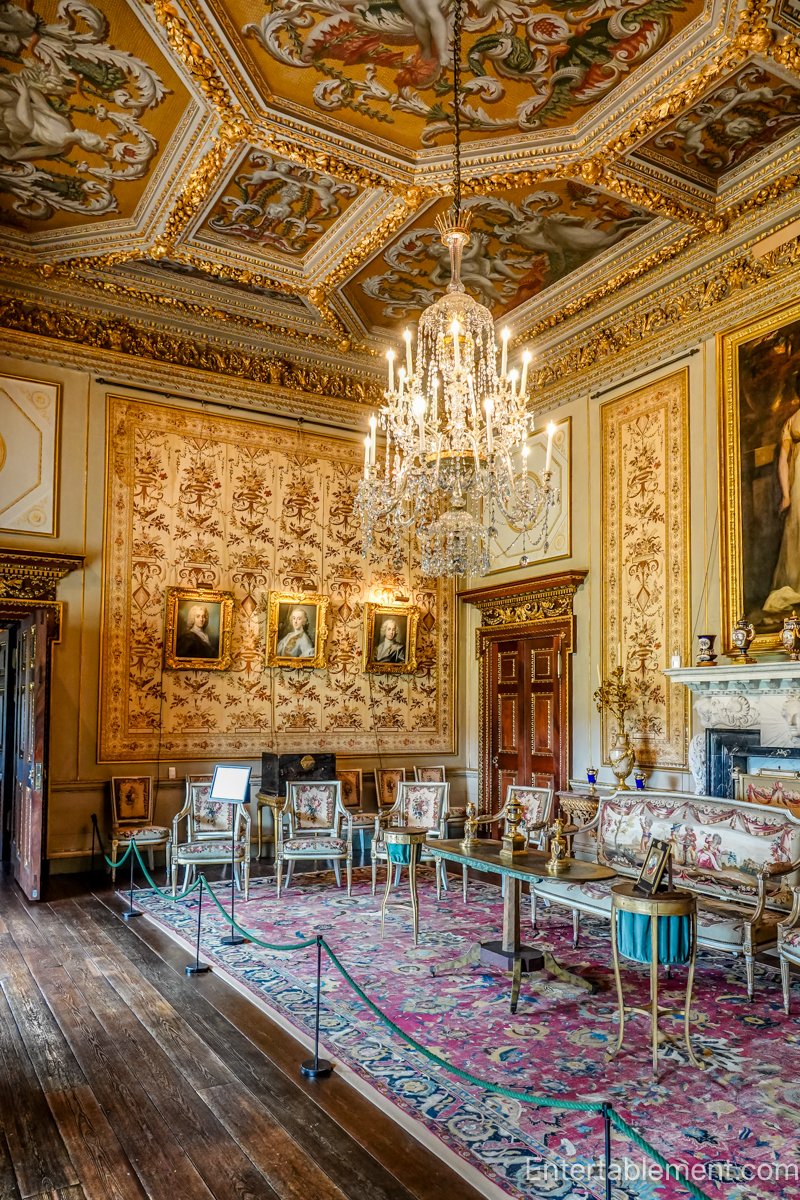
The splendid Palladian ceilings by William Kent are exquisite. I could have stayed for a week, just taking photos. But it was a long drive back to The Head Gardener’s House, and eventually, I tore myself away.

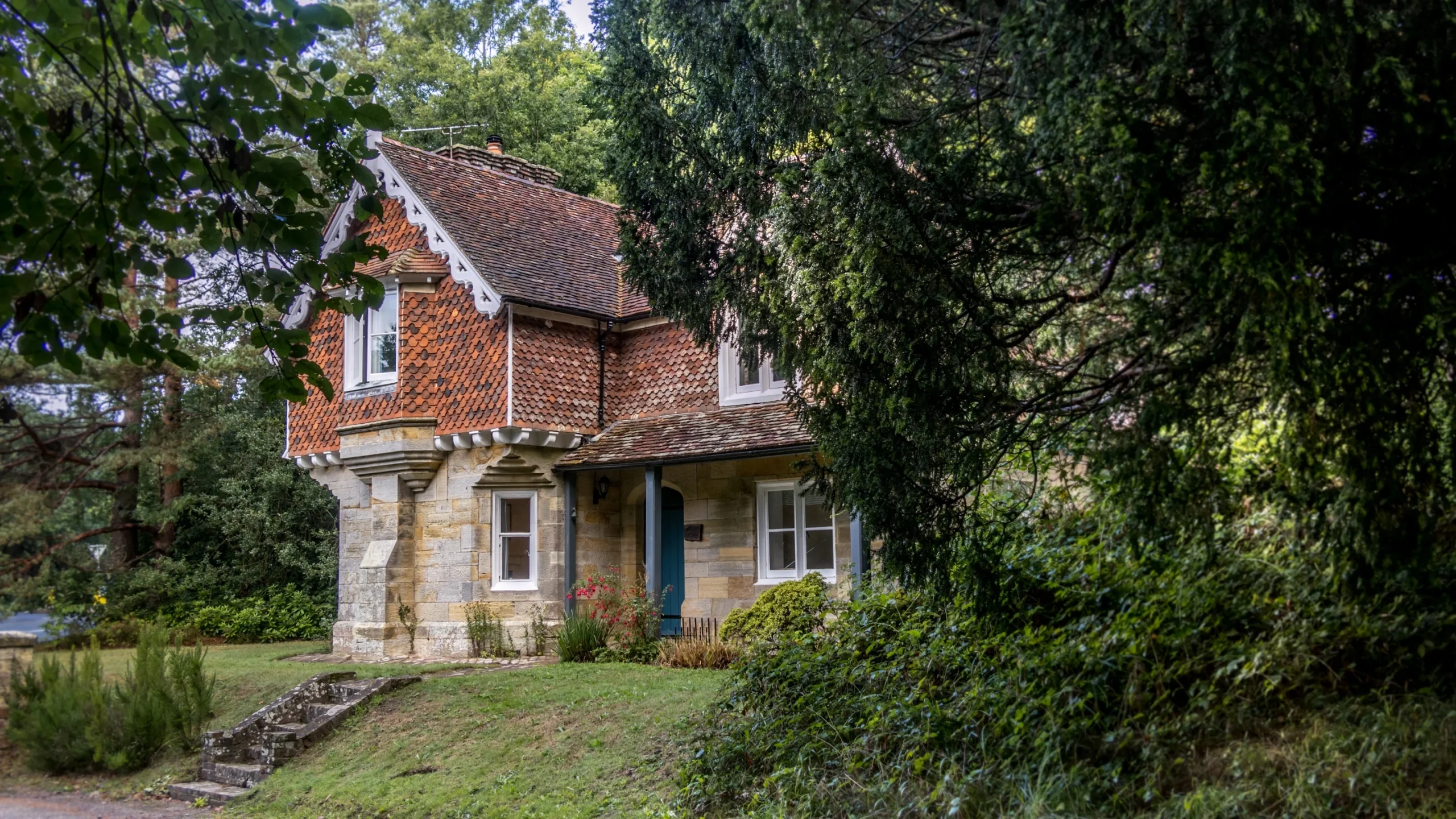
The following morning, we packed up and headed to our next self-catering cottage, the West Lodge at Scotney Castle, near Tonbridge Wells in Kent. It’s one of the National Trust rentals. It’s a bit dated and not quite as comfortable as our previous house, but it’s still excellent.
We’ve visited Scotney Castle on a previous trip.
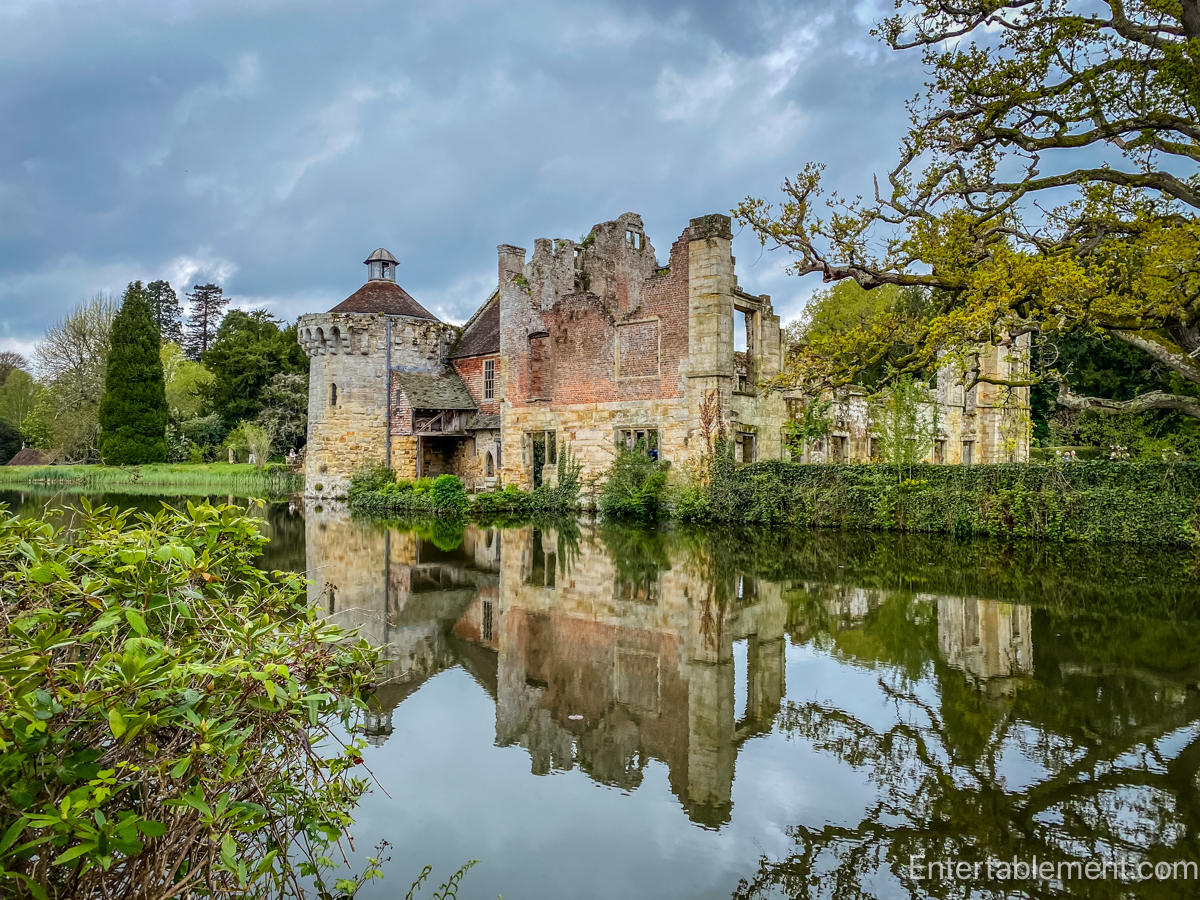
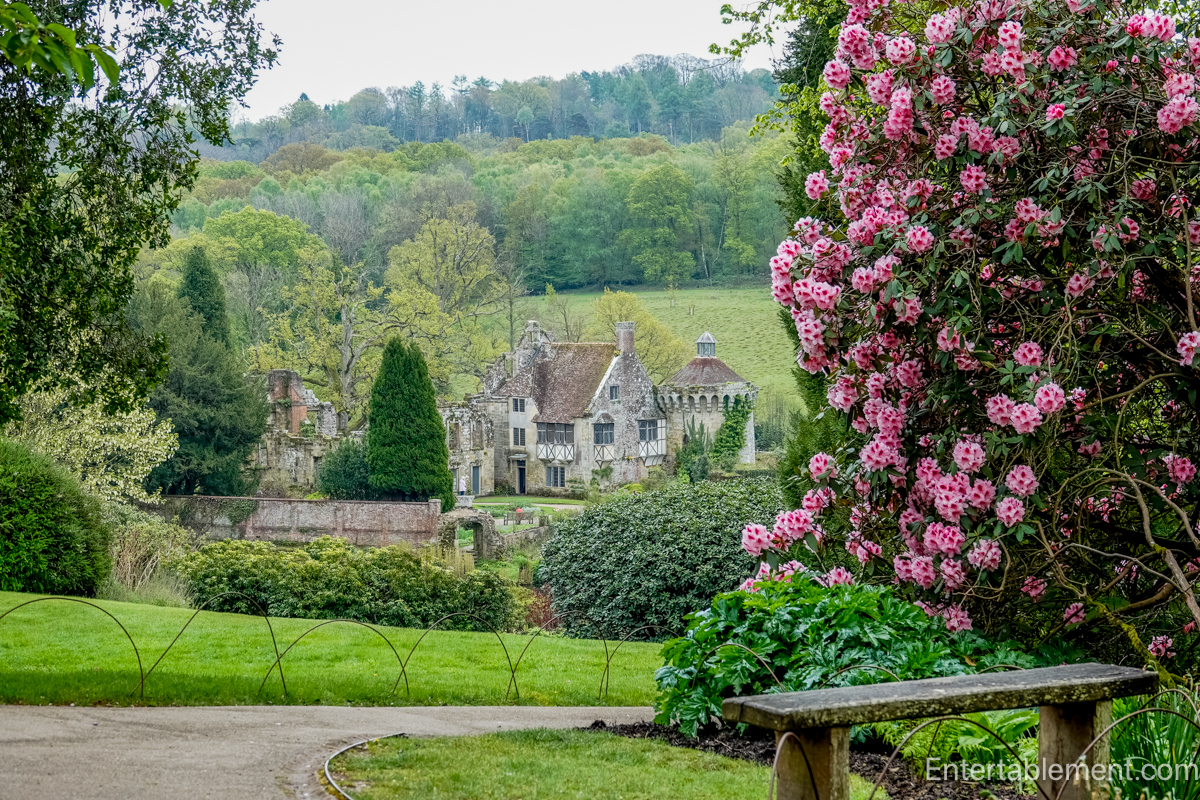
It was the location we were after, which was very convenient, and the grounds on which the rental house is located are beautiful.
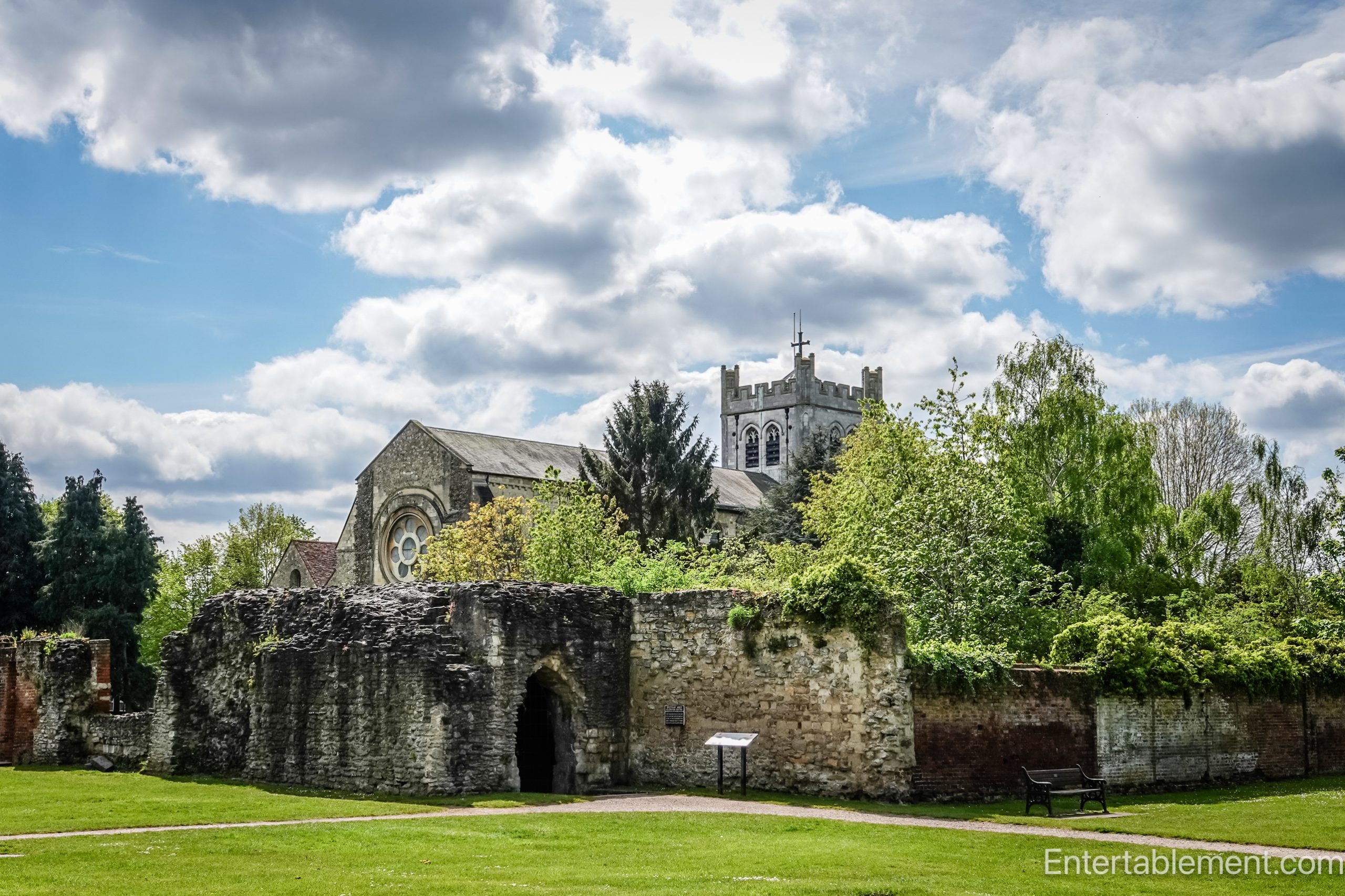
Along the way to the West Lodge, we stopped at Waltham Abbey, the final monastery to surrender during the Dissolution of the Monasteries.
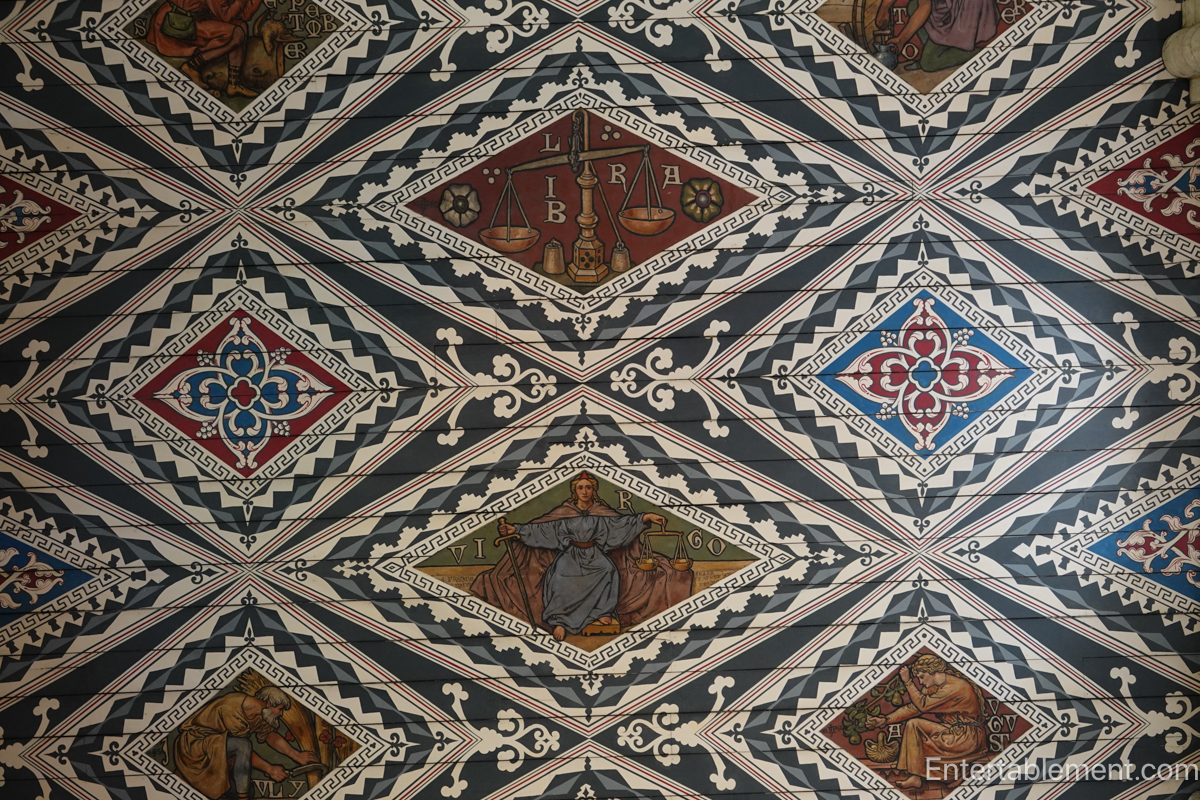
Now a parish church, the painted ceiling in the nave features all the signs of the Zodiac, of all things, and the labours of the months.

The ceiling is a Victorian addition created in 1860 by Edward Poynton.
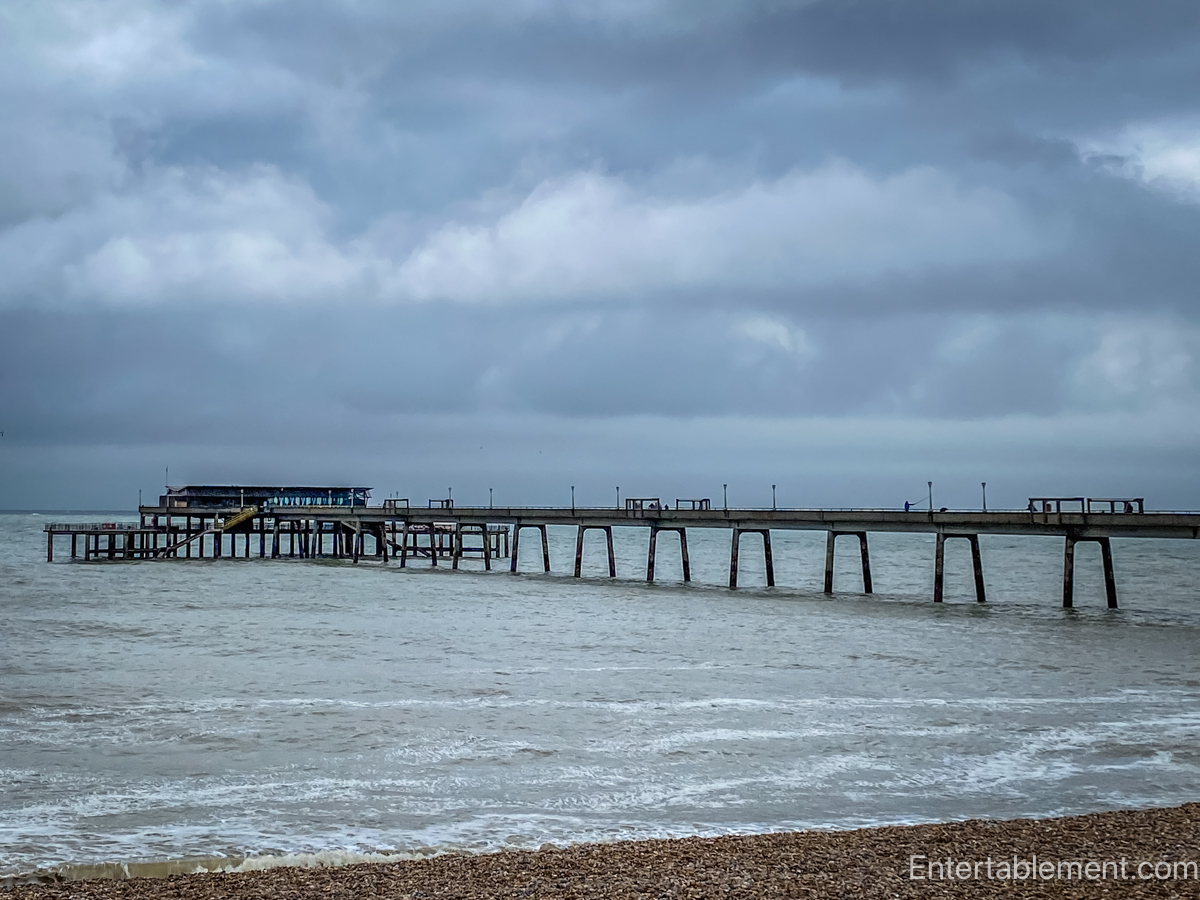
We went to the Deal Pier Kitchen for breakfast, which is located right at the end of the Victorian pier.
I had the Chorizo and Celeriac Hash; Glenn always goes for the Eggs Benedict. Both were very tasty.

Deal is a pretty seaside town with colourful houses and hotels lining the shore.

We had driven to Deal to see nearby Walmer Castle, one of the defensive Cinque Ports on the English Channel, built on the orders of Henry VIII.

Later, Walmer Castle was offered as a grace-and-favour home for the Lord Warden of the Cinque Ports, who included the Duke of Wellington and the late Queen Elizabeth, the Queen Mother. Several rooms were opened for the first time in 2024, including the Queen Mother’s apartment (no interior pictures allowed, but take my word for it; her taste was exquisite). Again, the gardens were spectacular.

While in Kent, we returned to a wonderful restaurant, the West House, in Biddenden. It was just as delicious as it had been a decade earlier. The chef, Graham Garrett, is an old rocker who started the restaurant in 2002 after working through the culinary ranks. His talents are endless; he’s cooked for the Queen and 10 Downing Street and appeared on shows such as Ramsey’s Best and Great British Menu, described in his autobiography Sex & Drugs and Sausage Rolls.
This is the menu we had. Sublime. If you’re ever in the area, I highly recommend you make a reservation and go!

Next stop: Athens. Stay tuned, dear readers!




I got tired reading about all the houses and gardens that you saw in such a short time. Such stamina! Typical story of your welcome at your first stop. Miscommunication between Brits and (yanks)! Your photos are beautiful of all the houses and the gardens are all so gorgeous. I need their gardeners. We miss ours. Thanks for sharing. Now enjoy your summer on the Cape.
We in crammed a lot in ten days, that’s for sure. But I keep finding wonderful places to visit! The list keeps growing, too. These were some of the nicest gardens I’ve seen. I saw the same Belle Epoque tulips at several of the English Heritage sites. They must buy them in bulk.
Summer on the Cape is shaping up beautifully, and we are busy here with our garden, as I know you are, too. Isn’t it grand that the hydrangea are so plentiful this year? Makes up for last year in spades.