
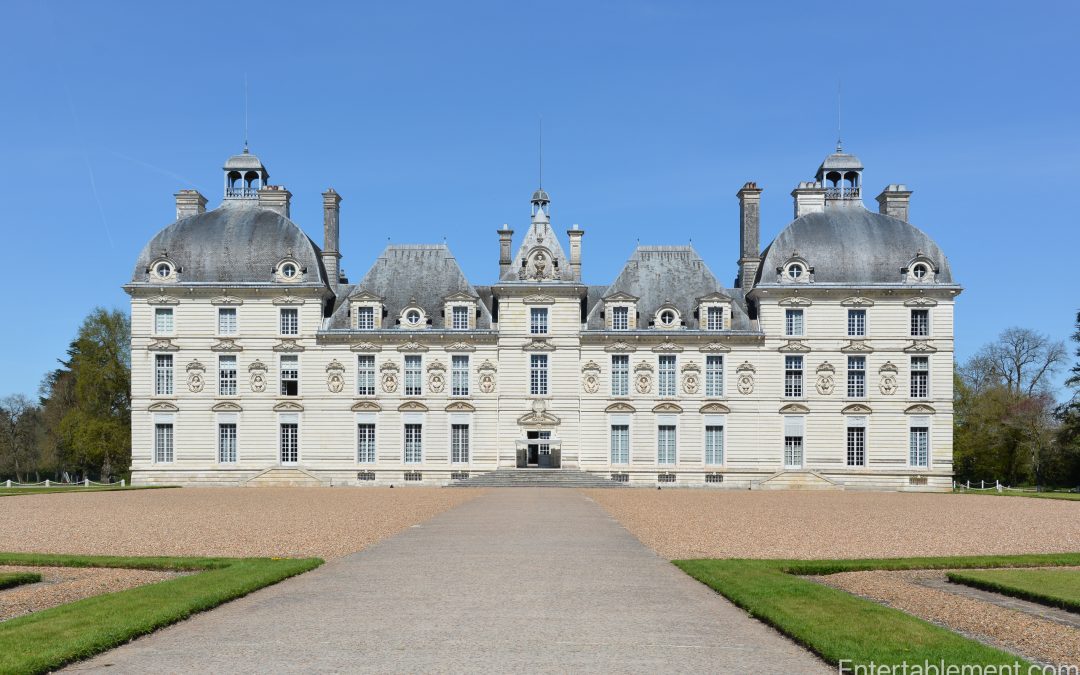
Updated May 2025 with new photos and insights.
Of all the châteaux we visited in the Loire Valley, Cheverny was my favourite.

It wasn’t the most grand or architecturally imposing, nor did it boast the dramatic backstories of Chenonceau or Chambord. (Though, after her unceremonious departure from Chenonceau, Diane de Poitiers did stay at Cheverny while Chambord was under construction).
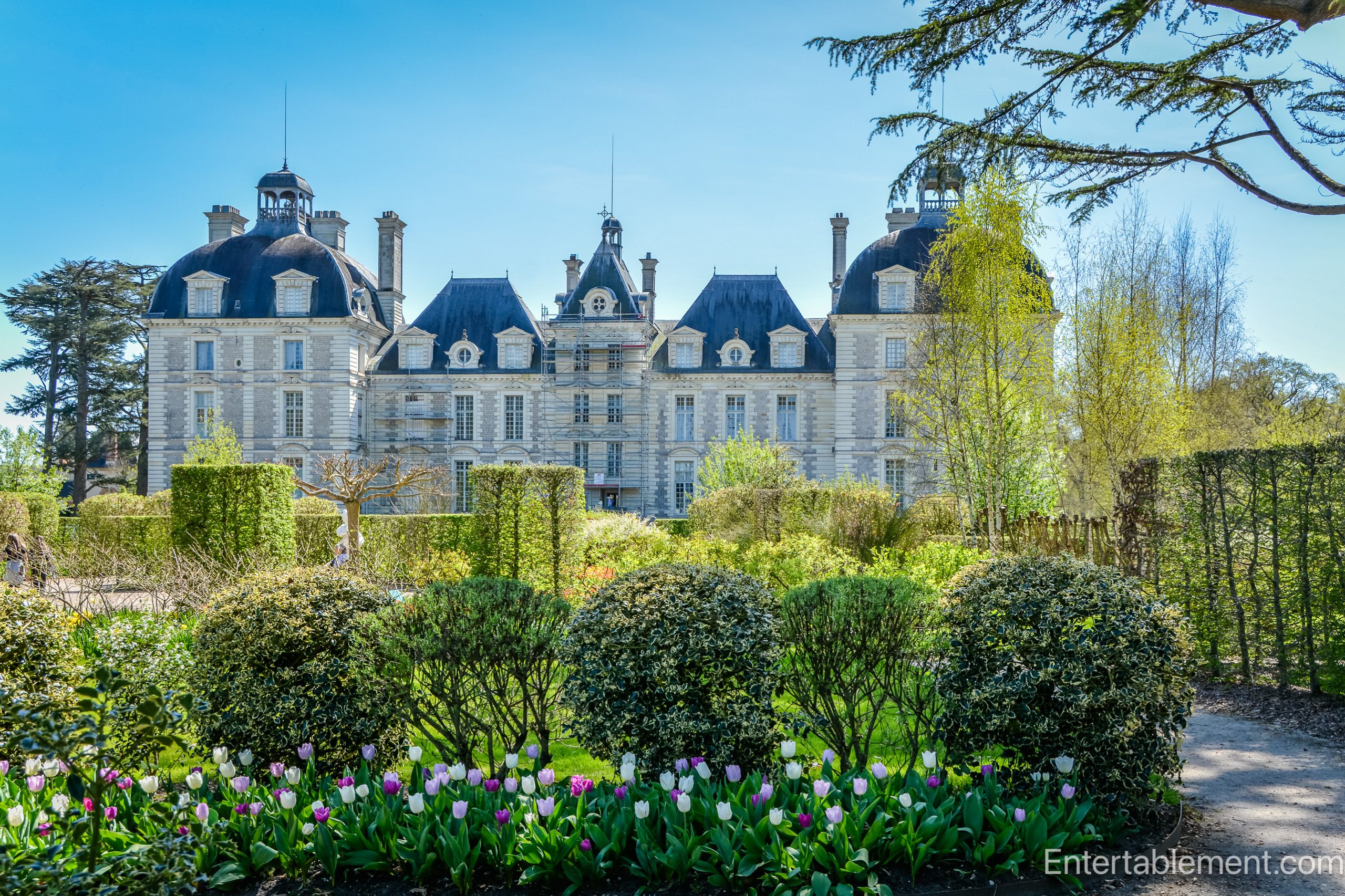
Not necessarily the most opulent or historically significant, but the one that felt the most like a living home. It was exquisitely elegant without being intimidating, lavish yet utterly welcoming. You could almost imagine someone breezing in from the garden, tossing their gloves on a chair, and pouring tea.

Cheverny has been in the same family for over six centuries. The current owners, the Marquis and Marquise de Vibraye, still reside in a private wing, while the rest of the estate is open to the public. It shows. This isn’t a museum, frozen in time—it’s a lovingly maintained home with both a sense of the past and a warm breath of the present.
A Harmonious Palette
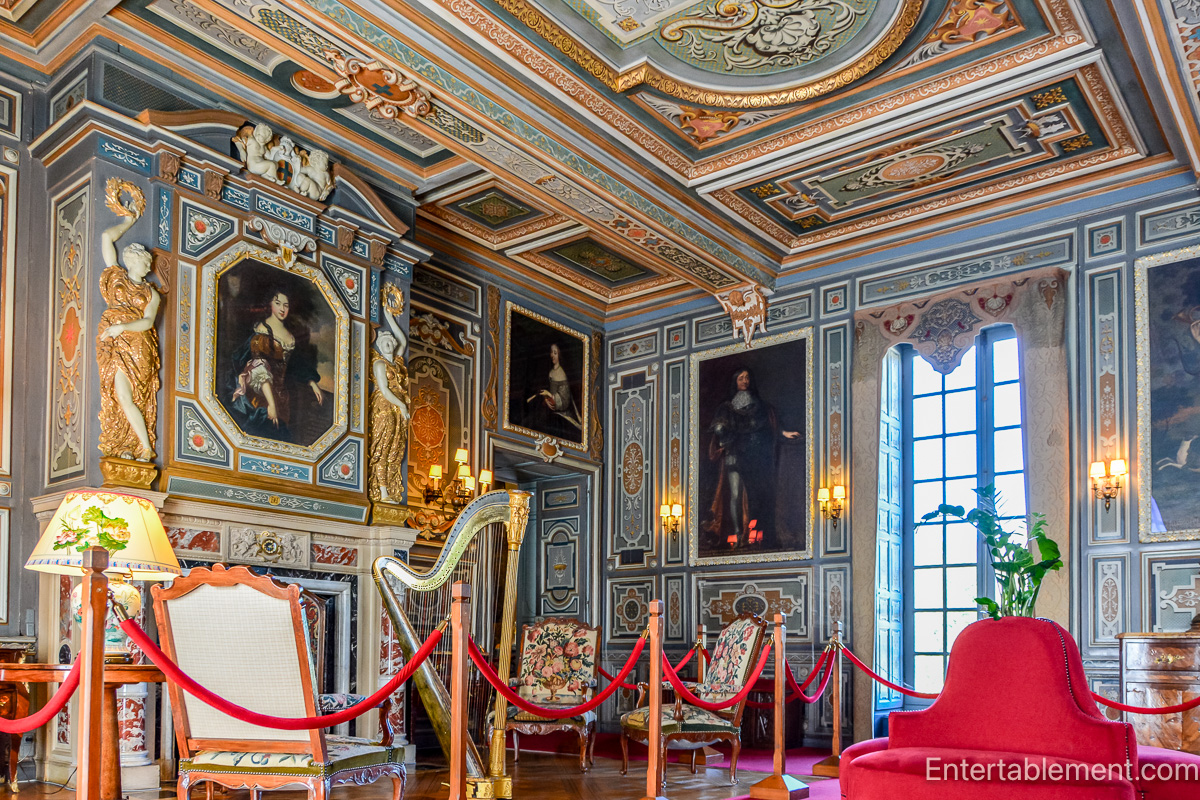
There’s a thread of continuity throughout the interiors — everything is of a piece, as though designed with a single artistic vision. Colour is used to striking effect throughout the château. The blue and gold reception rooms, anchored by deep carpets and gilded woodwork, glow with warmth.
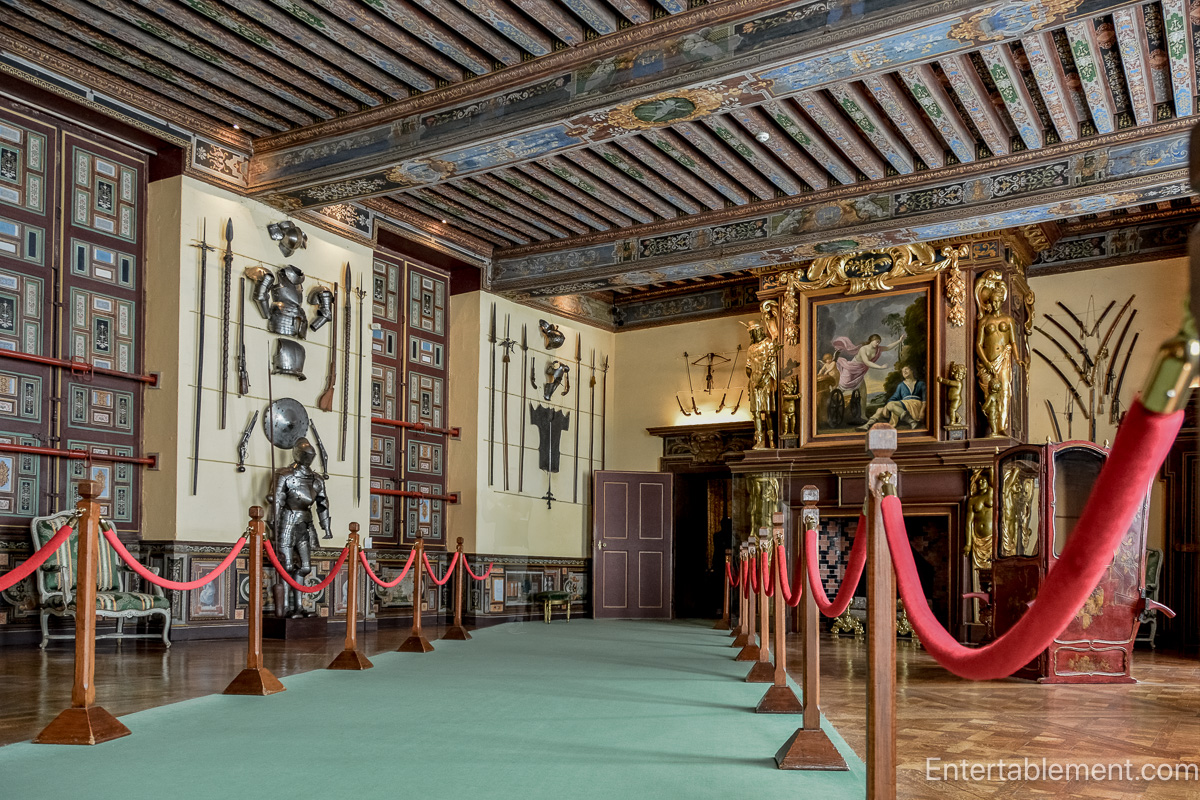
Always on the lookout for noteworthy trunks and boxes, I was delighted with this painted trunk, whose battered exterior made me wonder how many journeys it had undertaken. Look at the heft of those hasps! I surmise it must have held valuables.

And this one has a studded exterior.
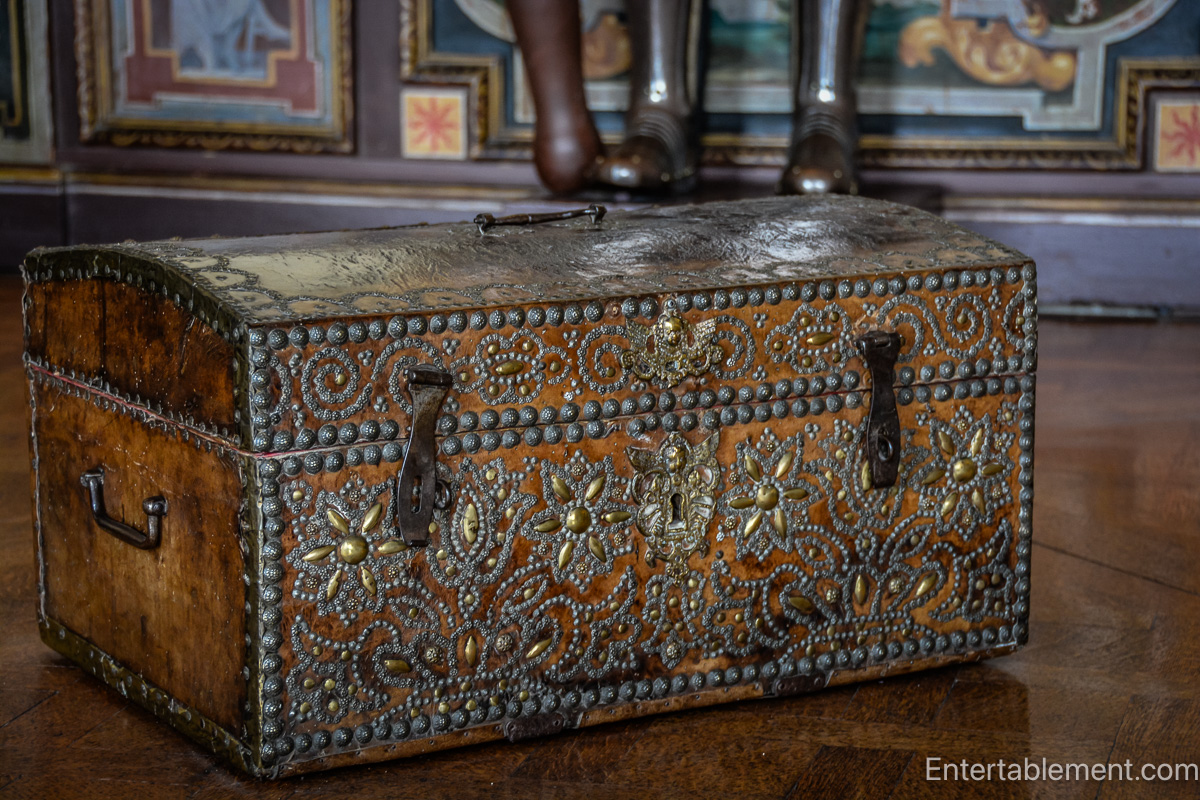
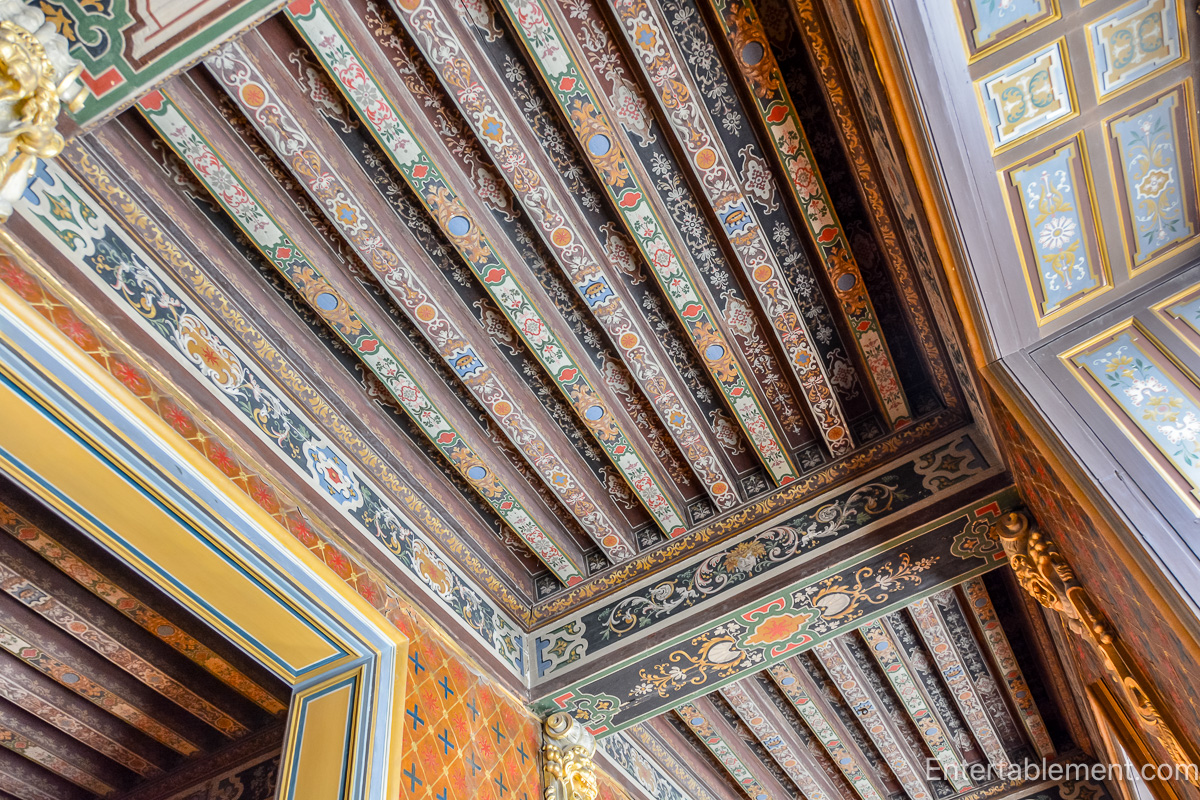
Painted ceilings and wall panels display grandeur and harmony in equal proportions.
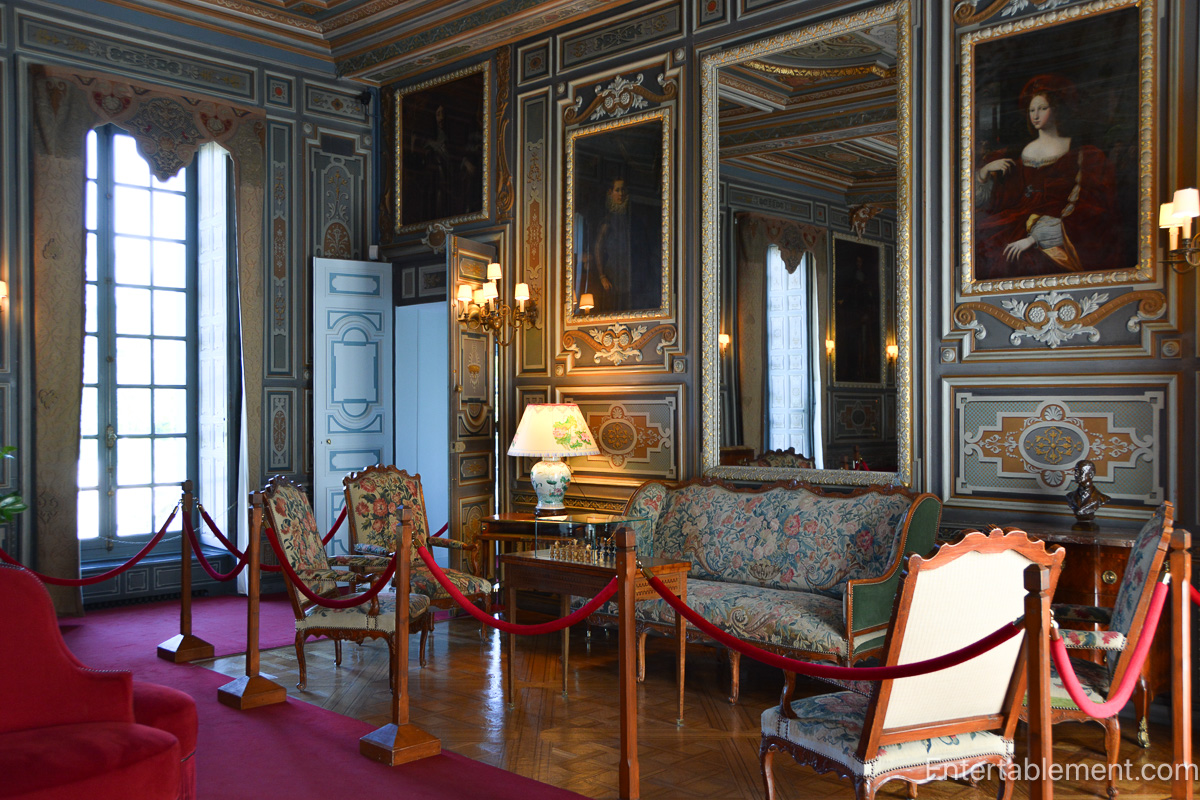
I adore that particular shade of “French Blue”, utterly at home in this oh-so-French Chateau.
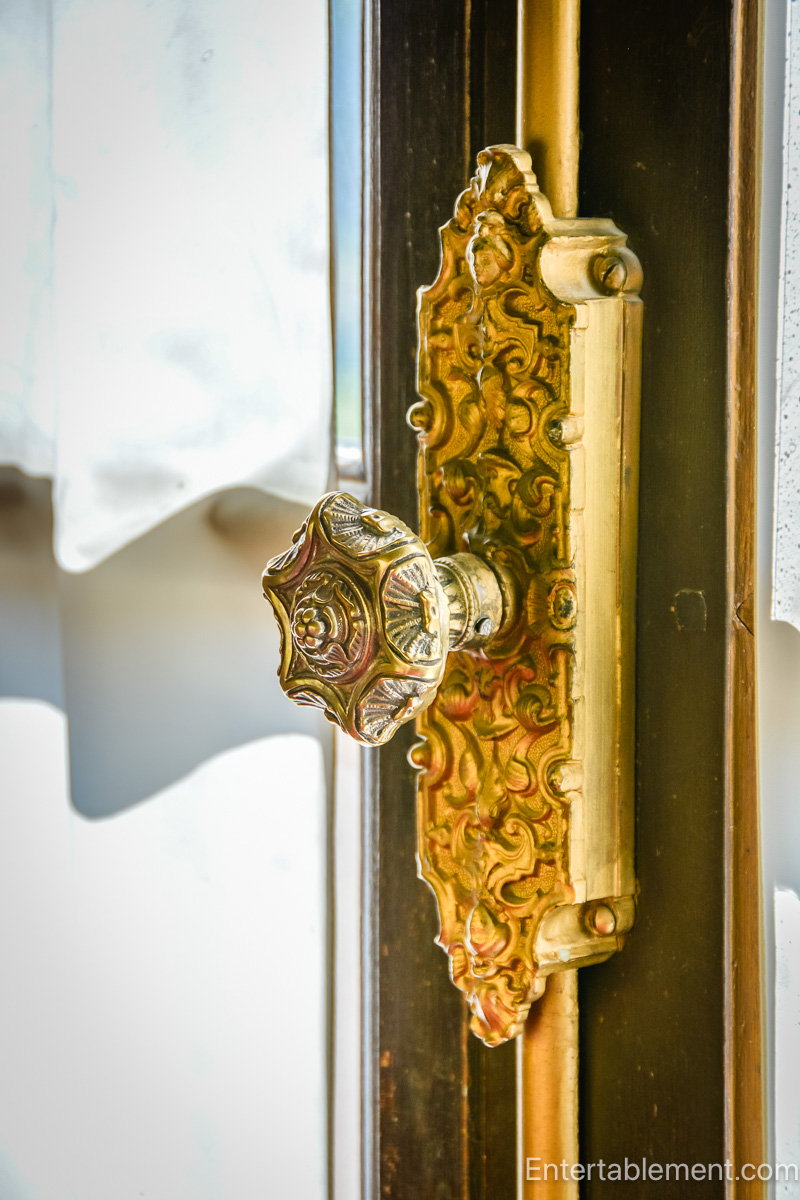
Even the door hardware and window locks are exquisite, hinting at the extraordinary attention to detail the château has enjoyed over the centuries.
The Formal Dining Room: Gilded Ceremony
The grandeur ramped up in the formal dining room. Gilded panelling framed richly painted walls, with ornamental busts presiding above ornate fireplaces.

The carved ceiling beams bore detailed foliate motifs, and a glittering chandelier hovered over a long polished table.
A dramatic arrangement of white orchids in a stone bowl provided a striking modern contrast to the baroque surroundings. It was regal, certainly, but inviting too.

One could imagine formal dinners here, but stories, debates, and laughter echoing into the high corners.
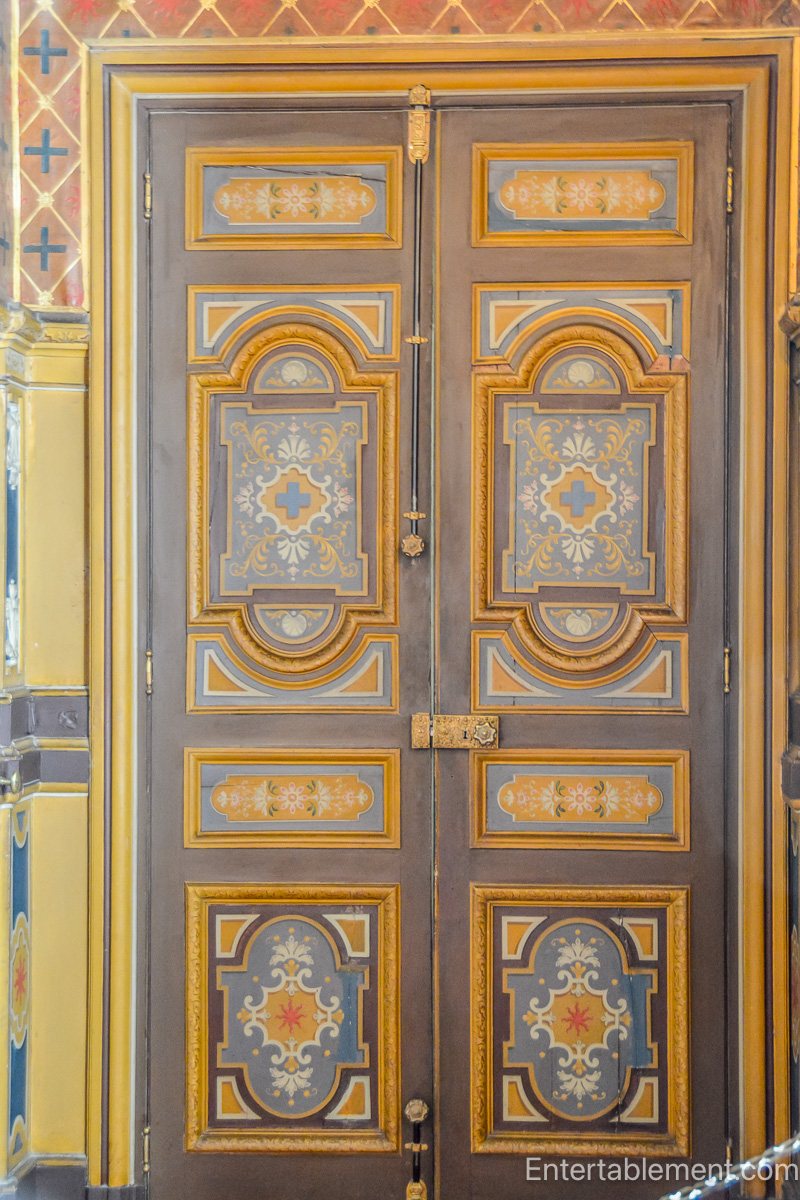

The Library and Salons: Quiet Luxury
Elsewhere, the château’s more private spaces continued to charm. The library was a favourite of mine—a painted grand piano stood like a sculpture before a wall of leather-bound books.

A bronze stag anchored a corner table. Everything in this room whispered luxury, but nothing screamed.
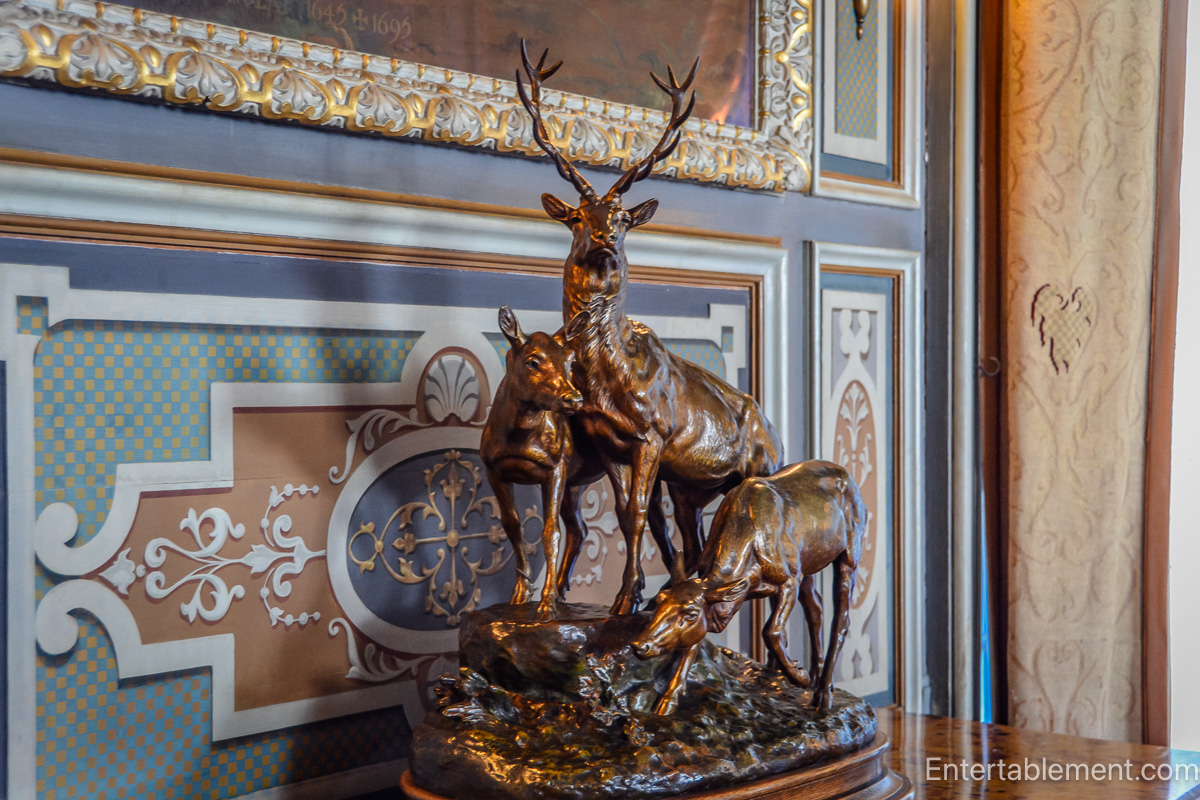
Gobelin tapestries stretched from floor to ceiling in the salons, depicting scenes of rustic life—harvests, carpenters, village fêtes. (As an aside, I wasn’t fond of the plastic coverings, which reminded me of newly decorated formal living rooms from the 1950s whose lampshades still sported cellophane wrapping.)
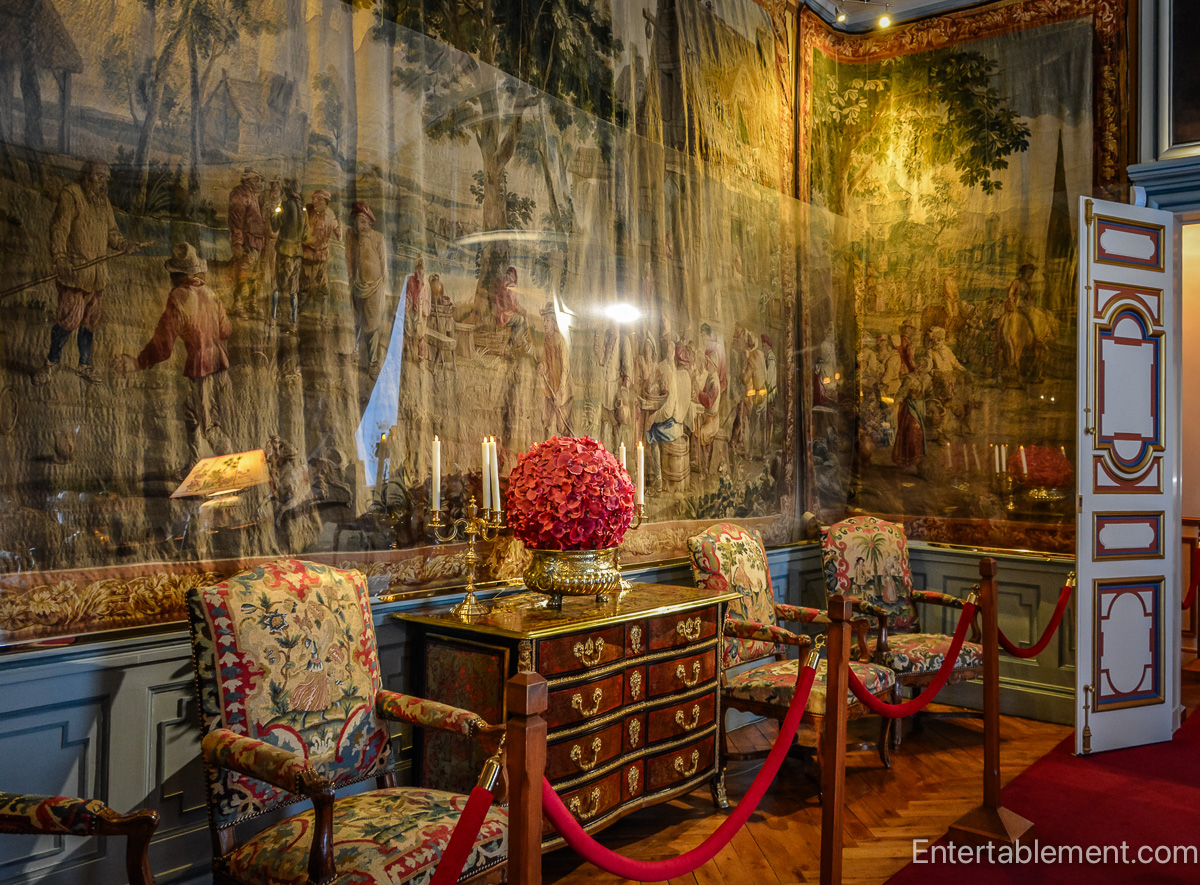
The walls were wrapped in painted panelling with intricate moulding and gilt-framed scenes. Chairs upholstered in needlepoint floral and chinoiserie patterns flanked polished tables, beneath softly glowing lamps.

It was impossible to take it all in at once. Every cushion, tapestry, and figurine contributed to the sense of cultivated beauty.

The Morning Room: A Toast to Dogs and Porcelain
The morning room, sunny and exuberant (in a rather “cheerful” shade of green), was set with a whimsical dining display that immediately made me smile.

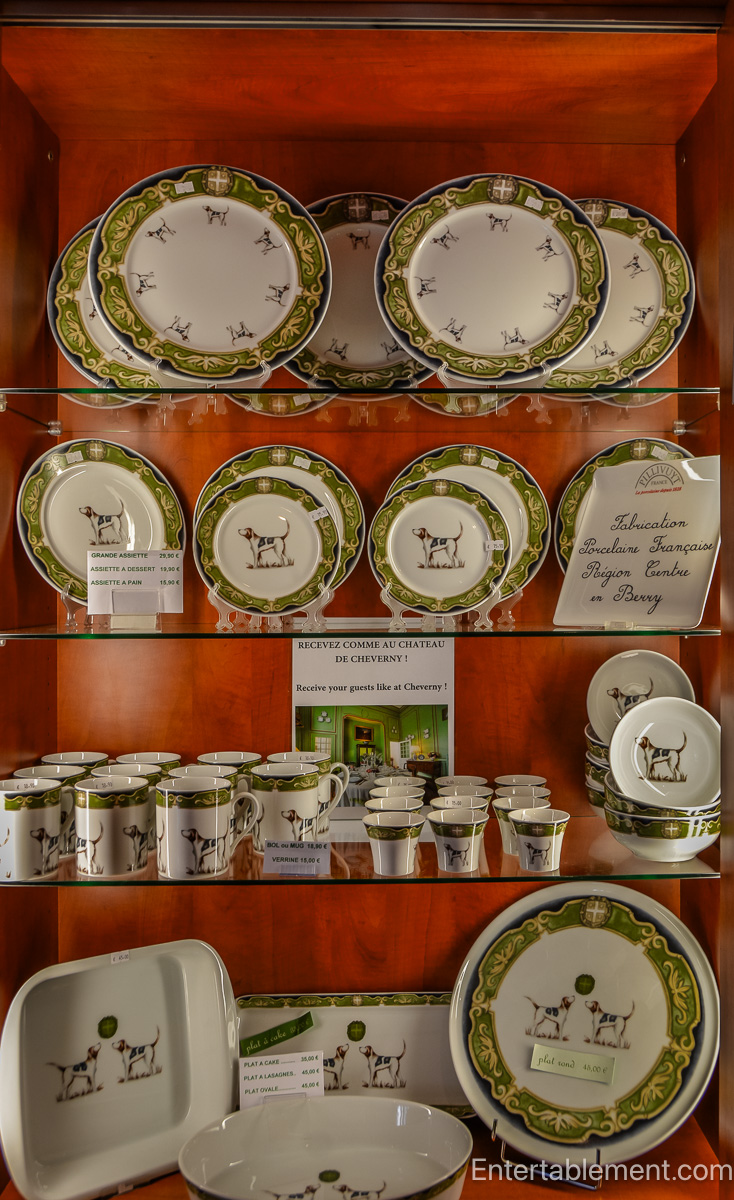
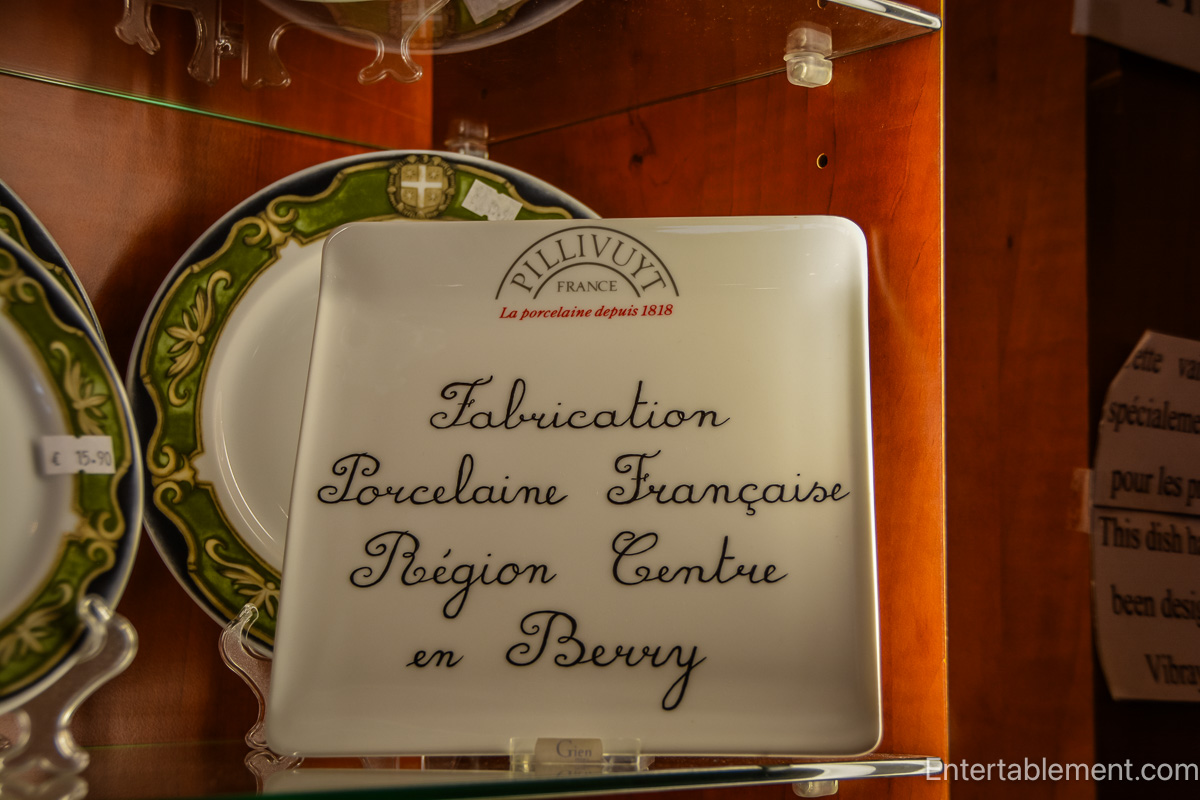
Adorned with cheerful painted dogs, the tableware pays homage to Cheverny’s beloved hunting hounds. The porcelain is made by Pillivuyt, a French manufacturer founded in 1818 in the Berry region and renowned for its enduring quality.
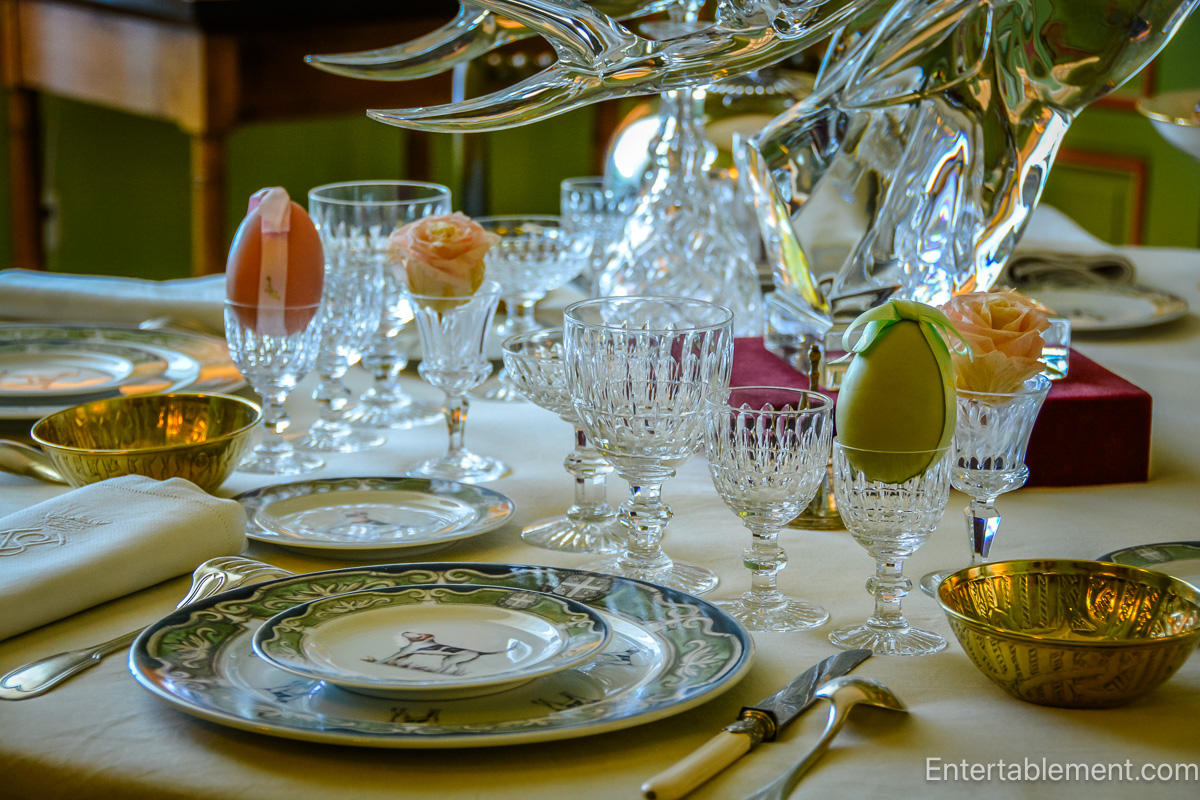
There’s something particularly delightful about elegant settings that don’t take themselves too seriously. It’s easy to imagine this space being used for informal breakfasts or cozy family moments.


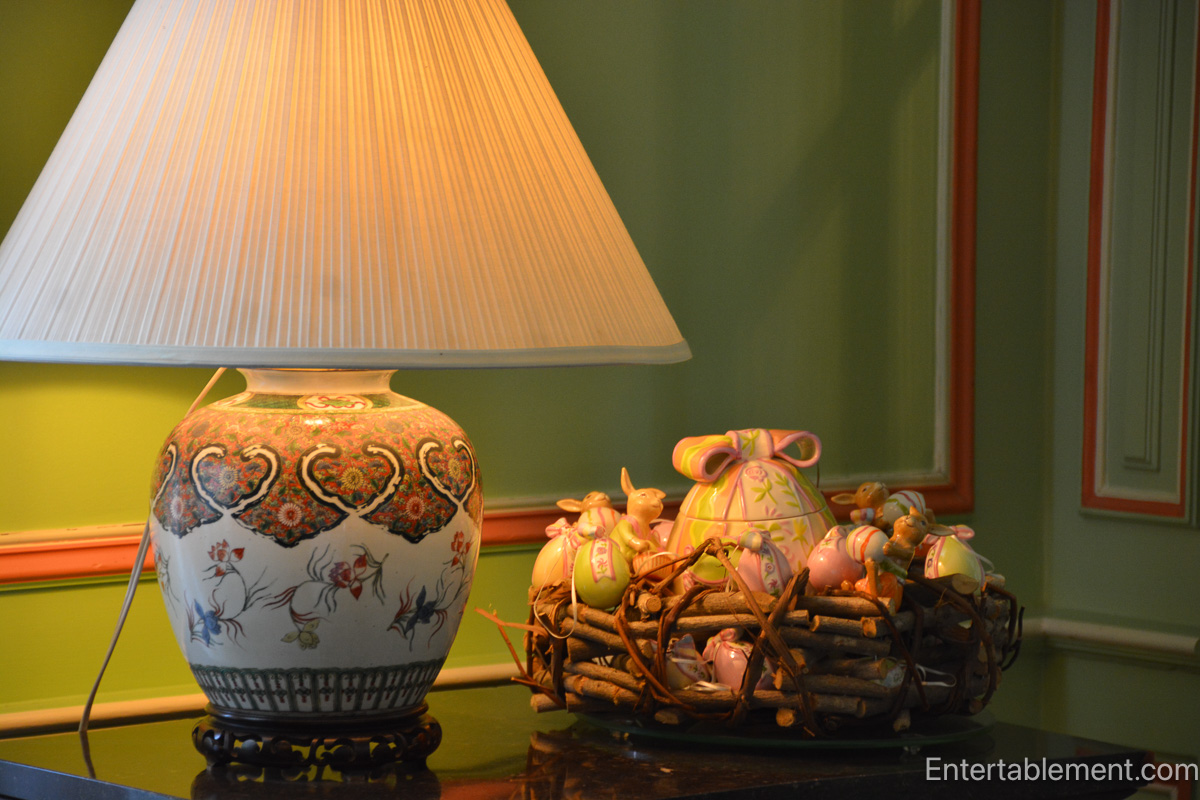
Nearby, a mirrored mantel displayed an Easter vignette: a cloche filled with vibrant chocolate eggs and a tray holding delicate pots de crème.

Even seasonal décor at Cheverny manages a certain dignified charm.

At the end of the tour, the gift shop had a cabinet with the china on display. The significance of the hounds becomes clear later.

Stone Steps and Quiet Detail
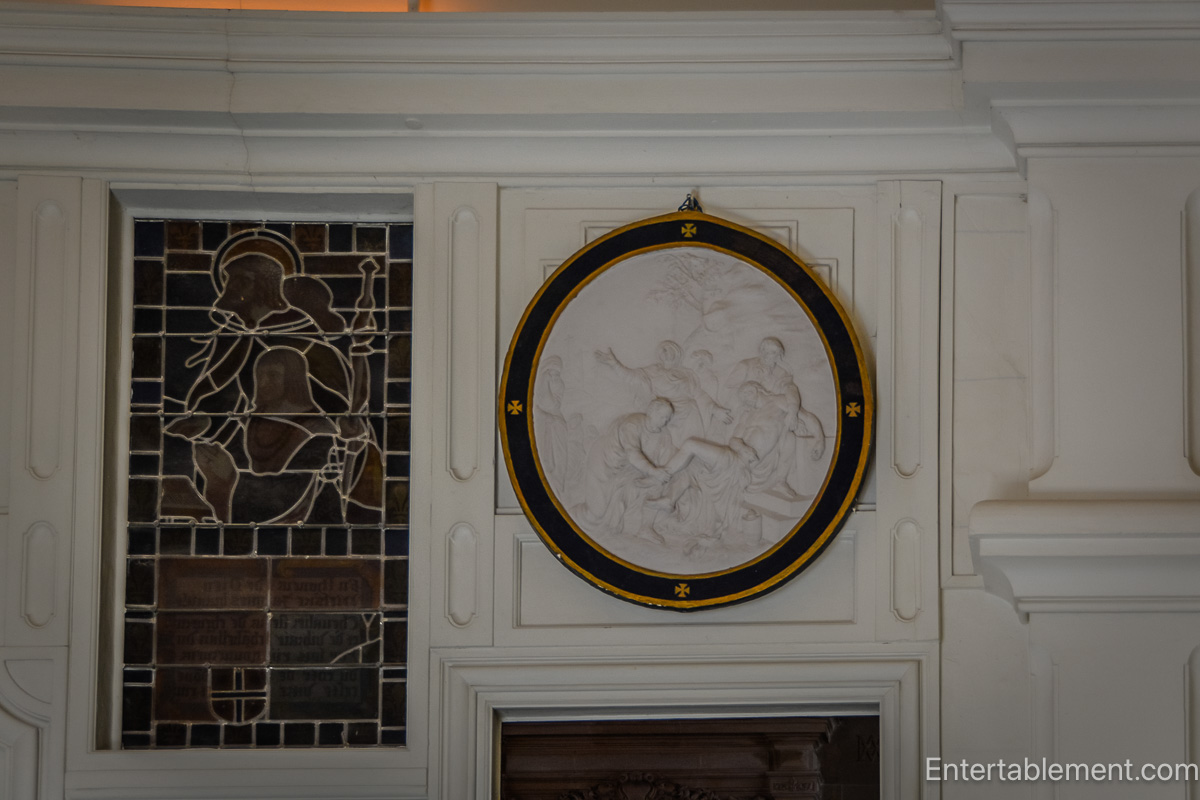
On our way to the bedrooms, we passed through a grand and surprisingly serene staircase. Made of pale local stone, the space was flooded with natural light, which softened the sharp lines of its carved balustrades and vaulted arches.

The checkerboard floor and sweeping banisters gave the whole space a quiet rhythm, guiding visitors upward without overwhelming the eye.
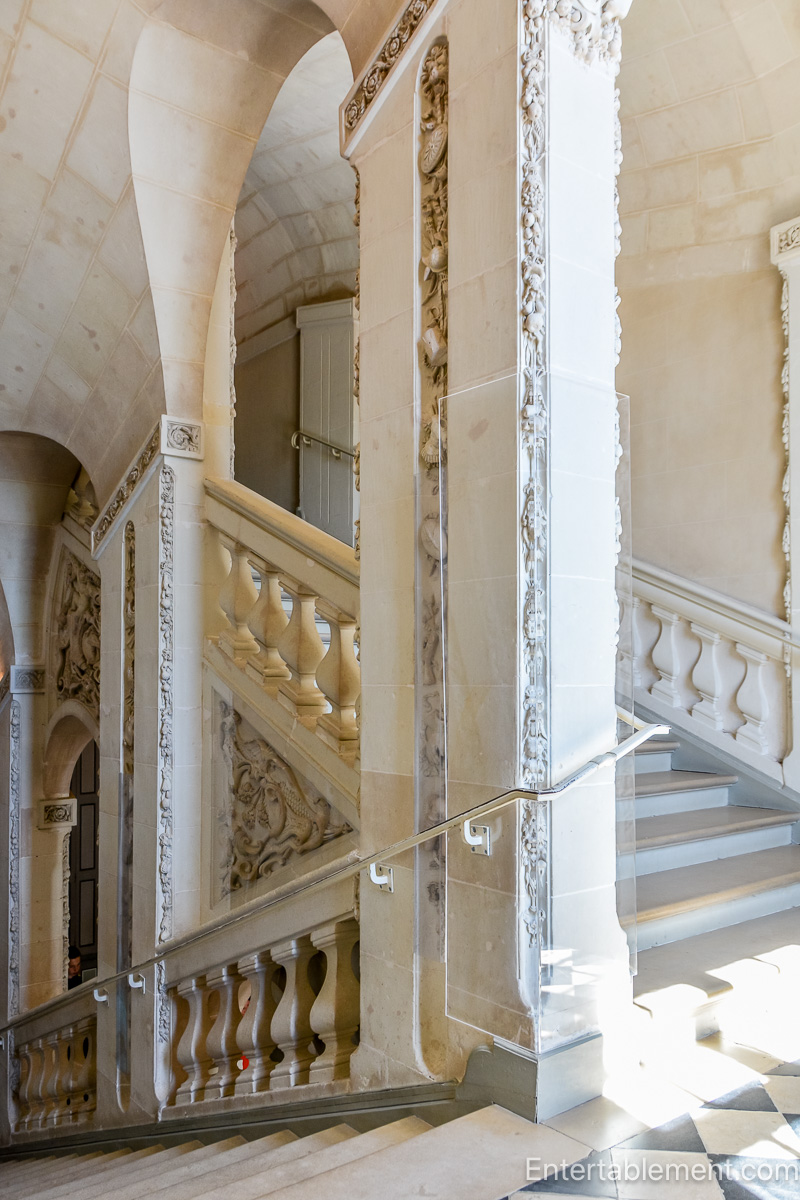
The sculpted reliefs along the walls added subtle elegance—musical instruments, foliage, and symbols woven into the plaster like quiet nods to the family’s legacy.
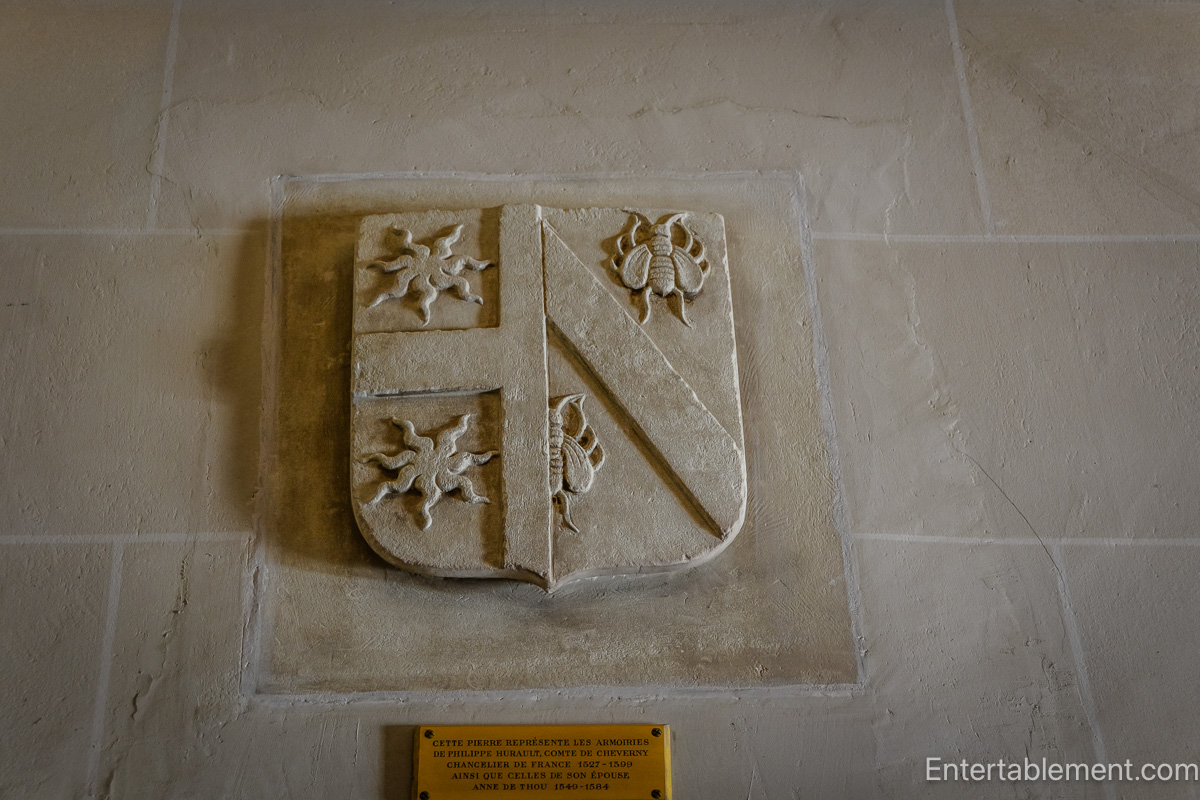
The stone crest shows sunbursts and bees, symbolizing the Hurault family lineage.
It struck the right note in the transition between the floors—the more formal, storied public spaces below and the private rooms above.

The Grand Bedroom
Among the many bedrooms, one in particular stood out for its grandeur. Draped in ornate tapestries from floor to ceiling and crowned with a gilded canopy bed, the room echoed courtly magnificence. (Here, the plastic extended to the bed coverings. Seriously, folks—why? The bed is behind velvet ropes. Who exactly do you think is going to be jumping on it?)
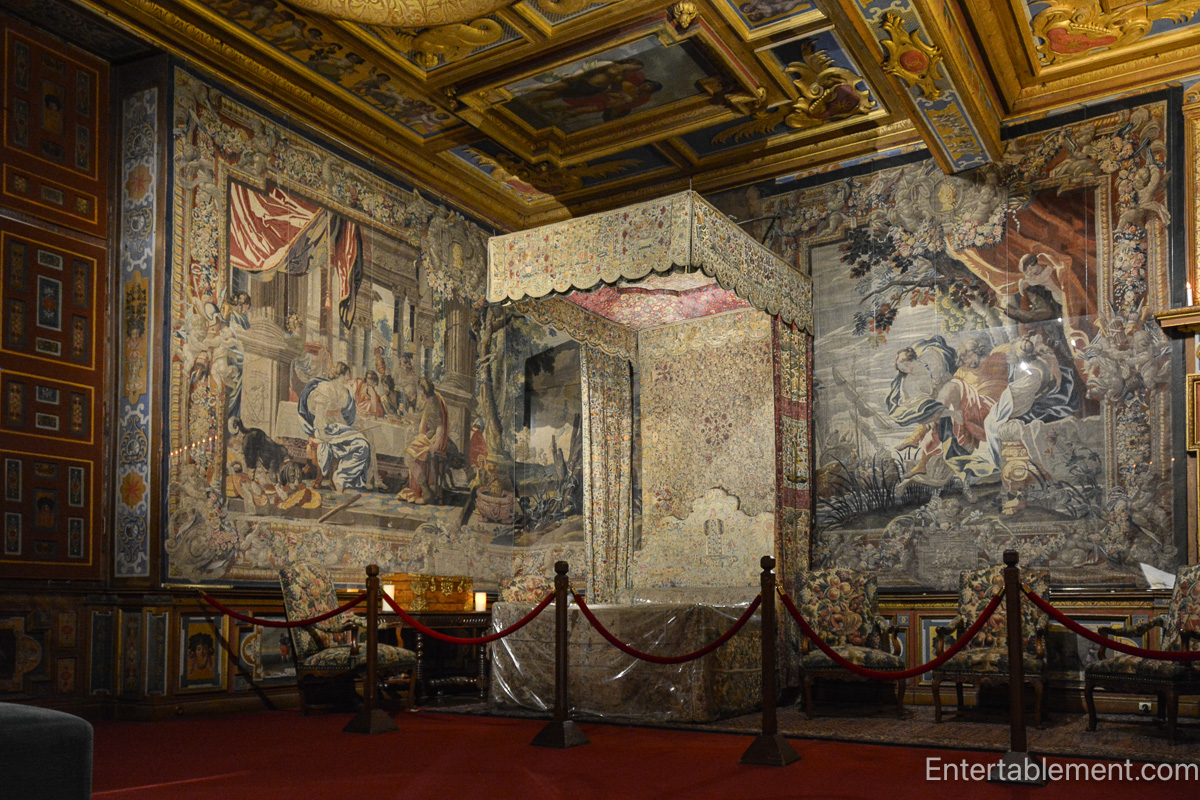
The walls themselves felt like paintings—scenes of banquets and pastoral myths unfolding around the bed.
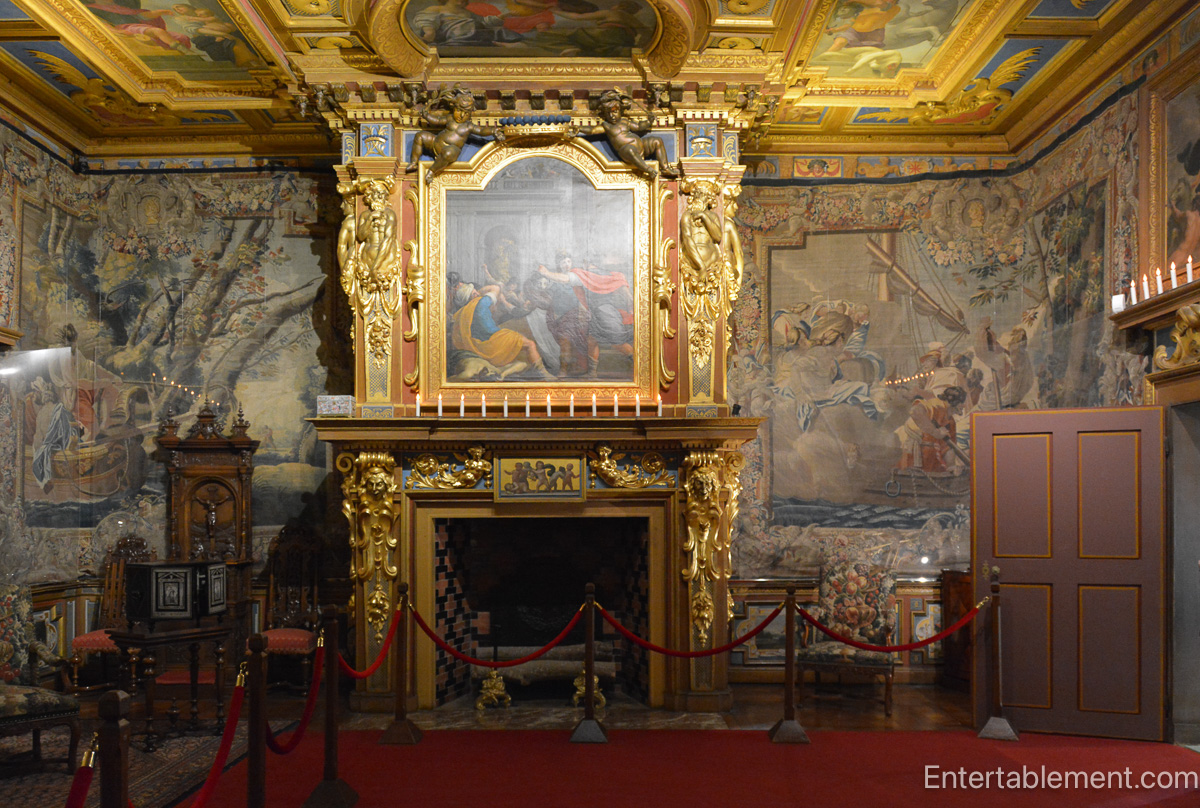
Then—the ceiling! A marvel of gilded panels and painted scenes adds another layer of immersive richness.
Bedrooms Full of Character
The bedrooms are a particular delight. Each had its distinct ambiance, from the tapestry-draped royal suite to the light-filled bridal room, which was especially charming.
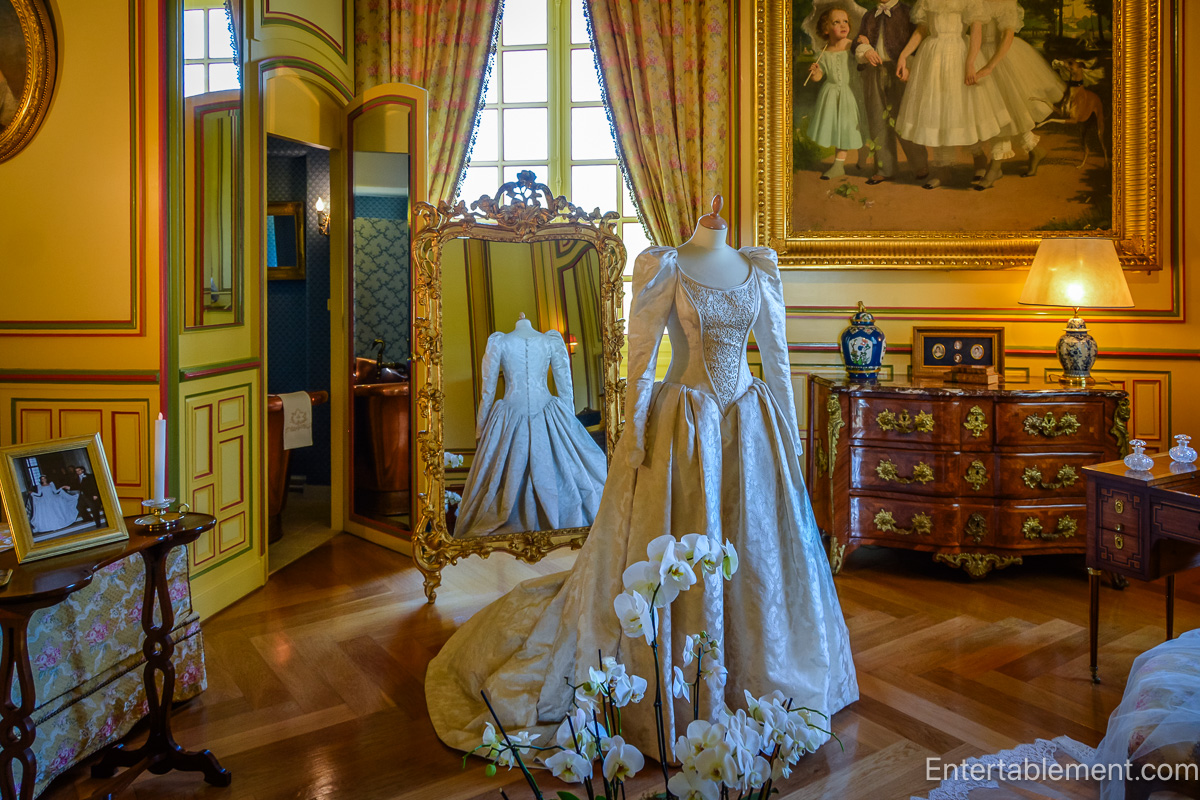
The display of a wedding gown, veil draped delicately over a chair, was as if a scene had been gently paused mid-moment.

The nursery and children’s rooms have antique toys and whimsical wallpaper.
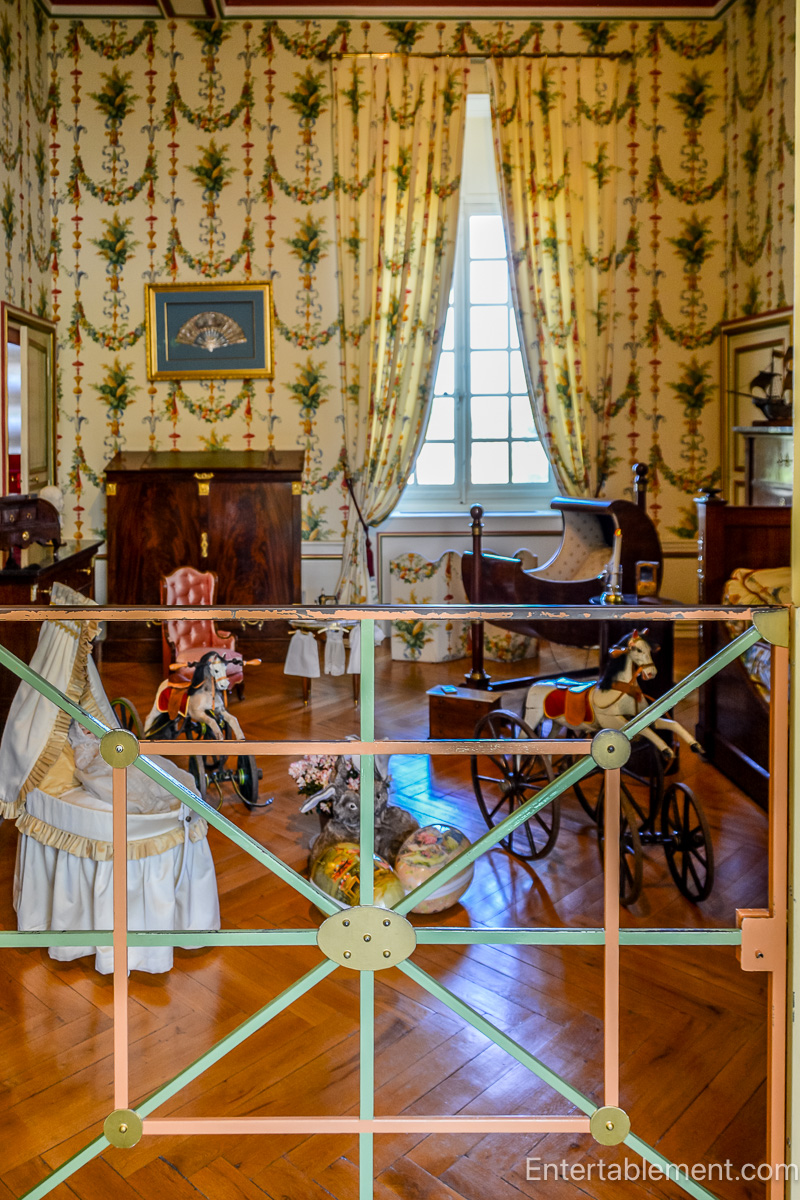
They feel loved, cared for, with a gentle sense of humour and affection. I could envision a child playing house with the diminutive tri-fold screen, busily arranging her dolls.
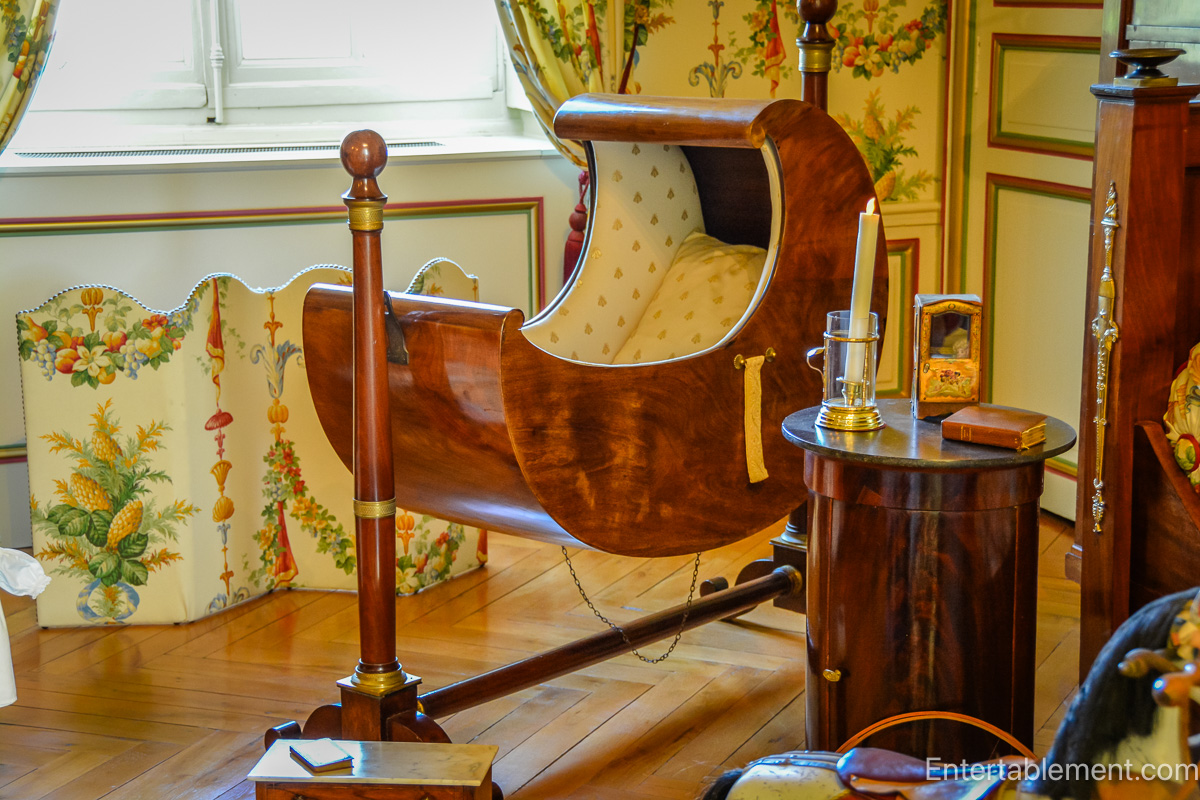
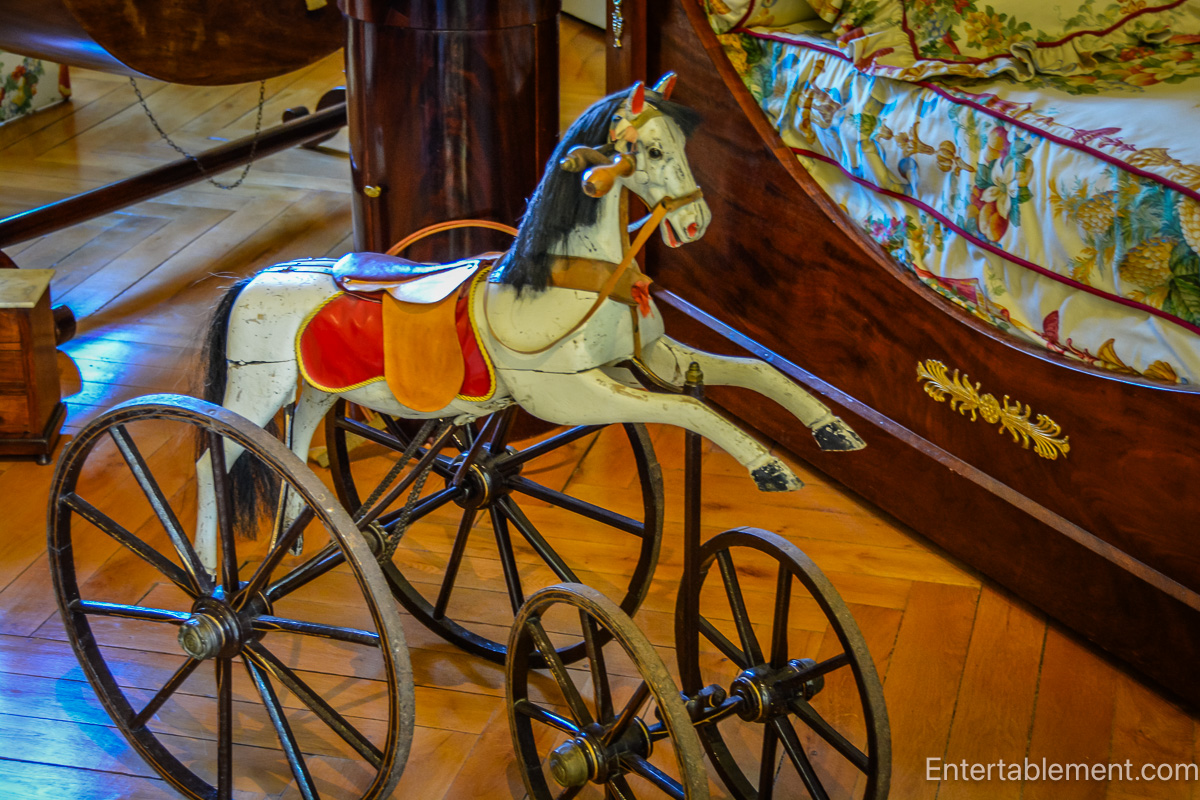
The diminutive clothes -for a toddler or a doll? Such beautiful lace. And the sewing machine!
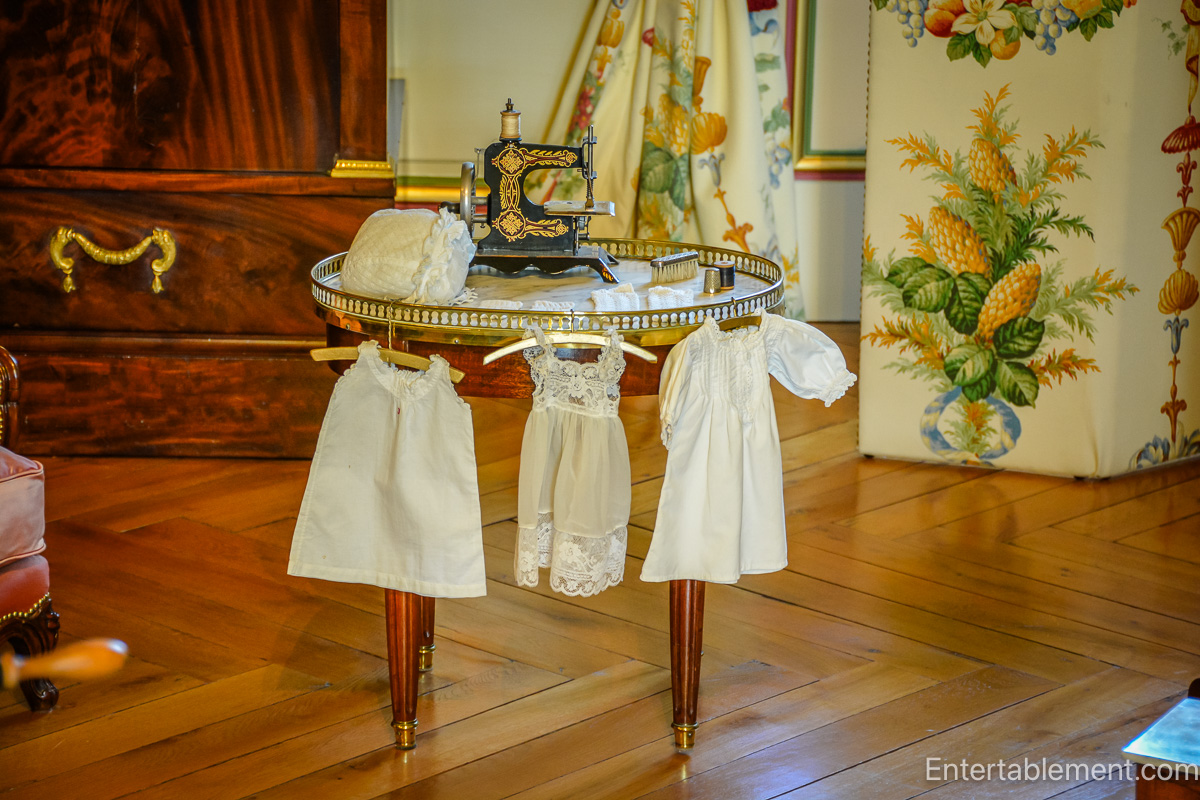
The Easter Bunny had brought a companion, as well as beautiful gifts!

The Chapel: Intimate Devotion
Tucked within the château is a small private chapel.
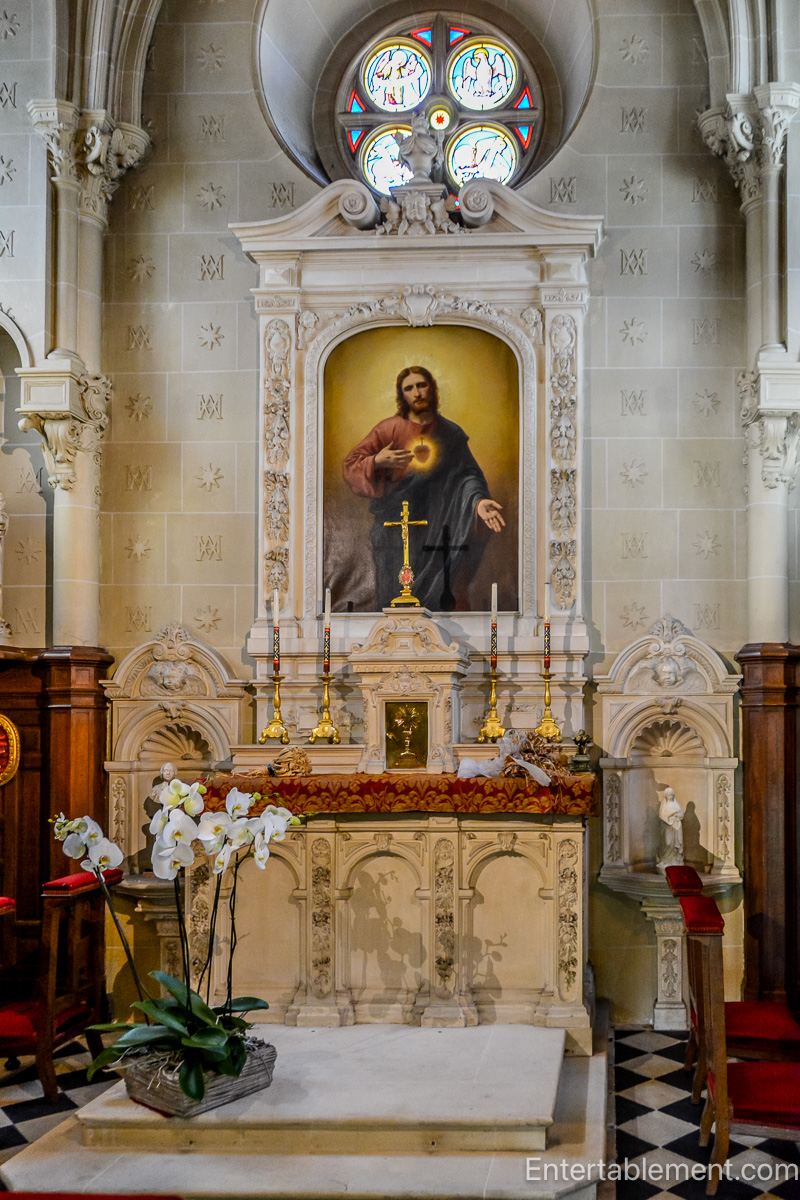
The stained glass medallions above the altar depict the four evangelists, their names scrolled in medieval Latin script: St. Matthaeus, St. Marcus, St. Lucas, St. Johannes.


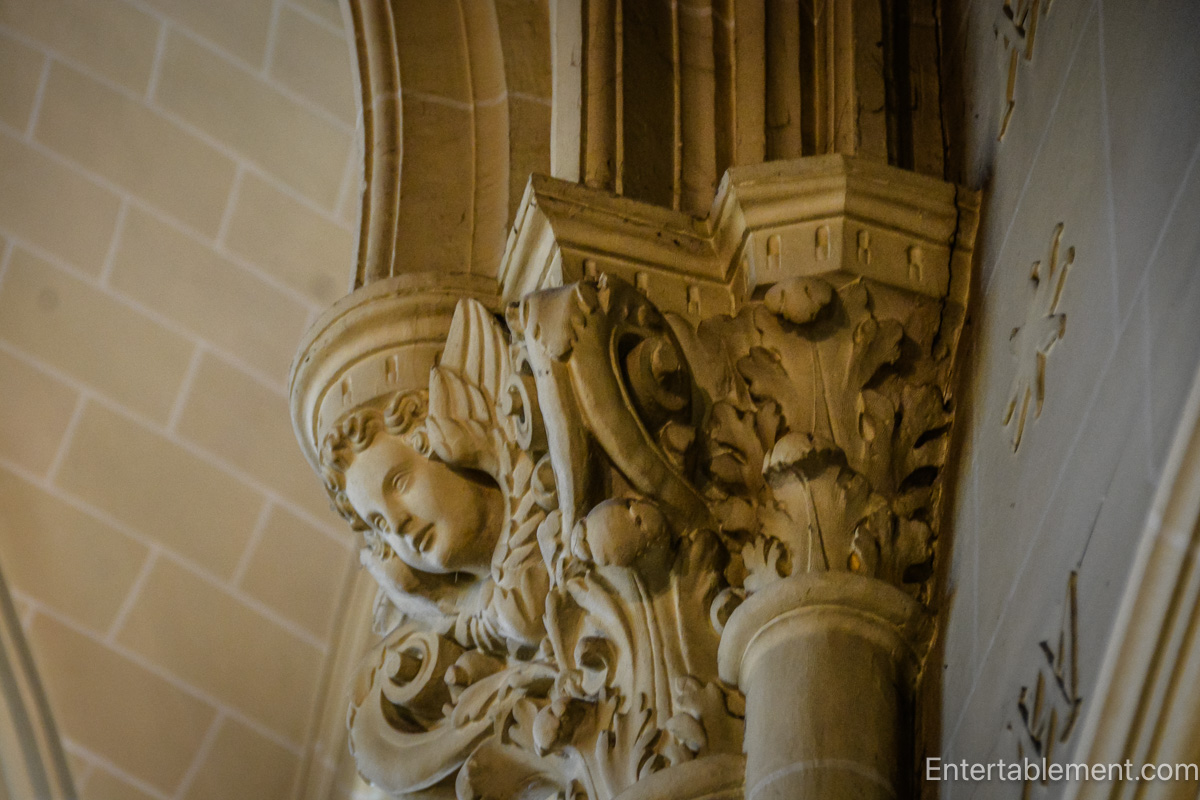
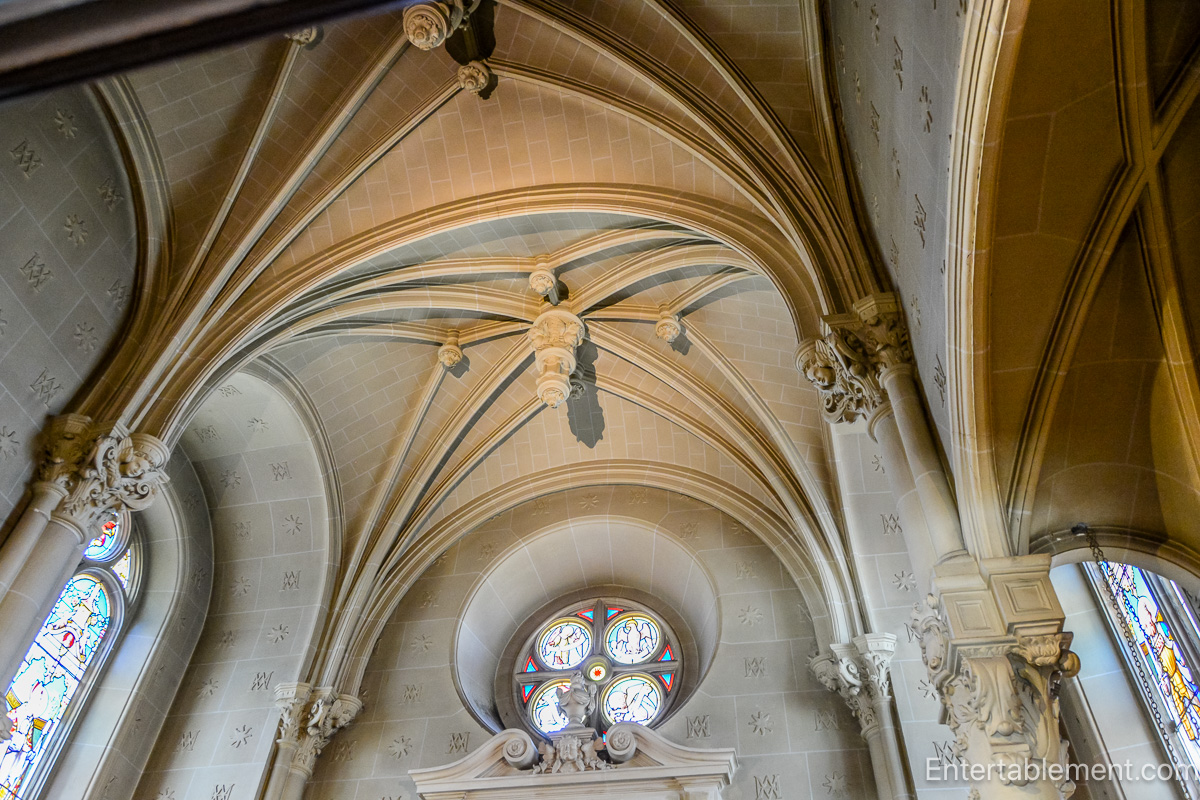
Angelic corbels support the vaulted ceiling, faces carved in limestone.
The Hounds of Cheverny: Comic Royalty
Once outside, the inspiration for the china became clear. The estate is home to over seventy hunting dogs, a dashing mix of English Foxhound and French Poitevin. They live in generous stone kennels out back and exude the cheerful chaos of a vast family.

When we visited, they were sprawled out in the sun, draped over one another like a living patchwork quilt.

One especially exuberant hound heaved himself into a water trough…

…spraying his companions and triggering a chorus of barking.
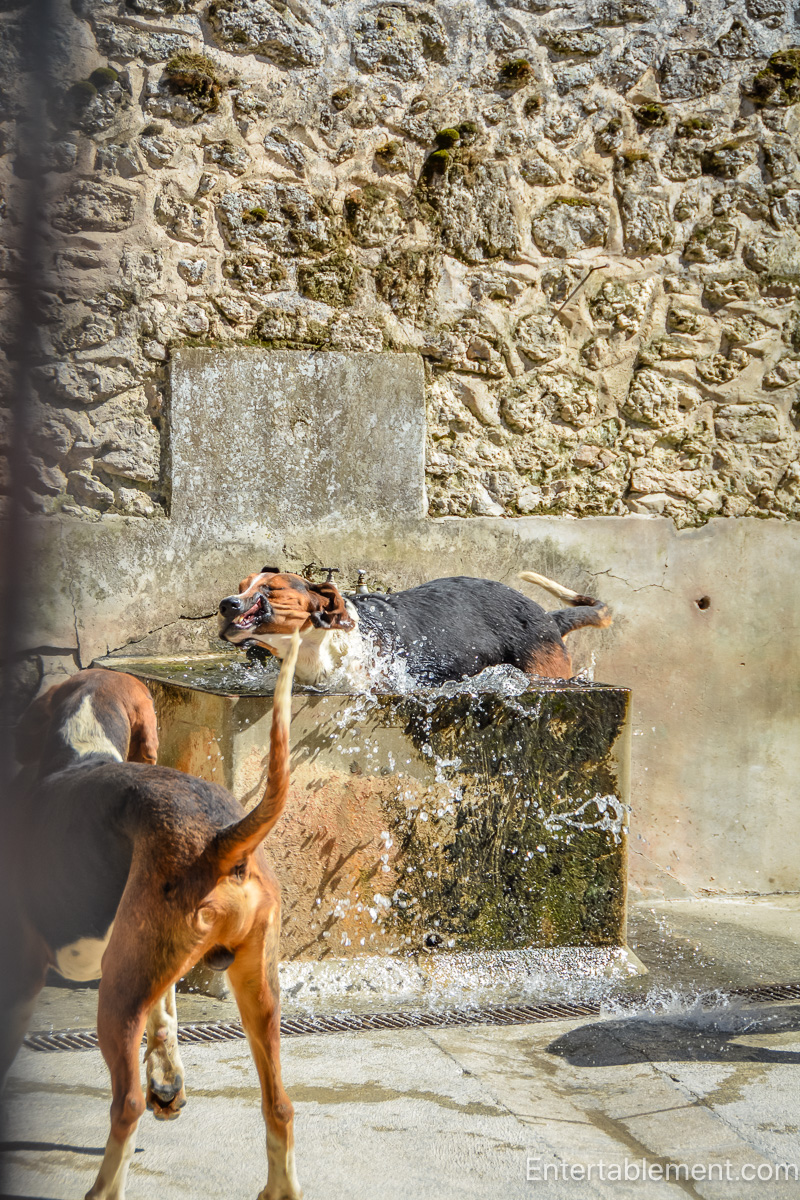
It was raucous, ridiculous, and utterly heartwarming.
The Tulip Gardens: Riotous Beauty
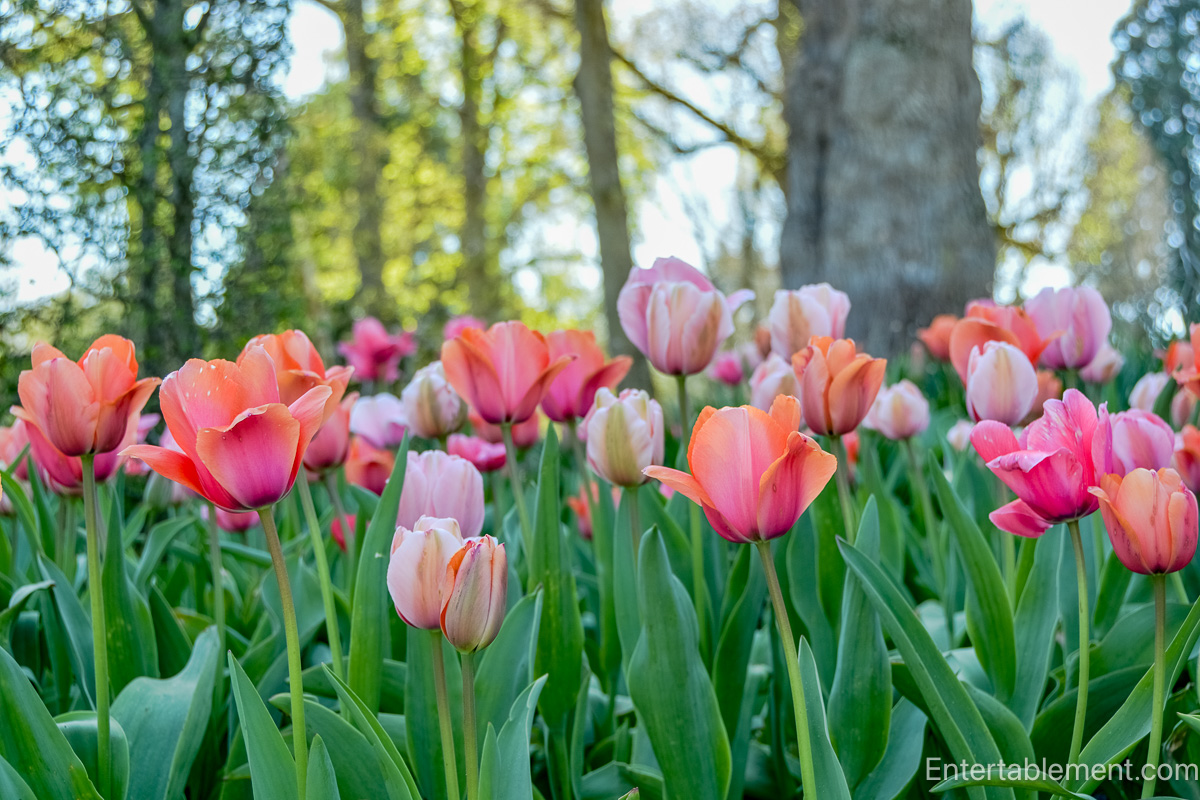
And then—oh, the gardens. Cheverny’s grounds in spring are a wonder. Vast swathes of tulips unfurl across the formal beds in raucous explosions of crimson, ivory, apricot, and violet.
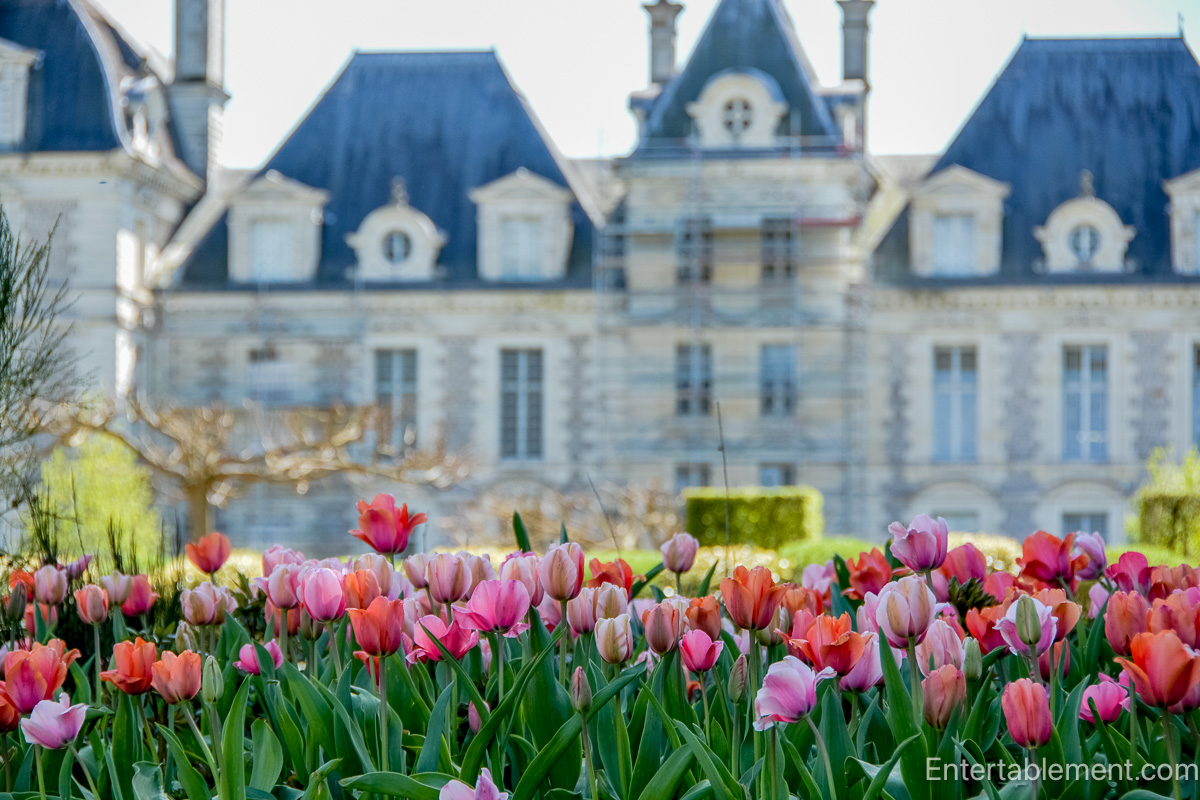

The effect is painterly and precise without being rigid. Towering trees anchor the horizon, and wide paths invite slow meandering.
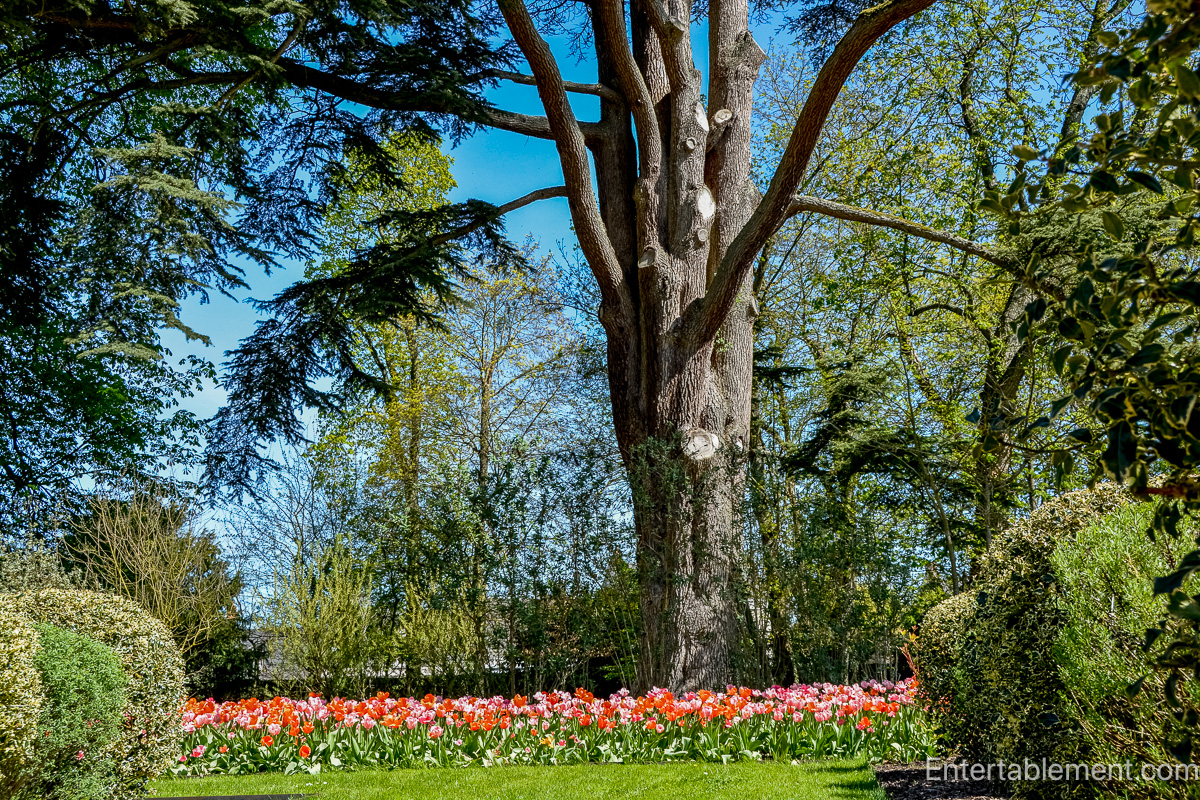
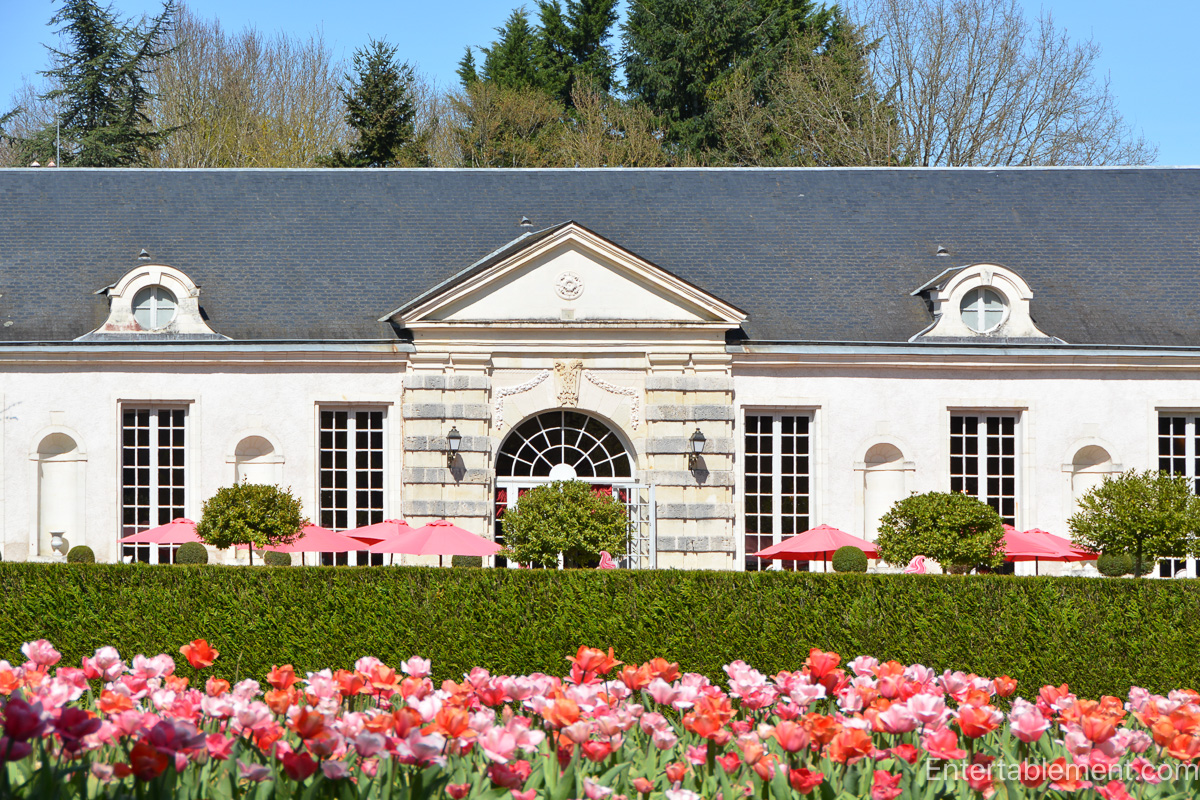
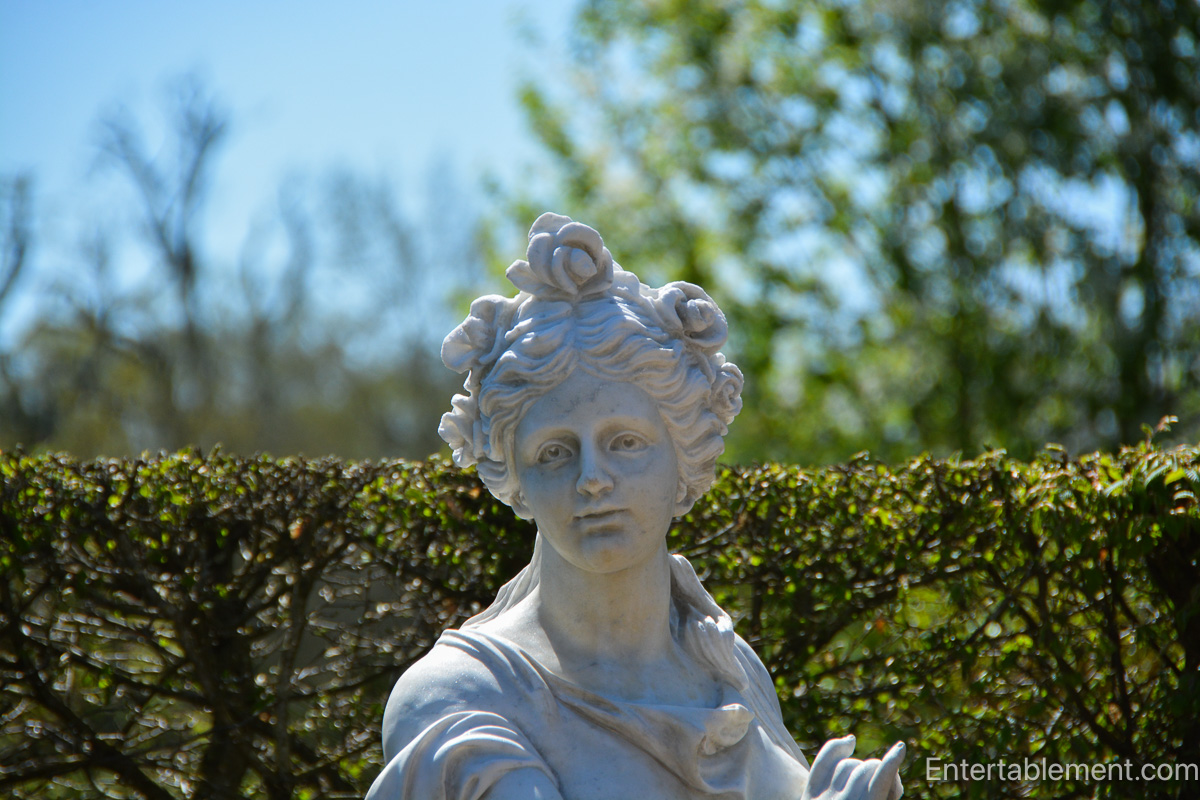

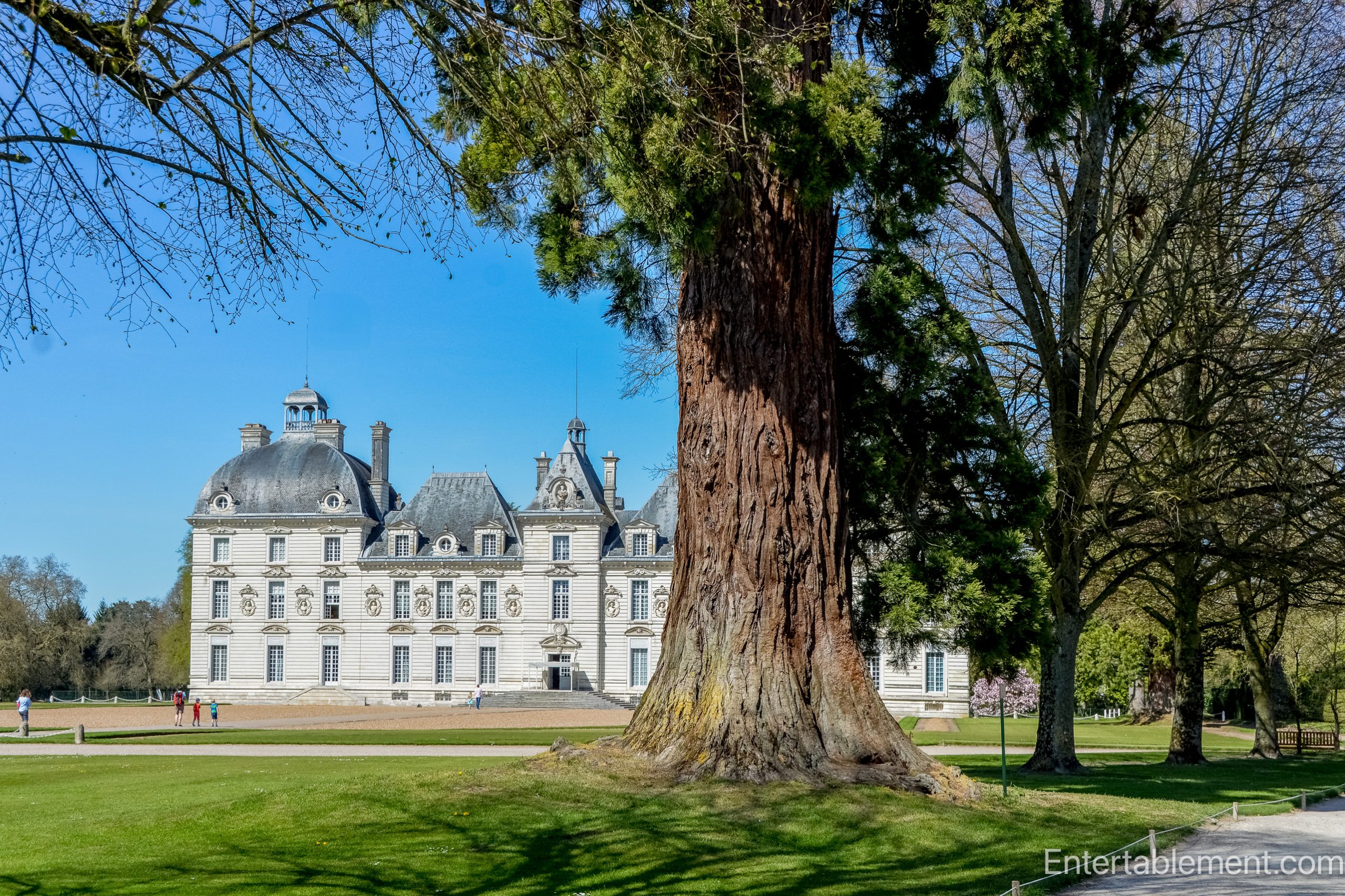
A massive sequoia near the front of the château adds a grounding presence to the scene.
Living History
Cheverny remains a family residence, though one with centuries of stories embedded in its stones. The Hurault family, whose ancestors began the construction in the early 17th century, still owns and inhabits the château. Their care is evident in every room. Unlike the more grandiose and museum-like châteaux, Cheverny pulses with life. And perhaps that’s what drew me in most of all. It doesn’t whisper history. It invites you in, offers you a chair, and begins telling its tale.
I could have moved right in! Do you think our Golden Retrievers would get on with the hounds?
This post is part of the Loire Valley Château Series—a journey through the elegance, history, and charm of France’s most beloved estates.
Explore the full series:
- Château de Chenonceau
- Château de Chambord
- Château de Chaumont
- Château de Cheverny
- Château de Villandry





Thank you for sharing your trip with us all. Really fabulous!