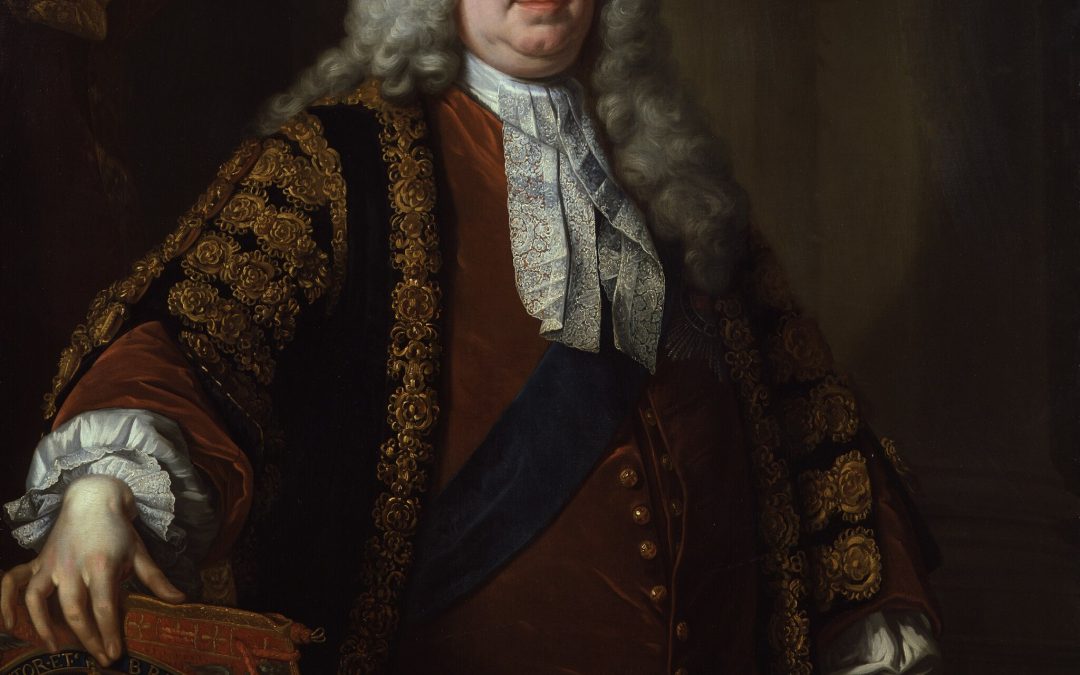
Sir Robert Walpole (1676–1745) is widely regarded as Britain’s first de facto Prime Minister. He served as the head of government for over two decades. As a statesman, he navigated the complexities of early 18th-century politics, consolidating the power of the Whigs and establishing many principles of modern parliamentary governance.
Early Life and Political Rise
Born in Norfolk to a prominent landowning family, Walpole was educated at Eton and King’s College, Cambridge. He entered Parliament in 1701 as the MP for Castle Rising before securing the seat for King’s Lynn, which he held for much of his career. He initially served under Queen Anne and became a key figure in the Whig Party, rising to become the First Lord of the Treasury in 1715 under King George I.
Prime Ministerial Legacy
Though the title “Prime Minister” was informal at the time, Walpole functioned as the de facto leader of the government from 1721 to 1742. His tenure was marked by financial stability, as he avoided costly wars and strengthened the national economy through policies such as the Sinking Fund, which reduced the national debt. He was a staunch advocate of peace, maintaining diplomatic stability in Europe. His influence extended to royal patronage, solidifying the Hanoverian dynasty’s grip on power.
Walpole played a crucial role in steering Britain through the South Sea Bubble crisis, preventing further financial ruin and stabilizing the economy. He also oversaw the gradual blending of the surviving powers of the Crown with the increasing influence of the House of Commons, solidifying the principles of parliamentary governance. As a Whig leader, he sustained the party’s dominance for decades and safeguarded the Hanoverian succession, defending the principles of the Glorious Revolution against Tory opposition.
Walpole’s position was threatened in 1727 when George I died and was succeeded by George II. For a few days, it seemed that Walpole would be dismissed, but on the advice of Queen Caroline, the King agreed to keep him in office. This decision reaffirmed his political acumen and ability to navigate the complexities of court politics.
By 1737, the death of Queen Caroline removed one of Walpole’s closest allies, marking the beginning of his political decline. Though his relationship with George II remained intact, his grip on government weakened. His opponents gained strength, particularly through the estranged Prince of Wales, who became a focal point for opposition factions. Young, ambitious politicians such as William Pitt the Elder and George Grenville formed the “Patriot Boys” faction, joining the Prince of Wales in opposition to Walpole’s policies. This growing resistance ultimately led to his resignation in 1742.
Personal Life and Family Legacy
Robert Walpole married Catherine Shorter in 1700, and together they had several children, including his heir, Robert, and Horace Walpole, the famed writer, antiquarian, and pioneering Gothic Revivalist. His marriage to Catherine ended in estrangement, and she died in 1737. Following this, Walpole secretly married his longtime mistress, Maria, Countess Waldegrave. Maria was a significant presence in his later years, and their relationship was well known in political and aristocratic circles.
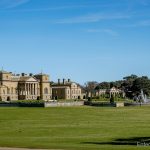
Beyond his official duties, Walpole was known for his love of hunting, gambling, and socializing. He maintained a lavish lifestyle, entertaining at Houghton Hall with grand dinners and political gatherings. His personal wealth, amassed through political maneuvering, funded both his indulgences and the grandeur of his estate.
His youngest son, Horace Walpole, became one of Britain’s most influential literary figures, best known for his novel The Castle of Otranto (1764), often considered the first Gothic novel. Horace also created Strawberry Hill House, an architectural gem that helped inspire the Gothic Revival movement. Although Robert Walpole was known for his practicality and political acumen, his son, Horace, embraced artistic and literary pursuits, demonstrating the diverse legacies of the Walpole family.
Houghton Hall and Personal Wealth
Walpole amassed great personal wealth, using his position to secure financial benefits for himself and his allies. He commissioned Houghton Hall as a grand statement of his success, enlisting architects Colen Campbell and James Gibbs, with interiors by William Kent. The house became a symbol of Walpole’s power, filled with an extraordinary art collection, much of which was later sold to Catherine the Great of Russia.
Downfall and Later Years
Despite his dominance, Walpole’s grip on power waned due to mounting opposition and growing unrest over his policies. He resigned in 1742 and was elevated to the peerage as Earl of Orford. He retired to Houghton Hall, where he spent his final years before his death in 1745.