At the northeast corner of Trafalgar Square stands one of London’s most iconic churches, St Martin-in-the-Fields. With its grand portico, soaring spire, and rich history, it is not just a place of worship but also a symbol of architectural elegance and a hub of cultural and social engagement.

A Masterpiece by James Gibbs
Designed by the Scottish architect James Gibbs and completed in 1726, St Martin-in-the-Fields is one of the finest examples of the English Baroque style.

Its grand, temple-like facade, with a towering Corinthian portico and pediment, is crowned by a striking spire—a model that influenced countless churches across Britain and the American colonies.

Gibbs’ design was revolutionary, blending classical symmetry with the emerging Palladian influences of the early 18th century.

Interior Grandeur
Stepping inside, visitors are greeted by an elegant and light-filled nave, supported by Corinthian columns that frame the space with classical refinement. The richly decorated plasterwork on the ceiling, featuring intricate rosettes and geometric patterns, enhances the sense of grandeur.

The ceiling’s barrel vaults and ornamental stucco work reflect the influence of Italian and French classical design, creating a striking contrast with the dark wooden elements below.

The magnificent organ, positioned above the entrance, commands attention with its imposing array of pipes and dark wood casing, providing a focal point for music and worship alike. It is a grand example of 18th-century craftsmanship, still in use for services and the church’s renowned musical performances.
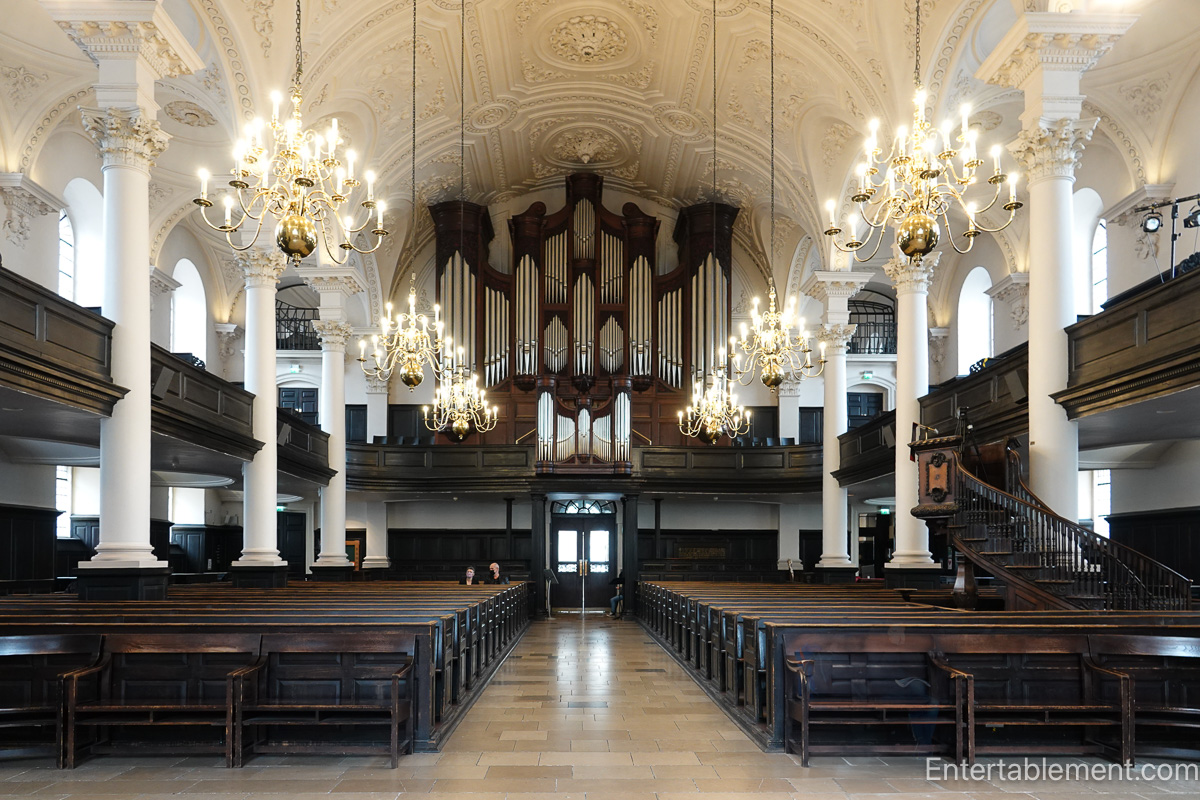
The box pews, crafted in dark wood, add to the period atmosphere, while the pulpit, accessed via a winding staircase, stands as a reminder of the church’s long history of sermons and public discourse.

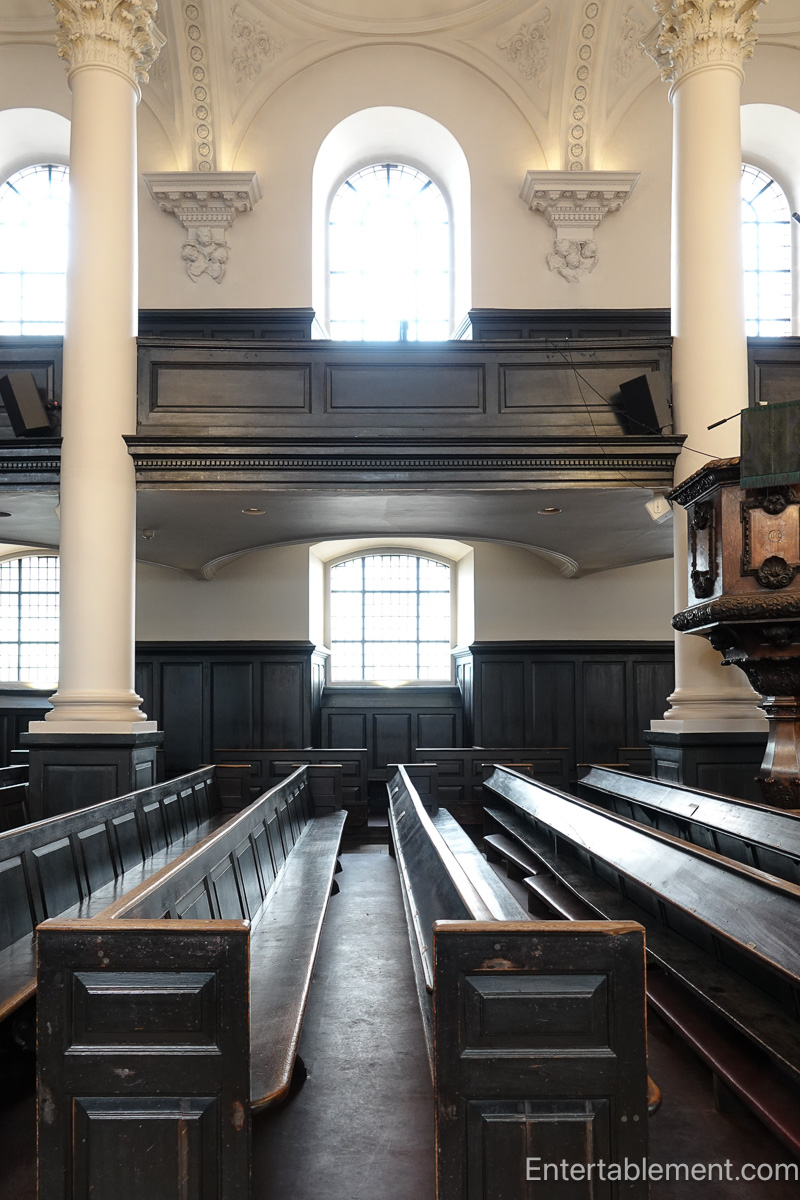
Ornamental carvings on the pews, featuring intricate scrollwork and floral motifs, further showcase the fine craftsmanship that went into the church’s furnishings. The dark wooden galleries that extend along the sides of the church provide additional seating, their simple yet elegant design harmonizing with the overall aesthetic.

Another striking feature is the series of arched windows that allow natural light to pour into the space. The clear glass, a deviation from the traditional stained-glass seen in many churches, allows for an airy and open atmosphere, emphasizing the church’s sense of spaciousness and serenity.
At the heart of the church’s chancel is the striking East Window, a contemporary addition designed by artist Shirazeh Houshiary and architect Pip Horne in 2008. This reinterpretation of a traditional east window features an abstract rippling design, symbolizing spiritual reflection and divine light.

The central circular opening in the leading serves as a visual focal point, drawing the eye towards the altar and reinforcing themes of transcendence and enlightenment. This modern installation creates an intriguing dialogue between past and present, seamlessly integrating with the classical architecture of the church.

The chandeliers, suspended from the ceiling, add further opulence to the interior. These gilded fixtures, adorned with multiple tiers of candles, contribute to the warm glow that enhances the church’s ambiance during evening concerts and services.
A Royal and Cultural Landmark
St Martin-in-the-Fields has long been associated with the British monarchy, serving as the parish church for Buckingham Palace. Over the centuries, it has been a place of worship for royalty, nobility, and commoners alike, embodying the democratic spirit of the Anglican Church. The church continues to hold regular services while also hosting concerts, particularly its famous lunchtime classical performances that attract visitors from all over the world.
The Crypt and Café
Beneath the church lies its atmospheric crypt, a space of both history and hospitality. The brick-vaulted ceilings and sturdy stone pillars create a striking setting for the Café in the Crypt, where visitors can enjoy a meal in a setting unlike any other. The crypt also houses a gift shop and an art exhibition space, further cementing the church’s role as a cultural venue.

One of the most striking elements of the crypt is the series of old gravestones embedded in the floor. The presence of skull-and-crossbones motifs and other funerary symbols offers a glimpse into the burial practices of the past, reminding visitors of the centuries of history contained within these walls.


A Church of Social Outreach
St Martin-in-the-Fields’ commitment to social justice mirrors that of St James’s Church, Piccadilly, another of London’s historic churches renowned for its outreach programs. Both churches have played pivotal roles in supporting marginalized communities, particularly the homeless, through various charitable initiatives. Beyond its architectural and musical contributions, St Martin-in-the-Fields is renowned for its commitment to social justice. It has long been a center for outreach programs, particularly in supporting the homeless community. The Connection at St Martin’s, a charity based at the church, provides vital services such as shelter, counseling, and skills training for those in need.
A Must-Visit Landmark
For lovers of architecture, history, and music, St Martin-in-the-Fields offers a compelling visit. Whether admiring the craftsmanship of James Gibbs’ design, enjoying a classical concert beneath the chandeliers, or savouring a quiet moment in the crypt café, this landmark church remains a testament to London’s rich cultural tapestry.

If you find yourself in Trafalgar Square, take a moment to step inside—you’ll be standing in one of the city’s most beautiful and historically significant spaces.